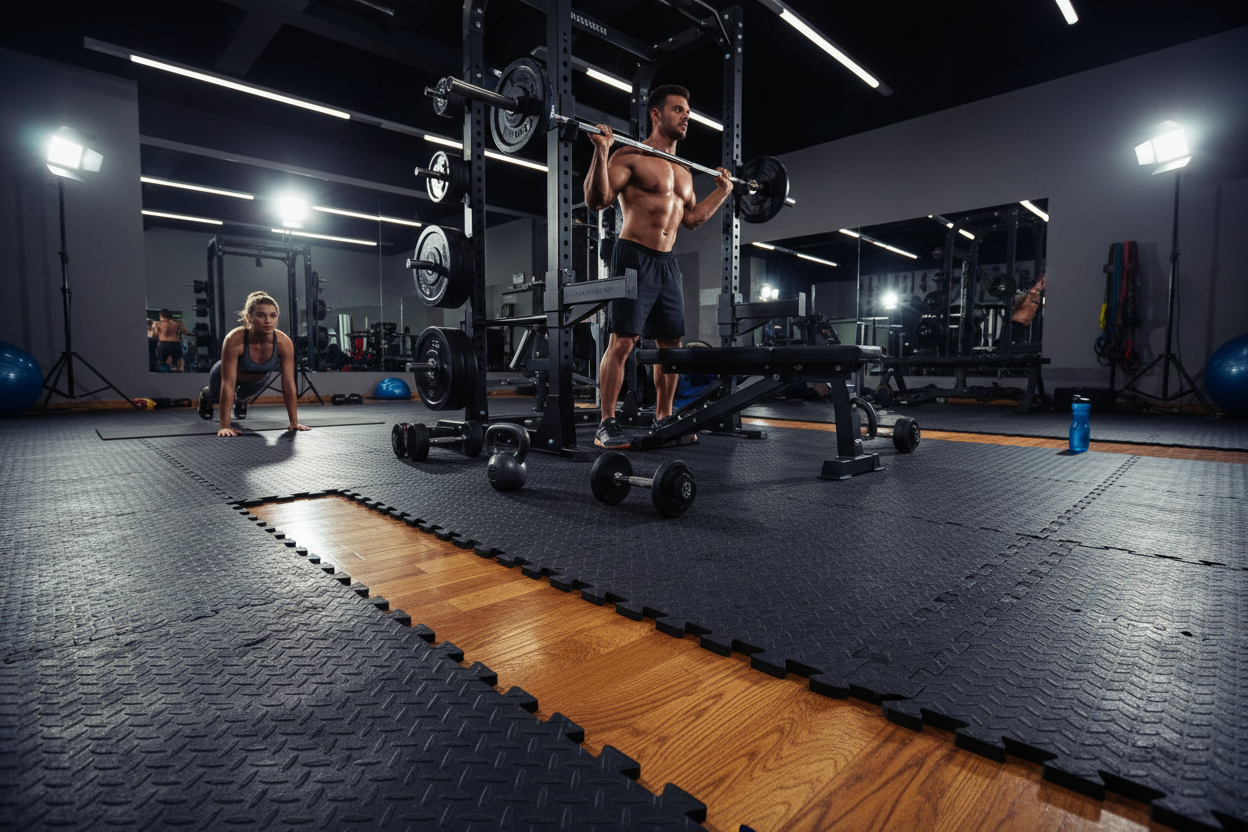
Protective Floor Mats For Gym Equipment: Stop Ruining Your Floors
We've all been there: you are setting up the ultimate basement or garage gym, you bring in a heavy power rack or a treadmill, and suddenly you realize your beautiful hardwood or concrete floor is in serious danger. Whether it is the repetitive vibration of a cardio machine or the impact of a dropped dumbbell, failing to protect your foundation is a costly mistake.
Investing in high-quality protective floor mats for gym equipment is the single most important foundational step you can take. In this guide, we will break down exactly what you need to look for, from material density to thickness, so you can train hard without worrying about property damage.
Key Takeaways
- Thickness matters: Heavy lifting requires at least 3/8-inch to 3/4-inch thickness, while cardio machines can get by with 1/4-inch.
- Material is king: Vulcanized rubber is superior to EVA foam for durability and impact absorption.
- Interlocking vs. Rolled: Interlocking tiles are ideal for custom or irregular spaces, while rolled rubber offers a seamless look for larger rooms.
- Protect the subfloor: A good mat prevents concrete cracking and stops hardwood from gouging under heavy point loads.
Choosing the Right Material for Your Setup
Not all flooring is created equal. When browsing for the right foundation, you will quickly notice a massive difference in price and quality between foam and rubber.
The Case for High-Density Rubber
If you are moving serious weight, EVA foam simply won't cut it. Foam compresses under heavy loads, creating an unstable lifting surface and leaving permanent indentations. Instead, you need heavy-duty rubber floor mats for exercise equipment. High-density rubber absorbs shock, dampens sound, and provides the necessary grip for heavy squats and deadlifts.
Space Planning: Tiles, Mats, or Rolls?
How you cover your floor depends entirely on the size of your space and the type of equipment you own.
Targeted Coverage vs. Wall-to-Wall
If you only need to protect the floor under a single rowing machine or spin bike, standalone rubber floor mats for gym equipment are your best bet. They are easy to unroll, usually measure around 3x7 feet, and catch sweat while dampening vibration. For full garage gym setups, interlocking puzzle tiles or thick rolled rubber are better investments. Just remember to account for equipment clearance—a power rack might need a full 8x8 foot platform footprint to safely accommodate barbell drops.
From Our Gym: Honest Take
When I first built out my garage gym, I tried to save a few bucks by using cheap foam puzzle tiles. Big mistake. Within three months, my power rack had punched right through the foam, and the tiles constantly separated when I did lateral bounds.
I eventually upgraded to 3/4-inch vulcanized rubber stall mats. The difference was night and day. My chalked grip felt more stable during deadlifts because the floor wasn't squishing beneath me, and I no longer worried about cracking the concrete when dropping 405 lbs. The only caveat? Premium rubber flooring has a distinct 'new tire' smell that takes about two weeks of good ventilation to fade. It is a minor annoyance, but absolutely worth the long-term protection.
Frequently Asked Questions
How thick should gym floor mats be?
For general fitness and cardio equipment, 1/4-inch to 3/8-inch is sufficient. If you are dropping heavy barbells or using heavy kettlebells, you need at least 1/2-inch to 3/4-inch thickness to protect the subfloor.
Can I put rubber gym mats directly over carpet?
It is not recommended for heavy lifting. Placing rubber mats over plush carpet creates a soft, unstable surface that can lead to ankle injuries during squats or deadlifts. If you must build over carpet, lay down a layer of rigid plywood before adding your rubber mats.
How do I clean and maintain my gym flooring?
Maintenance is incredibly simple. Sweep or vacuum regularly to remove chalk and dust. For a deeper clean, use a damp mop with a mild soap or a pH-neutral cleaner. Avoid harsh chemicals like bleach, which can degrade the rubber over time.