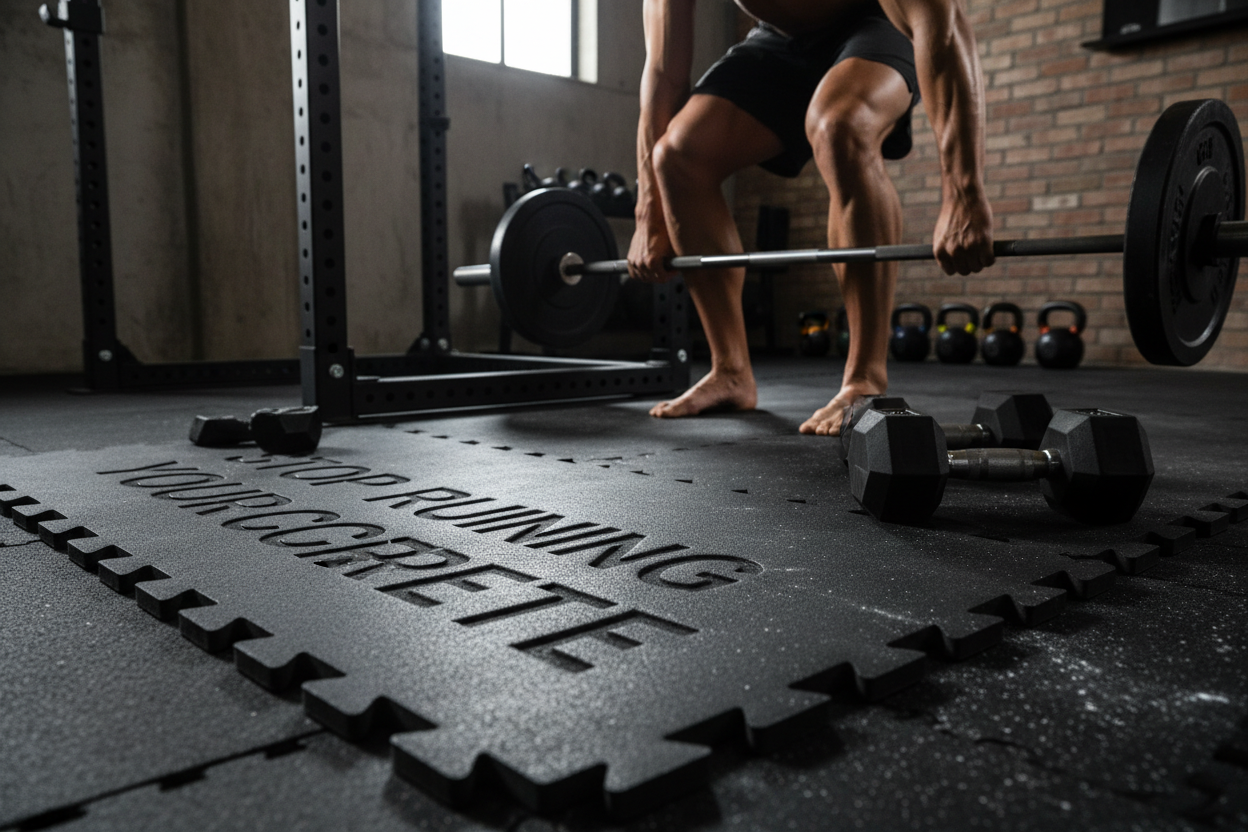
Gym Floor Mats Heavy Duty: Stop Ruining Your Concrete
There is a specific kind of panic that sets in when you accidentally drop a loaded barbell directly onto bare concrete. The resulting spiderweb crack is a harsh reminder that your foundation needs just as much armor as your body.
Whether you are building a garage sanctuary or a basement iron paradise, investing in gym floor mats heavy duty is the most critical first step. This guide will help you navigate thickness specs, material types, and installation tricks so you can train hard without destroying your home or your expensive bumper plates.
Key Takeaways
- Thickness matters: 3/4-inch mats are the gold standard for heavy barbell lifting and dropping weights.
- Material dictates durability: Vulcanized rubber resists moisture and tearing far better than bonded crumb rubber.
- Measure twice, cut once: Rubber expands and contracts with temperature; always leave a small gap near your walls.
- Acoustic benefits: Dense mats significantly dampen sound and vibration, saving your family's sanity during early morning sessions.
Decoding Thickness and Materials
The 3/4-Inch Standard
When you start shopping for heavy duty rubber gym mats, you will notice thicknesses ranging from 1/4-inch to over an inch. For a legitimate home gym where barbells, dumbbells, and kettlebells will regularly hit the floor, 3/4-inch is the undisputed sweet spot. It provides enough shock absorption to protect your concrete slab from a dropped 405-pound deadlift while remaining firm enough to offer a rock-solid lifting platform for heavy squats.
Vulcanized vs. Crumb Rubber
Not all rubber is created equal. Crumb rubber mats are made from recycled tires glued together with a polyurethane binder. They are budget-friendly but porous, meaning they absorb sweat and can crumble over time. Vulcanized rubber, on the other hand, undergoes a heat and pressure process that creates a solid, non-porous surface. It is completely waterproof, much easier to mop, and will not flake apart when you pivot hard during a heavy lift.
Space Planning and Installation Tactics
Fitting Your Layout
Most premium heavy duty rubber mats for gym setups come in standard 4x6 foot rectangular sheets or 3x3 foot interlocking tiles. For a standard one-car garage gym (roughly 12x20 feet), you will need about ten 4x6 mats to cover the primary lifting zone. Always calculate your square footage and add a 10% buffer for cutting around pillars and doorways.
The Cutting Secret
If you need to trim a mat to fit around a wall, do not try to saw through it flat on the ground. Place a piece of scrap wood under the cut line to bend the mat slightly, opening up the seam as you score it. Use a sharp utility knife dipped in soapy water or WD-40—the blade will glide through the dense rubber with a fraction of the effort.
From Our Gym: Honest Take
When I first built out my two-car garage gym, I tried to save money by using 1/2-inch foam puzzle mats. Within three months, my power rack had permanently compressed the foam, and a dropped 50-pound dumbbell punched a hole straight through to the concrete.
I finally upgraded to true 3/4-inch vulcanized rubber mats. The difference was night and day. The knurling on my barbells no longer chips when it hits the ground, and the acoustic dampening means my deadlifts do not rattle the kitchen cabinets above the garage. One caveat: these mats weigh about 100 pounds each. Bribe a friend with a post-workout meal to help you move them, because carrying them solo is a brutal grip workout in itself.
Frequently Asked Questions
Are horse stall mats good for a home gym?
Horse stall mats are a popular budget alternative because they are thick and highly durable. However, they are notorious for a strong sulfur smell (off-gassing) that can last for months, and their thickness can vary slightly from mat to mat, creating uneven seams. Purpose-built gym mats offer tighter manufacturing tolerances and significantly lower odor.
Can I put heavy gym mats over carpet?
You can, but it is not ideal for heavy lifting. The carpet underneath creates a squishy, unstable foundation, which is dangerous for heavy squats and overhead presses. If you must build over carpet, lay down a layer of 3/4-inch plywood first to distribute the weight, then place your rubber mats on top.
How do I clean heavy duty gym flooring?
Keep it simple. Vacuum up chalk dust and debris first. For mopping, use a mixture of warm water and a few drops of mild dish soap or a pH-neutral floor cleaner. Avoid harsh chemicals like bleach or ammonia, which can prematurely break down the rubber binder over time.