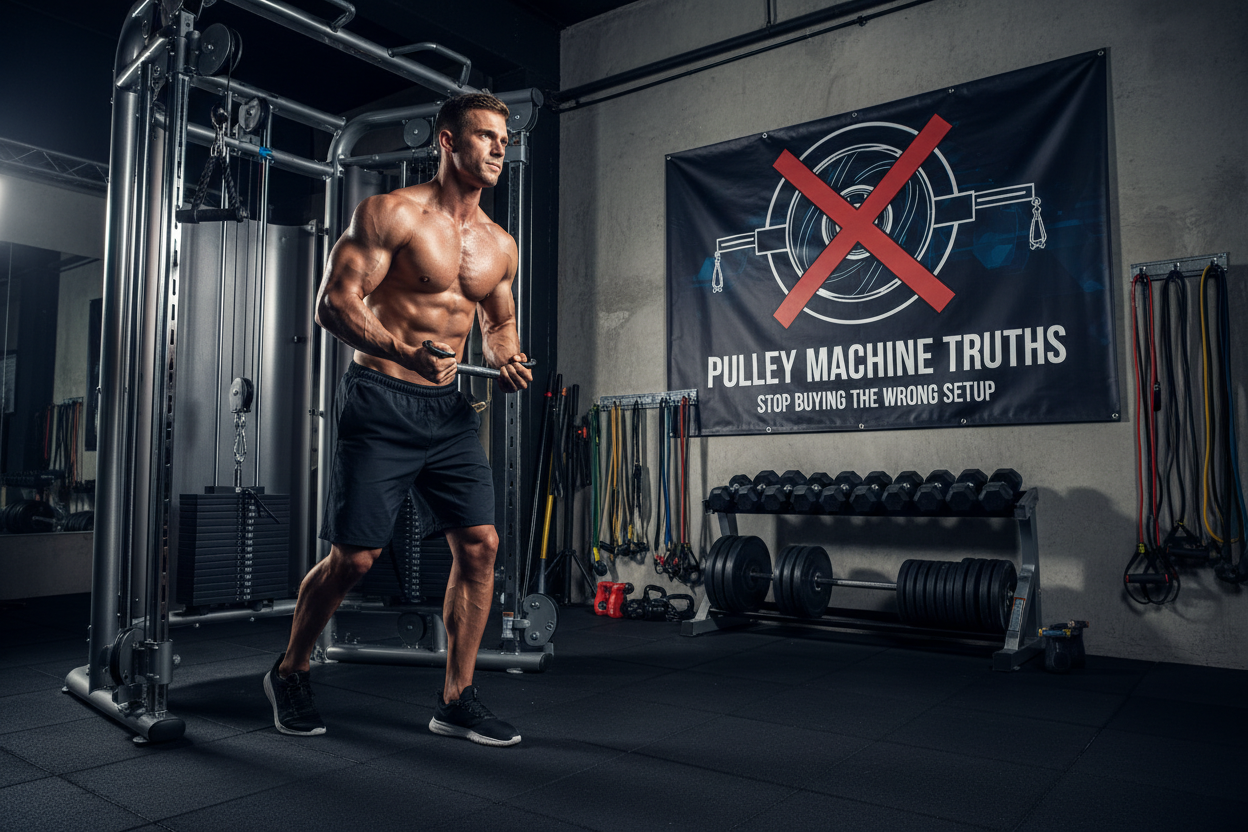
Pulley Machine Truths: Stop Buying the Wrong Setup
You have the power rack, the adjustable bench, and the heavy dumbbells. But if you are like most home gym owners, you might still feel like something is missing. That constant, smooth tension you get from commercial gym isolation equipment is notoriously hard to replicate with free weights alone. This is exactly where a well-chosen pulley machine changes the game.
Whether you are trying to squeeze equipment into a cramped basement or outfitting a spacious two-car garage, navigating the current market of cable systems can be overwhelming. In this guide, we are breaking down exactly how to choose, place, and train with these versatile units so you can stop wasting money on the wrong gear and finally break through your workout plateau.
Key Takeaways
- A dedicated cable and pulley machine provides constant time-under-tension, which is crucial for hypertrophy and joint-friendly isolation work.
- Plate-loaded systems offer incredible budget value, while selectorized weight stacks provide faster drop-sets and a premium feel.
- Space is the biggest limiting factor; measure your ceiling height carefully to determine if you need a standard tower or a specialized compact unit.
- Maintenance is simple but non-negotiable—monthly lubrication of the guide rods prevents carriage sticking.
Maximizing Your Footprint: Space Planning
The most common mistake home gym builders make is underestimating the footprint and vertical clearance required for cable equipment. A standard setup needs to accommodate not just the machine itself, but your body's range of motion during exercises.
Garage Gyms vs. Basement Setups
If you are in a garage with high ceilings, a standard 80-inch to 84-inch tower will easily fit. However, if you are working with a low-clearance basement or an apartment corner, you will need to actively seek out a short cable machine. These compact units typically cap out around 70 to 75 inches tall, allowing you to perform seated pull-downs and low rows without scraping your drywall or ceiling joists.
Key Specs to Compare Before Buying
Not every pulley exercise machine is built to the same standard. Knowing what separates an entry-level unit from a commercial-grade piece will save you from future upgrades.
Weight Stacks vs. Plate-Loaded Systems
Your budget will largely dictate this choice. Plate-loaded systems are highly cost-effective because they utilize the Olympic plates you likely already own. The trade-off is the time it takes to change weights between sets. Selectorized weight stacks (pin-loaded) are more expensive and heavier to ship, but they offer the ultimate convenience for quick transitions and drop-sets.
Ratio and Resistance
Pay attention to the pulley ratio. A 2:1 ratio means a 100-pound weight stack provides 50 pounds of actual resistance at the handle. This is ideal for functional training and fast, explosive movements. A 1:1 ratio provides the true weight selected, which is often preferred for heavy, slow strength building like lat pulldowns.
Unlocking New Muscle Growth: Training Applications
Free weights are fantastic for building foundational strength, but a pulley cable machine excels at isolating specific muscle groups and providing resistance from multiple angles.
Beyond Triceps Pushdowns
While cable crossovers and triceps extensions are staples, do not ignore the lower body and core. Using a low pulley attachment allows for glute kickbacks, cable pull-throughs, and standing abdominal crunches. By swapping out your standard handles for a cable bar machine attachment, you can comfortably execute heavy straight-arm pulldowns, upright rows, and even cable squats with perfect form.
From Our Gym: Honest Take
We have tested over a dozen cable setups in our own facility over the last few years. When using standard plate-loaded models, I noticed the carriage can sometimes stick during the eccentric phase of a lift if you do not lubricate the guide rods monthly with a silicone-based spray. It is a minor annoyance, but an important maintenance step.
That said, the smooth, constant tension during heavy seated rows is undeniable. At 6 foot 2 inches, I learned the hard way that ceiling clearance is critical. During overhead triceps extensions on a standard tower, the cable would occasionally top out against the upper housing. If you are tall and have low ceilings, you absolutely must check the maximum cable travel distance before hitting the buy button.
Frequently Asked Questions
Is a pulley machine worth it for a home gym?
Absolutely. It bridges the gap between heavy compound barbell lifts and joint-friendly isolation work. It allows you to train muscles from angles that are impossible to hit with dumbbells alone, making it one of the highest ROI investments for hypertrophy.
How much space do I need for a standard tower?
Most standard standalone towers require a footprint of roughly 4 feet by 4 feet, plus an additional 3 to 4 feet of working clearance in front of the machine. Always ensure you have at least 84 inches of vertical ceiling clearance for assembly and safe use.
What is the weight limit on a typical home cable system?
Entry-level plate-loaded systems usually max out around 250 to 300 pounds of capacity. Premium home gym models and selectorized stacks can handle anywhere from 300 to over 400 pounds, which is more than enough for the vast majority of lifters.