Lifting Weights and Losing Weight: Resistance Training Frameworks, Routine Architecture, and Home Gym Floor Setups
When individuals ask whether lifting weights and losing weight can go hand in hand, the answer lies in understanding how resistance exercise shapes overall physical conditioning. For years, conventional weight management focused heavily on continuous aerobic exercise alone. However, integrating dedicated resistance sessions provides structural tension, maintains functional movement patterns, and supports long-term physical capacity. Whether your primary goal is general conditioning, changing body composition, or building daily durability, understanding how lifting weights and weight loss interact is the first step toward building a sustainable routine.
Understanding Resistance Training in Body Composition Management
Exploring the question of whether is weightlifting good for weight loss requires looking beyond the immediate effort of a single workout session. Resistance exercise challenges muscular structures through mechanical load, prompting tissue adaptation and motor unit recruitment. This foundation supports physical independence, joint stability, and daily movement efficiency.
Mechanical Tension vs. Caloric Expenditure Perspectives
Traditional steady-state cardio activities rely primarily on sustained, repetitive output. While helpful for general cardiovascular endurance, isolated cardio does not provide the varied mechanical tension needed to retain structural muscle mass during periods of reduced caloric intake. When you choose to lift for weight loss, the mechanical loading signals your body to maintain muscle tissue while utilizing energy reserves for recovery and daily function. In this way, structured weight lifting lose weight protocols prioritize tissue quality and posture alongside energy expenditure.
Why Compound Movements Anchor Sustainable Weight Loss Programs
Compound exercises involve multiple joints and major muscle groupings working in coordinated patterns. Movements like goblet squats, Romanian deadlifts, overhead presses, and rows demand total-body engagement. By involving large portions of the muscular system in a single movement, compound exercises increase the overall work density of each training session. For those exploring structured gear for multi-joint loading, reviewing a dedicated weight lifting collection can provide inspiration for both free-weight and guided resistance setups.
Core Movement Blueprints for Weight Loss Strength Routines
Designing an effective home training plan requires organizing movements by biomechanical function rather than isolated muscle groups. This approach ensures balanced structural loading and helps prevent movement imbalances.
Lower-Body and Posterior Chain Patterns
The lower body houses the largest muscle groups in the body. Prioritizing squatting and hinging patterns creates a substantial training stimulus across the quadriceps, hamstrings, and gluteal complex.
- Squat Variations: Goblet squats and front squats encourage upright torso mechanics and deep core bracing.
- Hip Hinges: Romanian deadlifts and kettlebell swings reinforce hip extension mechanics and posterior chain tension.
- Unilateral Work: Reverse lunges and split squats challenge balance, address side-to-side asymmetries, and engage stabilizing hip musculature.
Upper-Body Push-Pull Dynamics and Core Bracing
Balancing upper-body pushing movements with horizontal and vertical pulling preserves shoulder mechanics and promotes upright posture. Incorporating dumbbell bench presses, push-ups, bent-over rows, and overhead presses ensures balanced upper-body development. Complementing these with loaded carries—such as farmer walks—trains dynamic core stability and grip strength under load. For additional perspectives on incorporating guided resistance stations alongside free weights, check out this weight good loss guide.
Structuring Time-Efficient Home Resistance Sessions
Consistency is the central pillar of any fitness journey. If a routine is overly complex or excessively time-consuming, long-term adherence becomes difficult. Structuring home workouts with time-efficient frameworks allows lifters to achieve maximum training stimulus in compact sessions.
Pairing Agonist and Antagonist Muscle Groups
Supersets that pair opposing muscle groups—such as following a chest press immediately with a dumbbell row—allow one muscle group to rest while the opposing group works. This structure keeps session tempo steady and reduces passive idle time without compromising movement quality or force production. Many trainees find that incorporating structured conditioning circuits, such as this weights weight loss guide, offers an effective template for blending density with low-impact control.
Progression Strategies Without Relying on Massive Loads
Progressive overload does not always require adding heavy iron plates to the bar. Home trainees can advance their routine and continue proving how lifting helps lose weight through several strategic training variables:
- Tempo Control: Slowing the eccentric (lowering) phase increases time under mechanical tension.
- Pause Repetitions: Holding a brief pause at the bottom of a squat or row removes momentum and reinforces positional stability.
- Density Management: Completing the same number of sets and repetitions within a shorter overall window increases workout density.
- Range of Motion: Increasing movement depth safely expands the active working range of the involved joints.
Flooring, Equipment Staging, and Subfloor Protection for Heavy Lifts
A productive home strength area requires more than just weights; the physical environment plays a crucial role in workout safety and equipment longevity. Choosing the right foundational surface protects your home's subfloor and enhances lifting mechanics. Before outfitting your training space, reading this weight lifting weights guide can help you organize your gear investments wisely.
High-Density Matting and Subfloor Load Distribution
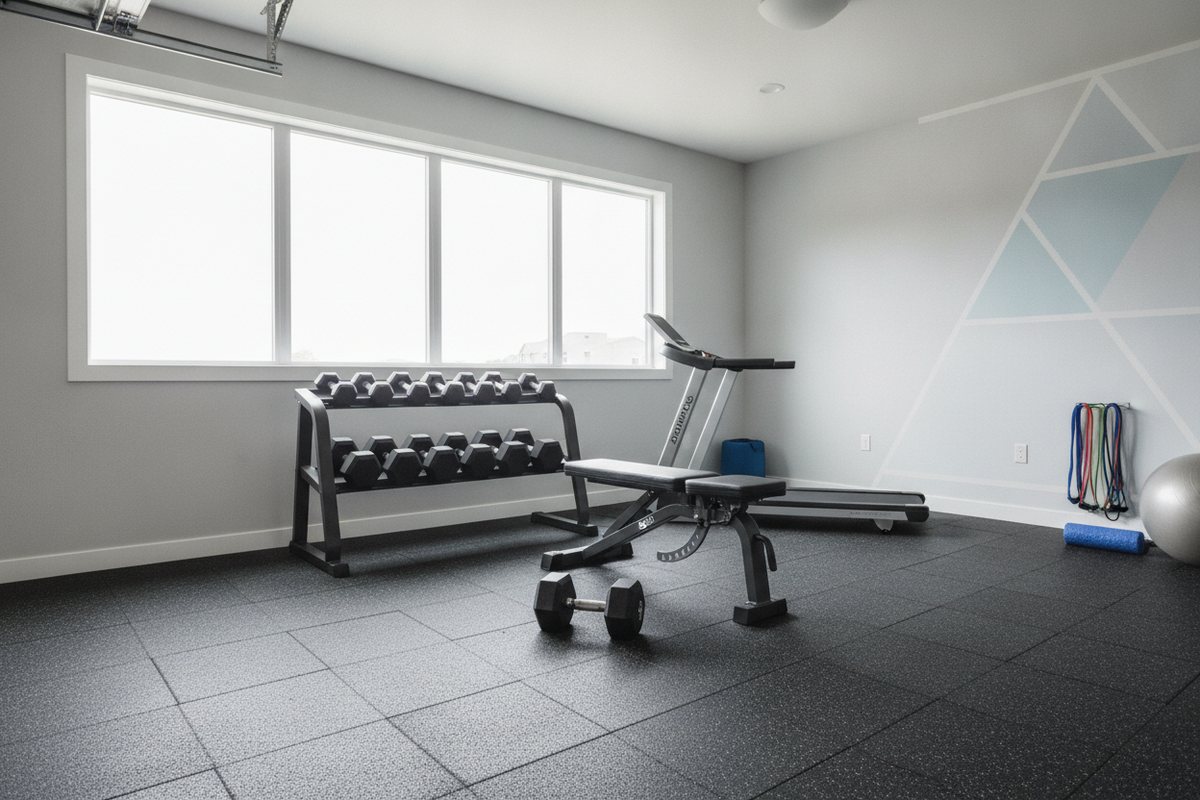
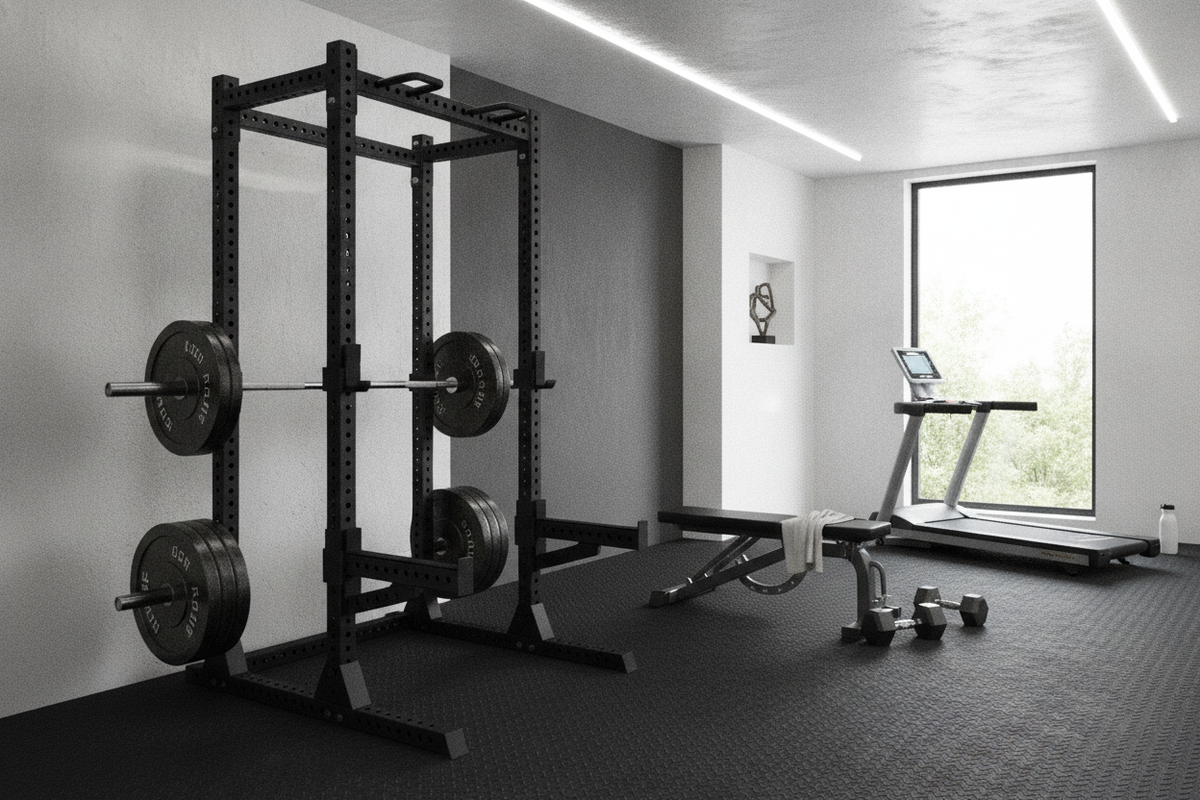
Dropping or setting down heavy dumbbells, kettlebells, and barbell plates creates concentrated point-load forces on residential flooring. Over time, bare hardwood, tile, or laminate can crack, dent, or shift under dynamic loads. High-density rubber mats distribute these impact forces evenly across a broader surface area, absorbing vibration and dampening acoustic transmission through floors and adjoining rooms.
Traction, Foot Stability, and Lateral Drift Prevention
During heavy compound lifts, proper foot rooting creates the stable base necessary to generate force safely. Soft, low-density foam mats tend to compress unpredictably underfoot, causing ankle instability and balance loss during loaded squats or lunges. High-density rubber matting provides a firm, non-compressible surface with textured traction that prevents foot slipping and mat shifting during multi-directional movements.
Practical Safety, Joint Mechanics, and Recovery Principles
Long-term adherence to a weight lifting weight loss routine depends on joint comfort and balanced recovery. To ensure your body adapts smoothly over time, implement these foundational training practices:
- Dynamic Preparation: Begin each session with dynamic mobility drills for the hips, thoracic spine, and ankles to prepare joint capsules for load.
- Technical Integrity: End sets when movement form begins to degrade, avoiding complete mechanical breakdown.
- Active Recovery Integration: Incorporate low-impact mobility or active core sessions on non-lifting days, such as this complementary weight loss lose guide, to promote tissue circulation and active recovery.
- Equipment Organization: Keep free weights securely racked and ensure training mats are clean and dry before each session to eliminate tripping hazards.
By combining structured compound movements, progressive overload techniques, and a durable, non-slip training floor, you create a safe, sustainable home workout system that delivers consistent results over time.