Lower Exercises: Comprehensive Movement Blueprints, Lower-Body Training Frameworks, and Home Floor Stability
Foundations of Lower Exercises: Core Movement Vectors and Biomechanics
Executing purposeful lower exercises begins with understanding the foundational movement patterns of the human kinetic chain. The lower body operates across multiple planes of motion, utilizing coordinated actions across the ankles, knees, hips, and lumbo-pelvic complex. When designing a routine, grouping drills by functional mechanics rather than isolated muscles produces smoother motor patterns and balanced joint distribution.
The two primary vectors in any structured leg routine are knee-dominant and hip-dominant mechanics. Knee-dominant patterns, such as squats and step-ups, emphasize knee flexion and extension, recruiting the quadriceps and stabilizing calf structures. Hip-dominant mechanics, characterized by the hip hinge, shift mechanical tension toward the posterior chain, engaging the hamstrings, gluteus maximus, and spinal erectors. Complementing these vectors with lateral and rotational lower body movement ensures that stabilizing muscles, including the adductors and abductors, receive sufficient engagement. For additional perspective on tailoring these kinetic patterns to individual goals, consult our detailed lower body exercise guide.
Essential Lower Exercise Categories for Glute and Leg Development
To construct a versatile training routine, practitioners generally draw from four distinct movement categories. Structuring your workouts across these groups ensures balanced loading while preventing repetitive stress on any single joint.
- Bilateral Squat Variations: Movements such as goblet squats, back squats, and front squats challenge vertical push strength. They demand ankle mobility, thoracic uprightness, and core bracing to stabilize the torso under load.
- Hip Hinge Patterns: Romanian deadlifts, standard barbell pulls, and kettlebell swings train the body to hinge deeply at the pelvis while maintaining a neutral spine, distributing load across the posterior chain.
- Unilateral and Split-Stance Drills: Exercises like reverse lunges, Bulgarian split squats, and lateral step-outs isolate each limb individually. This unilateral work addresses strength discrepancies between sides and trains balance across the foot arch.
- Floor-Based Glute and Hamstring Work: Supine hip thrusts, single-leg glute bridges, and hamstring walkouts offer focused contraction without significant spinal compression.
Integrating these movements with dedicated equipment expands training versatility. You can explore specialized machines in our lower body collection or review targeted loading variations in another lower body exercise guide to match your specific home setup.
Structuring a Balanced 20-Minute Lower-Body Training Session
When time is limited, an efficient lower exercise session relies on smart sequencing rather than high volume. By alternating compound bilateral lifts with focused unilateral drills, you can maintain continuous work capacity without overloading specific muscle groups prematurely.
A practical training framework follows a logical progression:
- Movement Prep and Activation: Spend several minutes performing unweighted hip openers, bodyweight hinges, and ankle rotations to prepare the joints for loaded ranges of motion.
- Primary Compound Movement: Select one major bilateral lift, such as a goblet squat or Romanian deadlift. Perform moderate sets with controlled eccentric pacing to reinforce proper motor control.
- Unilateral Secondary Superset: Pair a split-stance lower exercise, such as a reverse lunge, with an active recovery drill or floor bridge to challenge stability without compounding systemic fatigue.
- Posterior Chain or Core Finisher: Conclude with higher-repetition glute bridges or lateral band walks to fatigue supporting hip musculature.
This structured sequence delivers complete lower body movement coverage in a compact timeframe, making it practical for home gym schedules.
Home Gym Floor Setup: Traction, Cushioning, and Equipment Placement
Training at home introduces unique environmental factors, particularly regarding floor stability and surface traction. Executing dynamic lunges, deep squats, or explosive jumps on slick hardwood, thin carpet, or unyielding concrete can compromise footing and place unnecessary stress on joints.
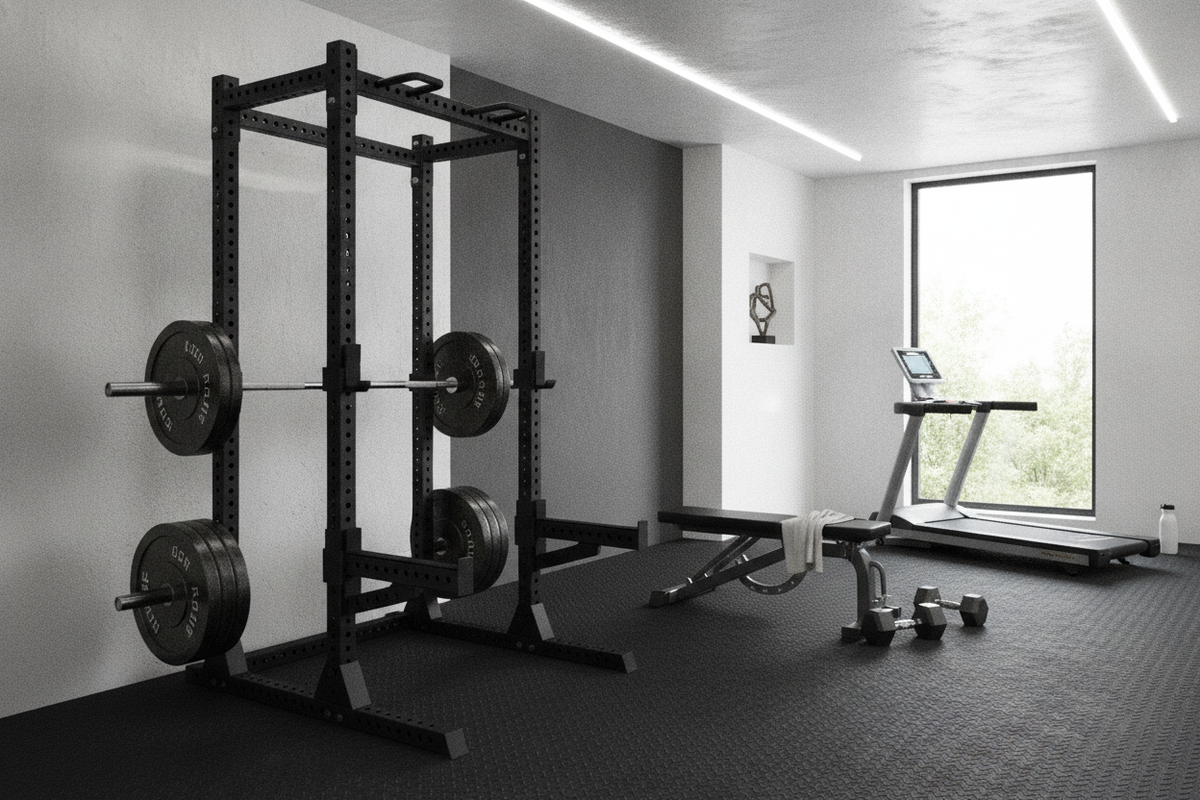
A dedicated protective surface provides the necessary foundation for high-demand lower exercises. High-density workout flooring cushions joint impacts during dynamic landings, reduces subfloor wear from placed dumbbells, and provides consistent grip for wide-stance squats. Selecting options from a quality exercise collection ensures that your training area remains stable underfoot. For larger workout spaces that accommodate lunges, traveling drills, and floor bridges simultaneously, a spacious exercise product offers continuous coverage without shifting seams.
Flooring Maintenance and Long-Term Durability for High-Impact Lower Body Workouts
Maintaining the grip and structural integrity of your home training floor requires straightforward yet consistent care. Over time, dust, sweat, and ambient moisture can accumulate on textured surfaces, reducing shoe traction during heavy sets.
To preserve your mat surface:
- Wipe Down After Intense Sessions: Use a mild soap solution and a microfiber cloth to clear away sweat and body oils that can create slick patches.
- Avoid Harsh Abrasives: Steer clear of bleach or rough scouring pads, which can degrade the protective top texture of dense foam or rubber materials.
- Ensure Proper Subfloor Placement: Place non-slip underlayment pads beneath mats if they are positioned over smooth hardwood or tile to eliminate lateral sliding during broad lower body movement drills.
- Store Clean and Flat: When not in continuous use, store rolled mats vertically or leave them flat to prevent permanent edge curling.
By pairing sound biomechanical principles with a stable, well-maintained floor environment, you can perform lower exercises with confidence, consistency, and long-term joint comfort.