Do I Need Cardio If I Lift Weights? Home Guide
When planning a home fitness routine, many lifters face a common dilemma: do I need cardio if I lift weights? After finishing demanding sets of squats, presses, and rows, it is tempting to skip conditioning altogether and assume the iron alone is sufficient. While resistance training develops dense muscle tissue, raw physical power, and joint resilience, relying entirely on heavy resistance can leave gaps in your general conditioning. Learning how aerobic conditioning works alongside barbell and dumbbell work can help you build a more durable, capable body.
Do I Need Cardio If I Lift Weights Regularly?
You still benefit from targeted aerobic conditioning even if you lift weights regularly, because cardiovascular endurance directly supports your overall work capacity and helps you recover between demanding sets. Resistance exercises rely heavily on anaerobic energy systems to generate force during short, intense efforts. However, your body depends on the aerobic system to replenish energy stores, clear metabolic waste, and regulate your heart rate once the bar is back on the rack.
Lifters who neglect conditioning often find themselves cutting rest intervals short or gasping for air long before their target muscles actually fatigue. If you have ever wondered, do i need to do cardio with weight training, consider how your body handles multi-rep sets of compound exercises. When your cardiovascular base is well-developed, your systemic blood circulation improves, delivering oxygen and nutrients to working tissues far more efficiently. This adaptation not only makes challenging training sessions feel more manageable, but it also accelerates muscle recovery during both rest intervals and non-training days.
Can Heavy Weightlifting Replace Aerobic Exercise Completely?
Heavy weightlifting cannot fully replace aerobic exercise because the two training styles place fundamentally different demands on your cardiovascular and muscular systems. While a brisk circuit or high-rep set of deadlifts certainly elevates your heart rate, the internal physiological response is distinct from sustained, steady-state cardio workouts.
During heavy lifting, muscle contractions temporarily compress local blood vessels, creating high intramuscular pressure that challenges the heart against heavy resistance. In contrast, steady-state aerobic conditioning encourages the chambers of the heart to stretch and pump larger volumes of blood per beat, improving resting circulation and peripheral capillary density. When lifters ask, do you need cardio if you lift weights, the missing element is often this low-intensity base. Without a solid aerobic foundation, overall stamina during long sessions suffers, making it harder to sustain quality reps as fatigue sets in. If you want to explore how these two training styles influence body composition and energy balance, take a look at our guide on cardio versus weights.
Low-Stress Conditioning for Your Home Gym Space
Incorporating conditioning into a strength routine does not mean exhausting your legs before your next squat day or grinding through high-mileage road running. The objective is to build functional stamina without generating excessive muscular damage or joint wear that could detract from strength training gains.
- Low impact cardio: Incline treadmill walking, stationary cycling, or rowing keep joint stress low while promoting steady circulation and active recovery.
- Jump rope intervals: Short rounds of skipping rope enhance coordination, lower-leg elasticity, and footwork without placing large demands on central nervous system recovery.
- Kettlebell swings: Using moderate resistance with crisp hip drive allows kettlebell swings to elevate the heart rate while conditioning the posterior chain without excessive joint impact.
Lifters who ask, do i have to do cardio if i lift weights, are usually concerned about losing muscle mass or compromising power. Choosing low-impact options and keeping conditioning bouts brief minimizes the interference effect, ensuring you build heart health while preserving lean tissue. For more insights on how to place these sessions relative to your lifting schedule, review our conditioning after weight training guide.
Choosing Gym Flooring for Both Cardio and Heavy Lifting
A home training area that accommodates both strength work and conditioning requires gym flooring that provides rock-solid stability under heavy loads while offering sufficient shock absorption for dynamic movement. Standard residential flooring, such as thin carpet or bare concrete, is poorly suited for handling both needs simultaneously.
When performing heavy lifting, you need an unyielding base that will not compress or shift underfoot, ensuring stable balance during squats, cleans, and overhead presses. Conversely, cardio workouts that include footwork drills, jumping, or fast-paced bodyweight movements require dependable traction and enough impact reduction to cushion your ankles, knees, and hips. A dense exercise mat made from high-grade rubber provides this balance, absorbing dynamic vibrations while maintaining the firm support required for heavy barbells. Equipping your home gym space with reliable gear from our strength accessories collection helps ensure your setup is versatile, durable, and comfortable.
Smart Equipment Placement and Room Care
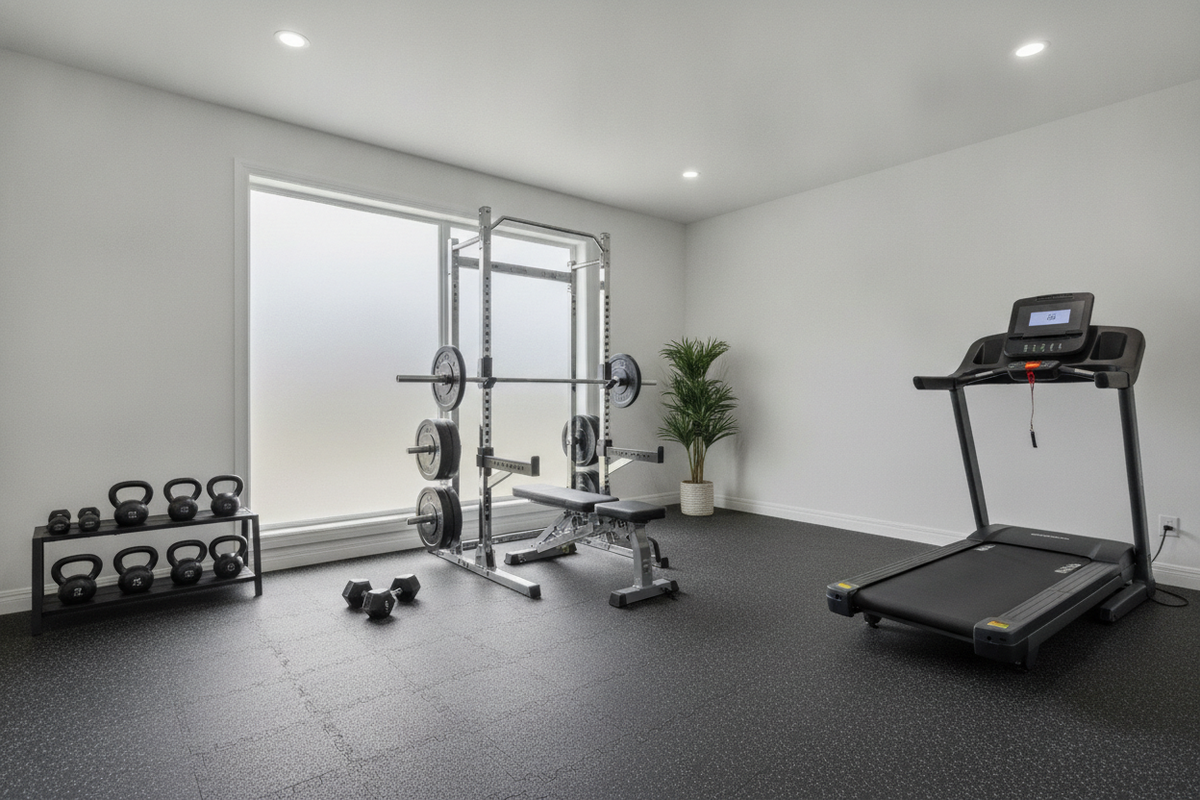
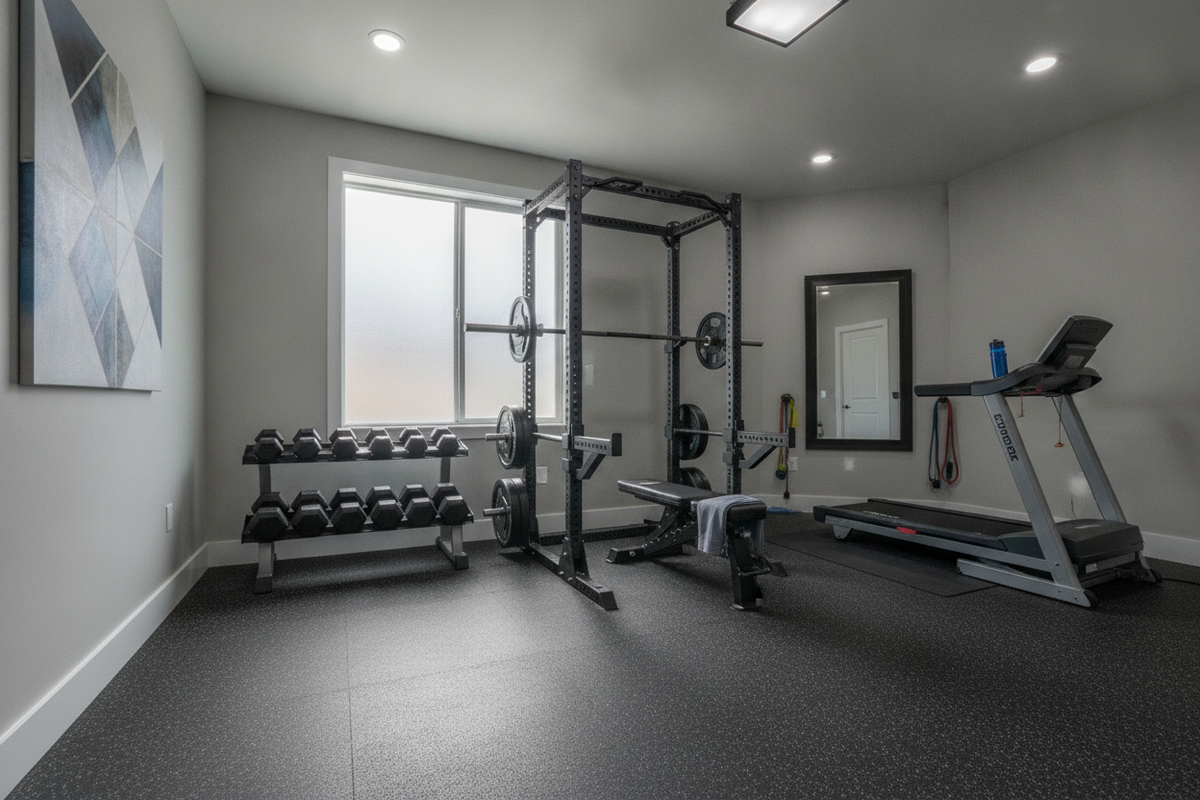
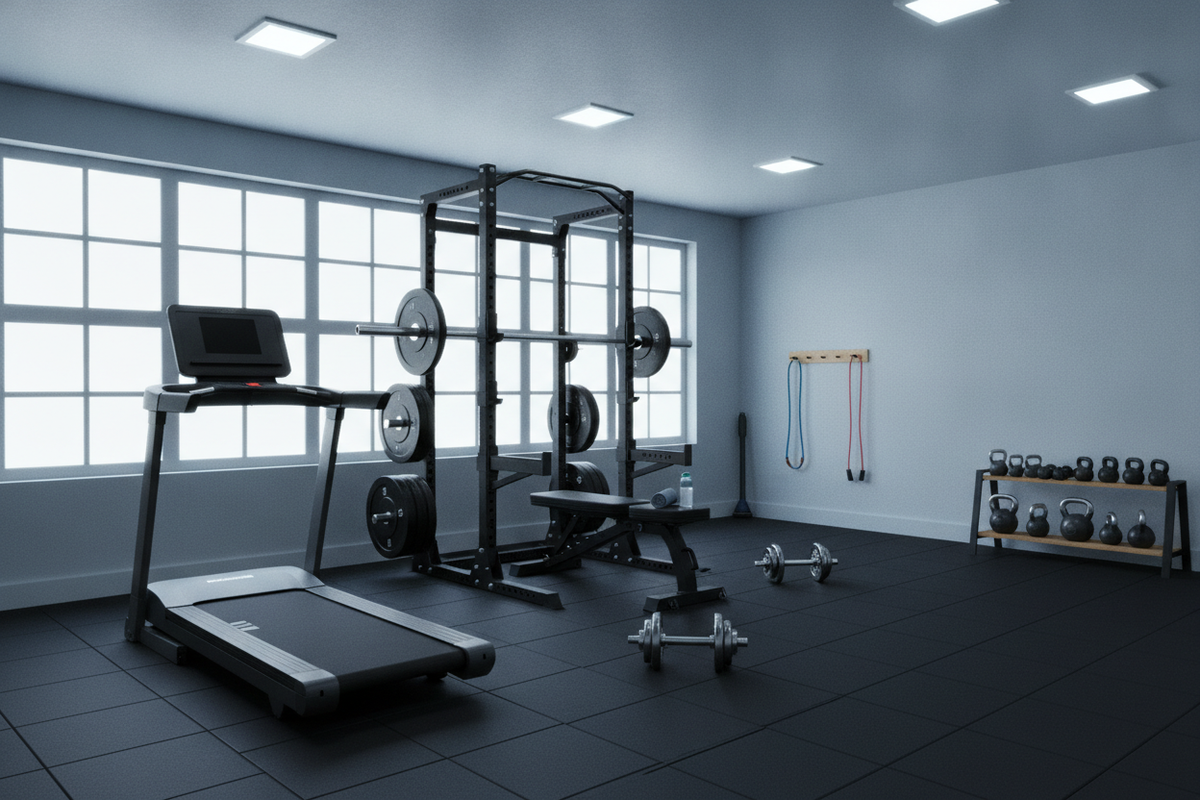
Balancing multiple training styles in one room requires sensible equipment placement to keep your home gym space safe and efficient. Keeping the central floor clear for movement drills, kettlebell work, and mobility routines prevents clutter, while large racks, plate trees, and benches are best positioned along perimeter walls.
Subfloor protection is another key consideration when creating a dual-purpose room. Dropping loaded barbells or repeatedly jumping in the same spot can crack underlying concrete, shatter ceramic tile, or dent wooden subfloors. Installing a high-density, resilient surface delivers essential subfloor protection, dampening noise and vibration throughout your home. A quality mat also provides a barrier against sweat, protecting the floor beneath from moisture damage during demanding workouts. For advice on organizing your floor layout and equipment around specific training goals, consult our lifting weights for weight loss guide.
How to Schedule Conditioning Around Your Weekly Routine
Structuring your weekly routine properly allows you to reap the benefits of conditioning without compromising your strength progression. When lifters consider how to fit both into a tight calendar, session timing and overall volume become critical factors.
If you must combine both activities into a single workout, complete your strength training first while your energy and mental focus are at their peak. Leaving your cardio workouts for the end of the session prevents pre-exhaustion, which helps preserve proper lifting mechanics and heavy-load performance. Alternatively, scheduling low impact cardio on your non-lifting days serves as active recovery, stimulating blood flow to sore muscles without placing excessive stress on the joints. Just two moderate twenty-minute conditioning sessions per week can yield noticeable improvements in endurance without cutting into strength gains. To explore different scheduling formats and weekly split options, check out our combining cardio and weights guide.
Ultimately, resistance training and aerobic conditioning are complementary tools rather than opposing forces. By combining consistent barbell work with purposeful conditioning and setting up resilient gym flooring, you create a home training environment that supports balanced, long-term athleticism.