Does Lunges Make Your Bum Bigger? Glute Growth Tips
If you want to sculpt and enlarge your glutes, you have likely wondered: does lunges make your bum bigger? The short answer is yes. When programmed with proper form, adequate depth, and progressive resistance, lunges serve as an exceptional compound movement for building lean muscle mass in your hips and rear. However, the exact way you step, bend, and stabilize your body determines whether the exercise focuses primarily on your thighs or your backside.
Many lifters start training with the question in mind: do lunges make your bum bigger, or will they simply build up the front of the legs? The truth comes down to joint angles, loading strategies, and consistent execution. In this practical guide, we break down how lunges trigger muscular hypertrophy, how small postural shifts alter muscle recruitment, and how setting up your home workout space keeps your joints protected during heavy, repetitive sets.
Does Lunges Make Your Bum Bigger? The Direct Answer
To understand why the answer to does lunges make your bum bigger is an emphatic yes, one must look at how muscle tissue responds to tension. When you perform lunges through a full range of motion, your rear hip extends and your front hip flexes deeply. This deep flexion places a significant stretch on the gluteus maximus, which is the largest muscle in your posterior chain.
Under tension, this deep stretch causes micro-tears in the muscle fibers. When provided with adequate nutrition and recovery, your body repairs these fibers to be thicker and stronger. This biological adaptation is known as muscle growth or hypertrophy. Because lunges require each leg to work independently, they also recruit stabilizing muscles, including the gluteus medius and minimus, creating fuller, more rounded development across the entire hip structure.
For anyone still debating if do lunges make your butt bigger, consider that unilateral leg exercises often generate higher levels of glute recruitment than bilateral squats. Because your body must balance on one forward foot, your glute muscles fire intensely to stabilize the pelvis and drive your body back upward through active hip extension.
Does Lunges Make Your Bum Bigger or Just Tone It?
Lunges will actively make your bum bigger rather than just "toning" it, provided you apply enough mechanical tension to stimulate muscle hypertrophy. The concept of muscle toning is largely a fitness marketing term; muscles either grow, shrink, or maintain their size depending on the training stimulus and your caloric intake. If your goal is glute growth, lunges must be performed with sufficient difficulty to prompt tissue adaptation.
When people ask whether does lunges make your bum bigger over a short period, expectations need to remain realistic. Visible muscle growth requires weeks of consistent progressive overload. If you perform lunges using only light bodyweight for dozens of casual repetitions, you develop local muscular endurance, which maintains firm tissue but may not significantly increase size. To increase circumference and muscular fullness, you need to challenge the glute muscles near their fatigue threshold, encouraging the muscle fibers to expand over time.
If you want a deeper look at the physiology behind lower-body hypertrophy, explore our detailed guide on how glutes grow to understand the balance of volume, rest, and nutritional fuel needed for noticeable shape changes.
How Stance and Torso Angle Shift Focus to Your Glutes
While lunges naturally engage the lower body, your posture determines whether the load lands on your glutes or your quadriceps. If you step forward and keep your upper body strictly upright, your front knee travels forward over your toes, shifting mechanical demand directly into the quadriceps. While great for leg strength, an upright torso reduces hip flexion and limits glute involvement.
To shift tension toward the hips and answer does lunges make your bum bigger with visible physical results, incorporate a slight forward torso lean. Hinging forward from the hips at roughly twenty to thirty degrees while keeping a flat spine immediately places the gluteus maximus under greater eccentric stretch. In this position, the front hip carries more of your bodyweight, forcing the glute to do the heavy lifting to pull you back to the starting point.
Foot placement is equally vital for glute activation. When your front foot lands, ensure you drive upward through the front heel rather than pushing off the ball of the foot or toes. Pushing through the front heel anchors the posterior chain, allowing you to maximize hip extension while reducing shearing forces on the front knee joint.
Why Do I Feel Lunges in My Thighs Instead of My Bum?
You feel lunges in your thighs instead of your bum because an upright torso, a short stride length, or pushing off the front toes shifts mechanical leverage straight to the quadriceps. When your stride is too short, your knee flexes deeply while your hip remains relatively open, minimizing the stretch on the gluteus maximus and placing dominant tension on the thigh.
To fix this and ensure do lunges make your bum bigger during your routine, lengthen your stride. A longer step allows your front shin to remain relatively vertical while your front hip flexes into a deep pocket of tension. Combine this longer step with a deliberate forward torso lean. Before initiating the rep, consciously focus on glute activation by squeezing the hip of the front leg as you begin the upward drive.
If you struggle with mind-muscle connection during compound movements, review our breakdown of exercises for a bigger bum to see how varied movement planes and isolation drills can wake up sluggish hip extensors before you lunge.
Which Type of Lunge Is Best for Glute Growth?
Reverse lunges and walking lunges with an intentional forward lean are widely considered the most effective variations for direct glute growth. Each lunge variation places slightly different demands on your balance, joint mobility, and muscular recruitment, making variation useful across a complete lower body workout.
1. Reverse Lunges
Unlike forward stepping, reverse lunges require you to step backward, keeping your front foot firmly anchored on the floor throughout the entire repetition. This setup makes reverse lunges exceptionally stable, allowing you to handle heavier weights while maintaining a vertical front shin. Because deceleration happens smoothly, reverse lunges are also much friendlier on the knee joint, letting you focus entirely on loading the front glute.
2. Walking Lunges
Walking lunges introduce continuous forward momentum. As you travel across the room, your leading hip must absorb your body's forward motion and immediately convert it into vertical and horizontal drive. This continuous transition creates intense metabolic fatigue and sustained tension on the gluteus maximus, making walking lunges a premier hypertrophy builder.
3. Deficit and Elevated Lunges
Elevating your front foot on a low, firm riser increases the movement's overall range of motion. By allowing the hips to descend deeper than floor level, you achieve a maximum stretch at the bottom position. Because muscle growth responds favorably to deep stretches under load, deficit lunges provide an incredible stimulus for individuals with adequate hip mobility.
Adding Resistance Without Bulking Your Whole Body
A frequent concern among fitness enthusiasts asking do lunges make your butt bigger is whether lifting weights will make the rest of their physique appear bulky. In reality, adding resistance through dumbbells, kettlebells, or weighted vests is the primary mechanism that drives targeted glute development without unintended bulk elsewhere.
Muscular growth requires progressive overload, which means challenging your muscles with heavier loads or greater volume over time. If you only rely on bodyweight lunges, your glute muscles quickly adapt, halting size gains. Holding moderate to heavy dumbbells at your sides provides the targeted tension needed to build hip volume while leaving your upper body lean and proportional.
If fears of unintended broadness hold you back from progressive loading, read our article examining lifting weights and body size myths to understand why gaining lean muscle in specific zones requires calculated, focused training rather than accidental overgrowth.
Home Gym Setup: Flooring, Balance, and Knee Protection
Executing heavy, stable lunges at home requires an environment built for traction and impact absorption. Many lifters who wonder does lunges make your bum bigger fail to see results simply because unstable or slick home floors undermine their balance and restrict their range of motion.
The Role of Gym Flooring in Balance and Drive
When you step into a lunge, your front heel must grip the ground firmly so you can drive upward without your foot shifting. Practicing on slick hardwood, smooth tile, or squishy residential carpet compromises your balance. Slipping causes your stabilizing muscles to panic, which inhibits prime mover output and reduces glute activation.
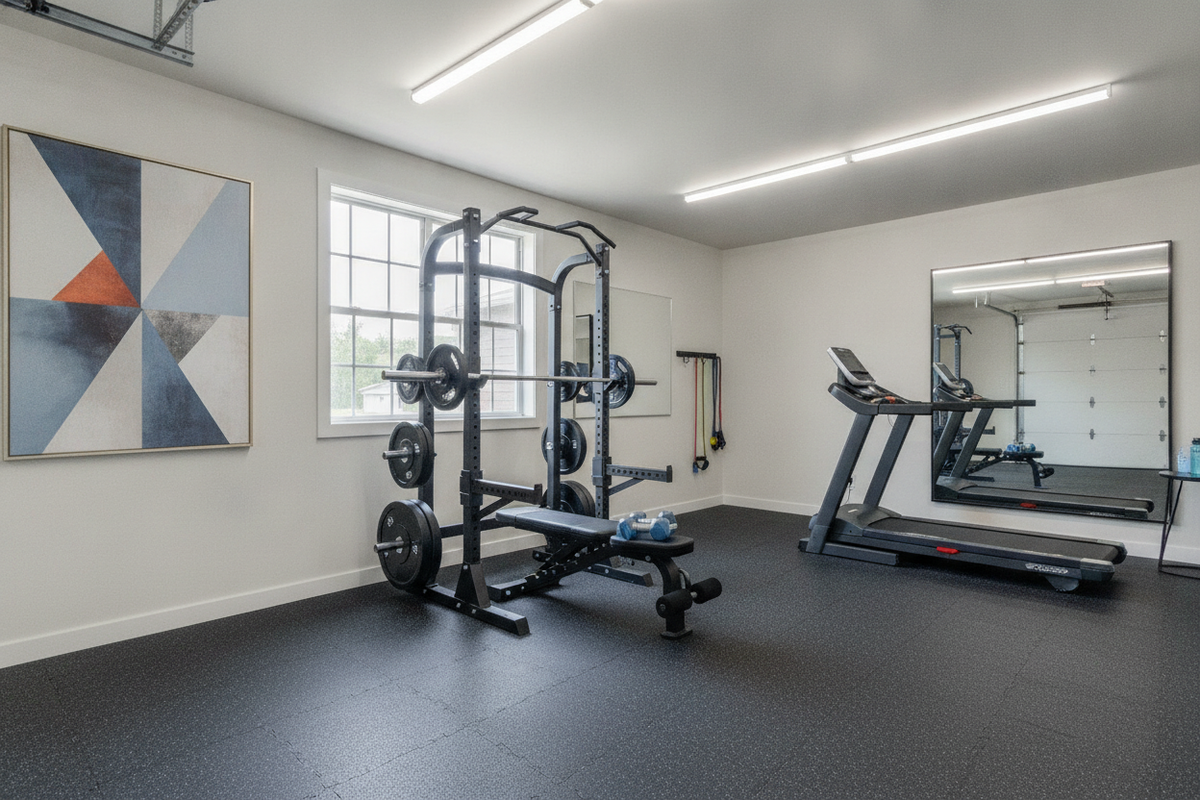
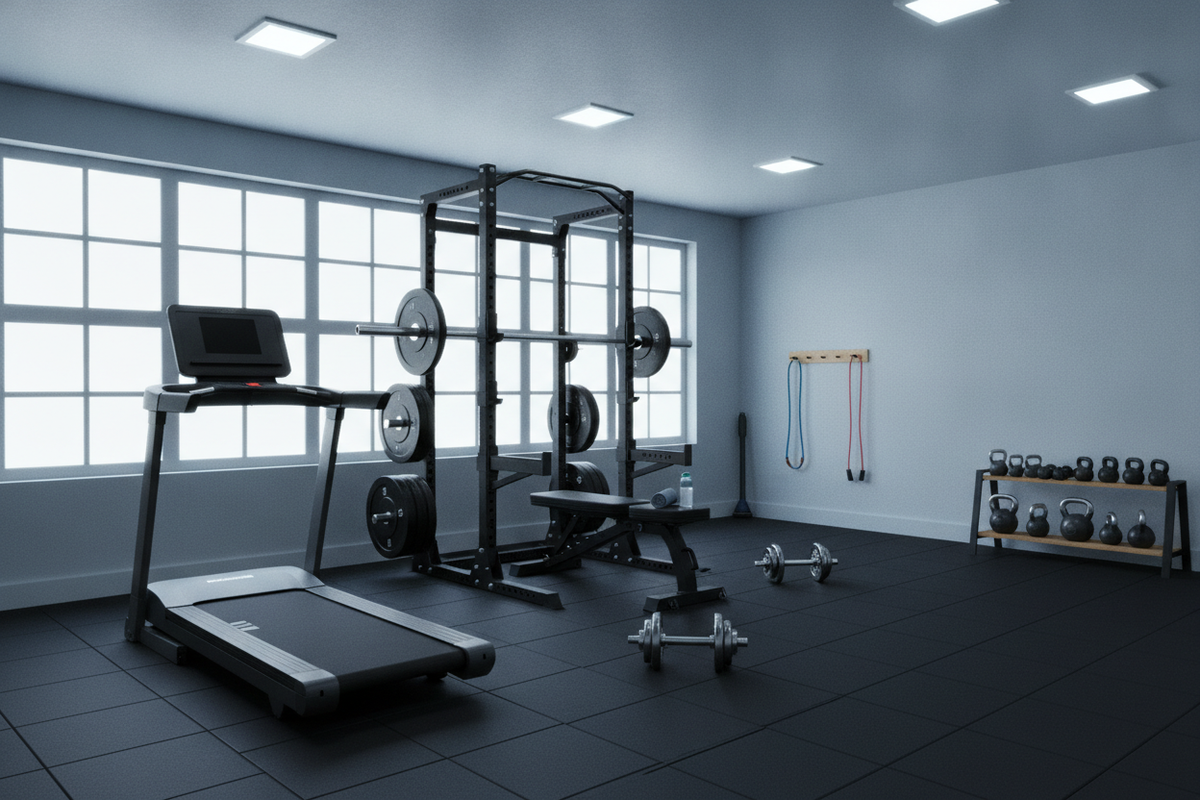
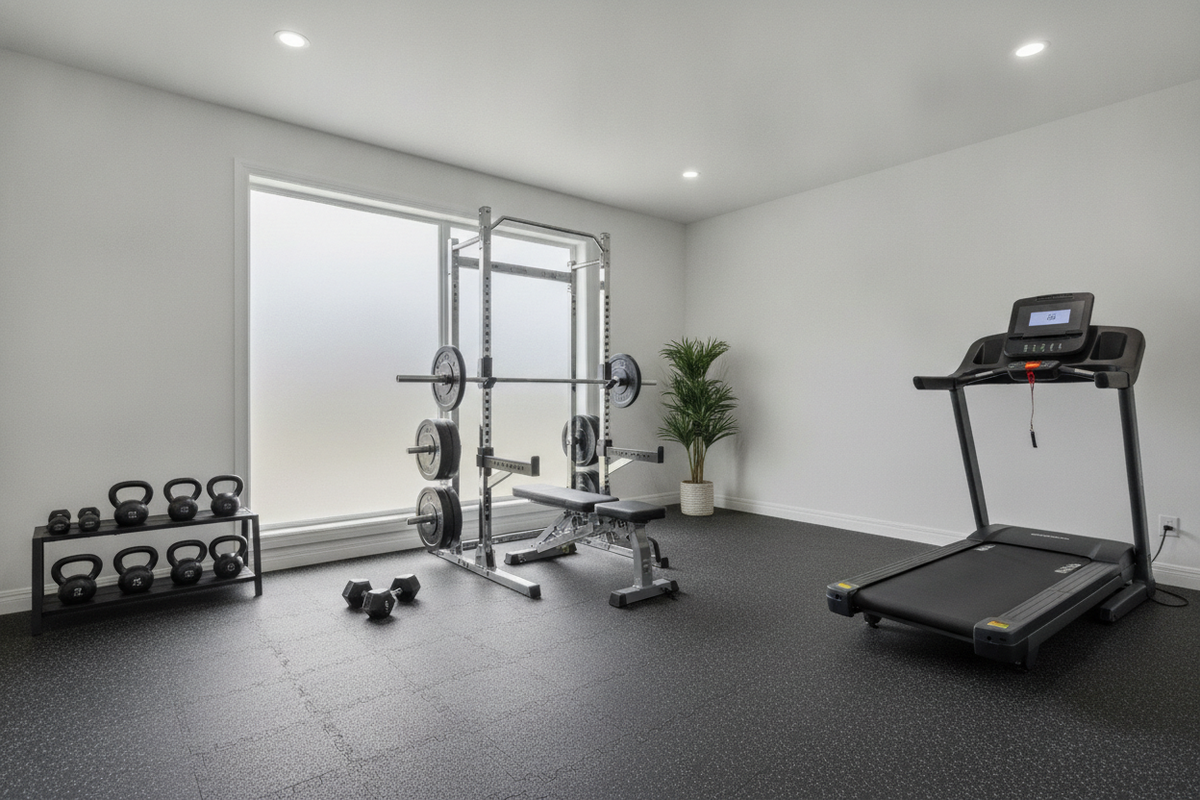
Installing dedicated high-density gym flooring or rolling out an oversized rubber flooring mat gives your training space a reliable non-slip surface. This stable foundation allows you to step with confidence, direct all your force downward through the heel, and handle progressive dumbbell loads safely.
Cushioning the Trailing Knee
In a proper lunge, your trailing knee descends toward the floor to achieve adequate depth. If you train directly on bare concrete or unpadded hardwood, the fear of bruising your trailing knee often causes you to cut the rep short. Cutting range of motion short deprives the glutes of their deepest, most productive stretch.
A supportive exercise mat or cushioned gym flooring provides the subtle impact resistance needed to tap the trailing knee gently against the floor without discomfort. This cushioning encourages you to hit full depth on every single rep, ensuring your glute muscles receive the complete stimulus required for steady growth.
Floor Protection for Heavy Loads
As you advance in your home workouts and begin using heavier dumbbells, proper floor protection becomes essential. Dropping or abruptly setting down heavy weights between intense lunge sets can easily crack tiles or dent subfloors. A durable rubber flooring mat distributes impact evenly, safeguarding your home infrastructure while supporting your fitness progression.
Common Lunge Mistakes That Limit Glute Growth
If you have been doing lunges consistently but are still wondering why does lunges make your bum bigger for other people but not for you, common technical errors may be blunting your progress:
- Stepping too short: A compressed stance forces the knee far over the toes and limits hip hinge mechanics, redirecting force to the quadriceps.
- Pushing through the toes: Lifting the front heel off the floor reduces gluteus maximus recruitment and places avoidable stress on the patellar tendon.
- Rushing the descent: Dropping rapidly without controlling the eccentric phase removes the deep stretch that drives muscle growth. Take two to three seconds to lower into the lunge.
- Training on unstable surfaces: Soft, squishy foam pads or slick floors ruin stability, preventing you from safely applying progressive overload. Use a dense exercise mat or textured gym flooring instead.
- Neglecting recovery: Glute muscles grow outside the gym. Pair your lower body workout days with sufficient protein and rest so your tissues can rebuild.
By refining your stance angle, maintaining a slight torso lean, pushing through your front heel, and establishing a stable home training floor, you can make lunges one of the most productive glute-building exercises in your fitness routine.