Do You Burn Calories Weight Lifting at Home?
When planning a fitness routine, many people ask a fundamental question: do you burn calories weight lifting? While steady aerobic exercise often gets recognized for high in-session expenditure, lifting weights plays a powerful and unique role in how your body consumes fuel. Whether you train with heavy iron or compact equipment in a home gym, engaging in focused resistance training demands considerable effort from your muscular system.
Understanding how your body uses energy during resistance sessions helps you design better workouts. From the immediate exertion of moving loads to the ongoing demands of post-workout recovery, strength work alters how your body processes energy. To build a foundation for lasting results, exploring our beginner weights weight lifting guide can help clarify practical training routines.
Do You Burn Calories Weight Lifting Compared to Cardio?
Yes, you burn energy during resistance sessions, though cardio and strength workouts use energy in different ways. Cardiovascular workouts maintain a sustained pace that produces steady in-session expenditure, whereas weight lifting alternates between intense muscular contractions and deliberate rest periods. During each working set, your active muscle tissue requires rapid fuel to overcome resistance, creating meaningful energy expenditure.
The debate around cardio vs weights often overlooks how the body functions after the session ends. While cardiovascular movement primarily burns fuel while you are moving, strength training places mechanical tension on muscle fibers. This tension requires repair work long after you rack your weights. As a result, you burn calories when lifting weights both during the active movement intervals and during the hours of recovery that follow.
How Weight Training Uses Energy During Workouts
Every time you initiate a lift, your muscles contract forcefully against resistance. This process requires fuel. When you ask yourself, do you burn calories weight lifting with moderate versus heavy loads, the answer depends largely on total training volume, density, and sustained tension. Pushing through multiple challenging sets keeps your heart rate elevated and recruits diverse motor units across your muscular system.
Moreover, the process of building muscle changes your baseline physical needs. Active muscle tissue demands more continuous upkeep than inactive tissue, which gradually influences your overall metabolic rate. Lifters who commit to regular resistance training develop denser musculature that naturally requires ongoing energy just to maintain daily function.
Compound Exercises vs Isolation Exercises
The specific movements you select in your training plan heavily influence your total calorie burn. In strength programming, movements generally divide into two broad categories:
- Compound exercises: Multi-joint movements that recruit multiple major muscle groups simultaneously, such as squats, deadlifts, overhead presses, and rows.
- Isolation exercises: Single-joint movements that target an individual muscle area, such as bicep curls, lateral raises, or tricep extensions.
When your goal is maximizing work output, multi-joint lifts provide a distinct advantage. A heavy set of squats engages the quadriceps, glutes, hamstrings, and core muscles all at once, requiring substantial cardiovascular and muscular drive. Similarly, performing deadlifts activates almost every muscle along the back of the body. Because so much musculature coordinates during these movements, you burn calories when lifting weights far more efficiently when compound lifts form the centerpiece of your routine.
In contrast, single-joint movements play a valuable role in targeting specific weak points, but they create a smaller systemic strain. Blending both styles into a balanced full body workout gives you the benefits of systemic exertion alongside targeted muscular refinement.
How Does Lifting Weights Help Burn Calories After Exercise?
Lifting weights stimulates extended energy expenditure after exercise because the body must expend resources to cool down, replenish cellular stores, and rebuild muscle fibers. This post-workout demand is closely tied to muscle recovery. When you challenge your muscles with loaded barbells or dumbbells, you create microscopic tears in the fibers that require structural repair.
During this recovery window, your body consumes additional oxygen and nutrients to synthesize new protein structures, clear metabolic byproducts, and restore equilibrium. As you support this rebuilding phase with balanced nutrition—as detailed in our nutrition guide when lifting weights—your resting metabolic rate remains engaged. Therefore, the total energy cost of lifting weights extends well beyond the minutes spent actively gripping a bar.
Setting Up Your Home Gym for Strength Training and Floor Protection
To train with sufficient intensity and consistency, setting up a safe and functional home workout environment is essential. Lifters who feel secure in their footing and unconcerned about dropping equipment can push their sets with greater confidence, directly improving the quality of each workout.
Gym Flooring and Stable Footing
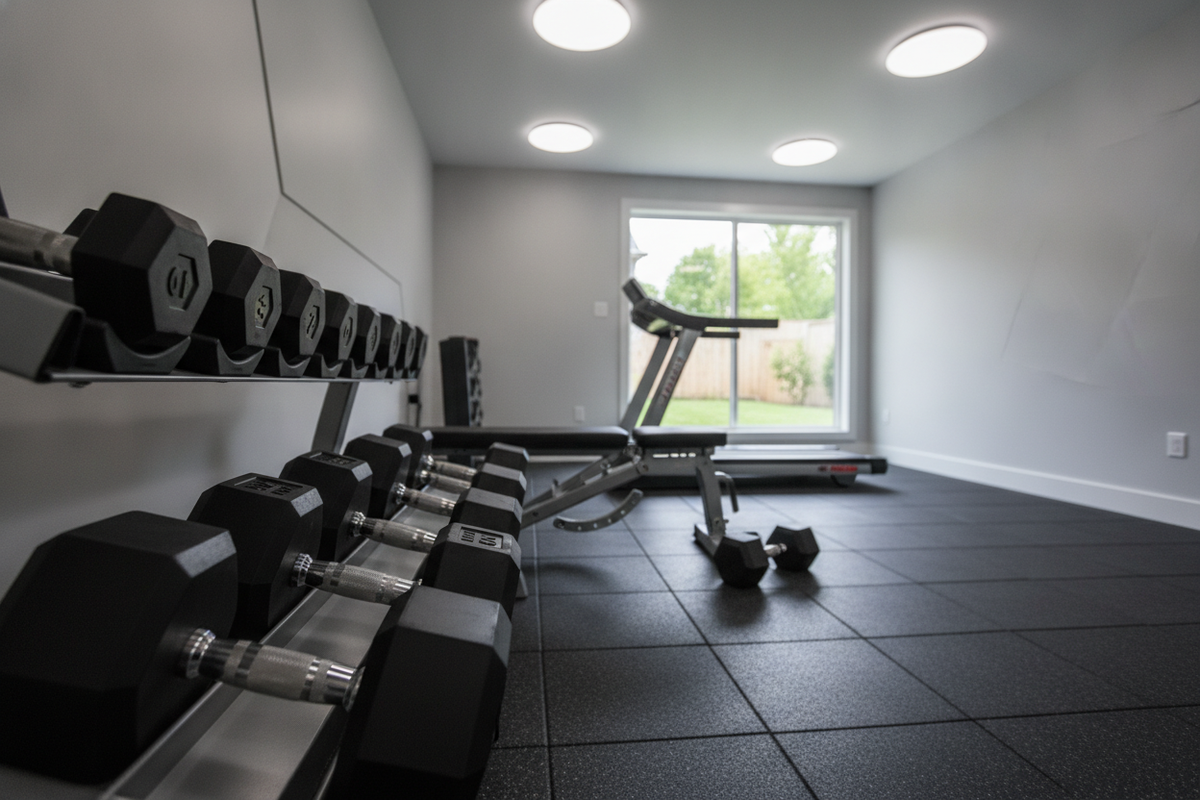
A dependable foundation is the most critical element of any lifting area. Hardwood, tile, or basic carpet cannot adequately absorb the shock of heavy iron or provide the non-slip grip needed during heavy leg work. Installing dedicated gym flooring creates the traction required to drive through your heels during heavy squats or presses without slipping.
High-density rubber exercise mats act as resilient protective mats that disperse downward force. Providing reliable floor protection protects your underlying subfloor from cracks or dents while dampening vibrations that travel through living spaces. With reliable stable footing beneath you, it becomes much easier to execute technically sound lifts, allowing you to train harder and burn more energy.
Equipment Placement for Barbells, Dumbbells, and Machines
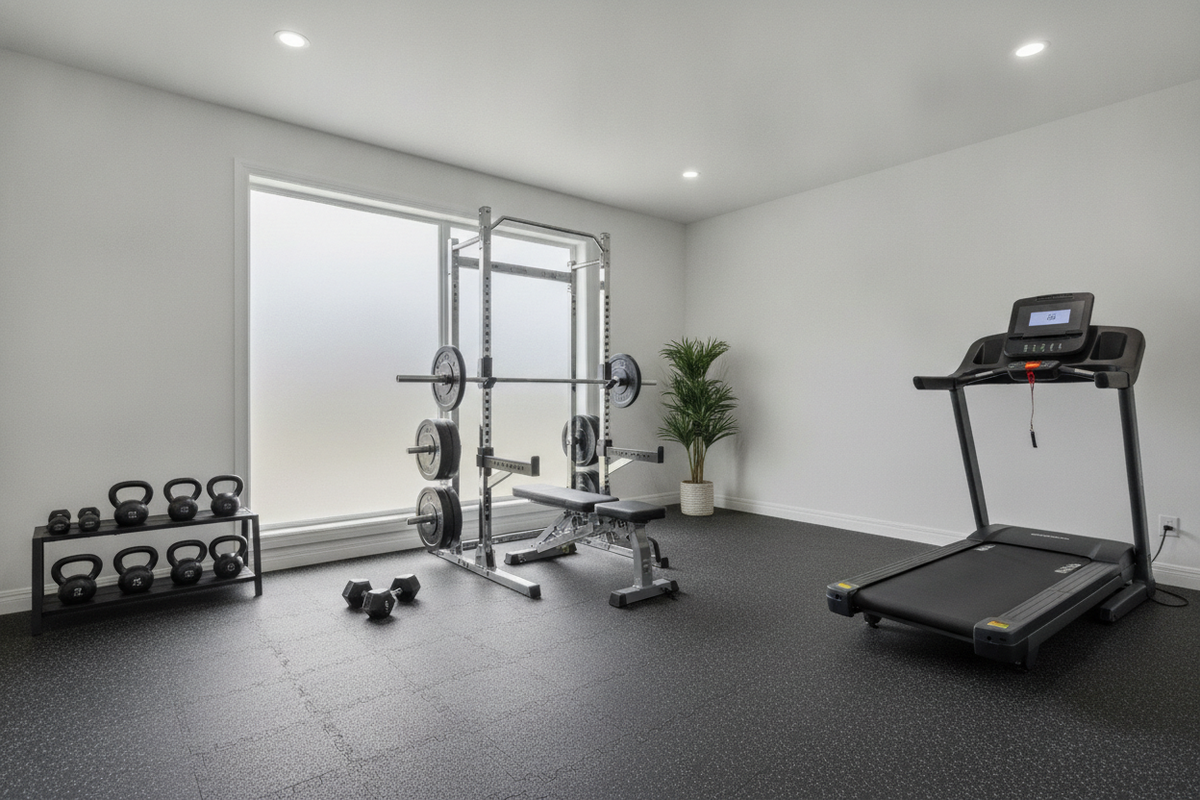
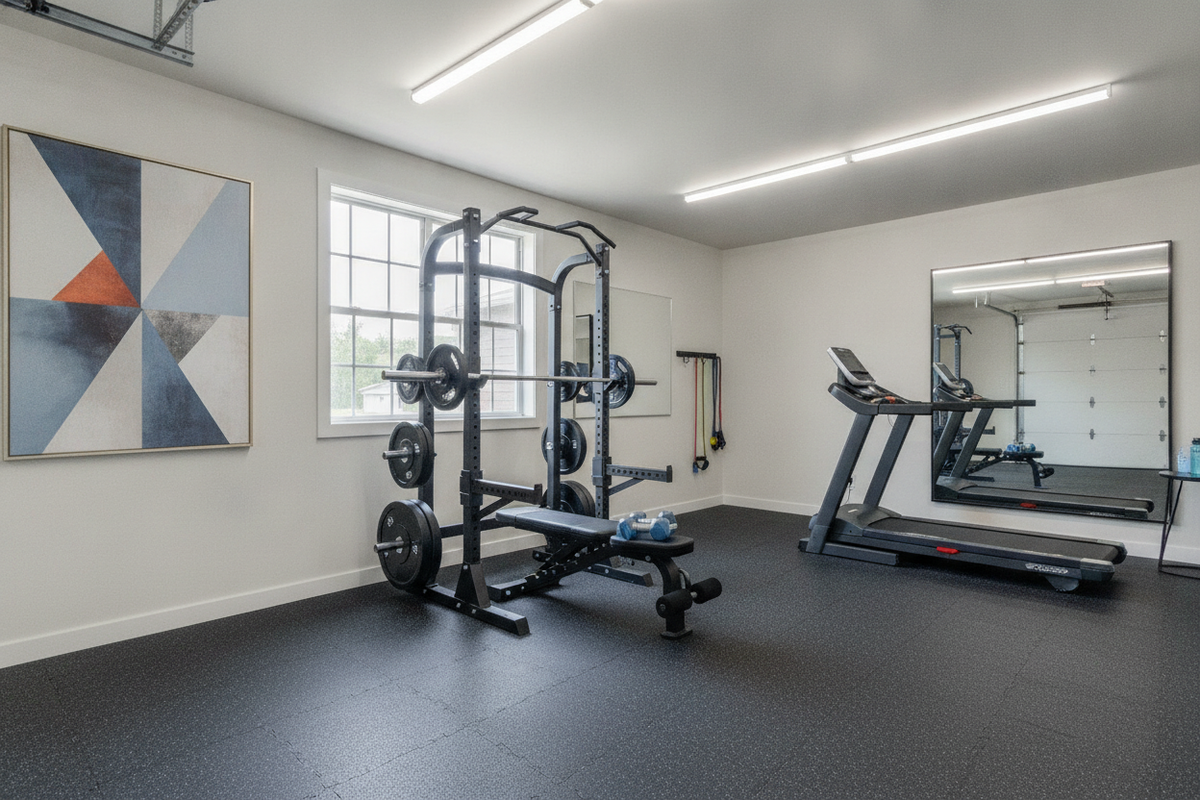
Organizing your gear thoughtfully makes training sessions smoother and more productive. When free weights like dumbbells and barbells are easily accessible on racks, transitioning between movements requires less idle downtime. If your training involves guided resistance stations, exploring a dedicated home weight lifting collection can help you integrate versatile multi-stations into your layout.
Before investing in new implements, reviewing our guide to weight lifting weights can help you decide which free-weight styles best match your budget and goals. Arranging benches, racks, and protective mats with clear walkways keeps the area hazard-free so you can focus entirely on your training effort.
Practical Tips to Increase Calorie Burn While Lifting
If you want to maximize your training output without extending your workout time indefinitely, specific programming adjustments can elevate the physical demand of each session:
- Incorporate Supersets: Pair two non-competing movements—such as a dumbbell bench press followed immediately by a dumbbell row—without taking long breaks between them. By using supersets, you keep your heart rate elevated while one muscle group works and the other rests.
- Manage Rest Periods: While maximum strength work requires long pauses, keeping breaks between 45 and 90 seconds during hypertrophy or circuit sessions elevates the overall cardiovascular demand. For high-tempo ideas, check out our weights burn calories guide.
- Focus on Full Body Splits: Performing a full body workout three days a week challenges large muscle masses in every session, producing greater session-by-session demand than isolated single-body-part splits.
- Prioritize Progressive Overload: Gradually increasing the weight, repetitions, or movement quality forces your muscle tissue to adapt continuously, sustaining higher energy expenditure across weeks of training.
Conclusion: Do You Burn Calories Weight Lifting?
So, do you burn calories weight lifting? The answer is an undeniable yes. While the immediate burn during a resistance set might feel different from a steady jog, the combined impact of intense muscular effort, the after-effects of muscle recovery, and the long-term benefit of building muscle make strength work an exceptional choice for physical conditioning.
By selecting powerful compound exercises, utilizing tools like barbells and dumbbells, and anchoring your training on shock-absorbing gym flooring that offers solid stable footing and durable floor protection, you create an environment where you can train hard, stay consistent, and reach your fitness goals.