Are Expensive Weight Lifting Weights Actually Worth the Money?
I remember the first time I loaded up a bar for a squat PR in my garage. I was using a set of mismatched iron I found on a local marketplace for fifty cents a pound. I hit the lift, felt like a god, and then realized something felt... off. I pulled out a bathroom scale and weighed the plates. One '45-pound' plate was 41.2 pounds. The other was 46.8. I hadn’t hit a PR; I had just spent six months training with a lopsided load that was wrecking my stabilizers.
When you start shopping for weight lifting weights, it is tempting to go for the cheapest cast iron you can find. After all, weight is weight, right? Gravity doesn't care about the brand name. But after a decade of lifting at the gym and building three different home setups, I can tell you that cheap gear often carries hidden costs that show up in your joints, your floor, and your progress.
Quick Takeaways
- Weight tolerance is the biggest differentiator; cheap plates can be off by 5-10%.
- Dumbbells are the one area where 'budget' often means 'dangerous.'
- A rock-solid bench is non-negotiable for safety once you pass the 225-lb mark.
- Invest in a high-quality barbell before you worry about the brand of your plates.
The Dirty Secret About Cheap Iron Plates
Most budget iron plates are sand-cast in factories with very little quality control. They are poured into molds, cooled, and shipped. The problem is that air bubbles and inconsistencies in the iron density mean that a plate marked '45' is rarely 45 pounds. If you are serious about weights lifting, consistency is your best friend. In my testing, premium machined plates usually stay within 1-2% of their stated weight, whereas the 'standard' iron you find at big-box stores can be off by as much as five pounds.
Think about what that does to your weight lifting training. If you are trying to add five pounds to your bench press every two weeks, but your plates have a five-pound variance, you might actually be lifting less than you did last week without knowing it. You can't track progress if your data is garbage. I always recommend buying machined plates if you can afford them—they have a flat back, a consistent diameter, and they won't rattle like a tambourine every time the bar hits the floor.
Beyond the weight, there is the finish. Cheap plates use a 'baked enamel' that chips if you look at it wrong. Once that paint chips, the raw iron underneath starts to rust, especially in a humid garage. Premium plates often use a powder coat or urethane finish that can take a beating for a decade without showing a spec of orange. If you're going cheap, be prepared to spend your weekends with a wire brush and a can of Rust-Oleum.
Free Weights vs. Machines in a Garage Gym
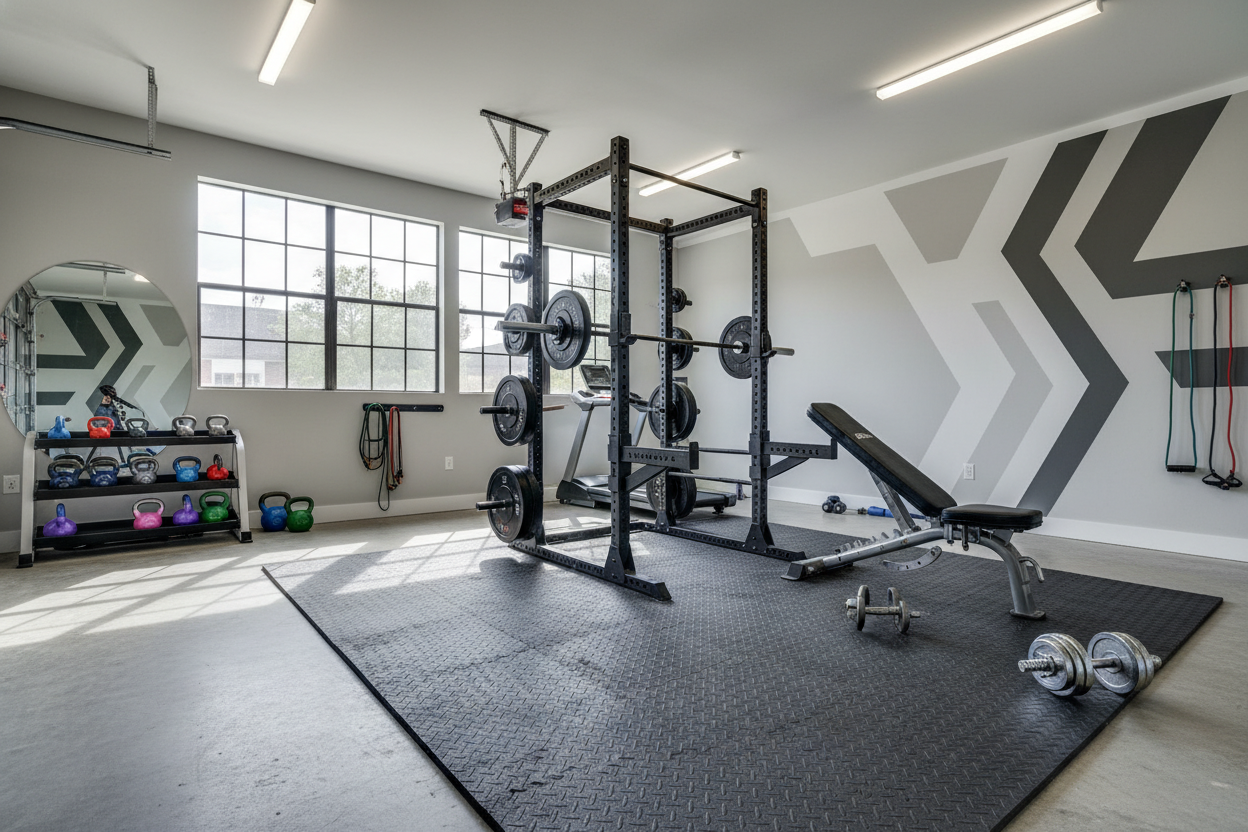
One of the most common questions I get is about the trade-off between a rack of weights and dedicated equipment. When you are lifting weights at home, space is your most valuable currency. A power rack and a set of plates take up about 48 square feet and allow you to perform hundreds of movements. However, there is a limit to what free weights can do for specific hypertrophy goals.
If you are used to weightlifting at gym environments with rows of specialized equipment, you might find that free weights alone make it hard to isolate certain muscle groups without taxing your lower back. This is where weight lifting machines come into play. While I’ll always advocate for the barbell as the foundation, adding a functional trainer or a lat pulldown can be a lifesaver for high-volume accessory work. Machines allow you to push to absolute failure without the risk of a barbell pinning you to the floor.
That said, don't buy a machine until you have your 'big three' covered: a rack, a bar, and a stack of plates. Fitness weight lifting is most effective when you master the compound movements first. Machines are the 'seasoning' on the steak. If you have the footprint, a dedicated leg press or cable station can prevent the boredom that sometimes comes with a minimalist garage setup, but they shouldn't be the priority for a beginner.
Dumbbells: The One Place I Refuse to Cut Corners
I have a scar on my shin from a cheap adjustable dumbbell handle that snapped during a set of heavy rows. The collar failed, the plates slid off, and the jagged chrome end caught me on the way down. When it comes to dumbbells, 'budget' can be a liability. If you are doing any kind of serious weightlifting at gym or home, you need gear that can handle being dropped.
Hex dumbbells are the gold standard for home gyms because they don't roll away, but they get expensive quickly as you build a full set. Many people opt for adjustable systems. If you go that route, avoid the plastic-heavy designs. Look for all-metal locking mechanisms. I also suggest picking up essential strength training accessories like fractional plates or magnetic weights. These allow you to make 1.25-lb jumps instead of the standard 5-lb jumps, which is a massive advantage for overhead pressing and curls.
If you have the budget, urethane-coated dumbbells are the dream. They don't smell like a tire fire (a common complaint with cheap rubber hex dumbbells) and they are virtually indestructible. But for most of us, a solid set of rubber-coated hex dumbbells from 5 to 50 lbs is the sweet spot. Just make sure the heads are friction-welded to the handles so they don't start rattling after a month of use.
Why Your Bench Matters Just as Much as Your Bar
You can have the most expensive set of weight lifting weights in the world, but if you're lying on a wobbly $50 bench, your brain is going to limit your strength output. It's called neural inhibition—if your body doesn't feel stable, it won't let you exert maximum force. I’ve tested benches that claimed a 600-lb capacity but felt like they were made of toothpicks once I had 225 on the bar.
You need a heavy-duty adjustable weight bench with a wide tripod base and high-density foam. Look for 11-gauge steel construction. A good bench should weigh at least 60-80 pounds on its own; if it’s light enough to pick up with one finger, it’s not going to support you and a heavy set of dumbbells. The gap between the seat and the back pad is another thing to watch—too wide a gap and it’ll dig into your lower back during flat benching.
I also look for a 'sticky' vinyl. There is nothing worse than sliding out of position during a heavy set because the bench cover is too slick. A quality bench is a one-time purchase. If you buy a cheap one now, you’ll just end up buying the expensive one in six months when the cheap one starts to creak and tilt. Save yourself the double-spend.
The Final Verdict on Building Your Stack
Building a home gym is a marathon, not a sprint. If you are trying to figure out what is lifting in gym culture versus what you actually need at home, start with the basics. My recommended buying order is always: a high-quality 20kg barbell, 160 lbs of bumper plates (so you can drop them safely), a solid bench, and then your dumbbells. This setup allows you to perform every major lift safely and effectively.
Don't get distracted by flashy colors or 'innovative' plate shapes. Round, flat, and heavy is all you need. If you want to see exactly how to lay out your space and prioritize your budget, check out this definitive home gym guide. It breaks down the floor plan requirements and the essential list for every budget level.
My biggest mistake was buying a 'complete set' from a sporting goods store for $300. The bar bent under 200 pounds and the weights were so poorly cast they wouldn't even slide onto a different bar. I ended up giving the whole set away and starting over. Buy the best gear you can afford for the things that move (the bar and the bench) and be a bit more frugal with the things that just sit there (the plates).
FAQ
Is iron or rubber better for home use?
Iron is thinner, allowing you to fit more weight on the bar, but it's loud and can crack your foundation. Rubber bumper plates are quieter and safer for your floors, but they are bulkier. For most garage lifters, a mix of both is ideal.
How many plates do I actually need to start?
A standard 160-lb or 210-lb set is plenty for most beginners. You’ll want a pair of 45s, 25s, 10s, and a few smaller change plates. You can always buy more 45s as you get stronger.
What should I look for in a barbell?
Look for a 'medium' knurling that provides grip without tearing your hands apart, a tensile strength of at least 190,000 PSI, and sleeves that spin freely on bushings or bearings.