Do I Have to Do Cardio After Weights? Simple Guide
When planning a workout routine, many lifters wonder: do I have to do cardio after weights to get results? The short answer is no; you do not have to finish every lifting session with aerobic exercise. Whether you add conditioning after lifting weights depends entirely on your personal fitness goals, your weekly workout split, and how you prefer to manage daily recovery.
Do I Have to Do Cardio After Weights?
No, you do not have to perform cardio after weights if your primary targets do not require it. If your main focus is pure muscle building or building raw power, skipping cardio immediately after your strength training allows you to dedicate your peak physical effort to moving heavy loads without creating excess muscle fatigue.
Many lifters constantly ask themselves, do I have to do cardio after weights on every training day? You do not. While pairing aerobic work with weight training can assist with general heart health and caloric expenditure, it is an optional tool rather than a strict rule. If you choose to skip it, your progress will not suddenly stall. Conversely, when people ask "do you have to do cardio after weight training?", the answer often comes down to personal scheduling. If your only time to exercise is a single block during the day, combining both can be efficient. But if you are questioning, do I have to do cardio after weights to stay lean, the reality is that your overall energy balance matters far more than whether you jump on a treadmill right after bench presses.
Why is Cardio Better After Weights Instead of Before?
Cardio is generally better after weights because it preserves your primary glycogen stores and central nervous system stamina for demanding strength exercises. When you prioritize lifting weights first, your energy levels remain high, allowing you to maintain proper lifting mechanics, lift heavier loads, and reduce injury risks associated with pre-exhaustion.
If you perform a hard cardio session before your strength training, you will likely experience muscle fatigue before you even touch a barbell or dumbbell. This fatigue can limit your performance on compound lifts like squats and deadlifts. For a deeper breakdown of this exercise sequence, review our guide to the benefits of cardio after weights. Understanding why is cardio better after weights helps you decide when to include it without compromising your muscle building objectives.
When lifters ask, why is cardio better after weights, the explanation centers on energy allocation. Heavy lifting requires explosive force and mental alertness. Running, rowing, or pedaling beforehand drains those critical reserves. Thus, if you decide to pair them in a single visit, completing your cardio after weight training is the standard recommendation for most fitness goals.
Do I Have to Do Cardio After Weights to Lose Weight?
You do not have to do cardio after weights to lose weight, because consistent fat loss is primarily driven by your total daily caloric balance and nutrition. While doing cardio after weight training burns extra calories in the moment, strength training by itself helps maintain metabolic rate by preserving lean muscle tissue during a calorie deficit.
If you prefer not to jog or cycle after your main sets, you do not need to force it. Many lifters find that keeping their weight training intense and relying on daily walking is more than enough for their body composition goals. To see how these modalities compare directly, read our article on cardio versus weight training for fat loss. When wondering "do I have to do cardio after weights to drop body fat?", remember that resistance workouts create a strong foundation for physique changes, and you can achieve your target shape with or without a finishing aerobic bout.
When to Skip Cardio After Weight Training
There are multiple instances where asking "do I have to do cardio after weights?" should lead to a clear decision to skip it. Knowing when to walk away from the gym floor helps protect your joints and supports long-term consistency.
- Heavy Leg Days: After grueling squats, lunges, or deadlifts, your lower body has already absorbed substantial physical stress. Adding intense cardio can lead to excessive muscle fatigue and lengthen recovery times.
- Strict Muscle Building Phases: When your program prioritizes hypertrophy, every ounce of recovery should go toward muscular repair. An extra high-intensity cardio session may cut into those adaptations.
- High Life Stress or Poor Sleep: If your energy levels are drained from long work hours or poor sleep, finishing your session early is smarter than grinding through extra conditioning.
- Time Constraints: If rushing through post-lift conditioning causes you to cut your rest intervals or compromise lifting form, it is better to eliminate the aerobic portion entirely.
So, do you have to do cardio after weight training when you are already exhausted? Absolutely not. Listening to your recovery indicators ensures steady progress without burnout.
Can I Do Cardio and Weights on Different Days?
Yes, you can do cardio and weights on separate days, and this is often the most effective approach for people who want to excel at both modalities. Scheduling aerobic workouts on non-lifting days lets you bring fresh energy to each session without compromising either your strength training or your endurance performance.
When you place conditioning on separate days, you no longer have to ask yourself, do I have to do cardio after weights during your lifting workout routine. Instead, you can dedicate Tuesday and Thursday to aerobic work and Monday, Wednesday, and Friday to lifting weights. This setup also doubles as active recovery. Engaging in low impact cardio on off days promotes circulation and helps ease muscular tightness without placing significant strain on connective tissues.
Structuring a balanced workout split might look like this:
- Monday: Upper body weight training
- Tuesday: Low impact cardio (incline walking or an exercise bike)
- Wednesday: Lower body strength training
- Thursday: Dedicated cardio session (rowing machine intervals or jump rope intervals)
- Friday: Full body strength session
- Saturday: Active recovery outdoor walk or mobility exercises
- Sunday: Complete rest
Using separate days allows you to dedicate 100% of your focus to each discipline rather than feeling drained halfway through a combined workout.
Best Low Impact Cardio After Weights Options
If you choose to do conditioning after your lifts, selecting the right format is key. The goal of cardio after weights should generally be to elevate heart rate while keeping joint impact manageable. For specific exercise ideas, check out our guide to the best cardio after weight training.
Here are several effective options to consider:
- Incline Walking: Walking on a steep treadmill incline provides steady aerobic work without the pounding impact of running, making it an ideal post-lift choice.
- Exercise Bike: Stationary cycling offers smooth, continuous resistance that works the cardiovascular system while being gentle on knees and hips after leg workouts.
- Rowing Machine: A steady row engages the back, core, and legs in a non-impact pattern, serving as a functional finisher.
- Jump Rope: Short, rhythmic jump rope rounds build foot speed and conditioning, though it is best kept brief to avoid foot and calf strain.
- Bodyweight Circuits: Light bodyweight circuits focused on mobility and steady movement can elevate breathing while doubling as cool-down work.
When questioning "do I have to do cardio after weights if I only have ten minutes?", a brief walk or light spin on an exercise bike is plenty to support recovery and daily activity.
Home Gym Setup for Strength and Conditioning
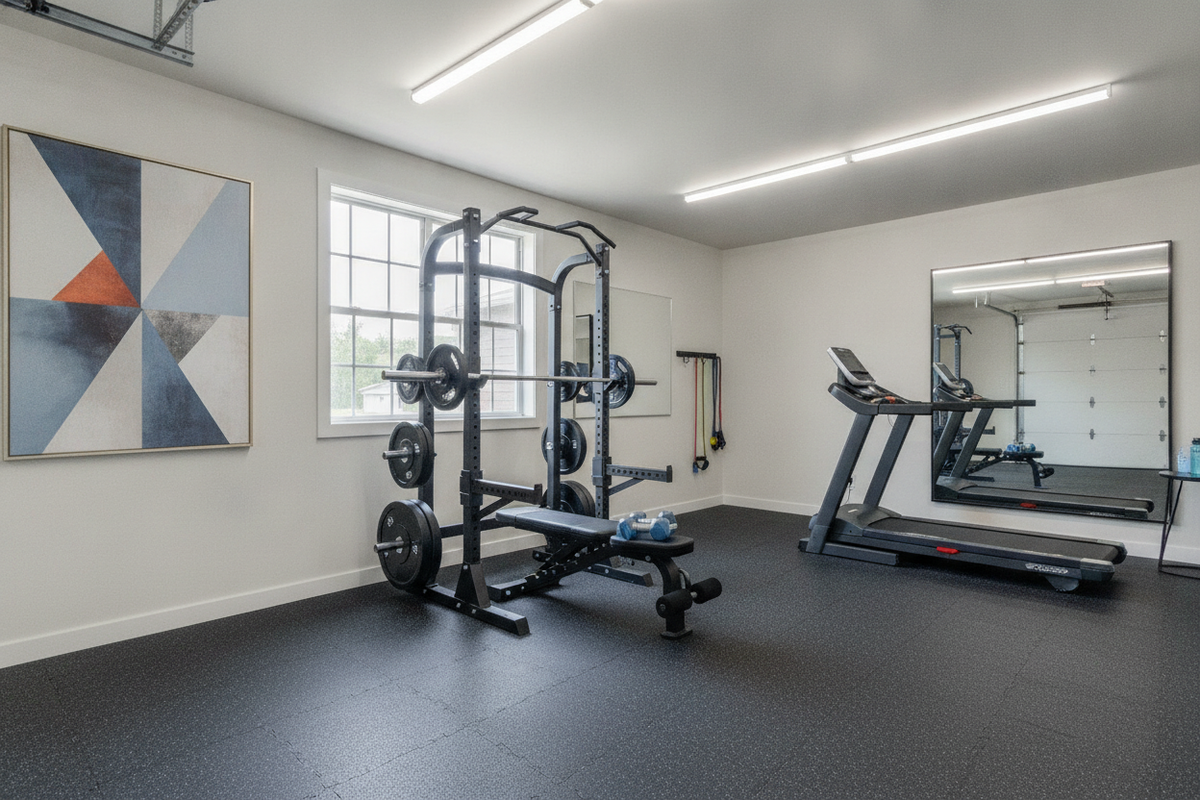
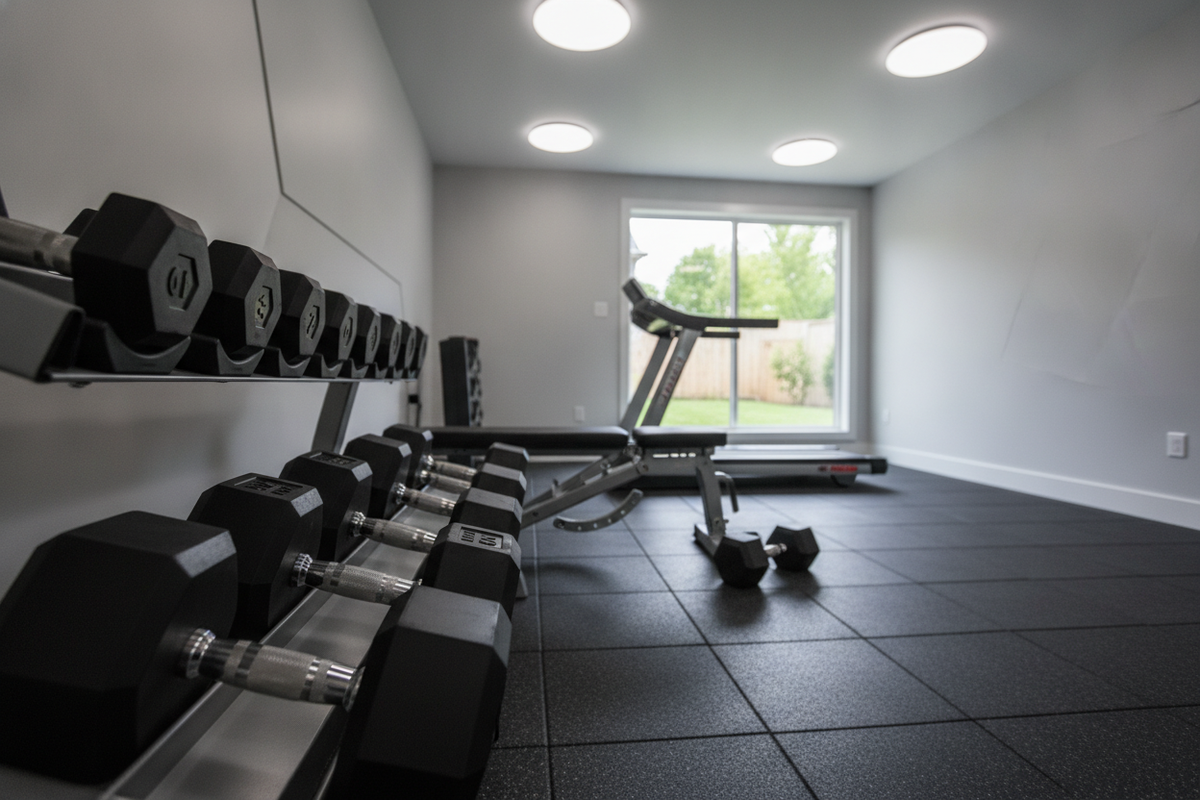
Setting up your training environment properly makes moving between strength work and aerobic finishers effortless. Whether you decide to perform cardio after weights or split them across different times, smart layout choices keep your home space organized and safe.
First, consider your gym flooring. High-density rubber gym flooring or a large, dense exercise mat provides necessary floor protection against dropped dumbbells, kettlebells, and heavy barbell plates. In addition to floor protection, quality gym flooring absorbs vibration and stabilizes cardio machines such as a rowing machine or exercise bike. If you do jump rope intervals, having a dense exercise mat underfoot softens impact forces on your joints while shielding the underlying floor surface.
Second, plan your equipment placement carefully. Separate your lifting rack and free weight zone from where you perform bodyweight circuits or store cardio equipment. Proper equipment placement ensures you have ample clearance to swing kettlebells or skip rope without bumping into racks. Having a dedicated dense exercise mat laid out beside your rack creates a natural station for core work, stretching, and active recovery. If you are stocking your space with supportive gear, explore our strength training accessories collection to find durable tools that fit your routine.
Frequently Asked Questions
Do I have to do cardio after weights every single day?
No, you do not have to perform cardio after weights every session. Limiting post-lift aerobic work to two or three days per week—or moving it to non-lifting days—prevents overtraining and keeps your energy levels consistent.
Is it bad to skip cardio after weight training?
It is not bad to skip cardio after weight training. Resistance training provides significant health and metabolic benefits on its own. If your primary goal is muscle building or strength, skipping cardio after lifting weights can actually help preserve energy for recovery.
How long should a cardio session be after lifting?
A typical post-lift cardio session should generally last between 15 and 30 minutes. Keeping it moderate allows you to gain aerobic benefits without causing severe muscle fatigue or interfering with your strength training adaptations.
Can I do incline walking instead of running after lifting?
Yes, incline walking is an outstanding form of low impact cardio following strength work. It raises your heart rate and promotes fat loss without placing high impact stress on joints that are already tired from lifting.
Do you have to do cardio after weight training to keep your heart healthy?
No, you do not have to complete your cardio immediately after lifting to support heart health. You can complete your aerobic exercise earlier in the day, on alternate days, or through outdoor recreational activities while still reaping full cardiovascular rewards.