Benefits of Cardio After Weights: Training Order Frameworks, Conditioning Strategies, and Home Gym Layouts
Deciding how to order resistance exercises and aerobic conditioning is a foundational choice in physical training. For many lifters and home gym practitioners, exploring the benefits of cardio after weights provides a structured path toward building muscular strength while maintaining cardiovascular endurance. Positioning aerobic work at the end of a session preserves energy reserves for demanding compound lifts, supports movement consistency, and streamlines the overall workout flow.
Understanding the Benefits of Cardio After Weights
The sequence in which you perform resistance training and conditioning directly influences exercise quality and energy distribution. By exploring the cardio after weights benefits, lifters can better align their daily efforts with clear functional priorities.
Prioritizing Energy and Force Production for Lifting
Heavy barbell, dumbbell, and kettlebell movements require high levels of neurological drive, core stability, and mental focus. When resistance exercises are performed first, the body approaches complex movement patterns with fresh neuromuscular coordination. Performing cardiovascular work beforehand can induce systemic fatigue, which may compromise technical precision during heavy sets. Prioritizing lifting preserves prime physical capacity for moving loads safely and effectively.
Cardiovascular Conditioning Without Compromising Technique
Another major advantage among the benefits of cardio after workout sessions is the ability to train the cardiovascular system without degrading resistance form. Because many cardio modalities involve cyclical, repetitive patterns—such as rowing, cycling, or brisk walking—they demand less instantaneous maximal joint stability than heavy squats or overhead presses. Completing your strength work first allows you to push conditioning intensity without risking technical breakdown on loaded barbells.
Active Cool-Down Dynamics and Post-Workout Recovery
Moderate post workout cardio benefits also extend to the transition toward recovery. Engaging in light to moderate aerobic work immediately following a lifting session promotes continuous circulation, assisting in the gradual reduction of elevated heart rates and easing the nervous system back toward baseline. This dynamic transition serves as an extended, productive wind-down period before complete rest.
Cardio Modality Frameworks: Selecting the Right Post-Lift Conditioning
Choosing an appropriate conditioning style depends on your daily training volume, personal preferences, and equipment access. Different aerobic approaches offer distinct physiological stimulus profiles following resistance training.
Low-Impact Steady-State Conditioning for Sustainable Recovery
Low-impact steady-state exercise, such as incline walking, stationary cycling, or light rowing, is an approachable option following intense lifting. Because it places minimal impact stress on joints and connective tissue, this modality provides sustainable aerobic volume without accumulating excessive mechanical fatigue.
Controlled Interval Conditioning for Condensed Sessions
For individuals working within tighter time constraints, interval conditioning offers a time-efficient finish. Athletes who prefer high-density intervals can consult a structured workout cardio weights guide to understand how short work periods fit alongside functional lifting. Short, managed work-to-rest intervals allow for elevated cardiovascular output in a compact duration.
Bodyweight Aerobic Complexes on Resilient Surfaces
Bodyweight circuits—incorporating movements such as shadowboxing, lateral bounds, and skipping—offer conditioning that requires minimal dedicated machinery. When performing dynamic calisthenic finishers, practicing on supportive gym flooring helps absorb repetitive foot strikes. For practitioners seeking structured routine ideas that blend compound movements with aerobic conditioning, exploring a practical cardio workout weights guide offers valuable pacing templates.
Structuring Your Weekly Split: Timing, Duration, and Sequencing
Integrating conditioning into an existing lifting routine requires thoughtful weekly scheduling to prevent interference between training days.
Balancing Upper-Body and Lower-Body Lift Days With Cardio
The nature of your strength session should guide the type of conditioning you attach to it. Following lower-body lifting days, selecting non-impact cardio options like cycling or upper-body ergometers can spare fatigued legs from excessive eccentric loading. Conversely, after upper-body lifting sessions, running or incline treadmill work can be performed with minimal leg fatigue, maximizing the benefits cardio after weight training can provide across a balanced split.
Session Sequencing: The Warm-Up, Lift, Cardio, and Decompression Chain
A well-balanced combined session typically follows a four-part progression:
- Dynamic Warm-Up: Mobility drills, joint preparation, and light movement prep.
- Resistance Training: Primary compound lifts followed by accessory volume.
- Targeted Conditioning: Steady-state or interval cardio based on session goals.
- Cool-Down: Static stretching, down-regulation breathing, and tissue decompression.
Adhering to this sequence ensures that high-skill, loaded tasks precede metabolic conditioning, reinforcing consistent movement quality.
Home Gym Transition Zones: Flooring, Equipment Layout, and Subfloor Care
Executing combined workouts at home requires a space organized for smooth movement transitions between heavy lifting stations and open aerobic zones.
Creating Seamless Flow Between Weight Stations and Cardio Zones
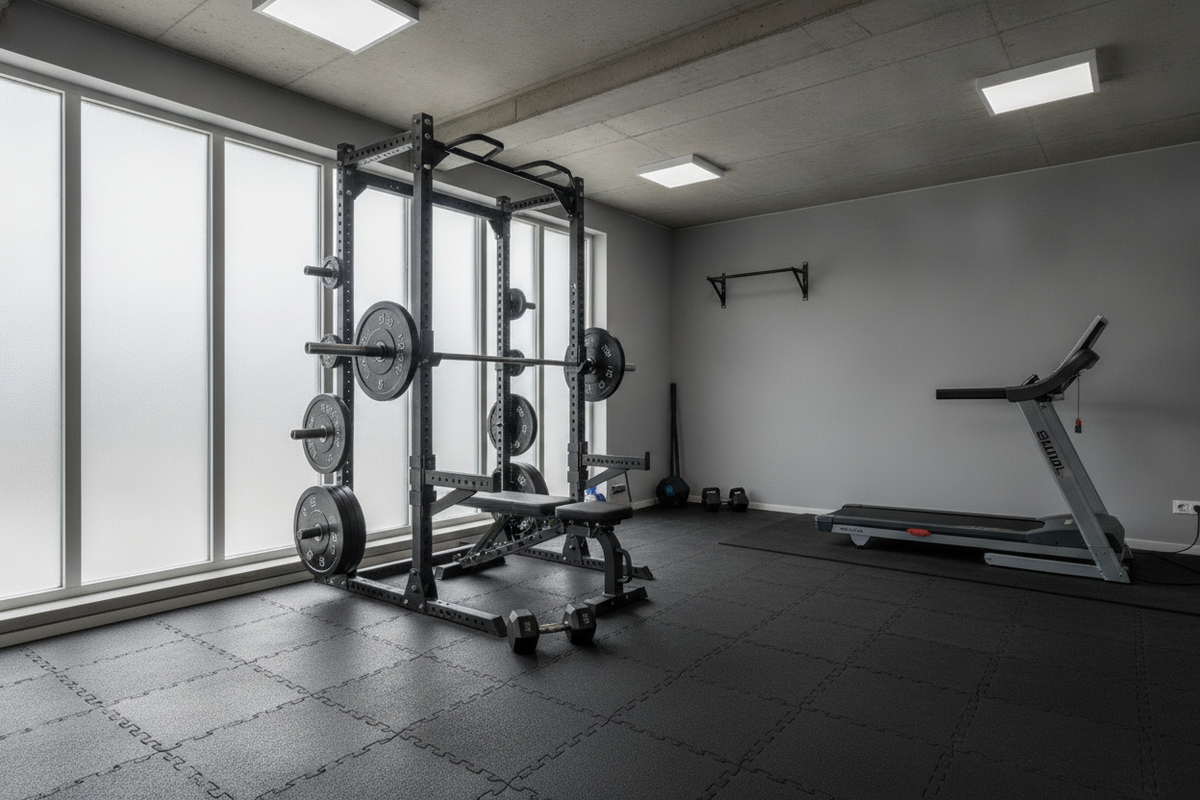
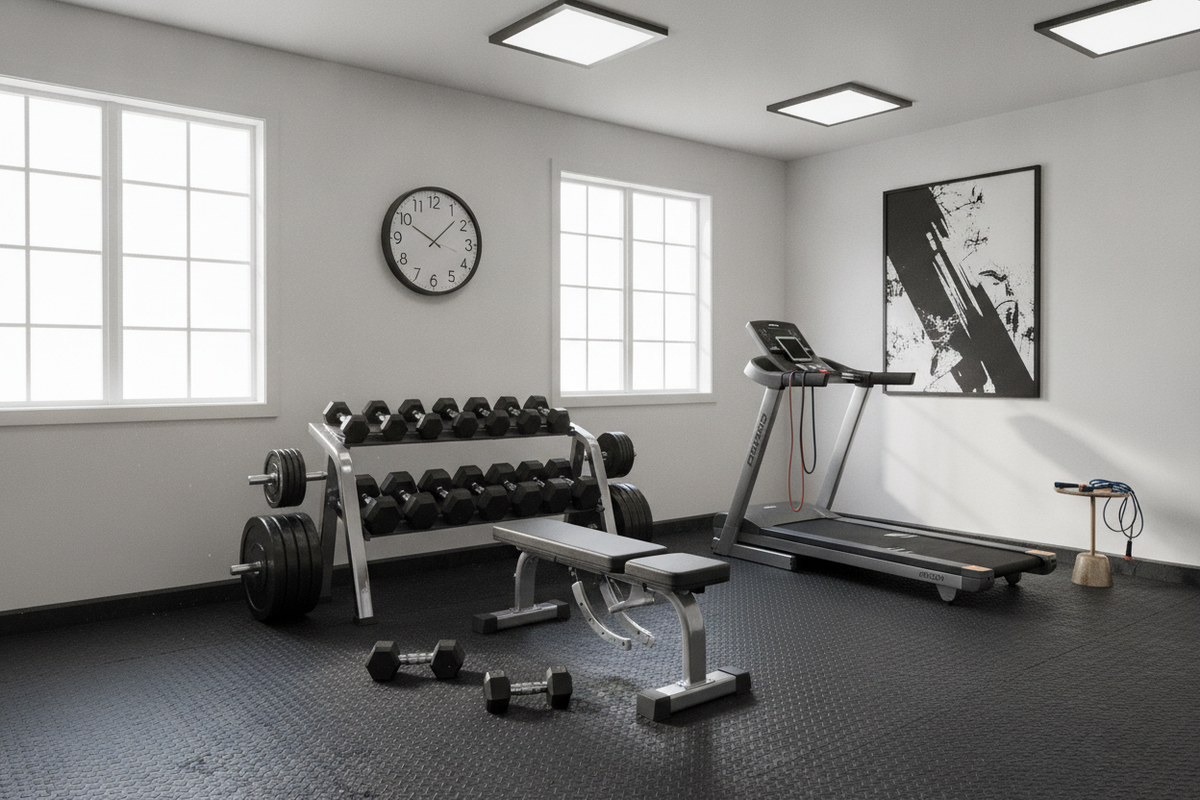
When building an adaptable setup for multi-discipline sessions, equipping your space with reliable gear from a dedicated strength training collection helps maintain organized weight stations next to open cardio bays. Keeping free weights, racks, and benches arranged along the perimeter preserves an open central area for dynamic conditioning, preventing equipment clutter from disrupting fast transitions.
Traction, Shock Absorption, and Surface Protection During High-Movement Transitions
Combined strength and conditioning workouts place varied demands on your training surface. Resistance training requires firm, non-compressible support underfoot, whereas cardio drills involve multidirectional movement and lateral forces. Positioning an expansive, non-slip large surface workout product across your primary training floor ensures both heavy barbell racks and dynamic cardio movements remain stable without damaging hardwood or concrete subfloors.
Mat Hygiene and Sweat Management Across Combined Workouts
Because back-to-back lifting and aerobic sessions generate increased perspiration, durable and water-resistant protective mats are essential for maintaining clean home environments. Selecting closed-cell surfaces allows for quick wipedowns between training phases, preserving traction and ensuring the training area remains hygienic for floor-based cooldown stretches.
Understanding the benefits of doing cardio after weights empowers you to construct balanced, goal-oriented training sessions. By prioritizing strength work when energy is highest and pairing it with appropriate conditioning and supportive gym flooring, you can achieve a versatile, durable home fitness routine.