Best Bigger Bum Exercises: Movement Vectors, Routine Design, and Home Floor Staging
Developing muscular, well-shaped glutes requires more than randomly performing squats or basic bodyweight kicks. The gluteal complex—consisting of the gluteus maximus, gluteus medius, and gluteus minimus—is a multifaceted muscular structure responsible for hip extension, external rotation, abduction, and pelvic stabilization. To achieve comprehensive muscular development, your training program must engage these muscles across different planes of motion and varied tension curves.
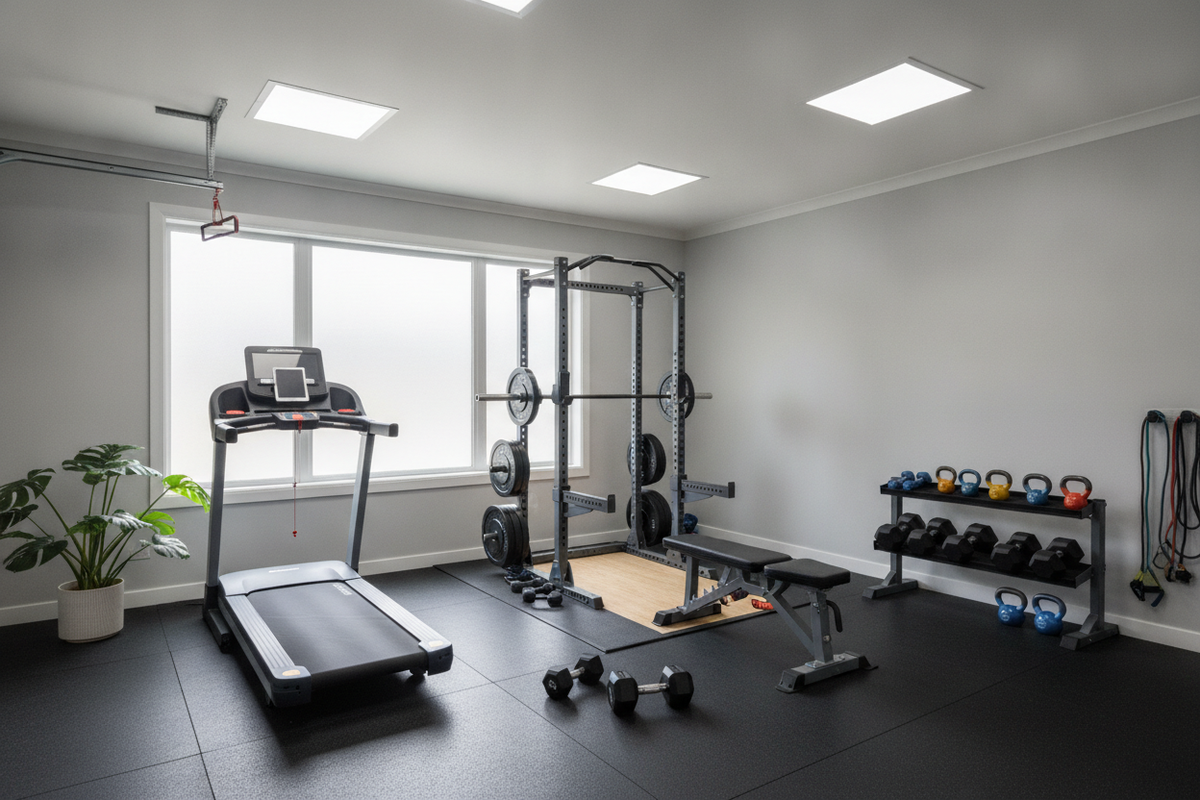
Equally critical to exercise selection is your training environment. Many primary glute movements involve high horizontal shear forces, heavy axial loads, or deep single-leg lunges. Establishing a secure, slip-resistant base at home protects your joints, anchors your equipment, and ensures full force transfer into the target muscles.
Biomechanical Foundations: How Glute Hypertrophy Vectors Work
Glute hypertrophy occurs when muscle fibers are subjected to mechanical tension across diverse movement paths. Depending on the movement pattern, peak mechanical tension occurs either when the glute fibers are fully lengthened (stretched) or when they are fully shortened (contracted). A balanced regimen targets both ends of the tension curve while incorporating lateral stability work.
Horizontal vs. Vertical Force Vectors
Movement vectors dictate how resistance acts on the hip joint. Vertical force patterns, such as standard squats and Romanian deadlifts, place maximum tension on the gluteus maximus when the hips are deeply flexed in a lengthened state. In contrast, horizontal force patterns, such as hip thrusts and glute bridges, direct tension horizontally across the pelvis, creating peak contraction when the hips are in full extension.
Understanding the biomechanics of glute training helps clarify why relying solely on traditional vertical squats often leads to quad-dominant fatigue rather than targeted posterior development. Incorporating horizontal hip extension ensures the upper and mid fibers of the gluteus maximus receive maximum loading at lockout.
Lateral and Abduction Vector Roles
The gluteus medius and minimus sit along the upper lateral contour of the hip. Their primary roles are hip abduction (moving the leg away from the midline) and stabilizing the pelvis during single-leg actions. Training along lateral vectors creates balanced pelvic support, reduces knee valgus collapse during heavy lifts, and rounds out the upper shelf of the hips.
The Best Bigger Bum Exercises by Movement Category
Structuring your routine around specific movement mechanics ensures every region of the gluteal complex is loaded effectively. Below are the foundational exercises categorized by their mechanical loading profile.
Shortened-Position Powerhouses: Hip Thrusts and Glute Bridges
Barbell hip thrusts and bench glute bridges remain foundational exercises for glute hypertrophy because they maximize tension at full hip extension without placing heavy compressive loads directly along the spine.
- Barbell Hip Thrust: Position your upper back against a stable workout bench with the lower edge of your shoulder blades aligned with the bench rim. Roll a padded barbell directly over your hip crease. Set your feet flat on the floor roughly shoulder-width apart, ensuring your shins are completely vertical at the top of the movement. Drive through your heels, extend your hips upward, and finish with a slight posterior pelvic tilt and a deliberate glute squeeze while keeping your ribcage depressed.
- Single-Leg Glute Bridge: Performed on the floor or with shoulders elevated, this unilateral variation isolates each glute independently, helping correct strength asymmetries without requiring heavy external weights.
Lengthened-Position Builders: Romanian Deadlifts and Bulgarian Split Squats
Exercises that challenge the glutes in a stretched position promote high levels of muscle fiber recruitment and mechanical stimulus.
- Romanian Deadlifts (RDLs): Stand with feet hip-width apart holding dumbbells or a barbell. Soften your knees slightly, then push your hips backward as if trying to touch a wall behind you. Keep the weight tracking close to your shins, maintaining a neutral spine throughout. Lower the weight only until your hips stop traveling backward, then push through your heels and bring your hips forward to complete the repetition.
- Bulgarian Split Squats (Rear-Foot Elevated): Rest the top of your rear foot on a bench or sturdy platform. Step forward into a lunge stance and hinge your torso forward at a roughly forty-five-degree angle. Lower your hips down and back to place primary tension on the front glute rather than the front quadriceps.
Executing dynamic split squats and heavy lunges requires absolute traction. Setting up on a broad large exercise mat surface prevents foot slippage during deep eccentrics and absorbs the pressure of heavy dumbbell loads.
Isolation and Abduction Movements: Cable Kickbacks and Side-Lying Abductions
Isolation movements allow for higher repetition schemes with low central nervous system fatigue, targeting the gluteus medius, minimus, and upper fibers of the gluteus maximus.
- Standing Cable or Resistance Band Kickbacks: Secure an ankle strap or resistance band. Hinge slightly at the waist and extend your working leg backward and outward at a thirty-degree angle, aligning the movement path with the natural orientation of the upper glute fibers.
- Side-Lying Hip Abductions and Clamshells: Performed on a mat with or without a resistance band above the knees. These movements isolate the hip abductors and build foundational rotational control. Using dedicated cushioned exercise mats prevents painful hip bone contact against hard subfloors during side-lying work.
Designing Progressive Workouts for Bigger Glutes
Consistency and progressive overload drive long-term muscle adaptation. Rather than exhausting your legs with excessive daily volume, structure your workouts to allow sufficient rest and tissue recovery.
Balanced Lower-Body Routine Architectures
A well-rounded plan distributes volume across horizontal, vertical, and lateral movements. Combining posterior chain work with targeted glute and thigh routines supports overall lower-body balance and functional joint stability.
- Sample Glute-Focused Workout:
- 1. Barbell Hip Thrust: 4 sets of 8 to 10 repetitions (Horizontal Shortened)
- 2. Dumbbell Romanian Deadlift: 3 sets of 10 to 12 repetitions (Vertical Lengthened)
- 3. Bulgarian Split Squat: 3 sets of 10 repetitions per leg (Unilateral Lengthened)
- 4. Standing Resistance Band Kickback: 3 sets of 15 to 20 repetitions (Isolation/Abduction)
- 5. Side-Lying Clamshell or Banded Abduction: 2 sets of 20 repetitions (Stability Finisher)
Managing Volume, Intensity, and Recovery
For most lifters, training the glutes two to three times per week provides an optimal balance between mechanical stimulus and recovery. Focus on executing every repetition with a controlled two-to-three-second eccentric phase, a brief pause at peak contraction, and steady progression in either load, repetitions, or movement control over time.
Home Floor Staging, Equipment Placement, and Joint Protection
Training at home introduces unique structural challenges that do not exist on commercial gym surfaces. Hardwood, laminate, and tile floors can be slick, unstable, and vulnerable to damage from dropped weights or shifting benches.
Anchoring Thrust Benches and Mitigating Slide
During heavy hip thrusts, your back exerts considerable horizontal force against the workout bench. On a slick subfloor, this force causes the bench to slide backward, compromising spinal alignment and interrupting the set. Placing your bench and feet on a high-density home gym flooring mat creates firm friction against both the bench feet and your footwear, locking your setup in place.
Shock Absorption and Subfloor Preservation
Heavy dumbbells used in RDLs or split squats generate significant downward force when set down. Dense exercise flooring acts as a protective shield for your home subfloor while providing supportive cushioning for kneeling hip drills, kneeling kickbacks, and floor bridges. A dense, resilient surface dampens impact noise and minimizes unnecessary pressure on your knees and wrists.
Common Form Mistakes and Optimization Strategies
Refining technical cues ensures that tension remains directly on the glutes rather than migrating into the lumbar spine or quadriceps.
- Overarching the Lower Back: Lifters often attempt to push the barbell higher in a hip thrust by arching their lumbar spine. Instead, stop the upward drive when your hips reach a straight line with your torso, keeping your chin tucked toward your chest.
- Placing Feet Too Far or Too Close: In a glute bridge or hip thrust, placing feet too far forward shifts the work into the hamstrings, while placing them too close shifts tension to the quads. Adjust your stance until your lower legs form a ninety-degree angle to the floor at top extension.
- Rushing the Eccentric Phase: Dropping rapidly through the lowering phase of RDLs and split squats wastes valuable muscle-building stimulus. Maintain slow, controlled tension throughout the descent to maximize recruitment.
By combining vector-based movement selection, progressive training principles, and a stable, high-grip home floor foundation, you establish an effective, sustainable environment for building glute strength and shape.