Lower-Body Mechanics: The Best Exercises for Butt and Thighs, Program Design, and Floor Setup
Understanding Lower-Body Biomechanics: Glute and Thigh Synergy
Developing lower-body strength and shape requires a clear understanding of how the hips, knees, and ankles work together. The gluteal complex—comprising the gluteus maximus, gluteus medius, and gluteus minimus—functions in tandem with the primary thigh musculature, which includes the quadriceps along the front of the femur, the hamstrings across the posterior chain, and the adductor group along the inner thigh.
When planning training sessions, balancing knee-dominant and hip-dominant movement patterns ensures proportional muscular recruitment. Knee-dominant patterns emphasize knee extension under load, placing primary tension across the quadriceps while engaging the gluteus maximus at the base of the movement. Conversely, hip-dominant movements hinge at the pelvis, lengthening the hamstrings and relying on gluteal force to drive hip extension back to a neutral upright posture. Integrating both planes creates functional balance and supports joint integrity throughout dynamic training.
Core Movement Categories: The Best Exercises for Butt and Thighs
A comprehensive training program incorporates four primary movement categories to challenge the musculature from multiple angles and mechanical leverage points. For detailed hypertrophy techniques, lifters can reference exercise butt thighs guide to fine-tune tempo and muscle activation.
Knee-Dominant Patterns: Squats and Goblet Variations
Squats serve as a cornerstone for building the anterior thighs and glutes. Variations such as goblet squats, front squats, and barbell back squats allow individuals to adjust torso angles and loading mechanics according to their mobility.
- Goblet Squat: Holding a dumbbell or kettlebell close to the chest promotes an upright torso, encouraging deep knee flexion and high quadriceps involvement while keeping shear forces low across the lumbar spine.
- Back Squat: Loading the weight across the upper back allows greater total resistance, requiring significant gluteal drive to exit the bottom of the movement.
Hip-Dominant Patterns: Romanian Deadlifts and Hinges
Hinge variations place the primary training stimulus on the posterior chain. The Romanian deadlift (RDL) stands out as an exceptional choice for targeting the hamstrings and lower gluteal fold.
- Execution Focus: Initiating the movement by sending the hips rearward with a soft knee bend stretches the hamstrings under tension.
- Lockout Mechanics: Returning to the top position requires deliberate hip extension, contracting the glutes without hyperextending the lower back.
Unilateral Patterns: Split Squats, Reverse Lunges, and Step-Ups
Single-leg training is vital for correcting bilateral strength imbalances and activating the gluteus medius to maintain pelvic leveling.
- Bulgarian Split Squats: Elevating the rear foot increases the range of motion for the lead leg, intensely challenging both the glutes and quads.
- Reverse Lunges: Stepping backward maintains a vertical front shin, emphasizing glute loading while reducing forward knee travel.
- Step-Ups: Driving through the heel onto an elevated, stable surface builds functional strength and recruits the upper glute complex.
Horizontal and Floor-Based Bridging: Hip Thrusts and Glute Bridges
Horizontal hip extension movements isolate the glutes by maintaining peak tension at full hip extension without placing direct vertical compression on the spinal column.
- Barbell Hip Thrust: Setting the upper back against a stable bench allows full hip extension against horizontal resistance, maximizing gluteus maximus recruitment at peak contraction.
- Floor Glute Bridge: Performed directly on a supportive mat, this variation provides a beginner-friendly or high-repetition option to isolate hip extension mechanics.
Structuring Balanced Weekly Lower-Body Routines
Consistency and progressive overload are fundamental to long-term progress. Rather than performing random workouts, organizing exercises into structured weekly sessions ensures proper volume and adequate recovery between training bouts. For lifters focused on athletic development, exploring exercise buttocks thighs guide can provide additional programming insights.
A typical lower-body split can be divided across two dedicated weekly sessions:
- Session A (Knee-Dominant Emphasis): Front or goblet squats, Romanian deadlifts, walking lunges, and calf raises.
- Session B (Hip-Dominant & Unilateral Emphasis): Barbell hip thrusts, Bulgarian split squats, hamstring curls, and lateral band walks.
Pacing working sets with sufficient rest intervals allows the central nervous system and muscular tissue to recover between heavy efforts, supporting consistent execution from the first repetition to the last.
Home Gym Floor Staging and Equipment Placement
Executing heavy lower-body exercises at home requires an intentional floor plan. Heavy free weights, intense foot drive during lunges, and the placement of benches for hip thrusts demand a reliable, dedicated surface.
Subfloor Protection and Impact Dissipation
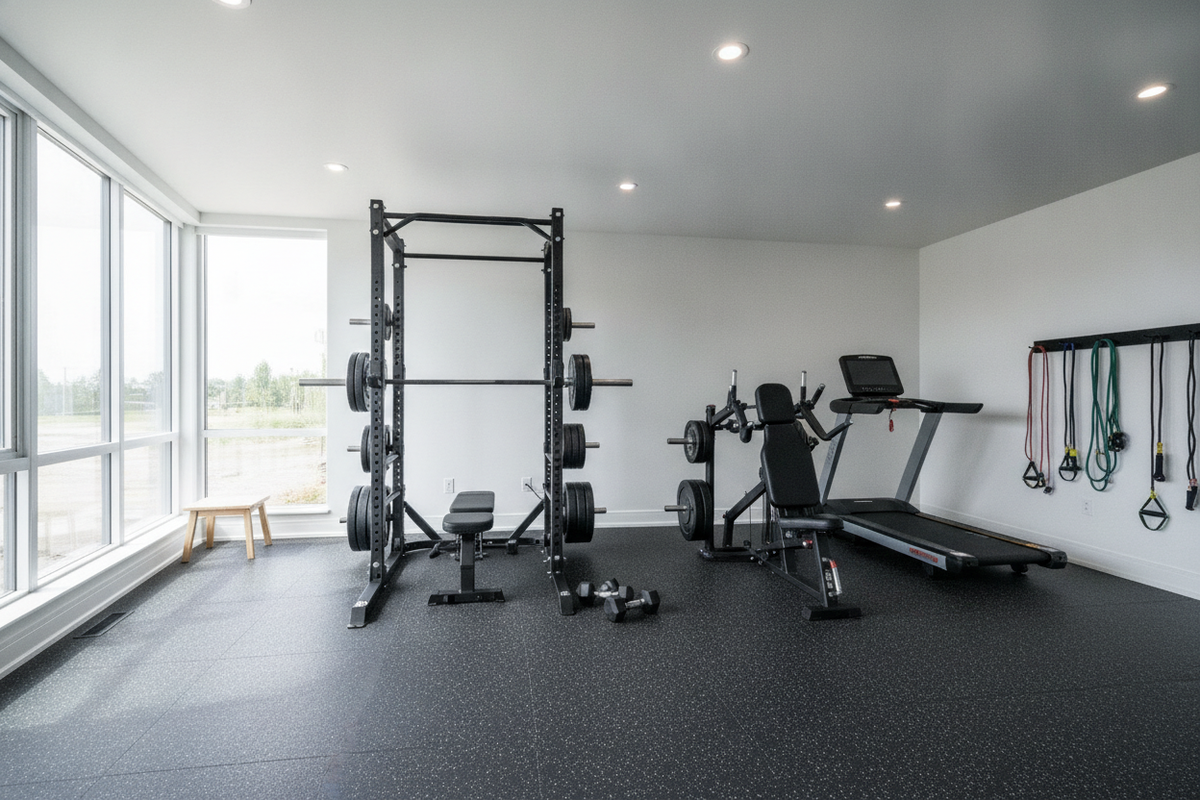
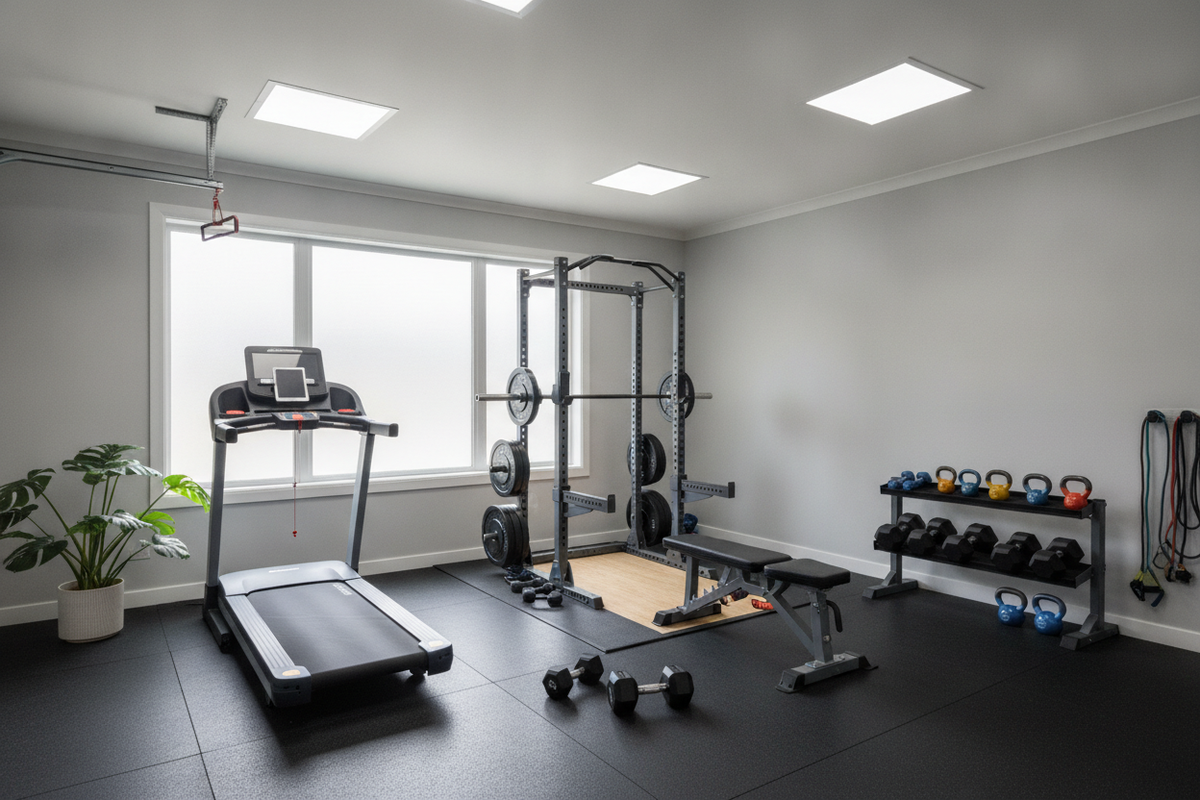
Lower-body movements frequently involve setting heavy dumbbells, kettlebells, or barbells down onto the floor. Without adequate cushioning, repeated impacts can damage underlying hardwood, laminate, or concrete subfloors. Utilizing a 6x10ft exercise mat yoga mat gym flooring for home workout creates an expansive protective footprint capable of accommodating weight racks, benches, and free weights simultaneously.
For smaller training footprints or bodyweight-focused routines, deploying a versatile exercise mat provides essential point-load cushioning beneath the joints during floor bridges and kneeling variations.
Traction, Stability, and Joint Cushioning for Dynamic Footwork
Dynamic lower-body movements like walking lunges, step-ups, and wide-stance squats generate significant lateral and shear forces against the floor. A slick or bunching surface compromises foot positioning and disrupts balance. Setting up a spacious large exercise mat ensures firm traction under athletic shoes, helping lifters maintain stable foot drive during heavy lifts.
In our experience evaluating home training zones, anchoring flat workout benches securely on a high-traction mat prevents unwanted sliding during barbell hip thrusts, allowing the lifter to concentrate entirely on glute activation.
Maintenance, Care, and Longevity of Workout Flooring
Keeping training surfaces clean preserves grip performance and extends material life. Sweat, chalk, and everyday dust can accumulate on mat surfaces over time, reducing surface friction and traction during dynamic footwork.
- Routine Cleaning: Wipe down mat surfaces after workouts using a soft microfiber cloth dampened with warm water and a mild, neutral soap solution.
- Avoiding Harsh Chemicals: Steer clear of bleach, petroleum-based cleaners, or abrasive scrubbing tools that can degrade synthetic materials and wear down anti-slip textures.
- Proper Drying: Allow the flooring to air dry completely before rolling or stacking equipment on top to prevent moisture entrapment beneath heavy bases.
Summary and Execution Checklist for Lower-Body Training
Achieving balanced lower-body development relies on methodical movement selection, structured weekly programming, and a dedicated, safe workout surface. Follow this checklist to keep training sessions productive:
- Select at least one knee-dominant, one hip-dominant, and one unilateral movement per workout.
- Maintain a neutral spine during hinge and squat variations to keep mechanical tension on the working muscles.
- Prioritize full hip lockout at the top of thrusts and bridges without arching the lower back.
- Stage workout spaces with high-density, non-slip flooring to protect subfloors and provide stable footing.
- Clean workout mats regularly to maintain surface traction for safe, consistent lifts.