Benefits of Cardio and Weight Training: 6 Strategic Integration Methods and Home Floor Staging Blueprints
Integrating aerobic exercise with resistance training creates a well-rounded foundation for functional movement, daily stamina, and lifting consistency. Many home fitness enthusiasts wonder how to balance conditioning work without interfering with strength progress or cluttering their training space. Understanding the benefits of cardio and weight training allows lifters to structure workouts that build athletic stamina while maintaining solid bar mechanics and protecting home flooring.
Understanding the Synergistic Benefits of Cardio and Weight Training
Strength and conditioning complement each other when programmed thoughtfully. Regular aerobic exercise supports recovery between heavy sets by facilitating oxygen flow and metabolic waste clearance. For lifters, maintaining a solid cardiovascular base prevents premature breathlessness during high-volume compound lifts such as squats, deadlifts, and lunges.
Developing cardio for strength athletes does not require endless hours on a treadmill. Instead, moderate conditioning supports movement capacity and joint mobility. By pairing resistance exercises outlined in a comprehensive strength training workout guide with targeted conditioning intervals, lifters can maintain higher training density and stay refreshed across longer workout blocks. Combining these modalities in a balanced gym workout cardio and strength routine promotes total-body preparedness for both heavy efforts and dynamic movement.
Balancing Fatigue and Adaptation in Cardio-Based Strength Training
The primary challenge when adopting cardio based strength training is managing physical fatigue. If dynamic conditioning is performed immediately before heavy lifting, central nervous system fatigue and muscular exhaustion can degrade form, increasing the likelihood of poor technique. Strategic sequencing ensures that each exercise modality achieves its intended adaptation without compromising the other.
When incorporating cardio into strength training, place maximum-effort barbell or dumbbell lifts at the start of the workout when focus and stability are highest. Conditioning elements can then follow as secondary work or metabolic finishers. Organizing equipment efficiently—using items from a dedicated strength training collection alongside open flooring—allows lifters to switch between heavy stations and open-mat conditioning drills without chaotic transitions or fatigue-induced missteps.
6 Practical Ways to Add Cardio to Your Strength Workouts
Finding how to add cardio into weight training depends on schedule availability, current conditioning levels, and available floor space. Here are six reliable methods to structure your sessions:
- Dynamic Movement-Prep Warmups: Allocate the initial portion of a session to continuous bodyweight flows, skipping rope, or light rower intervals to elevate core temperature before touching a barbell.
- Non-Competing Intraset Intervals: Insert low-intensity active recovery, such as light cycling or step-ups, between upper-body pressing sets where leg fatigue will not compromise lifting stability.
- Compound Complexes: Perform unbroken sequences of multi-joint dumbbell or kettlebell movements to blend resistance loading with elevated breathing rates.
- Post-Lift Metabolic Finishers: Conclude lifting days with brief conditioning circuits, such as sled pushes, shadowboxing, or medicine ball slams, once technical lifts are complete.
- Dedicated Conditioning Splits: Schedule aerobic sessions on non-lifting days to keep strength workouts focused strictly on load progression and form.
- Low-Intensity Active Recovery Days: Use off days for steady walking, light mobility flows, or gentle cycling to encourage tissue recovery and keep joints moving freely.
Learning how to add cardio to strength training allows you to tailor intensity based on recovery capacity. Whether exploring how to add cardio to your workout via quick finishers or researching how to incorporate cardio into strength training through dedicated split days, selecting suitable movements keeps routines engaging and sustainable. You can adapt these methods alongside equipment ideas in a workout weight training guide to construct an effective home layout.
When deciding to add cardio or determining how to implement cardio into weight training, start conservatively. Introduce one or two conditioning elements weekly to evaluate recovery, joint response, and lifting energy before increasing tempo or volume.
Home Gym Zoning and Floor Protection for Hybrid Workouts
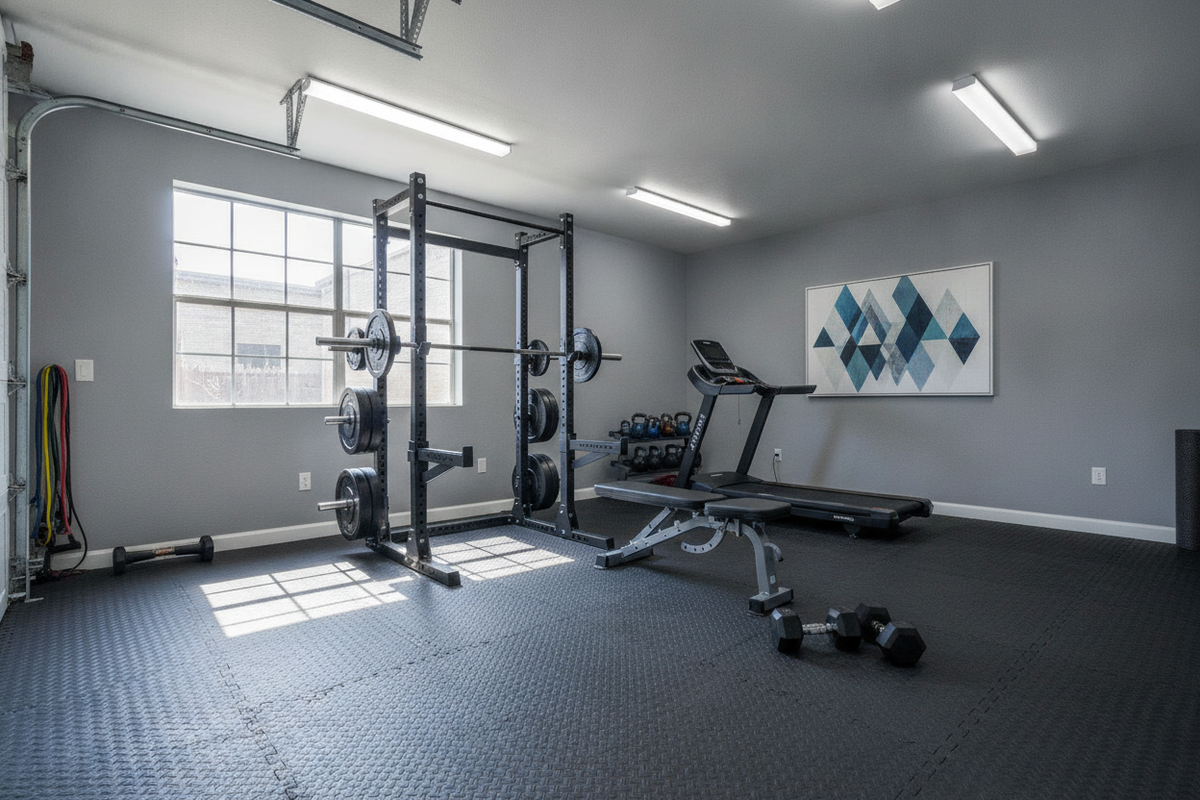
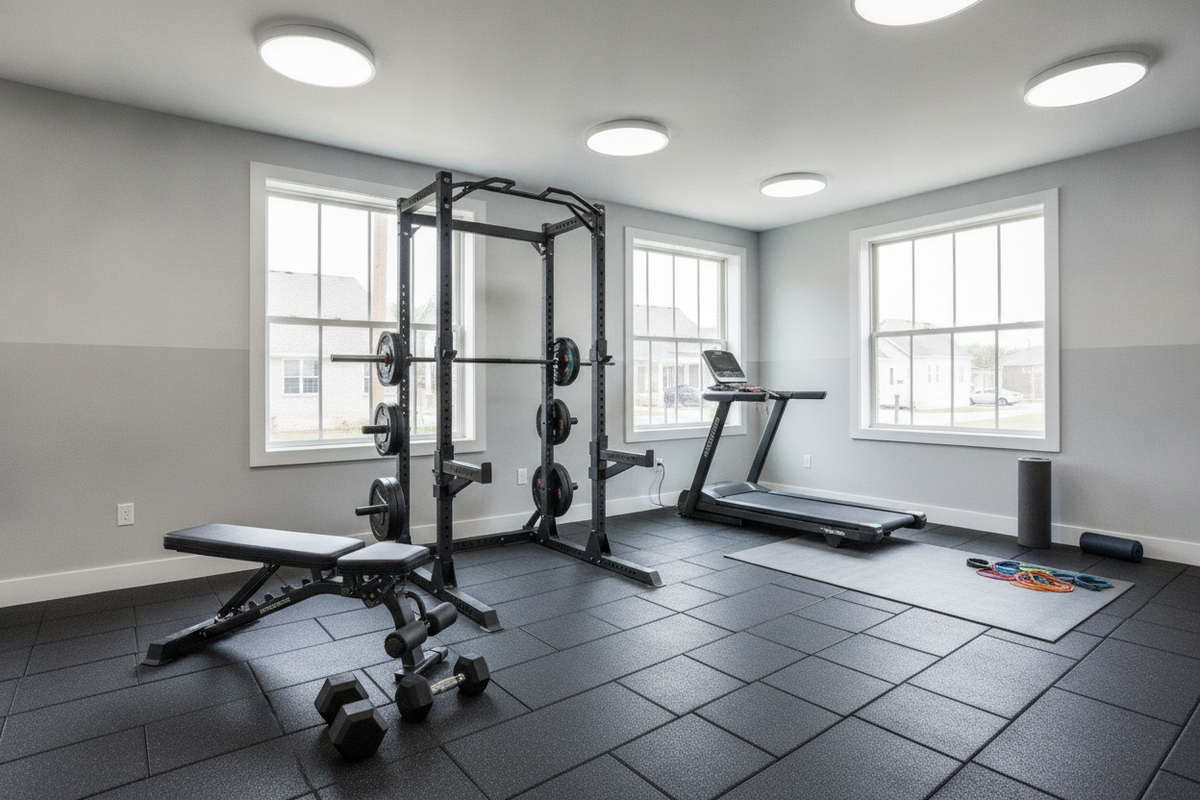
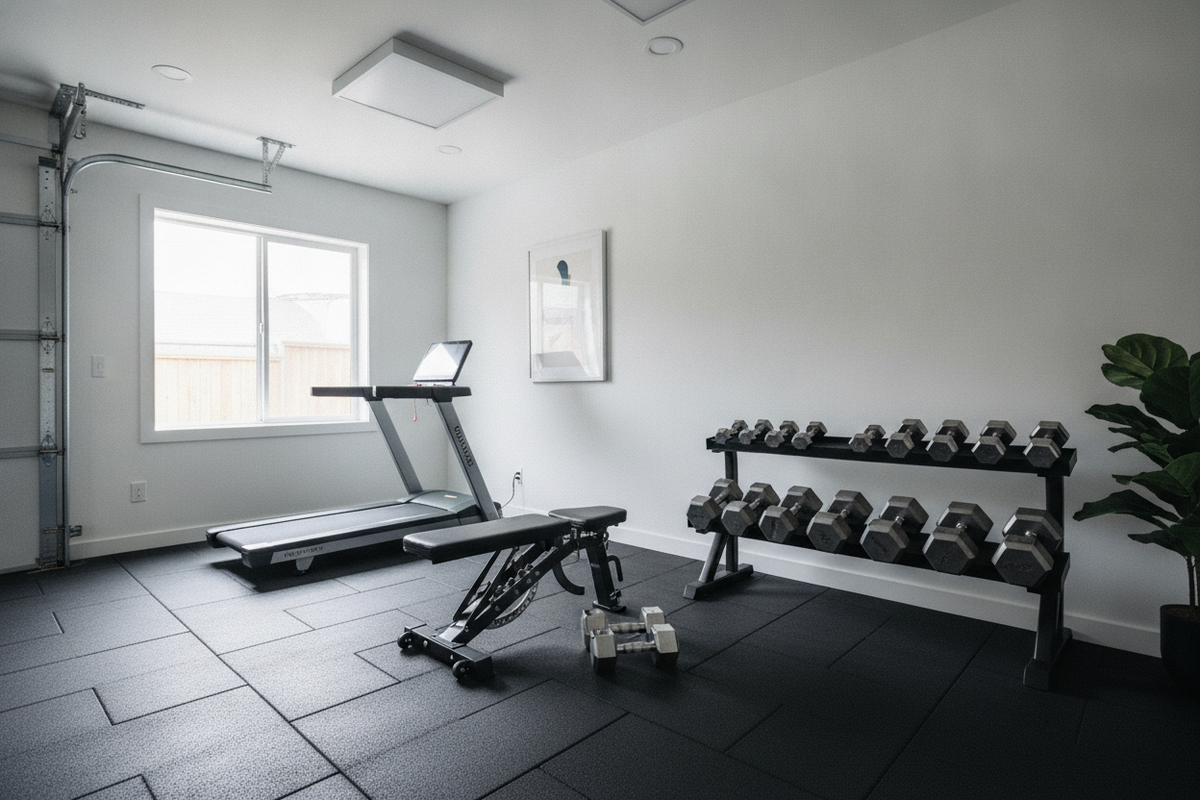
Hybrid training sessions that combine dynamic conditioning with heavy resistance require dedicated floor staging. Fast footwork, lateral bounds, and skipping generate repetitive downward friction, whereas barbell and dumbbell work introduces concentrated point-load pressure. Establishing specific zones protects your base subfloor and creates distinct areas for varied movement patterns.
A well-planned hybrid room divides space into a static lifting zone and an open dynamic conditioning zone. The lifting area accommodates racks, benches, and plate storage, while the conditioning zone provides uninterrupted space for agility drills and floor routines. Adding a spacious gym workout product provides the necessary surface area and traction required for pivoting, jumping, and floor-based conditioning without sliding on smooth surfaces.
Maintenance, Traction Care, and Mat Setup for High-Tempo Sessions
High-tempo hybrid workouts generate significant sweat and surface friction. Maintaining mat hygiene and surface stability is essential for consistent traction during rapid footwork transitions. Regularly sweeping away dust and wiping down mat surfaces with mild soap and water preserves the non-slip textured finish.
Positioning a dedicated gym workout product on a clean, dry subfloor prevents mat shifting during fast-paced bodyweight intervals. Ensuring seamless mat placement eliminates trip hazards when moving quickly between a barbell station and an open conditioning space, keeping your hybrid home training environment organized and dependable.