6 Foundational Strengthening Training Movements: Mechanics, Equipment Staging, and Floor Protection
Understanding Strengthening Training: Core Principles and Mechanics
At its core, strengthening training involves applying controlled resistance against targeted muscular structures to prompt physiological adaptations. When lifters ask what is a strength workout or what is muscle training, the answer centers on moving external loads or bodyweight through functional ranges of motion under sustained tension. Unlike casual conditioning or high-speed cardiovascular routines, physical strength training prioritizes movement precision, joint alignment, and deliberate tempo over momentum.
A well-structured strength training activity stimulates neuromuscular coordination by teaching motor units to fire in synchronized patterns. Whether utilizing free weights, resistance bands, or bodyweight levers, the primary objective is progressive mechanical tension. To establish balanced development across major muscle groups, following an exercise strength guide helps organize weekly sessions into cohesive movement archetypes rather than disjointed exercises.
6 Foundational Strength Exercises for Full-Body Development
Understanding what does strength training consist of starts with recognizing universal movement archetypes. An effective strength training protocol focuses on multi-joint patterns that engage extensive kinetic chains rather than isolated muscles alone. Below are six foundational strength exercise patterns, complete with execution cues and mechanics.
1. The Goblet Squat: Quad Tension and Torso Uprightness
The goblet squat serves as a cornerstone training exercise for lower-body development. Holding a single dumbbell or kettlebell against the chest creates an anterior counterbalance, which naturally assists in keeping the torso upright while achieving parallel hip depth.
- Foot Stance: Set feet slightly wider than shoulder-width with toes turned outward between fifteen and thirty degrees.
- Descent: Initiate the movement by pushing the hips back and spreading the knees outward in line with the middle toes.
- Torso Position: Keep the chest tall and the elbows pointed downward inside the knees at the bottom of the movement.
2. The Romanian Deadlift: Posterior Chain Engagement and Hip Hinge Mechanics
The Romanian deadlift emphasizes hip hinge mechanics, shifting load directly onto the hamstrings and glutes while requiring isometric trunk stability. Mastering this muscle strength training pattern reduces unnecessary lower-back strain during daily lifting tasks. For deeper insights into targeted lower-body variations, review a comprehensive training exercise guide to refine hip extension mechanics.
- Hinge Pattern: Soften the knees slightly and push the hips straight backward as if aiming to touch a wall behind you.
- Barbell or Dumbbell Path: Keep the weights grazing close to the shins and thighs throughout the entire descent.
- Spinal Neutrality: Maintain a straight line from the crown of the head to the tailbone without hyperextending the neck.
3. The Floor Press and Push-Up: Controlled Horizontal Pressing
Horizontal pressing targets the pectorals, anterior deltoids, and triceps. Performing presses on a supportive, flat surface offers distinct biomechanical benefits by limiting extreme shoulder extension at the bottom of the movement.
- Scapular Set: Retract and depress the shoulder blades against the floor before initiating the press.
- Elbow Angle: Keep the upper arms angled at roughly forty-five degrees relative to the torso rather than flared wide.
- Pressing Line: Drive the weights upward in a smooth arc until the arms reach full extension without losing upper back contact.
4. The Single-Arm Dumbbell Row: Upper Back Stability and Lat Tension
Balanced upper-body development requires horizontal pulling to counterbalance pushing volume. The single-arm row reinforces anti-rotational core stability while strengthening the latissimus dorsi, rhomboids, and rear deltoids.
- Tripod Base: Position one knee and hand on a flat bench or brace a split stance with one hand resting firmly on an elevated support.
- Pulling Path: Pull the dumbbell toward the hip crease rather than vertically straight into the armpit.
- Torso Discipline: Keep the shoulders square to the floor to prevent rotational twisting through the spine.
5. The Split Squat: Unilateral Balance and Hip Stability
Unilateral strength activity addresses side-to-side muscular imbalances and challenges hip stabilizers in ways bilateral squats cannot replicate. Split squats place the majority of the working load on the front leg while requiring the rear leg to provide balance.
- Stride Length: Step one foot back far enough so both knees form roughly ninety-degree angles at the bottom of the descent.
- Weight Distribution: Keep seventy to eighty percent of your bodyweight anchored through the midfoot and heel of the front leg.
- Vertical Descent: Lower the back knee straight down toward the ground rather than lunging forward over the front toes.
6. The Loaded Suitcase Carry and Plank: Core Bracing Under Movement
Core stability in strengthening training extends beyond traditional crunches. Functional strength requires anti-lateral flexion and anti-extension capabilities. The suitcase carry involves walking with a heavy weight in only one hand, forcing the lateral stabilizers of the trunk to resist leaning.
- Posture Alignment: Stand completely upright with level shoulders and ribs pulled downward toward the pelvis.
- Controlled Cadence: Walk with measured, heel-to-toe strides without letting the weight bounce against the thigh.
- Tension Maintenance: Brace the abdominal wall as if preparing to receive a direct impact.
Home Gym Staging: Equipment Placement and Subfloor Protection
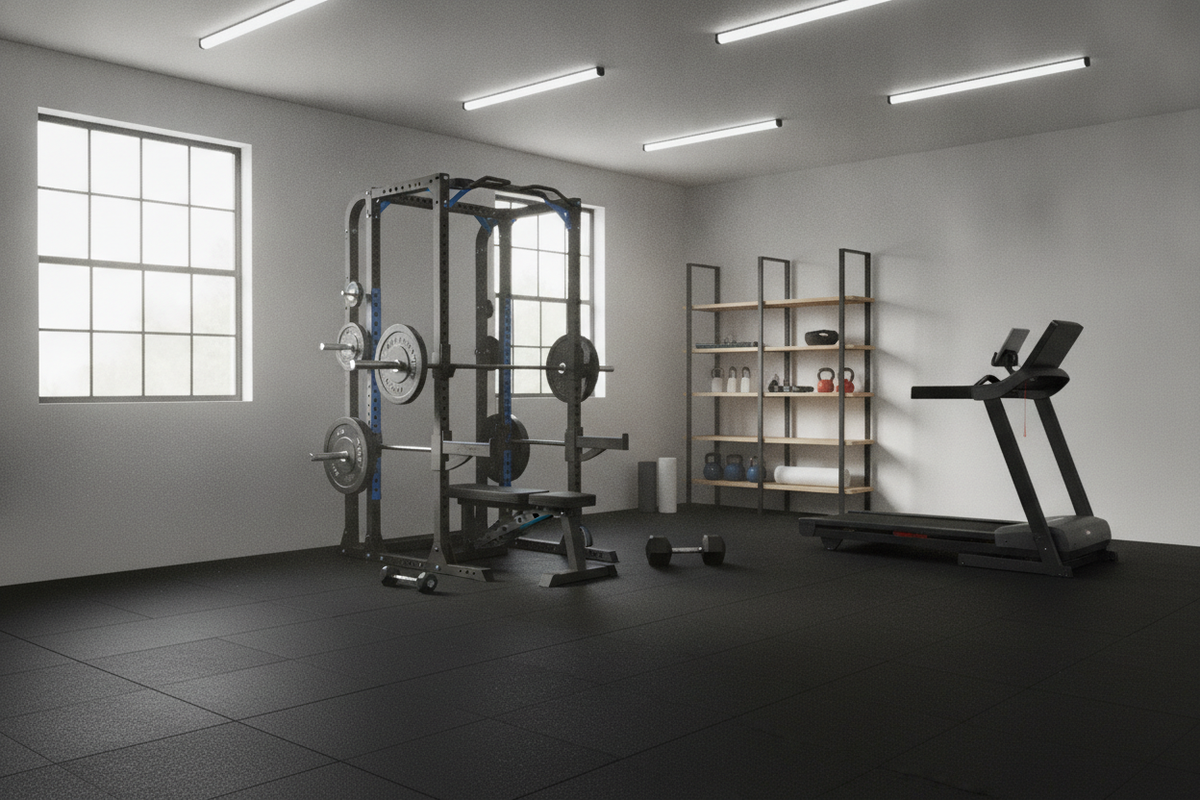
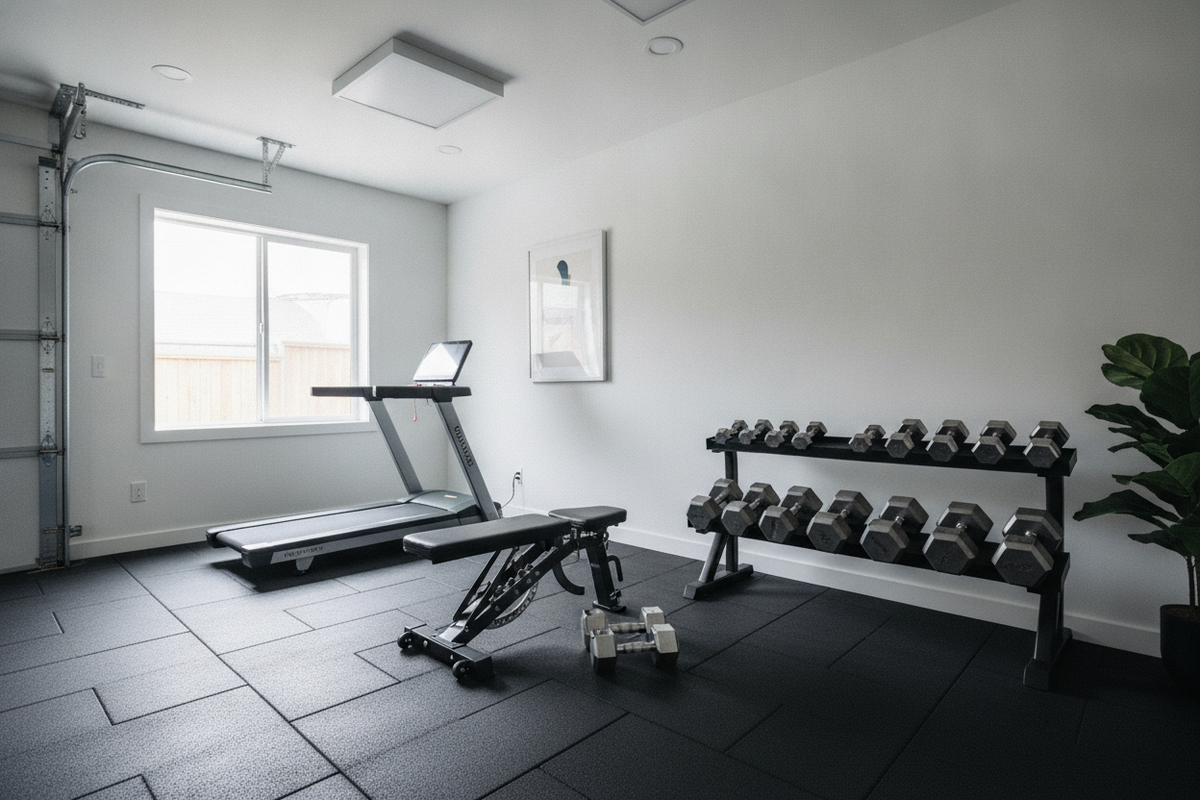
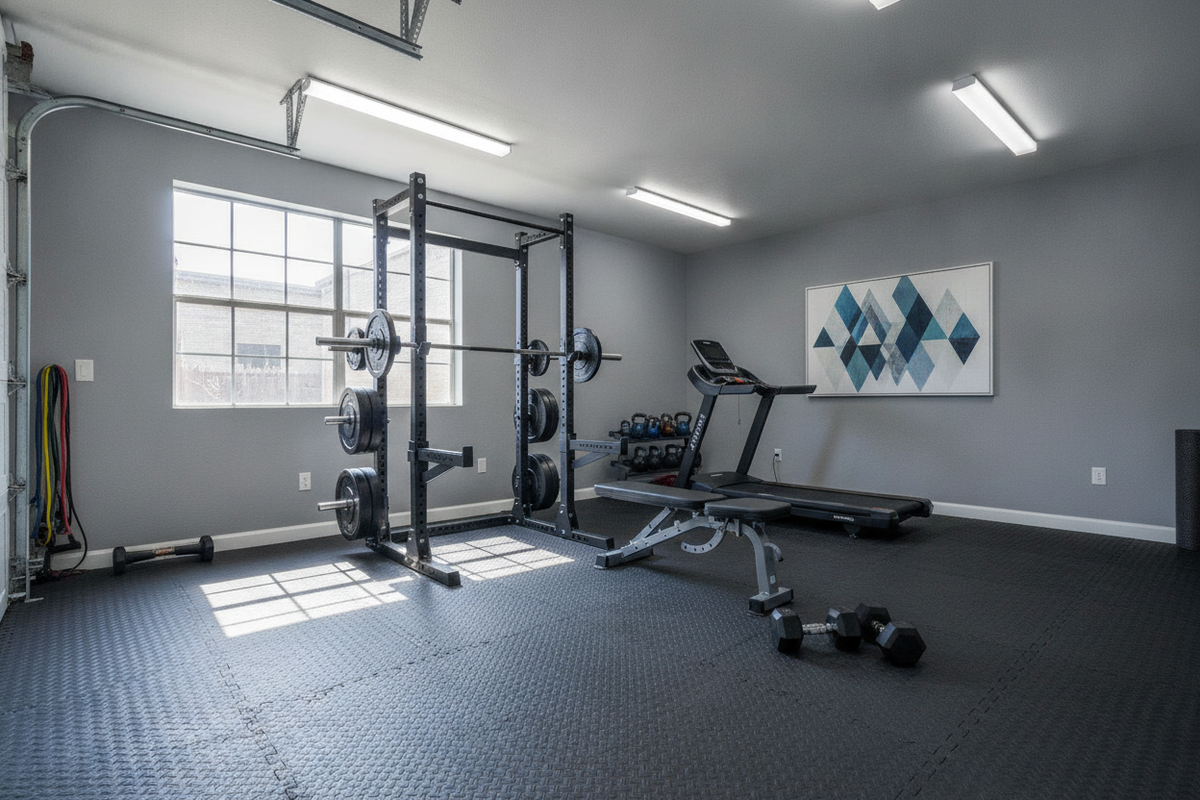
Executing heavy strength workouts at home requires proper floor staging. Subfloors made of concrete or wood can suffer surface degradation and structural impact damage when exposed to repeated loading from free weights. Staging a dedicated training zone with a heavy-duty exercise workout product creates a stable, non-slip boundary that disperses localized point loads across a broader surface area.
When laying out equipment, establish clear perimeters around main lifting zones. Free weights, kettlebells, and adjustable benches should remain organized along the outer perimeter to prevent tripping hazards during dynamic sets. A properly surfaced floor also provides acoustic damping, absorbing the mechanical vibration generated when placing loaded implements back down between working intervals.
Flooring Selection and Equipment Maintenance Guidelines
Maintaining a clean, functional strength training environment ensures consistent traction and extends the lifespan of both floor mats and training implements. Textured, high-density exercise surfaces prevent foot slippage during loaded lifts such as heavy goblet squats and split squats.
To maintain your space effectively, consider the following routine care practices:
- Surface Cleaning: Wipe down matting weekly with a mild soap solution to clear dust, chalk residue, and moisture without degrading the material.
- Weight Storage: Store heavy dumbbells and weight plates on vertical or horizontal storage racks to avoid concentrated pressure points on flooring over extended periods.
- Apparatus Pairing: Complement your floor setup with items from a dedicated strength training collection, such as resistance bands, barbell collars, and chalk blocks, keeping all tools stored in organized bins.
By pairing sound biomechanical execution across foundational movements with a carefully staged workout surface, you establish a resilient foundation for long-term physical progression at home.