Home Gym Free Multi Gym Exercises Chart: Station Blueprints, Movement Mechanics, and Floor Staging
Foundational Framework: How to Structure a Multi Gym Exercise Plan
Multi-station home gyms consolidate several traditional resistance machines into a single, compact footprint. Because these systems use selectorized weight stacks, guided travel paths, and dual-pulley cable setups, they offer controlled movement tracks that minimize the stabilization demands often found in free-weight training. Creating an effective multi gym exercise plan begins with understanding how these mechanical pathways correspond to human movement patterns.
A well-rounded multi gym workout plan balances horizontal pressing, vertical pressing, vertical pulling, horizontal pulling, and isolated lower-body knee flexion and extension. By organizing a home gym free multi gym exercises chart around movement patterns rather than isolated muscles alone, you ensure balanced muscular development and avoid joint overuse. If you are structuring your training split for the first time, reviewing a foundational free workout plan guide helps clarify fundamental volume management and exercise sequencing principles.
Station-by-Station Multi Gym Exercise Chart and Form Directory
Understanding each station's adjustment points and movement geometry ensures that every multi gym exercise targets the intended muscle group effectively. The following directory breaks down proper posture, alignment points, and mechanics across standard multi-gym stations.
Upper Body Pressing Station: Chest Press and Seated Shoulder Press Alignment
The chest press and overhead press stations utilize pivot-arm levers connected to the central weight stack. For the chest press, set the seat height so that the primary press handles align horizontally with mid-chest level. Keep the feet flat on the floor, retract the shoulder blades firmly against the back pad, and maintain a neutral wrist position. Press forward smoothly without letting the elbows lock out aggressively at full extension.
For overhead or inclined shoulder press configurations, adjust the backrest angle and seat height so the handles begin at roughly ear level. Maintain abdominal bracing throughout the press to prevent excessive arching in the lower back as the arms drive upward along the guided path.
Upper Body Pulling Station: Lat Pulldowns and Low Cable Rows
The high pulley station facilitates vertical pulling movements like lat pulldowns. Secure the thigh-hold-down pads snugly against the upper legs to keep your hips anchored. Grasp the wide bar with an overhand grip, establish a slight backward lean from the hips, and initiate the pull by driving the elbows down toward the ribcage rather than pulling primarily through the forearms. Control the weight stack during the ascent to maintain constant cable tension.
For low cable rows, sit with a neutral spine on the seat or floor platform, resting the feet against the footplates with knees slightly soft. Pull the handle toward the lower abdomen while drawing the shoulder blades together. Avoid swinging the torso forward and backward to propel the weight stack.
Lower Body Station: Leg Extensions and Seated Leg Curls
Lower-body stations rely on rotational pivot arms designed for knee extension and flexion. When configuring leg extensions, align the machine's primary pivot axis directly with your knee joints. The lower roller pad should rest comfortably across the lower shins just above the ankles. Extend the legs smoothly until parallel with the floor, pausing briefly before lowering the weight stack with deliberate tempo control.
For seated or lying leg curls, position the padded lever behind the lower calves. Maintain hip contact with the support pad throughout the contraction to prevent pelvic tilting, pulling the heels toward the glutes under full control.
Cable & Accessory Pulley: Triceps Pressdowns, Biceps Curls, and Core Rotations
Adjustable cable attachments allow for isolated accessory work and multidirectional core exercises. When executing triceps pressdowns at the high pulley, keep the upper arms tucked against the sides of the torso, extending only at the elbows. For low-pulley biceps curls, face the station, pin the elbows in place, and curl the bar upward while keeping the wrists rigid.
Low-to-high or high-to-low diagonal cable chops provide functional rotational stimulus. Stand perpendicular to the machine, brace the midsection, and rotate the torso smoothly through the hips and trunk while keeping the arms extended.
The 3-Day Progressive Multi Gym Training Programme
A structured multi gym workout program allows adequate recovery between sessions while providing consistent frequency across all primary stations. Below is a progressive 3-day multi gym training programme suited for building strength and movement familiarity:
-
Day 1: Full-Body Foundation (Push Focus)
- Chest Press: Controlled tempo sets with moderate resistance.
- Lat Pulldown (Wide Grip): Full range of motion with paused contraction.
- Leg Extension: Controlled concentric extension and slow lowering.
- Triceps Pressdown: Cable rope attachment for full lockout.
-
Day 2: Full-Body Foundation (Pull Focus)
- Seated Cable Row: Neutral-grip handle to target mid-back musculature.
- Seated Shoulder Press: Overhead guided pressing with braced core.
- Seated Leg Curl: Smooth hamstring contraction with anchored hips.
- Low-Pulley Biceps Curl: Straight-bar or EZ-attachment curls.
-
Day 3: Integrated Strength and Cable Accessory
- Incline Chest Press or Pec Fly Station: Controlled horizontal adduction.
- High-to-Low Lat Pulldowns (Close Grip): Focused lat isolation.
- Leg Extension and Leg Curl Alternating Sets: Balanced lower-body volume.
- Standing Cable Core Rotations and Triceps Overhead Extensions: Multi-angle cable work.
For individuals looking to refine interval pacing, rest periods, and tempo within their weekly schedule, consulting an exercise workout plan guide offers helpful frameworks for interval-based session management.
Spatial Layout, Weight Stack Protection, and Home Gym Floor Staging
Multi-gym stations concentrate substantial structural weight onto small frame contact points. Steel base feet, heavy weight stacks, and dynamic cable movements create point loading that can damage subfloors or cause frame shifting over time. Proper staging requires durable, high-density flooring beneath the machine.
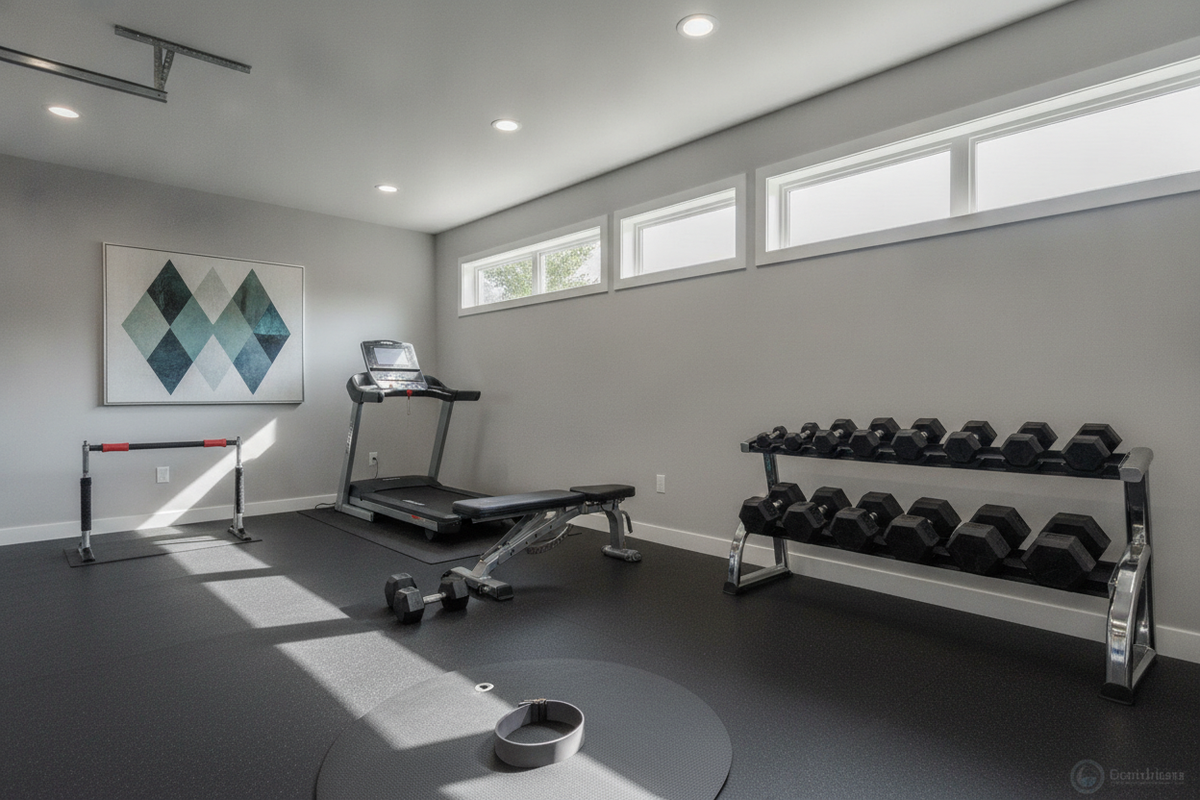
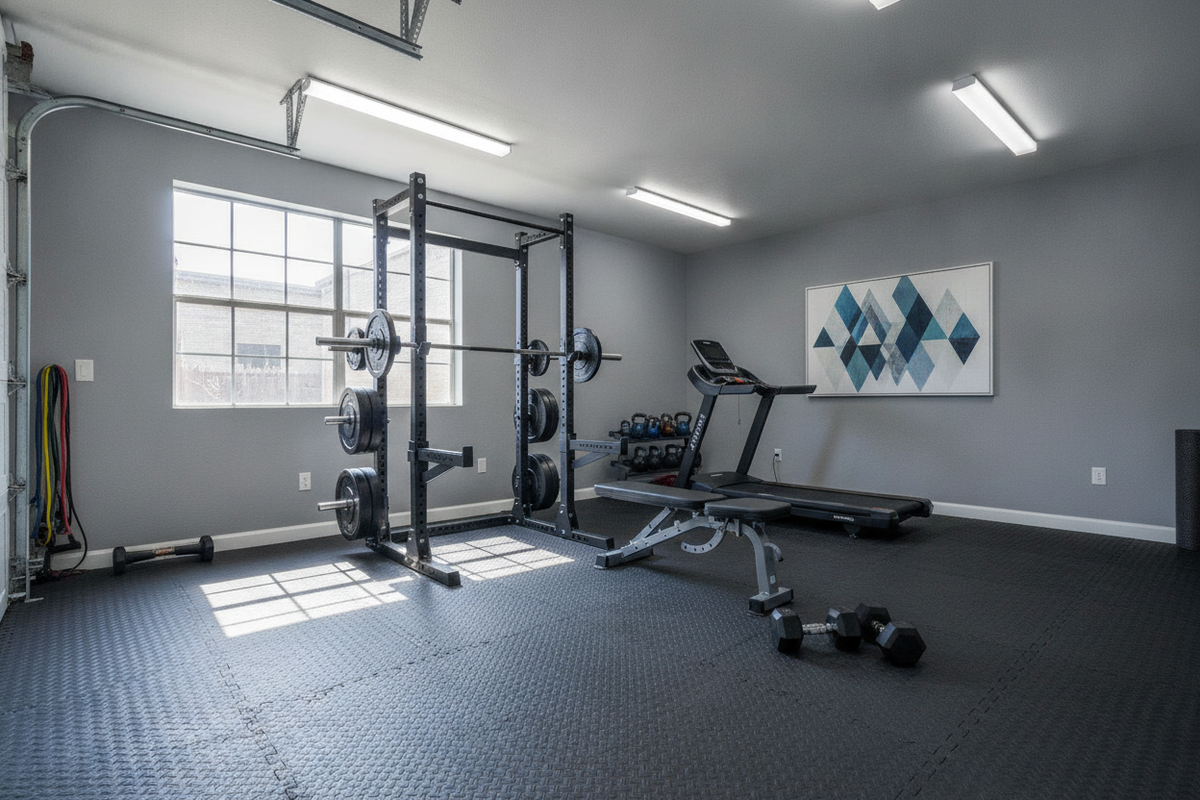
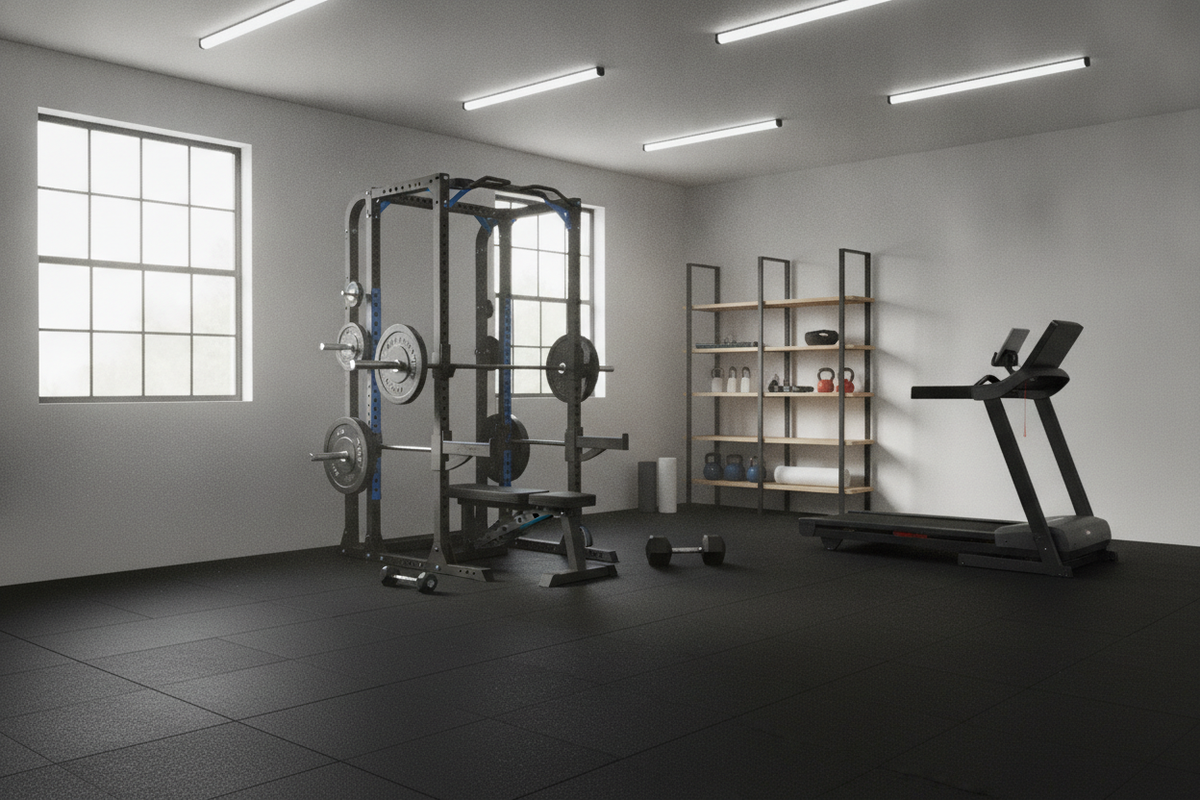
When planning your layout, ensure sufficient clearance around the machine's perimeter. Cable attachments, leg extension levers, and wide pulldown bars require unobstructed room to operate smoothly without striking walls or adjacent equipment. Setting up a dedicated mat from the exercise gym collection provides a stable foundation that absorbs mechanical vibration and protects concrete or hardwood floors.
For setups incorporating standing cable exercises, bodyweight warmups, or accessory bench positions, a continuous surface such as the exercise gym workout product creates an expanded perimeter that accommodates both the machine footprint and active movement space.
Equipment Maintenance and Long-Term Setup Longevity
Routine care preserves the smooth movement mechanics of home multi gyms and extends the lifespan of both equipment and flooring:
- Cable and Pulley Inspection: Regularly check nylon-coated cables for fraying or outer sleeve stripping. Inspect pulley wheels for alignment and free rotation to prevent friction buildup.
- Guide Rod Lubrication: Wipe down selectorized weight stack guide rods periodically to remove dust, and apply silicone-based spray lubricant to ensure silent, frictionless glide.
- Upholstery Cleaning: Wipe sweat from vinyl bench pads and rollers with a mild soap solution after workouts to prevent material degradation.
- Floor Surface Monitoring: Check under frame contact pads periodically to ensure the underlying protective matting remains centered and free from debris accumulation.