6 Arthritis Back Exercise Routines: Spine-Sparing Movements, Biomechanical Cues, and Floor Mat Staging
Understanding Lumbar Arthritis and Movement: Why Gentle Exercise Matters
Managing spinal stiffness often requires balancing regular physical activity with joint protection. When joint cartilage along the spinal column experiences wear, high-impact movements or prolonged inactivity can lead to persistent tightness. A structured routine of gentle mobility and core stabilization exercises helps promote functional movement, maintain joint lubrication, and reinforce the muscular scaffolding that supports the lumbar spine. For broader context on managing discomfort through movement, exploring an exercise lower back guide can provide foundational context for daily activity modifications.
Biomechanical Priorities: Neutral Spine, Pelvic Control, and Joint Unloading
Spinal mechanics play a central role in maintaining comfort during exercise. When performing an arthritis back exercise program, the objective is rarely to maximize spinal flexion or hyperextend the back. Instead, routines focus on establishing a neutral spinal position, building lumbo-pelvic control, and distributing movement across larger joint complexes such as the hips. By emphasizing controlled, low-velocity movements, you can gently activate deep stabilizers without subjecting facet joints to sudden compressive or twisting forces.
The Role of a Cushioned, Stable Floor Foundation
Performing spinal floor work directly on unyielding hardwood or concrete surfaces can create uncomfortable pressure points over bony landmarks, including the sacrum, hips, and knees. Setting up a dedicated large exercise mat or supportive training area provides the necessary firm cushioning to absorb contact pressure while maintaining a stable, non-sinking platform for deliberate movements.
6 Spine-Friendly Exercises for Lower Back Arthritis
The following movements emphasize gentle range of motion, hip mobility, and foundational trunk engagement. Perform each exercise with calm, continuous breathing, moving only within comfortable physical limits.
1. Supine Pelvic Tilts: Restoring Lumbo-Pelvic Rhythm
Pelvic tilts serve as a gentle warm-up movement to ease morning stiffness and reconnect with pelvic awareness.
- Setup: Lie flat on your back with knees bent, feet resting flat on your mat hip-width apart, and arms resting comfortably at your sides.
- Execution: Inhale naturally. On the exhale, gently engage your lower abdominal muscles to flatten your lower back against the mat, tilting your pelvis upward toward your ribs. Hold this position for a moment, then inhale as you return to your starting neutral posture.
- Key Cue: Focus on smooth, subtle rocking rather than pushing aggressively into the floor.
2. Double Knee-to-Chest Stretch: Gentle Lumbar Decompression
This supine stretch gently lengthens the lower back extensors and creates space across the posterior spinal structures.
- Setup: Begin supine on a supportive mat with your head and neck resting comfortably.
- Execution: Draw one knee toward your chest, followed by the other. Grasp your hands around the back of your thighs or beneath your kneecaps. Gently pull your knees toward your torso until you feel a mild, comfortable stretch along your lower back and glutes.
- Key Cue: Keep your neck relaxed and avoid lifting your shoulders off the floor.
3. Bird-Dog Holds: Quadruped Core and Spinal Stabilization
The bird-dog develops anti-rotational core strength and posterior chain endurance without placing heavy compressive loads on the spine.
- Setup: Position yourself on all fours with hands directly beneath your shoulders and knees positioned under your hips. Ensure your knees rest on a well-cushioned mat.
- Execution: Keeping your spine neutral and eyes focused downward, extend your right arm forward and your left leg straight back until both are parallel to the floor. Hold for a steady pause, slowly return to the starting quadruped position, and alternate sides.
- Key Cue: Imagine balancing a flat tray on your lower back, preventing your hips from tilting or your spine from sagging.
4. Supported Glute Bridges: Posterior Chain Engagement Without Arching
Strong gluteal muscles help absorb daily movement forces, sparing the lower back from excessive strain during standing and walking.
- Setup: Lie on your back with knees bent, heels placed firmly on the mat about hip-width apart, and arms resting along your sides.
- Execution: Press evenly through your heels and engage your glutes to lift your hips toward the ceiling until your thighs and torso form a straight line. Lower your hips back down in a smooth, controlled descent.
- Key Cue: Avoid hyperextending your lower back at the top; drive the movement entirely from your hips and glutes.
5. Seated or Supine Piriformis and Hip Rotator Stretches
Tightness in the deep hip rotators can limit hip mobility, forcing the lumbar spine to twist or compensate during everyday motion.
- Setup: Lie on your back, cross your right ankle over your left knee to form a figure-four shape.
- Execution: Reach your hands behind your left thigh and draw the leg gently toward your chest until a comfortable stretch is felt in the outer right hip and glute. Maintain steady breathing before releasing and switching to the opposite leg.
- Key Cue: Keep your head rested on the mat and maintain an open chest throughout the stretch.
6. Standing Hip Hinges with Wall Feedback: Functional Movement Training
Learning to bend from the hips rather than rounding the lower back protects arthritic joints during lifting and daily chores.
- Setup: Stand facing away from a wall, positioning your heels a short distance in front of the baseboard with feet hip-width apart.
- Execution: Place your hands on your hips. Keeping your spine neutral and knees slightly softened, send your hips backward until your glutes gently make contact with the wall. Drive through your heels to return upright.
- Key Cue: Maintain an upright chest and ensure the folding action occurs strictly at the hip crease.
Home Gym Staging and Floor Setup for Joint-Sensitive Workouts
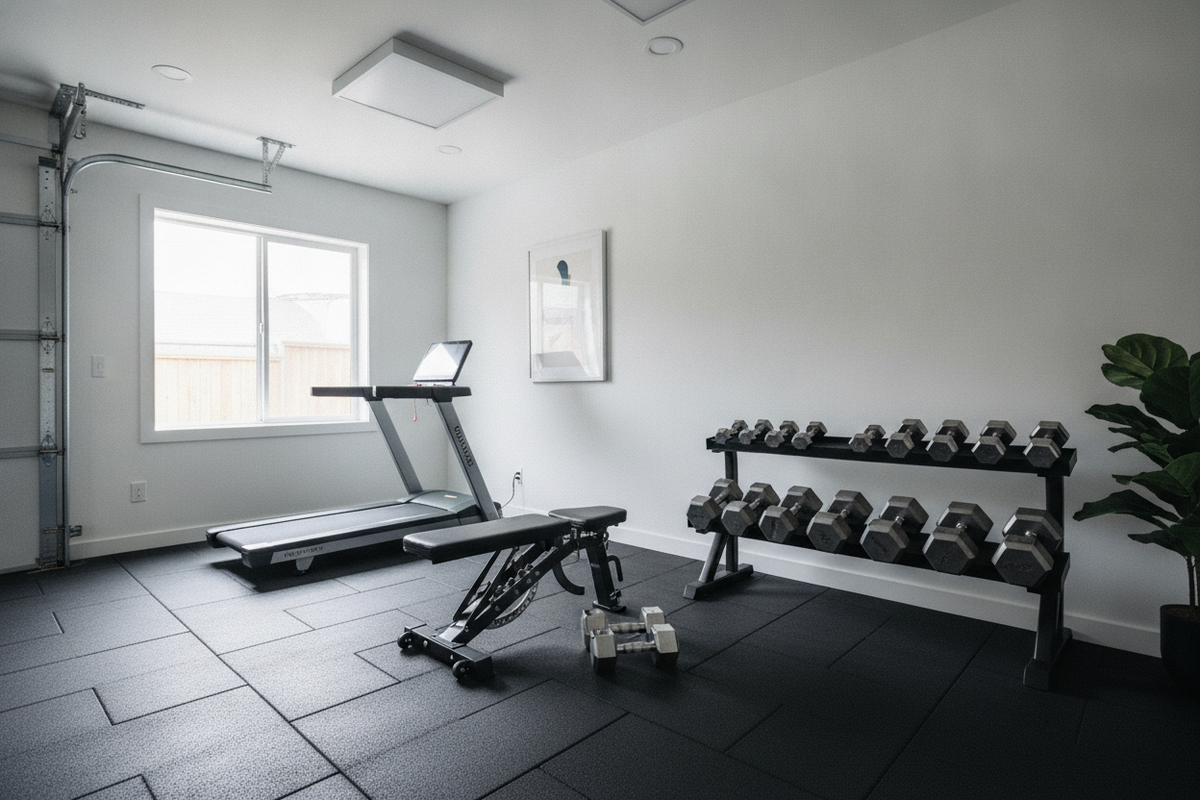
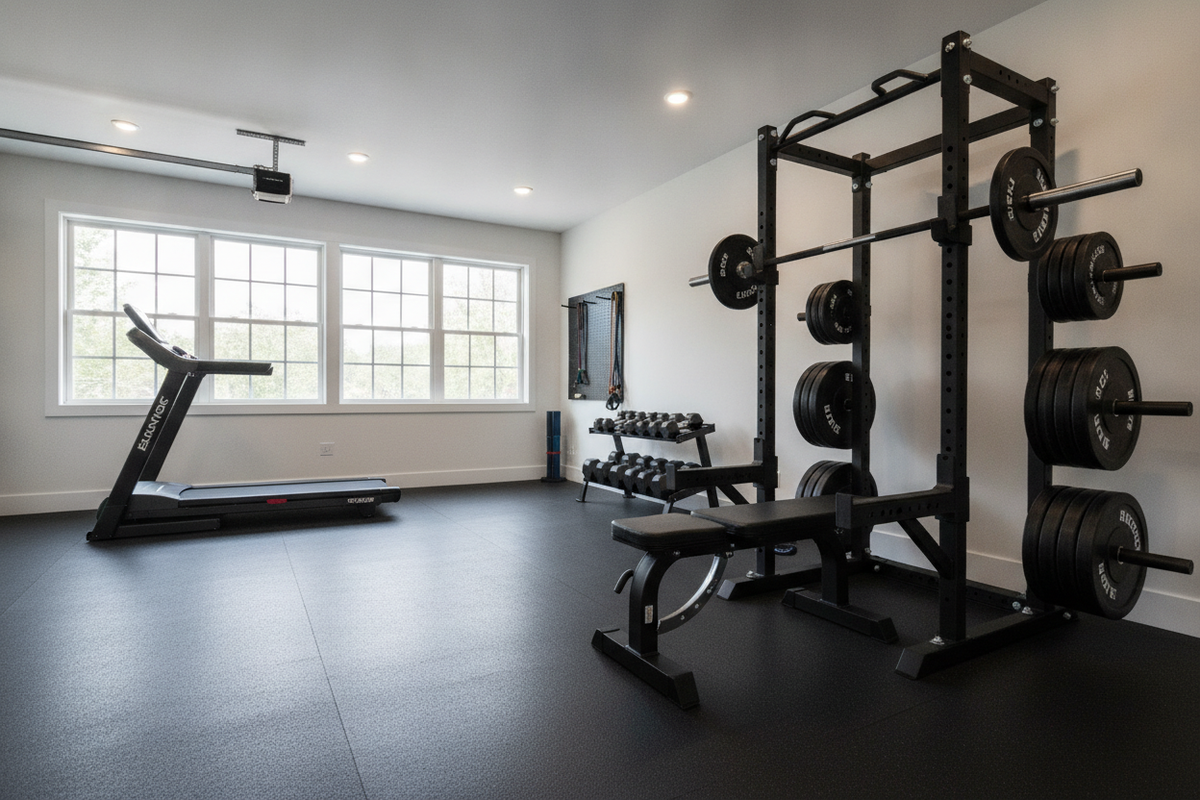
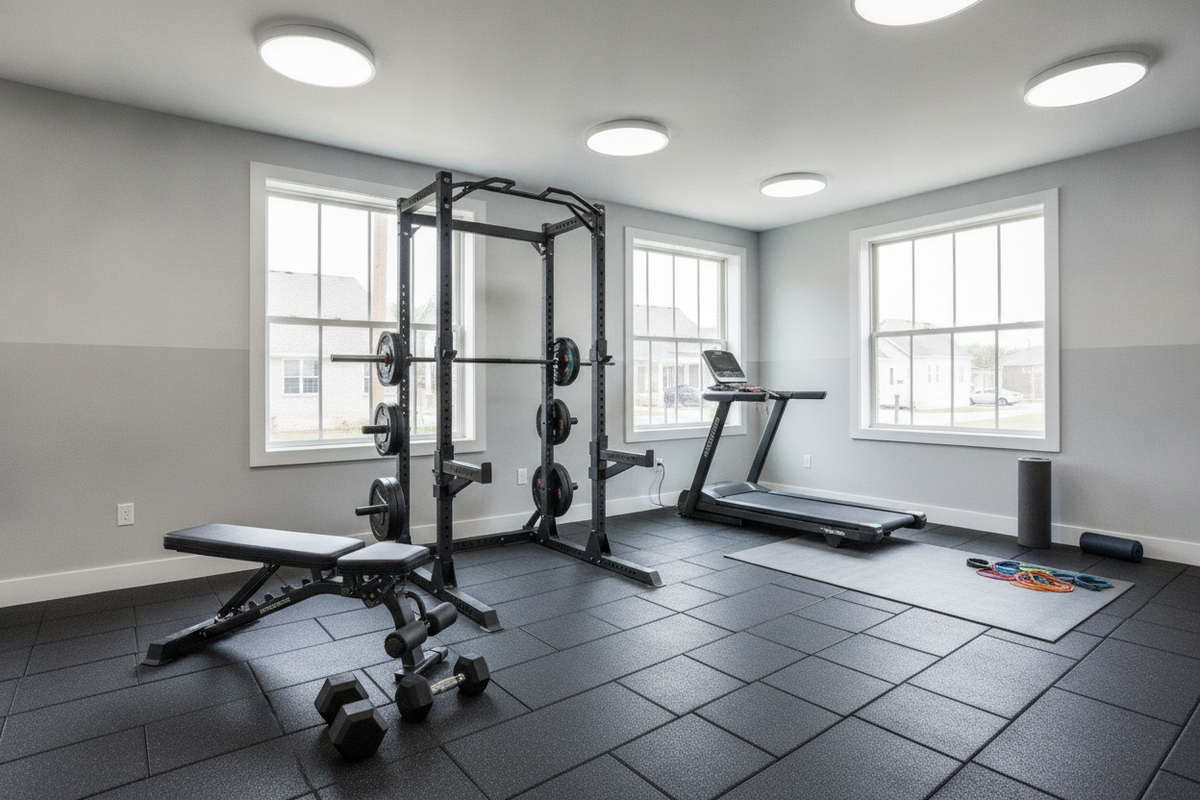
Creating an inviting, safe workout area helps remove friction from your daily mobility routine. When managing spinal arthritis, floor selection and room layout significantly affect overall comfort and compliance.
High-Density Foam vs. Standard Yoga Mats: Cushioning Under Knees and Spine
Standard yoga mats are often thin and designed primarily for traction, which can leave knees, wrists, and spinal processes exposed to hard subfloors. Selecting high-density flooring or a dedicated exercise collection mat distributes body weight evenly across contact areas. A dense surface prevents your joints from bottoming out against the subfloor while still providing the firm footing needed for balance exercises.
Traction, Edge Stability, and Equipment Clearances
When performing mobility transitions, such as moving from standing to all-fours or supine positions, slip resistance is essential. Staging a wide surface, such as a specialized exercise product, ensures generous room for sprawling stretches without rolling off the edges. Keep transition paths clear of free weights, bands, or loose furniture so you can move smoothly between exercises without twisting unexpectedly. For those incorporating seated cardio options, reviewing a back exercise lower guide can offer practical ideas for integrating back-supported low-impact conditioning alongside floor mobility.
Weekly Programming and Gentle Progression Framework
Consistency is key when building joint resilience. Developing a sustainable weekly rhythm ensures gradual progress without overwhelming sensitive spinal joints.
Structuring Frequency, Rest, and Daily Warm-Ups
Aim for short, regular mobility sessions rather than infrequent, exhausting workouts. A balanced framework includes:
- Daily Movement: Gentle pelvic tilts, light stretches, and low-impact walking to encourage joint circulation.
- Alternating Stability Days: Performing glute bridges, bird-dogs, and hip hinges several days per week with rest intervals between sessions.
- Warm-Up Transitions: Starting every session with gentle breathing and mild movements to ease joint stiffness before progressing into stabilization holds.
Listening to Movement Feedback and Modifying Ranges
Every individual experiences spinal arthritis differently, and symptom levels can fluctuate from day to day. If a specific movement causes sharp discomfort, reduce the range of motion, shorten hold times, or switch to a more supportive variation. Prioritize controlled execution, firm foundation support, and gradual consistency to cultivate long-term back comfort and functional mobility.