
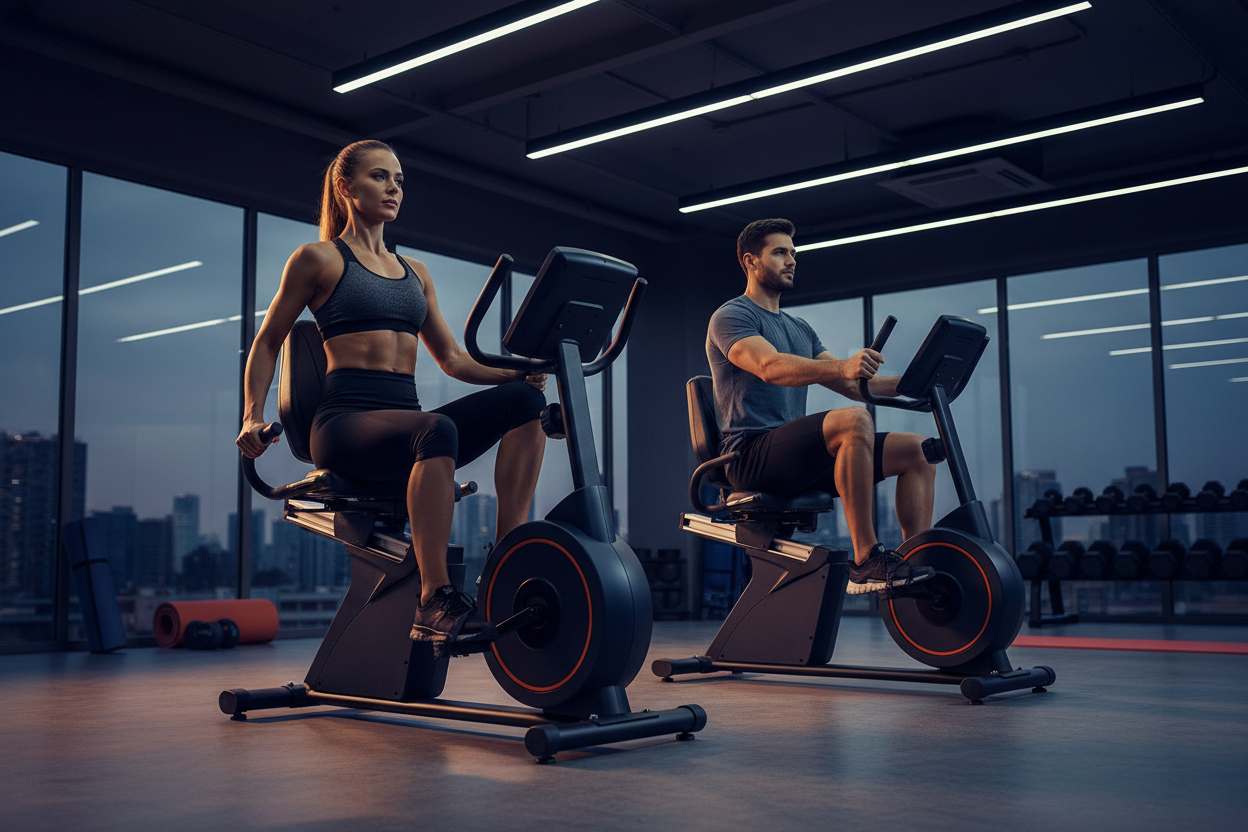
Back Support Exercise Bike: Why It Could Save Your Lower Back
Let's face it: nothing kills a cardio routine faster than lower back pain. If you find yourself cutting your indoor cycling workouts short because your lumbar spine is screaming, it might be time to ditch the traditional saddle. As a Senior Fitness Equipment Specialist, I've seen countless home gym owners abandon their fitness goals simply because their equipment hurts to use. Investing in a back support exercise bike can completely transform how you approach cardiovascular health, allowing you to focus on burning calories rather than managing discomfort.
Whether you are outfitting a sprawling basement gym or a tight apartment corner, choosing the right seated cardio machine requires looking beyond just the price tag. Let's break down exactly what you need to know before bringing one into your home.
Key Takeaways
- Provides crucial lumbar stabilization, reducing spinal compression during long rides.
- Available in full recumbent or space-saving semi-upright designs to fit any home gym footprint.
- Promotes longer, more consistent workout durations by eliminating saddle fatigue.
- Magnetic resistance models offer whisper-quiet operation, perfect for shared living spaces.
Choosing Your Ideal Setup
The Upright vs. Recumbent Debate
When shopping for a stationary bike with back support, you generally have two main structural choices: a traditional recumbent bike or a modified upright. An upright stationary bike with back support offers a significantly smaller footprint, making it perfect for tight spaces. It keeps your core slightly more engaged and mimics a traditional riding posture, while still offering a padded rest for your spine. Conversely, a full recumbent bike places the pedals out in front of you, distributing your weight across a much wider seat base and offering maximum lumbar relief.
Key Specs to Compare
Not all seats are created equal. When evaluating a bike with seat back, pay close attention to the cushioning material. High-density foam wrapped in moisture-wicking vinyl is the gold standard for durability. Additionally, ensure the bike features an adjustable seat rail or frame. Proper leg extension—maintaining a slight bend in the knee at the bottom of the pedal stroke—is essential to protect your hip and knee joints.
Space Planning for North American Homes
One of the biggest mistakes buyers make is underestimating the footprint of comfortable cardio gear. Full recumbent models are notorious space hogs, often requiring a dedicated footprint of at least 60 by 25 inches, plus an extra two feet of clearance for safe mounting and dismounting. If you are building a garage gym with ample square footage, this isn't an issue. However, if you are squeezing your workouts into a home office, look for a folding semi-recumbent frame. These engineered marvels provide the back support you crave but can be collapsed and wheeled into a closet when your workout is done.
From Our Gym: Honest Take
We recently spent six weeks testing a popular mid-range back support model in our facility's recovery and low-impact corner. As someone with a history of L4-L5 disc flare-ups, I immediately noticed the difference during my steady-state cardio days. The contoured mesh backrest on our test model allowed me to push through 45-minute sessions without the usual post-workout lower back stiffness. My chalked hands from earlier deadlift sets didn't slip on the side-mounted grip handles, either. However, I will note one caveat: the wider, supportive seat base means you absolutely cannot pedal out of the saddle. If you love high-intensity, standing spin classes, this isn't the bike for you. It is purpose-built for seated endurance and joint-friendly longevity.
Frequently Asked Questions
Is a stationary bike with back support good for weight loss?
Absolutely. Weight loss is fundamentally about sustained calorie burn and consistency. Because the added ergonomic comfort allows you to ride longer without pain, you can achieve a higher overall caloric expenditure compared to a traditional bike you can only tolerate for ten minutes.
How much weight can these bikes support?
Entry-level folding models typically support between 220 to 250 pounds. If you need a higher capacity, look for commercial-grade recumbent bikes with heavy-duty steel step-through frames, which routinely support upwards of 300 to 350 pounds.
Are these bikes only for seniors or physical therapy?
Not at all. While they are fantastic for rehabilitation and senior fitness, anyone looking for low-impact, comfortable cardio can benefit. Cranking up the heavy magnetic resistance on a high-quality model will challenge even the most seasoned strength athletes looking for a grueling leg pump without loading their spine.


