Dieting While Exercising: How to Balance Fuel and Workouts
Embarking on a new fitness path often brings two goals together: reducing body weight while maintaining steady physical activity. Pursuing both at once means you are dieting while exercising, an approach that calls for careful coordination between daily meals and training routines. When you limit energy intake while sustaining regular movement, your body operates with tighter fuel margins. Learning how to pace your efforts can make the difference between steady, long-term consistency and premature burnout.
A frequent mistake is slashing food intake while dramatically increasing daily activity. Sustainable dieting while working out requires sensible balance rather than extreme deprivation. Whether your routine centers on bodyweight movements, free weights, or intervals, your floor space and food intake should support your goals. If you are beginning from scratch, exploring an approachable exercise introduction can help you build practical expectations from day one.
Dieting While Exercising: The Balance Between Food and Movement
At the center of weight management is a sensible calorie deficit. When spending more energy than you consume, your body relies on stored reserves for fuel. However, if this deficit becomes too steep, physical sessions can feel sluggish and difficult to complete. Balancing everyday meals with the physical demands of exercising helps ensure you have sufficient stamina to finish each set with sound technique.
When you are dieting while exercising, maintaining lean muscle tissue while reducing body fat is usually the main priority. Consistently meeting a realistic protein intake across your meals provides amino acids that assist regular maintenance. If nutritional intake is too low, training performance tends to drop, which can make regular sessions harder to sustain. Keeping a balanced calorie intake preserves stamina and keeps motivation high over many months.
Pacing overall training volume is just as valuable. Stacking high-repetition workouts on top of demanding resistance sessions can quickly overwhelm your ability to recover. Establishing an adaptable training schedule allows harder training blocks to alternate with lighter activities. Thoughtful fatigue management keeps your enthusiasm steady and prevents unnecessary physical strain.
How Do You Maintain Workout Energy When Dieting While Exercising?
You maintain workout energy when dieting while exercising by timing your meals and fluids strategically around training sessions to provide readily available fuel. Even while maintaining a moderate calorie deficit, strategic meal distribution helps prevent sluggish starts and mid-session slumps.
A simple pre-workout meal eaten an hour or two before training supplies easily digestible carbohydrates alongside a modest serving of protein. This combination gives your muscles accessible fuel without causing heaviness during vigorous movements. When schedules are tight, a smaller pre-workout meal or simple fruit snack eaten closer to training can still support your immediate workout energy.
Proper hydration is another practical factor in sustaining workout output. Establishing sound hydration habits supports normal body temperature regulation and physical circulation during demanding sets. When you are dieting while working out, losing fluids through sweat can make routine efforts feel substantially heavier. Keeping water accessible during home workouts ensures that everyday dehydration does not compound workout lethargy.
After finishing your session, turn your attention to a balanced post-workout snack. Enjoying a combination of carbohydrates and protein in your post-workout snack helps replenish spent energy reserves and supports steady muscle recovery. Maintaining your target protein intake across the entire day further supports muscular tissue during continuous dieting periods, helping you stay consistent from week to week.
Adjusting Training Intensity When Dieting While Working Out
Managing physical intensity is essential when overall caloric intake is restricted. When you are dieting while working out, recovery speed between demanding efforts is typically lower than when eating at maintenance. Because of this, training sessions should prioritize quality movement over sheer exercise volume.
Many lifters choose straightforward strength training movements to stimulate major muscle groups without creating excessive exhaustion. Focusing on controlled multi-joint movements like squats, rows, and presses provides an effective stimulus while keeping total set counts manageable. Deliberate strength training encourages the body to preserve lean mass during an energy restriction phase rather than letting physical strength decline.
Cardiovascular training also benefits from thoughtful pacing. Adding multiple demanding cardio sessions onto a limited diet can increase overall weariness and make subsequent lifting sessions difficult. Mixing lower-impact walking or steady-state cycling with moderate intervals often provides a balanced middle ground. You can also review practical strategies for structuring home workouts to create efficient exercise stations without excessive physical wear.
Every sustainable program includes intentional rest days. Taking one or two planned rest days each week gives muscles and joints adequate time to recharge. On non-lifting days, participating in light active recovery, such as walking or mobility stretches, encourages blood flow without placing heavy demands on your body. Alternating intense exercising with purposeful rest helps prevent persistent fatigue.
Why Does Floor Cushioning Matter More When Exercising on a Diet?
Floor cushioning matters more when exercising on a diet because lower caloric reserves can cause stabilizing muscles to tire faster, increasing the repetitive landing stress placed on joints. When muscles fatigue early in a routine, a resilient floor surface helps maintain joint comfort during high-repetition exercises.
Executing jumping exercises, lunges, and plyometrics directly on unyielding concrete or hard tile can feel jarring to the feet, knees, and hips. Over time, these repetitive impacts may cause minor aches that disrupt your training consistency. Adding a dense foam mat or a resilient shock-absorbing surface cushions downward foot strikes, helping you move with confidence even when energy levels run lower than usual.
A durable, textured large exercise mat also provides dependable traction during quick foot transitions and bodyweight circuits. Perspiration and smooth flooring can cause unexpected slipping, especially when concentration drops near the end of a session. A reliable surface ensures firm footing, which directly reinforces joint comfort across demanding movements.
Quality flooring also provides essential subfloor protection. Dropping handheld weights, kettlebells, or barbells on unprotected surfaces can damage residential floors. Using a protective floor covering safeguards your home environment while aiding overall fatigue management during intense home workouts.
Upgrading Your Home Gym Floor for Safe Training
Designing a practical workout area requires striking the right balance between cushioning and firmness. Your home gym floor should cushion sudden landings without feeling so soft that it compromises your balance or footing.
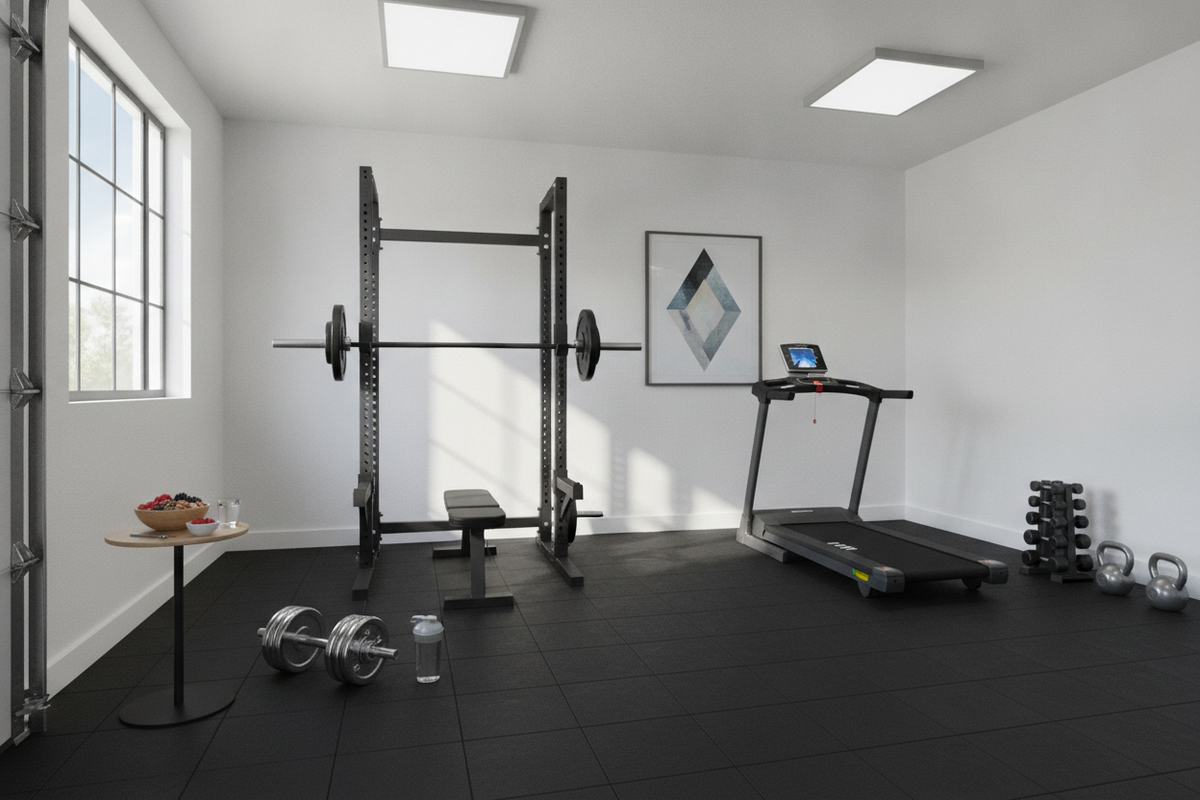
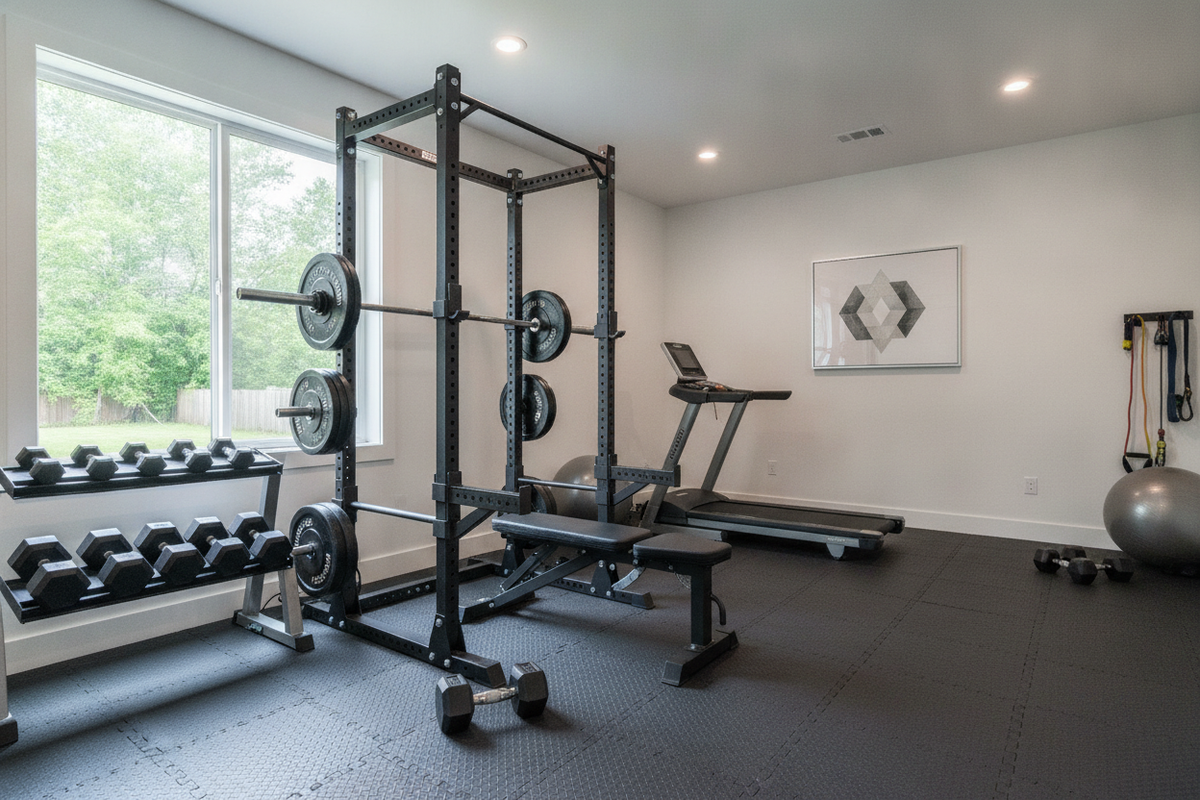
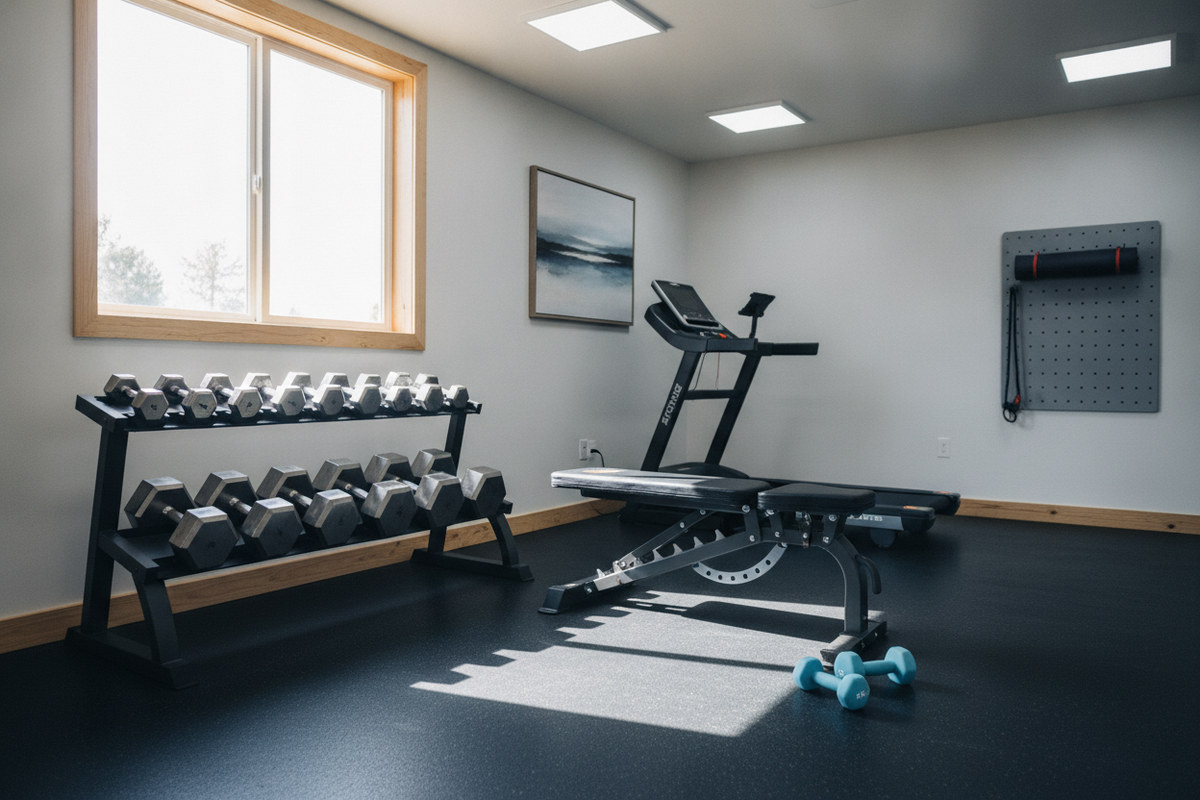
When evaluating materials for a home gym floor, high-density rubber tiles and firm composite mats are popular choices. A supportive dense foam mat provides a comfortable surface for floor stretches and core exercises, while firm rubber offers the rigid base needed for lifting weights. Ensuring firm equipment stability prevents benches or racks from shifting during exercise sets.
In living rooms or multi-use spaces, unrolling a large exercise mat provides a broad training zone that cleans up easily when not in use. A quality shock-absorbing surface also helps muffle vibration and impact sounds, making early morning or evening exercising much more neighbor-friendly. Integrating helpful accessories for working out can further complement your setup and enhance daily workout comfort.
Reliable mats also deliver continuous subfloor protection from accidental dumbbell drops or equipment scuffs. Firm traction underfoot helps you maintain stable form without slipping. Investing in your home gym floor transforms an ordinary room into a dedicated, comfortable space that supports regular physical activity no matter your daily calorie target.
How Can You Avoid Workout Burnout While Dieting and Working Out at Home?
You can avoid workout burnout while dieting and working out at home by matching your weekly training volume to your available nutritional energy and planning regular downtime. Pairing an aggressive food restriction with heavy daily exercise routines often leads to physical exhaustion and stalled progress.
Keep your overall training schedule realistic. When your daily energy is modest, scheduling intense daily routines can be counterproductive. Aiming for three or four focused strength training sessions, balanced with light cardio sessions and structured active recovery, allows adequate time for full muscle recovery.
Pay close attention to changes in strength and mood. If you notice persistent weakness across multiple movements, your current calorie deficit may be too steep or your nightly rest might be insufficient. Reading general advice on out while exercising guide can offer practical perspective on aligning caloric intake with ongoing training demands.
Focus on consistency rather than extreme physical output. Successfully navigating dieting while exercising is an ongoing process of small, manageable choices. By scheduling regular rest days, managing physical effort, and training on a supportive floor surface, you can build lasting fitness habits that support everyday health.