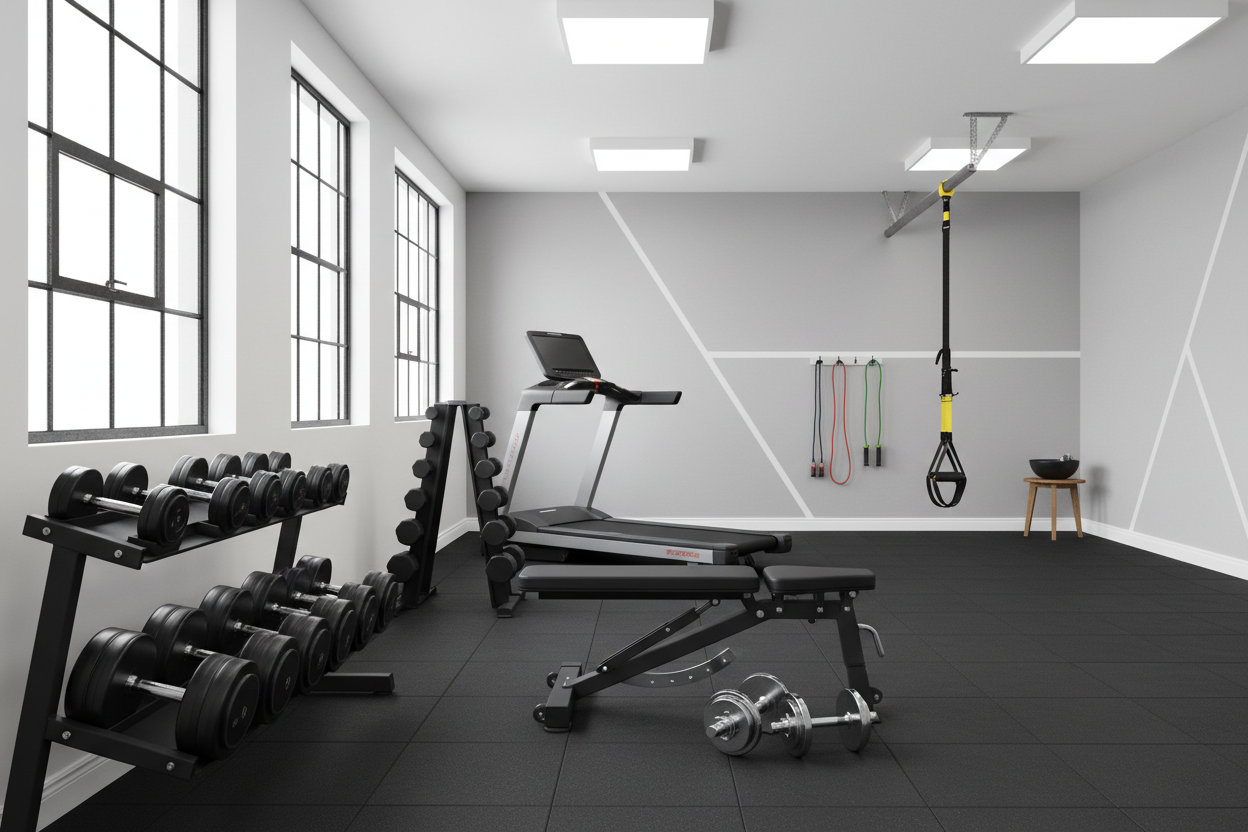
At Home Working Out: Use Your House as a Gym Machine
I remember staring at my living room wall during a three-day snowstorm back in 2021. I was tired of doing endless pushups and air squats. If you want to get serious about at home working out, you eventually hit a wall—literally and figuratively. You run out of ways to pull heavy weight without buying a massive, expensive machine. But as a personal trainer who has designed dozens of garage and living room setups, I learned a highly effective secret. Your house is already a giant, load-bearing gym machine.
Understanding how to workout at home effectively means looking past the floor. By using your home's architectural elements as structural anchor points, you can unlock full-body leverage exercises. You do not need a massive footprint to get a heavy pump.
Quick Takeaways
- Your home's architecture offers hundreds of pounds of structural resistance if you know where to look.
- Load-bearing walls and solid-core doors can safely anchor suspension trainers for heavy rows and pulldowns.
- Staircases provide precise micro-adjustments for incline and decline leverage exercises.
- Always pull against the closing direction of a door to prevent hinge blowout.
- Friction is your friend; a proper floor mat prevents slipping during heavy anchored pulls.
The Missing Link in Living Room Fitness
When doing workout at home routines, the biggest limitation is always the pulling muscles. You can push against the floor all day, but hitting your lats, rhomboids, and rear delts requires pulling resistance toward your body. For those gyming at home, this usually means buying a bulky power tower or settling for lightweight dumbbell rows that barely stimulate muscle growth. This lack of heavy pulling is exactly why exercise in a gym feels different.
But if you shift your perspective, your house solves this problem. Most home fitness exercises focus on moving your body through empty space. Structural anchor training changes the physics. By attaching resistance bands or suspension straps to fixed points in your house, you turn static architecture into dynamic resistance. If you search for how to exercises at home, you mostly find cardio circuits. Using your home's frame allows you to train in the 5 to 12 rep range for actual hypertrophy.
The Anatomy of a Safe Home Anchor Point
Before you start pulling on your fixtures, you need to understand how to exercise in the house safely. Not all doors and walls are created equal. The secret to how to home exercise without damaging your property lies in identifying load-bearing structures. Standard residential wall studs are placed 16 inches apart and can hold immense vertical and horizontal sheer force. When looking for a way to exercise at home using walls, always use a cheap magnetic stud finder first.
Doors require even more caution. A standard interior door uses three hinges. Each hinge is typically rated for about 40 to 50 pounds of horizontal pull, meaning the door can technically handle 150 pounds of force. However, mastering how to home workout means you never pull against the hinges. Always set up your anchor so you are pulling the door closed against its own frame. This transfers the force from the tiny hinge screws into the solid wood framing of the house. I also test stair railings by applying 50 pounds of lateral pressure before I ever trust them with my full body weight.
Doorway Dynamics: Recreating the Cable Machine
Here is how to do a home workout that rivals a commercial cable tower. You need a solid-core door, a heavy-duty door anchor, and a set of resistance bands or a suspension trainer. Slide the anchor over the top hinge-side of the door, close it securely, and lock the deadbolt if it has one. Wondering how can i do exercise at home for your back? Grab the suspension handles, walk your feet toward the door, lean back, and perform heavy inverted rows. The closer your feet get to the door, the heavier the resistance becomes.
You can adjust the anchor height to hit different angles. Slide it to the top for kneeling lat pulldowns and tricep pushdowns. Move it to the bottom for seated cable rows and bicep curls. When learning how to do exercise at home, this doorway setup is your most versatile tool. I personally use a nylon suspension strap rated for 400 pounds. I have tested it with clients of all sizes, and it holds up perfectly. My only honest downside? After about 1,000 reps, the heavy metal carabiner slightly scuffed the white paint on my doorframe. I solved this by wrapping the carabiner in a layer of athletic tape.
Staircase Leverage: Elevated Push and Pull Mechanics
One of the best ways to workout at home is utilizing the varied elevations of a staircase. Standard stair risers are exactly 7 inches tall. This gives you a built-in, micro-adjustable bench press and squat rack. Finding new ways to exercise at home is easy when you treat each step as a new intensity level.
For chest development, place your hands on the third step for incline pushups to target the lower chest. Put your feet on the second step and your hands on the floor for decline pushups to hit the upper pecs. A reliable way to workout at home for legs involves Bulgarian split squats. Rest your rear foot on the second step while keeping your front foot planted on the floor. This provides the exact 14-inch elevation needed for a deep, glute-tearing stretch. Staircases are essentially a giant plyometric box that never moves.
Wall and Floor Synergy: The Heavy Foundation
To understand how to do workout in home spaces effectively, you have to look at the relationship between your walls and your floor. True fitness in the home requires traction. When you are doing a heavy wall sit, or pushing off a wall for isometric calf raises, your feet are generating massive horizontal force against the floor. If you are on slick hardwood or cheap carpet, you will slide, losing power and risking injury.
This is where proper flooring becomes critical. You need high-friction contact. I always have my clients use a 6x8ft exercise mat for joint protection and grip. When your feet are locked into a high-density rubber surface, you can press your back into a load-bearing wall and perform single-leg isometric holds that will leave your quads shaking after 30 seconds. Proper fitness in home training relies on this synergy. The wall provides the immovable resistance, and the floor provides the anchor for your feet.
Structuring Your Anchor-Based Routine
People always ask me, how can i workout at home and actually build a balanced physique? You take these structural mechanics and organize them into a push-pull-legs split. This exercise guide at home will get you started. On pull days, use your doorway anchor for heavy suspension rows and banded pulldowns. On push days, use your staircase for varying angles of pushups and doorway-anchored banded chest presses.
For leg days, combine staircase deficit lunges with heavy wall-sits. My favorite way to work out at home is supersetting a doorway pull with a staircase push to keep the heart rate elevated. Just remember that pulling heavy weight requires your feet to be totally secure. Laying down a large exercise mat for home gym use ensures you will not slip while leaning back into a 200-pound suspension row.
Frequently Asked Questions
Will anchoring resistance bands damage my doors?
Not if you do it correctly. Always use a soft foam door anchor, place it near the hinges where the door is strongest, and pull against the direction the door closes. Never use hollow-core doors for heavy bodyweight suspension training.
How do I know if a wall is load-bearing?
Load-bearing walls typically run perpendicular to your floor joists and sit directly above the foundation. However, for bodyweight exercises like wall sits or isometric presses, any standard interior wall with 16-inch stud spacing will safely support your weight. Just ensure you are pressing against the stud, not the empty drywall.
Can I build real muscle without dumbbells?
Absolutely. Muscle tissue only recognizes tension and mechanical overload, not the brand of equipment you hold. By manipulating your body angle with suspension straps and staircases, you can easily place 100 to 150 pounds of resistance on targeted muscle groups, which is more than enough for hypertrophy.