Diet Build Muscle Mass Guide for Home Lifters
Committing to regular strength training requires an equally disciplined approach in the kitchen. If your goal is to add lean weight and increase your lifting numbers, learning how to structure a proper diet build muscle mass plan is essential. Without sufficient energy and nutrients, challenging workouts with barbells, dumbbells, or resistance bands will leave you drained instead of growing stronger. Establishing clear eating habits guarantees that the effort you put into training turns into noticeable, lasting physical changes.
A successful gain muscle diet does not demand extreme restriction, endless spreadsheets, or tasteless food. Instead, it pairs wholesome food choices with consistent physical demands. When your body receives enough raw material to rebuild strained muscular fibers, your training sessions yield visible results. Structuring your meals thoughtfully gives you the stamina to lift with intensity, hit your targets, and recover smoothly week after week.
Core Principles of a Diet to Build Muscle Mass
The foundation of any meal plan aimed at growth rests on a modest calorie surplus. Muscular tissue is metabolically demanding, requiring surplus energy to synthesize and sustain. Consuming slightly more energy than you burn every day signals to your body that it has enough resources to lay down new tissue. A controlled, modest surplus minimizes unwanted body fat accumulation while supplying the fuel needed to tackle challenging lifting routines.
Sufficient protein intake supplies the amino acids necessary for repairing tissue. Every intense workout creates microscopic disruptions within your muscles, and dietary protein provides the building blocks to repair and reinforce those strands. Distributing your protein intake across several balanced meals provides a dependable stream of amino acids. Combining this steady intake with structured strength training gives your body the mechanical signal it needs to turn dietary resources into solid muscle.
To generate reliable muscle growth, your lifting routine must also implement progressive overload. This means systematically adding weight, improving repetition counts, or performing sets with cleaner control across consecutive weeks. Adequate nutrition supplies the glycogen and cellular energy required to execute these demands. Without proper nourishment, lifting heavier loads quickly leads to exhaustion, whereas consistent fueling allows progressive overload to continue without burning out your reserves.
Healthy Diet for Muscle Gain: Building Your Daily Plate
Assembling a practical, healthy diet for muscle gain starts with minimally processed ingredients organized into simple, repeatable meals. A well-designed gains diet does not need to feel complicated to deliver results. By focusing on three main macronutrient pillars at each sit-down meal, you can keep digestion smooth and physical energy elevated throughout the day.
Your daily foundation should center around:
- Lean Protein Sources: Base every major meal on a high-quality portion of lean protein, such as chicken breast, turkey, eggs, cottage cheese, lean beef, or tofu. Spreading these choices across three to five meals helps support ongoing tissue repair.
- Complex Carbohydrates: Include slow-burning complex carbohydrates like oats, brown rice, sweet potatoes, and whole grains. These foods replenish intramuscular glycogen stores, keeping your muscles full and ready for demanding sessions.
- Healthy Fats: Include moderate servings of healthy fats, such as avocados, olive oil, nuts, and seeds. Dietary fats support essential hormonal balance and help you achieve your caloric goals without having to consume uncomfortably large meals.
Adopting a balanced healthy diet for muscle building avoids the sluggishness often caused by excessive, unchecked eating. When comparing standard lifestyle nutrition with serious athletic planning, our article on eating for lean muscle details how targeted caloric adjustments differ from basic wellness advice. Consistent adherence to a good diet for building muscle turns hard lifting into dependable progress.
Fueling Workouts: Pre- and Post-Lifting Nutrition
Strategic meal timing helps optimize power output during workouts and speeds up the rebuilding process afterward. What you consume prior to training determines how hard you can push, while your post-exercise nutrition jumpstarts muscle recovery. Coordinating your daily eating schedule around training sessions ensures nutrients reach your muscles when they can be utilized most effectively.
Roughly one to two hours before training, eat a meal combining a moderate portion of lean protein with easily digested complex carbohydrates. This combination sustains blood glucose levels and prevents premature fatigue during demanding compound exercises such as squats, presses, and rows. If you work out early in the morning or have tight schedules, our guide on nutrition during lifting sessions shares helpful advice for maintaining energy without feeling weighed down.
After you finish lifting, prioritize a balanced post workout meal containing adequate protein and replenishing carbohydrates. Enjoying a dependable post workout meal kickstarts tissue repair, refills depleted energy stores, and prepares your body for the next workout. In my experience, cooking extra portions during dinner makes next-day post-lift nutrition simple and stress-free.
Do I Need to Eat Differently on Rest Days When Building Muscle?
You do not need to slash your caloric intake dramatically on rest days, because actual recovery and physical expansion happen when you are away from the weights. While you might slightly reduce workout-specific quick carbohydrates, remaining in a supportive energy state on off-days provides the raw materials your body needs to rebuild stressed tissue. For an in-depth breakdown of off-day nutrition pitfalls, review our rest-day muscle building diet review.
On non-lifting days, maintain a steady protein intake and continue following solid healthy eating muscle gain habits. Drink plenty of water, eat fiber-rich vegetables, and keep your regular meal intervals stable. Successful progress relies on weekly energy balance rather than isolated 24-hour windows, making consistent nourishment on recovery days vital for lasting muscle growth.
Pairing Nutrition with a Dedicated Home Gym Setup
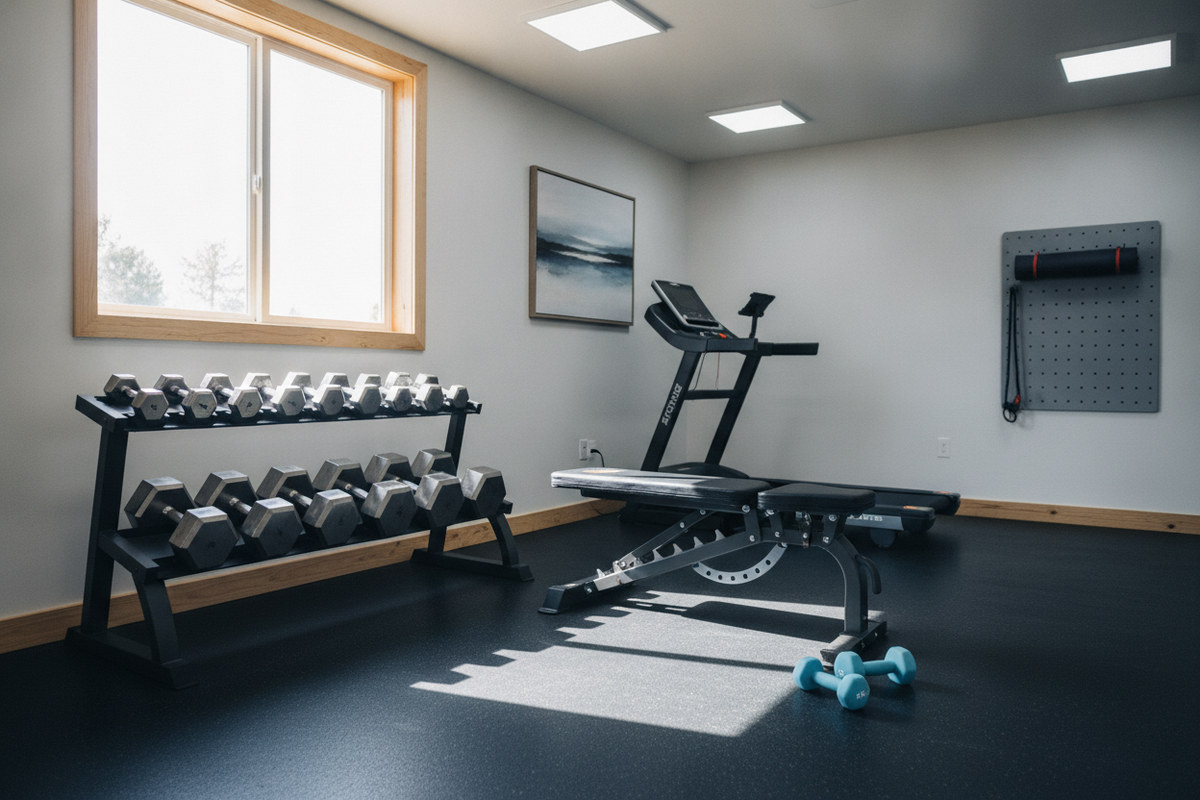
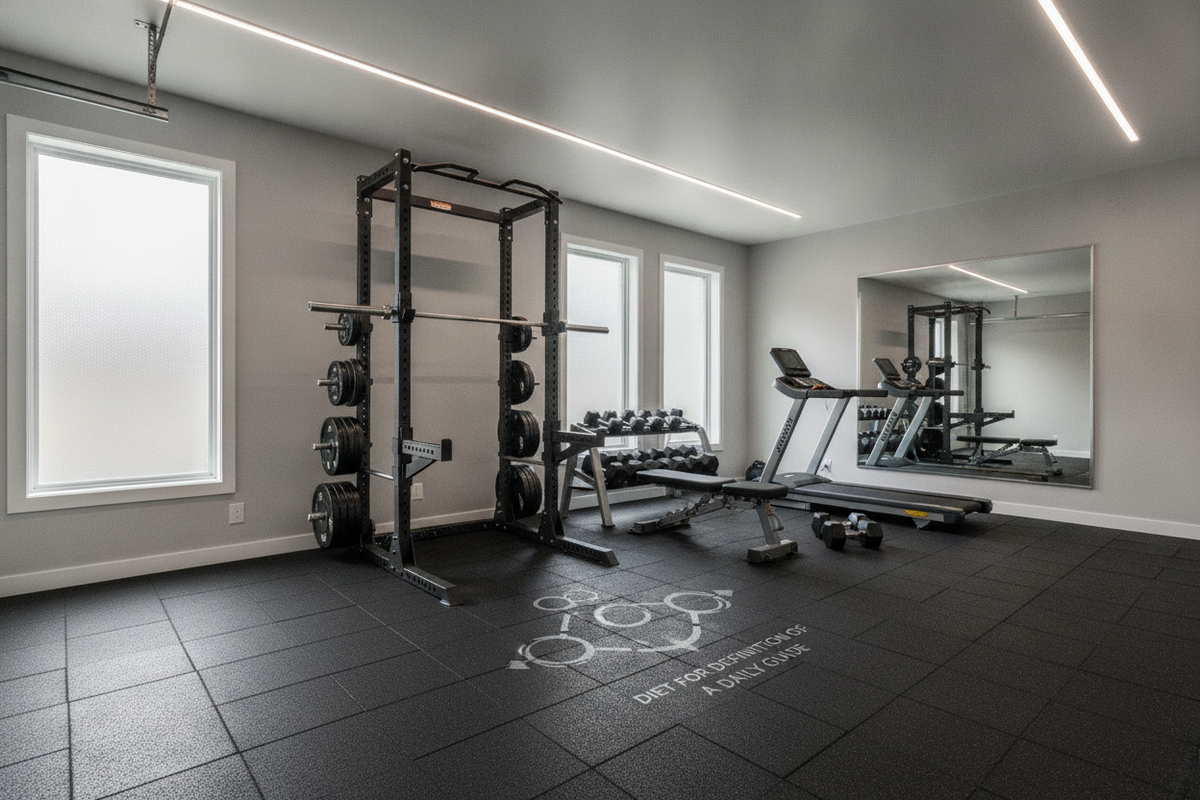
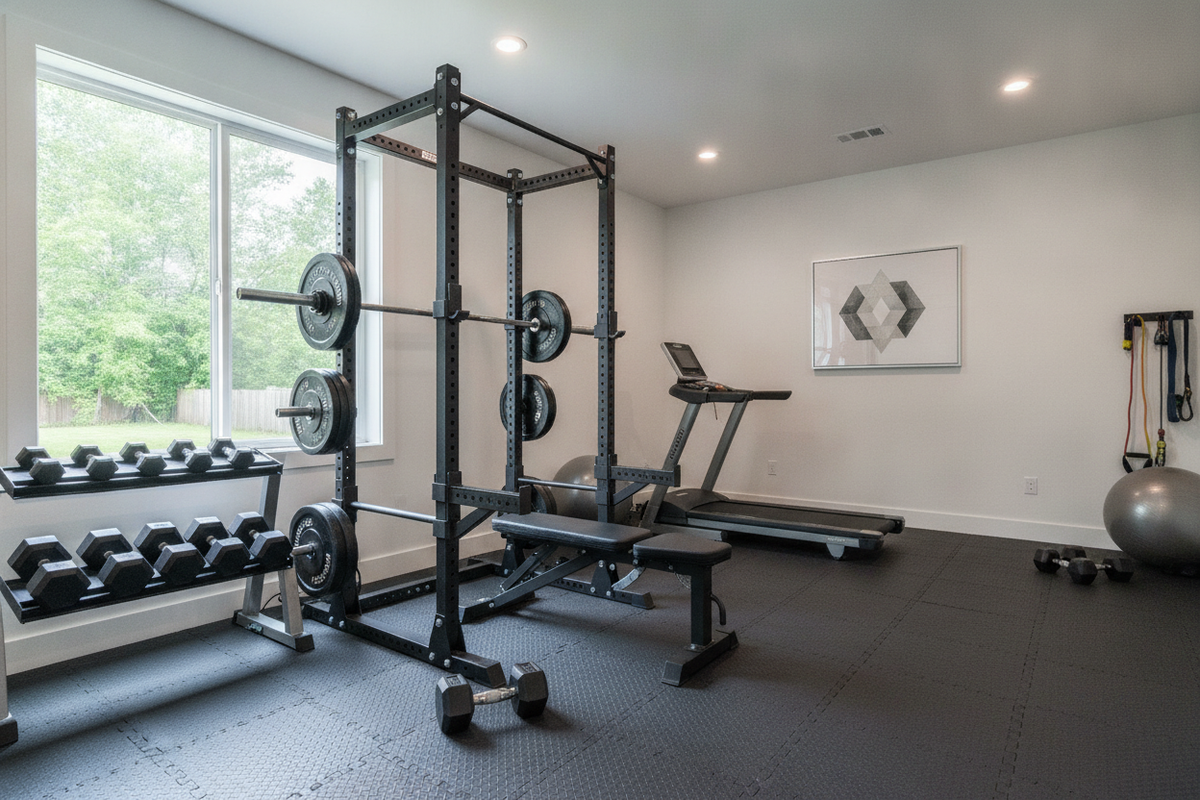
A smart eating plan works best when matched by a safe, functional training environment. If your workout area feels cluttered, unstable, or cramped, staying committed to your training schedule becomes difficult. Setting up a dedicated home gym setup gives you an organized area where you can complete challenging compound exercises with confidence.
Handling heavy weights in a residential setting requires dependable flooring underfoot. High-density gym flooring absorbs the impact of dropped dumbbells and weight plates, offering critical subfloor protection against cracked concrete or damaged wood. Laying down interlocking rubber floor tiles creates a firm, slip-resistant surface that stabilizes your stance during heavy squats and floor lifts.
In addition to foundational floor tiles, a durable exercise mat provides supportive cushioning for warm-ups, core movements, and stretching routines that aid overall muscle recovery. High-density foam mats ease joint stress and offer reliable traction for floor-based movements. Combining resilient rubber floor tiles for subfloor protection with a versatile exercise mat creates a durable environment capable of handling rigorous training programs.
Common Mistakes in a Gains Diet
Many lifters struggle to make progress because of simple, avoidable nutritional habits. One common mistake is leaning too heavily on processed powders and commercial mass gainers rather than balanced whole foods. Our breakdown of whole-food muscle building diets explains why whole, nutrient-dense meals offer better satiety, digestive comfort, and sustained energy than processed shakes.
Another common mistake when following a diet for gains is maintaining an excessively large surplus. Consuming far more calories than necessary does not speed up muscular adaptation; it primarily leads to excess body fat that requires prolonged cutting phases later. Sticking to a mild, steady surplus ensures progressive strength development without compromising conditioning.
Finally, do not overlook the importance of hydration and sleep. Even the most structured meal plan cannot overcome inadequate fluid intake or chronic rest deprivation. Water facilitates nutrient delivery, while sleep provides the primary window for tissue repair. Treating hydration and rest with the same commitment as your meals ensures that your hard work translates into tangible results.
What Should I Eat in a Diet Build Muscle Mass Plan?
You should build your daily meals around whole proteins, slow-digesting starches, and nutrient-dense fats that provide steady energy and recovery support. Focus on versatile staples that you can easily batch-cook and portion throughout the week.
A practical sample day could look like this:
- Breakfast: Scrambled eggs paired with spinach, oatmeal topped with fresh berries, and a spoonful of natural nut butter.
- Lunch: Grilled chicken breast with roasted sweet potatoes and steamed greens drizzled with olive oil.
- Pre-Workout Snack: Plain Greek yogurt with a sliced banana and a light drizzle of honey to fuel challenging lifting sessions.
- Dinner: Baked salmon or lean ground sirloin served over white or brown rice alongside roasted zucchini.
- Evening Snack: Low-fat cottage cheese paired with walnuts to supply steady amino acids overnight.
By centering your daily meals on wholesome ingredients, maintaining practical meal timing, and staying consistent with your strength training, your nutrition will deliver real, measurable results. Pair your kitchen discipline with an inviting home gym setup equipped with supportive gym flooring, and let consistent effort build the strength and physique you want.