Diet for Definition of Muscle: A Daily Guide
Adopting a structured diet for definition of muscle is the foundational step for anyone who wants their hard training to show. Visible conditioning requires balancing daily calorie intake with sustained physical effort. When you build lean muscle through consistent lifting, those lines remain hidden if a layer of excess body fat sits above them. Following a targeted diet for definition of muscle provides the fuel needed for tough sessions while encouraging the body to tap into stored energy.
Understanding a Diet for Definition of Muscle
A successful muscle definition diet is not about extreme deprivation. Instead, it centers on establishing a sensible calorie deficit that prompts fat loss without sacrificing hard-earned tissue. When cutting calories too aggressively, the body often breaks down muscle tissue for immediate energy, leading to a flat appearance rather than sharp muscle definition. A gradual, controlled diet for definition of muscle keeps energy steady so your training output remains high.
By focusing on nutrient-dense whole foods, you support a healthy metabolism throughout the cutting phase. The best diet for muscle definition emphasizes steady nourishment, pairing high-quality proteins with slow-digesting carbohydrates and essential lipids. When your daily nutrition aligns with your physical demands, muscle definition becomes noticeably clearer over time.
What is the best diet for definition of muscle?
The best diet for definition of muscle is a balanced eating plan that pairs sufficient lean protein with controlled portions of complex carbohydrates and healthy fats. Rather than eliminating entire food groups, this sustainable approach keeps training intensity high while steadily reducing overall body fat.
To sustain progress, your diet for definition of muscle should emphasize consistent daily habits:
- Lean protein at every meal: Incorporate lean protein sources such as chicken breast, turkey, white fish, tofu, or egg whites to supply the building blocks necessary to preserve lean muscle.
- Complex carbohydrates for steady energy: Rely on complex carbohydrates like oats, brown rice, sweet potatoes, and quinoa to power through demanding workouts without sudden energy crashes.
- Healthy fats in moderation: Add healthy fats from sources such as avocados, olive oil, almonds, and seeds to support joint comfort and overall wellness.
- High-volume vegetables: Fill your plate with leafy greens, broccoli, and peppers to stay full while cutting calories.
When selecting the best diet for muscle definition, consistency matters far more than short-term dietary extremes. A sensible diet for definition of muscle gives you the stamina to train hard week after week.
Core Food Choices on a Muscle Definition Diet
Structuring a daily menu around wholesome ingredients makes adhering to a muscle definition diet much easier. Prioritizing foods with high satiety ensures you do not feel constantly hungry while maintaining your calorie deficit. Lean protein takes longer to digest, helping curb cravings between scheduled meals. Meanwhile, fibrous vegetables provide volume and essential micronutrients without adding excessive calories to your daily total.
Carbohydrate quality is equally vital on a diet for definition of muscle. Selecting unprocessed complex carbohydrates provides sustained glycogen replenishment for working muscles. When structuring your daily eating rhythm to support definition without sluggishness, consult our article on meal frequency for muscle gain to evaluate how spacing your food can support daily performance. Balancing these carbs with measured amounts of healthy fats keeps daily meals satisfying and supports long-term adherence to your diet for definition of muscle.
Daily Meal Timing Around Your Workouts
Strategic meal timing helps maximize physical output and accelerates post-exercise recovery. Consuming a balanced pre-workout meal roughly one to two hours before training ensures adequate circulating energy for heavy lifts or interval sets. A light pre-workout meal combining fast-to-moderate digesting carbs with a small portion of lean protein prepares your body for intense effort without causing stomach heaviness.
Equally critical is post-workout nutrition. After completing challenging resistance training, your muscles need prompt nutritional support to initiate repair. A balanced serving of lean protein paired with carbohydrates during post-workout nutrition replenishes spent fuel stores and helps maintain lean muscle. Proper hydration throughout the day also plays a key role; maintaining consistent hydration keeps your metabolism functioning smoothly and aids nutrient delivery to muscle fibers. Managing your meal timing helps you get the most out of every training session while following a diet for definition of muscle.
How do you eat to show muscle definition without losing size?
You eat to show muscle definition without losing size by maintaining a modest calorie deficit while keeping lean protein intake consistently high across all meals. This controlled deficit encourages your body to burn stored body fat for fuel while the steady supply of amino acids spares your existing muscle mass.
To retain fullness while on a diet for definition of muscle, avoid drastic reductions in food intake. Sharp drops in calories signal the body to slow its metabolism and can cause noticeable losses in strength. Keep lifting heavy weights, prioritize recovery, and let your diet for definition of muscle do the steady work of revealing sharp muscle definition week by week.
Pairing Your Nutrition with Home Strength Training
A diet for definition of muscle works hand in hand with consistent physical stress. To signal your body to retain muscle tissue while shedding fat, you must challenge it with regular strength training. Engaging in structured resistance training several times per week maintains tissue density, ensuring that when the fat comes off, defined shape is revealed underneath.
You do not need a commercial weight room to achieve outstanding results. Focused dumbbell workouts and bodyweight exercises performed with high effort create sufficient tension to preserve muscle definition. Incorporating multi-joint movements like goblet squats, overhead presses, push-ups, and lunges stimulates multiple large muscle groups simultaneously. To pair your plate with focused upper-body resistance work, review our high-rep chest workout guide for practical rep schemes. Balancing resistance training with a well-planned diet for definition of muscle ensures your physique stays athletic and strong.
Setting Up Your Home Gym Floor for Calorie-Burning Conditioning
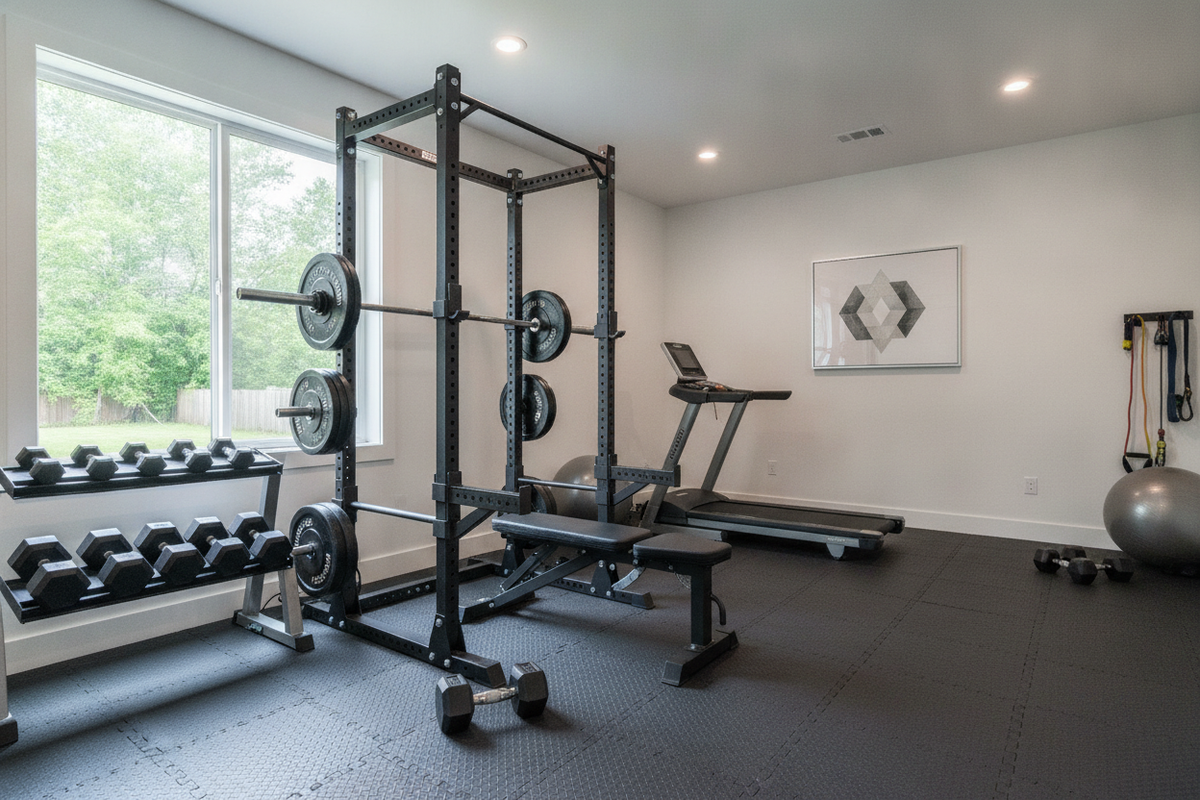
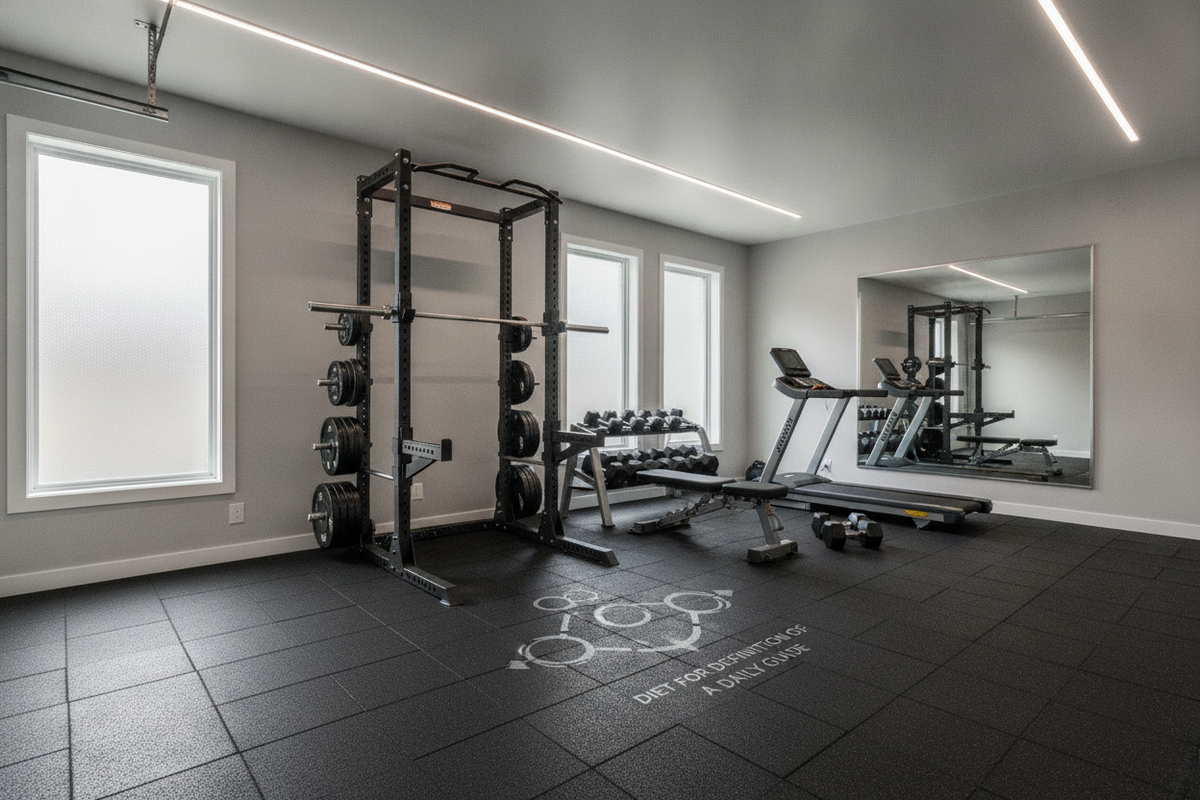
Executing high-energy dumbbell workouts and bodyweight exercises at home requires a safe, comfortable training area. When your workout space is well prepared, you can push through intense conditioning circuits that complement your diet for definition of muscle without worrying about slipped feet or damaged floors. A dedicated home gym space keeps you accountable to your daily training schedule.
Investing in a large exercise mat or a high-density floor mat provides essential shock absorption for joints during jumps, burpees, and lunges. Dense flooring also delivers reliable subfloor protection against dropped weights, protecting tile, hardwood, or concrete underneath. Thoughtful equipment placement ensures you have ample clearance to transition rapidly between exercises. When setting up your home gym, position your storage racks along the perimeter so your large exercise mat remains clear for dynamic movement. Having proper subfloor protection and organized equipment placement creates an inviting environment that supports the best diet for muscle definition.
Maintaining Mat Care and Room Protection During Daily Sweat Sessions
High-intensity circuits paired with a strict diet for definition of muscle naturally generate significant sweat. Keeping your training area clean is vital for both hygiene and traction. A high-density floor mat needs regular wipe-downs with mild soap and warm water to prevent residue buildup that could make the surface slick underfoot. Keeping your large exercise mat clean preserves its grip, allowing you to perform bodyweight exercises and dumbbell lifts with total confidence.
Allow your mats to air-dry completely after strenuous sessions to maintain material integrity. Taking good care of your home gym flooring ensures lasting durability while you pursue peak conditioning. Combining a disciplined diet for definition of muscle, consistent strength training, and an organized home workout space delivers the ideal environment to build lean muscle and maintain sharp muscle definition year-round.