Diet to Build Lean Muscle Mass: Practical Food Tips
Establishing an effective diet to build lean muscle mass requires a sustainable strategy rather than short-lived dietary extremes. While traditional bodybuilding lore often pushes massive caloric surpluses followed by harsh cutting phases, steady progression comes from supporting physical output with nourishing foods. When you align your daily intake with dedicated strength training, you provide your tissues with the resources needed to adapt and grow without accumulating unwanted body fat.
Core Foundations of a Diet to Build Lean Muscle Mass
A successful diet to build lean muscle mass starts with an intentional calorie balance. To build lean muscle, your body must take in sufficient energy to synthesize new tissue while sustaining rigorous training sessions. Rather than eating everything in sight, a modest surplus above maintenance intake provides the fuel necessary to develop lean muscle mass efficiently. When you maintain this sensible calorie balance, you support steady muscle recovery without placing undue stress on your digestive system.
Understanding how nutrition to build lean muscle works helps you avoid the pitfalls of sudden overeating. Lifters who push their caloric intake too far often find that surplus energy converts to unwanted fat rather than functional tissue. For a detailed breakdown of maintaining a clean intake pattern, our guide on lean muscle meal planning outlines how to calibrate energy needs without unnecessary fat gain.
What is the best diet to build lean muscle mass?
The best diet to build lean muscle mass consists of balanced whole foods providing adequate protein, complex carbohydrates, and essential dietary fats tailored to your training demands. Rather than eliminating major food groups, this approach emphasizes steady daily consistency in nutrient intake. By prioritizing lean protein sources, complex carbohydrates, and healthy fats, you create an internal environment that supports cellular repair and continuous physical performance.
Within this balanced framework, your diet to build lean muscle mass should accommodate the physical demands of heavy lifting. When you challenge your muscles through resistance exercises, the breakdown of muscle fibers triggers an adaptive rebuilding process. Fueling this process requires a structured diet to build lean muscle mass that supplies steady energy throughout the entire day, reinforcing daily consistency across both your eating schedule and your workouts.
Balancing Nutrition for Gaining Lean Muscle
Crafting effective nutrition for gaining lean muscle depends on how well you balance your macronutrients. Protein is the direct building block of muscular tissue, supplying the essential amino acids required for repair. To build lean muscle effectively, distribute lean protein sources across all your daily meals. High-quality poultry, fish, eggs, tofu, and legumes offer reliable options that nourish muscle fibers without excessive saturated fats.
Carbohydrates serve as the primary fuel source for high-intensity training. Incorporating complex carbohydrates such as oats, brown rice, sweet potatoes, and whole grains ensures your muscular glycogen stores remain adequately stocked. Without these sustained carbohydrate sources, your strength output during workouts can diminish rapidly. Balancing these with healthy fats from avocados, nuts, seeds, and olive oil helps support normal hormone production and cellular health, reinforcing complete nutrition to build lean muscle.
Lifters sometimes make the mistake of over-restricting certain essential elements like electrolytes. As explored in our review of dietary sodium for lifters, avoiding essential minerals can leave your muscles feeling flat and sap your energy during challenging training sessions. A comprehensive diet to build lean muscle mass accounts for both macro and micronutrients.
How to eat to build lean muscle without gaining excess fat?
Learning how to eat to build lean muscle without gaining excess fat involves matching your food intake to your daily energy expenditure while prioritizing nutrient density. By choosing unrefined foods, you gain satiety, micronutrients, and fiber, which helps keep appetite in check. Practicing how to eat to build lean muscle also means avoiding the urge to treat every lifting session as a reason for unrestricted eating.
Structuring your diet to build lean muscle mass around predictable meal intervals prevents energy crashes and impulsive snacking. Focusing on lean protein sources and fiber-rich complex carbohydrates at each meal allows your body to build lean muscle while keeping body composition sharp. Developing good hydration habits also plays a vital role in nutrient transport and workout endurance, ensuring that water intake keeps pace with training volume.
Meal Timing, Workout Fueling, and Muscle Recovery
Strategic meal timing helps maximize the impact of your daily food intake. Dividing your daily nutrients into three to five meals delivers a regular supply of amino acids and glucose to working tissues. Proper pre-workout fueling gives you the immediate energy required for progressive overload during intense lifting sessions. Consuming a light meal combining carbohydrates and moderate protein an hour or two before exercise primes your body for high-effort training.
Following your workout, targeted post-workout nutrition helps kickstart muscle recovery. A combination of easily digested carbohydrates and protein replenishes spent glycogen stores and provides the raw materials needed to rebuild trained fibers. Even on days when you are not training, your diet to build lean muscle mass must remain steady. As detailed in our rest day nutrition guide, tissue repair continues long after you finish lifting, making continuous nutrition for gaining lean muscle vital on active recovery days.
Paying attention to your evening meals is equally important. Consuming overly heavy, greasy meals late in the evening can disrupt digestion and disturb your sleep patterns, which directly interferes with nighttime muscle recovery. To understand how late-night habits affect progress, read our breakdown of evening eating habits. Supporting restful sleep through a disciplined diet to build lean muscle mass allows your body to repair tissue and build lean muscle during overnight rest.
Why does home gym setup matter for muscle building consistency?
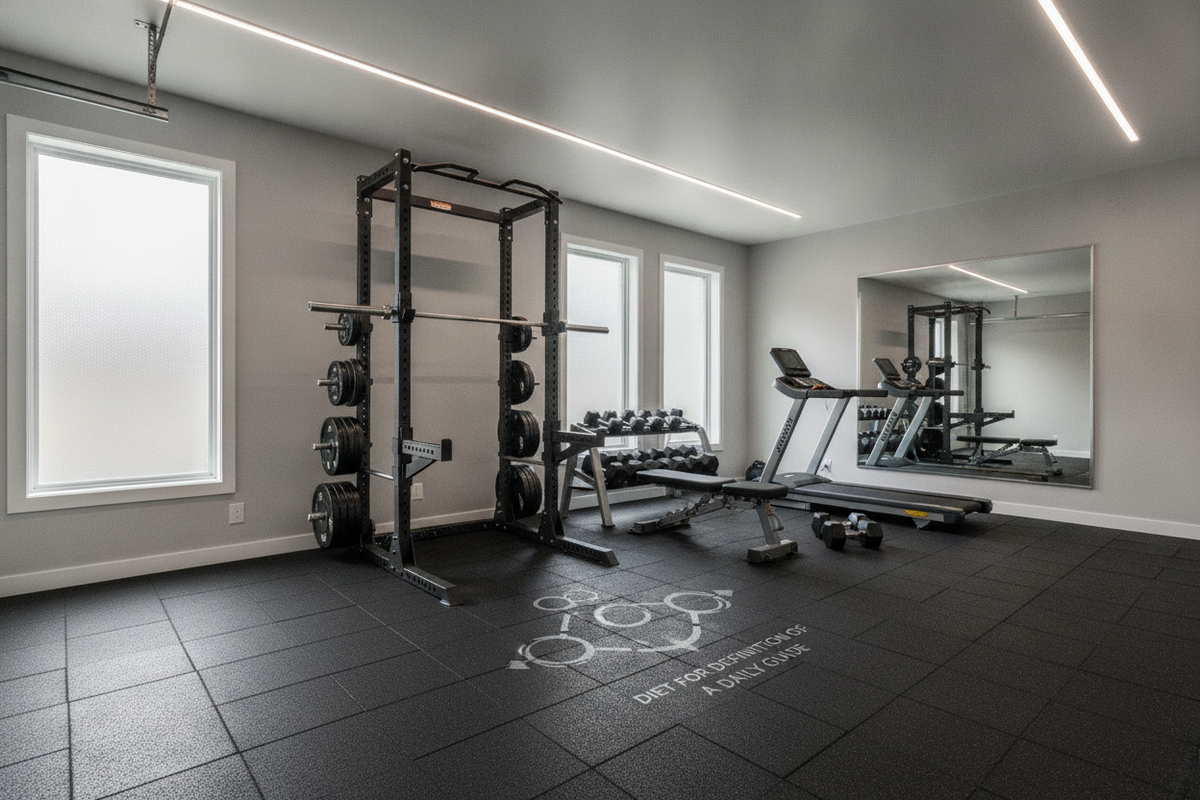
A well-planned home gym setup matters for muscle building consistency because having a dependable, accessible training space removes friction from your routine and helps you maintain regular progressive overload. When your equipment is organized and ready, you are far more likely to execute your planned workouts consistently. Combining an organized training room with a reliable diet to build lean muscle mass forms the foundation of long-term progress.
Executing heavy lifting and demanding dumbbell exercises requires a secure and stable floor. Dropping weights or moving heavy benches on unprotected surfaces can cause serious subfloor damage over time. Installing a dense rubber gym mat or a large exercise mat creates dependable floor protection while providing traction underfoot. This allows you to perform lifts like goblet squats, presses, and rows with confident footing.
Thoughtful equipment placement also optimizes workflow in a compact training space. Setting up your adjustable bench, weights, and storage racks along the edges of your rubber gym mat preserves an open area for dynamic movements, warm-ups, or circuits. lifters who balance their strength work with dynamic conditioning can consult our HIIT and weight training routine for ideas on blending resistance work with conditioning.
Sustaining Your Muscle-Building Lifestyle
Long-term physical development is the result of repeated good decisions rather than short-term fixes. Maintaining your diet to build lean muscle mass month after month allows you to gradually build lean muscle while developing strong dietary habits. When you respect the fundamentals of calorie balance, complete nutrition to build lean muscle, and deliberate meal timing, your training efforts yield dependable results.
Equally, your training environment should support your ambitions. Utilizing a large exercise mat provides floor protection against subfloor damage during dumbbell exercises, protecting both your home and your joints. By pairing thoughtful equipment placement and reliable hydration habits with a steady diet to build lean muscle mass, you build a sustainable routine that supports lean muscle mass development for years to come.