Accessories for Working Out: The Definitive Performance Guide
You can’t buy hard work, but you can certainly buy tools that help you express that hard work more efficiently. Walking into a commercial gym today can feel like entering a fashion show mixed with a hardware store. With so many options available, it is difficult to discern which accessories for working out are legitimate performance enhancers and which are just expensive distractions.
The goal of gym gear isn't to make the weight feel lighter; it's to make your body more stable so you can exert maximum force safely. Whether you are a powerlifter, a bodybuilder, or a general fitness enthusiast, understanding the mechanics behind your gear is just as important as the program you follow.
Key Takeaways
- Stability is King: The primary function of most accessories is to increase rigidity and force transfer, not just comfort.
- Grip Aids: Lifting straps and chalk remove grip strength as a limiting factor, allowing you to overload target muscles like the back and hamstrings.
- Joint Warmth: Neoprene sleeves (knee/elbow) improve proprioception and keep synovial fluid warm, reducing injury risk.
- Footwear Matters: Flat, hard-soled shoes are superior for heavy lifting compared to cushioned running shoes due to better ground reaction force.
The Science of Stability: Belts and Sleeves
Many beginners misunderstand the purpose of a lifting belt. It does not strictly "support your back" like a brace. Instead, it provides a tactile cue for your abdominal wall to push against.
Understanding Intra-Abdominal Pressure
When you wear a belt, you increase Intra-Abdominal Pressure (IAP). Think of your torso as a soda can. An empty can crushes easily. A pressurized, sealed can supports a massive amount of weight. A belt allows you to create that pressure, stabilizing the spine during heavy squats and deadlifts.
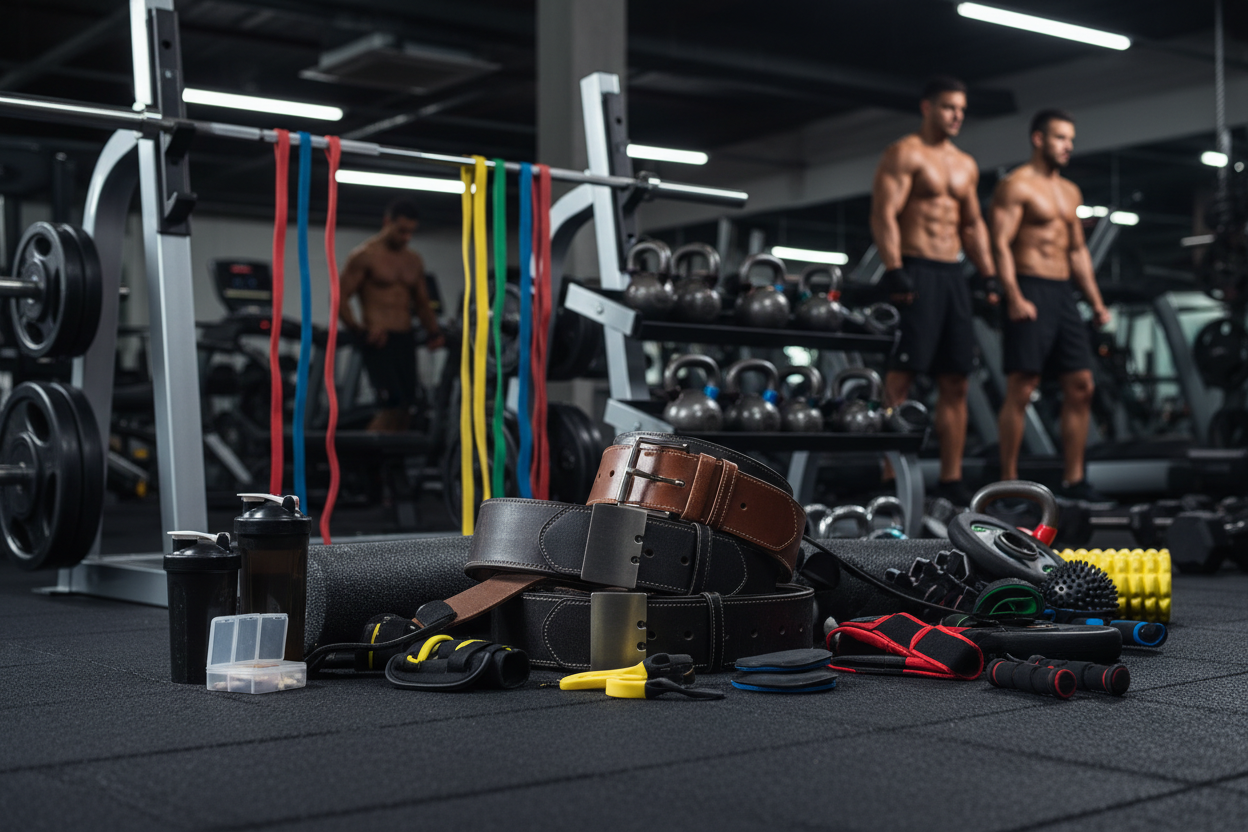
Among the most vital gym and fitness accessories, a 10mm or 13mm leather belt is usually superior to nylon for heavy compound movements because it offers a rigid wall for your abs to brace against.
Compression vs. Support
Knee and elbow sleeves fall into a different category. While stiff wraps store elastic energy, neoprene sleeves primarily provide compression and warmth. This heat retention keeps the joint lubricated. When looking for workout gym accessories that prevent tendonitis during high-volume training, sleeves are often the first line of defense.
Grip Mechanics: Straps, Chalk, and Gloves
Your back is significantly stronger than your hands. If your grip fails before your lats do during a row or deadlift, you aren't training your back to failure; you're training your grip.
Using lifting straps is not "cheating." It is a strategic decision to isolate the posterior chain. However, avoid using them for warm-ups to ensure you still build baseline forearm strength.
Regarding gloves: generally, coaches advise against them for heavy barbell work. Gloves add a layer of material between your hand and the bar, effectively increasing the bar's diameter and making it harder to grip. Chalk is the superior alternative for friction.
Smart Purchasing: Quality Over Hype
When you decide to browse gym accessories buy online, the sheer volume of products is overwhelming. The barrier to entry for manufacturing fitness gear is low, leading to a market flooded with subpar items.
Materials to Look For
When conducting online shopping fitness accessories, check the specifications carefully. For belts, look for vegetable-tanned leather and steel levers or prongs. Avoid "genuine leather" fillers which are often glued layers of scrap.
For gym fitness accessories like wrist wraps, look for heavy-duty elastic that doesn't overly stretch. You want casting-level stiffness to keep the wrist neutral during a heavy bench press.
My Training Log: Real Talk
I want to be transparent about the learning curve here. I remember buying my first high-end lever belt. I thought it would instantly add 20 pounds to my squat. It didn't. In fact, it hurt.
Real high-quality leather takes weeks to break in. I vividly remember the specific, deep purple bruises on my hip bones and lower ribs after my first heavy squat session with it. It pinched my skin every time I hit the bottom of the hole. I actually considered returning it.
But once the leather softened and conformed to my body shape, and once I learned to breathe into the belt rather than just wearing it tight like a corset, everything clicked. The stability was undeniable. Also, a quick note on knee sleeves: nobody tells you about the smell. If you don't wash them regularly, that neoprene absorbs sweat like a sponge and develops a funk that will clear out a locker room. Wash your gear, folks.
Conclusion
The right workout accessories act as force multipliers. They protect your joints and allow you to push closer to your true physical potential. However, they are never a substitute for good form. Master the movement pattern first, then introduce the gear to enhance it.
Frequently Asked Questions
At what point should I start using a lifting belt?
You don't need to wait until you are lifting a specific weight. However, it is best to learn how to brace your core without a belt first. Once you are confident in your bracing mechanics, you can introduce a belt for your working sets (usually 80% of your 1-rep max and above).
Are lifting shoes really necessary for casual lifting?
If you are squatting or deadlifting, yes. Running shoes have compressible soles that absorb force and create instability. You don't need expensive Olympic lifters, but flat-soled shoes (like Converse or Vans) are much safer and more effective for lifting than squishy running sneakers.
How do I clean my neoprene sleeves and wraps?
Do not put them in the dryer. Hand wash them in a sink with mild detergent or a wetsuit cleaner to kill bacteria. Let them air dry completely. High heat from dryers can damage the elastic fibers and shrink the neoprene.