Is Electronic Fitness Actually Effective? The Honest Truth
You have likely seen the ads. The wall-mounted mirror that corrects your squat form, the suit that shocks your muscles into contraction, or the stationary bike that leans when you turn. The fitness industry is rapidly moving away from iron plates and toward algorithms.
But amidst the flashing LEDs and subscription models, a crucial question remains: does electronic fitness actually produce better results than gravity and grit?
It is easy to get lost in the marketing. This guide cuts through the noise to analyze whether adding voltage and processors to your regimen is an upgrade or just an expensive distraction.
Key Takeaways: Electronic Fitness at a Glance
- Definition: Electronic fitness refers to training methods integrating digital resistance, biofeedback, or Electrical Muscle Stimulation (EMS).
- Efficiency: Digital motors allow for eccentric overloading (heavier negatives) without a spotter.
- EMS Utility: Best used for recovery or supplementary activation, rarely as a sole replacement for heavy lifting.
- Data Accuracy: Modern technology exercise equipment tracks power output in real-time, allowing for immediate progressive overload adjustments.
The Shift to Tech Exercise Equipment
For decades, resistance training remained unchanged. You picked up a heavy object, and gravity pulled it down. Today, tech exercise equipment has fundamentally altered that physics equation.
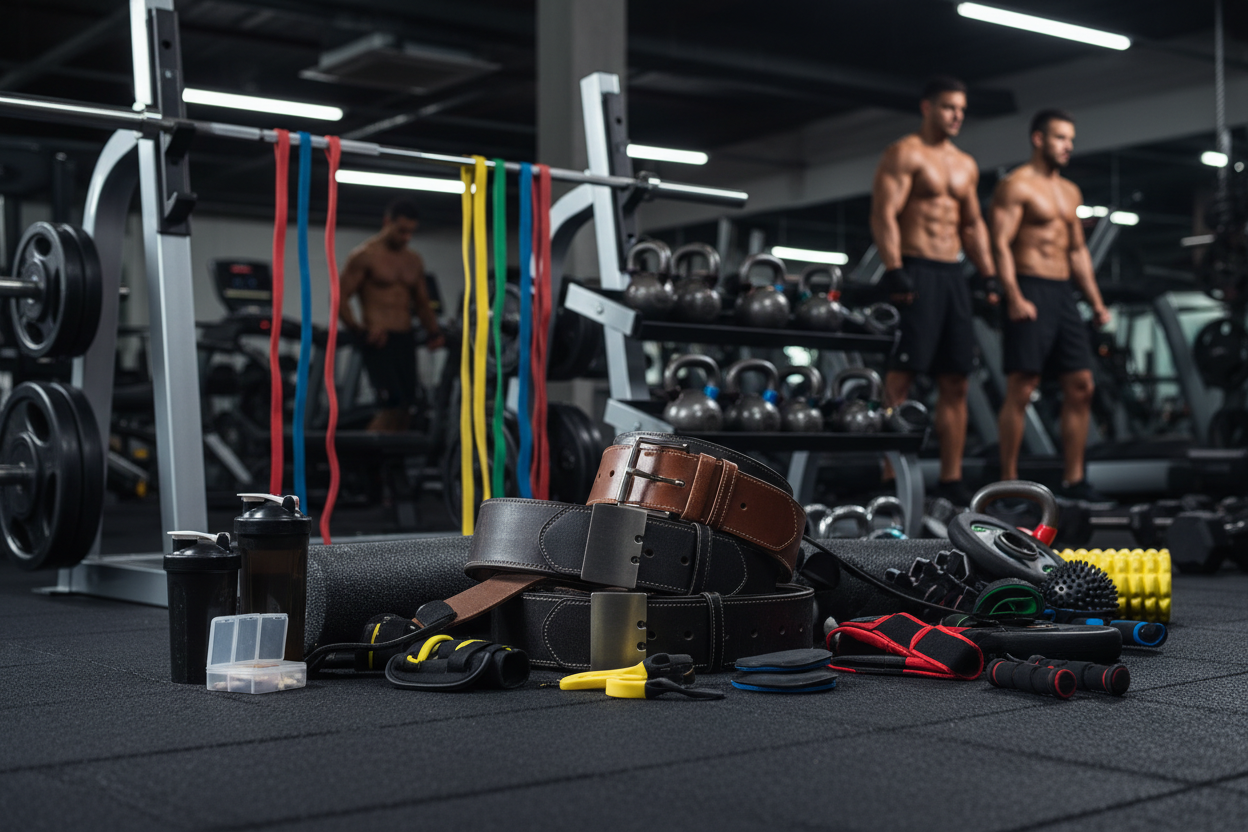
We are seeing a transition from passive equipment (dumbbells) to active equipment (digital weight). These machines use electromagnetic motors to generate resistance. The primary benefit here isn't just saving space; it is the manipulation of the resistance curve.
With traditional iron, a bicep curl is hardest at the midpoint and easiest at the top. Electronic motors can keep the tension constant—or even increase it—throughout the entire range of motion. This creates a stimulus that traditional weights struggle to replicate without chains or bands.
Understanding EMS (Electrical Muscle Stimulation)
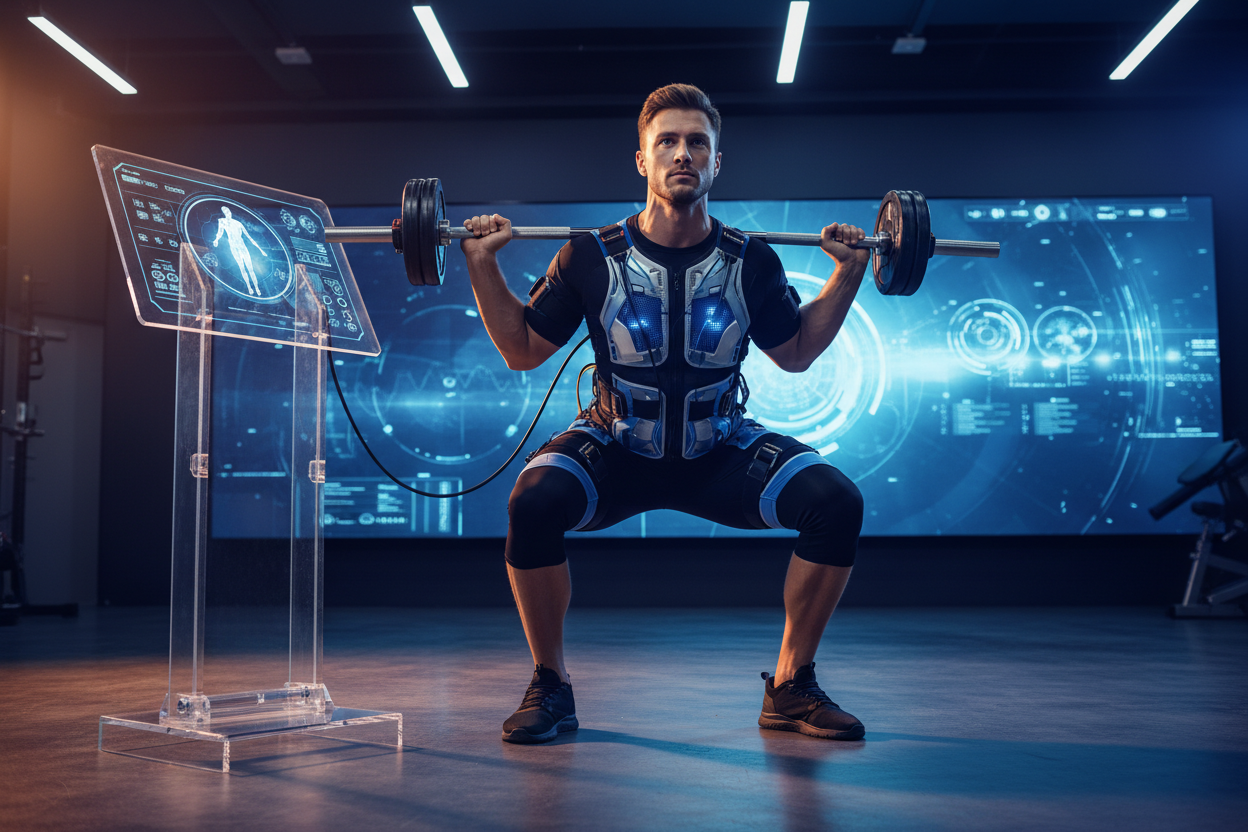
One of the most controversial subsets of this category is EMS. This involves wearing a suit or pads that send electrical impulses directly to the motor neurons, causing muscles to contract.
The Science Behind the Shock
Your brain naturally sends electrical signals to your muscles to move. EMS devices mimic this signal but often at a higher frequency. The claim is that you can recruit 90% or more of your muscle fibers, including deep tissues that are hard to activate voluntarily.
However, there is a catch. While the contraction is real, the neurological pathway is different. Building strength is as much about teaching your nervous system to coordinate movement as it is about raw muscle size. EMS bypasses some of that coordination learning.
The Reality of Technology Exercise Equipment
When evaluating technology exercise equipment, you must look at the software as much as the hardware. The most effective electronic tools are the ones that act as a strict coach.
For example, velocity-based training (VBT) sensors attach to a barbell to measure how fast you move the weight. If you move too slow, the tech tells you to drop the weight. If you move too fast, it tells you to add more. This removes the ego from lifting and relies purely on daily physiological readiness.
My Training Log: Real Talk
I have spent the last six months testing various smart home gyms and a high-end EMS suit. The brochure promises a futuristic, seamless experience. The reality is a bit messier.
Specifically regarding the EMS suit: nobody warns you about the "dry bite." To get the conductivity right, you have to soak the electrode pads with water before putting the suit on. Last month, I was in a rush and didn't spray the lower back pad enough. Five minutes into the workout, as the intensity ramped up, the sensation shifted from a deep muscle squeeze to what felt like a localized hornet sting on my lumbar.
Furthermore, with the digital resistance cable machine I tested, there is a specific, weird sensation during explosive movements. If you pull too fast, faster than the motor can spool, there is a millisecond of slack before the weight "catches." It feels like stepping off a curb you didn't see. It kills your rhythm. Electronic gear is impressive, but it lacks the unforgiving, consistent honesty of cold iron.
Conclusion
Electronic fitness is not a magic pill. A motor cannot do the work for you, and a sensor cannot force you to show up. However, if used correctly, these tools offer precision that analog weights cannot match.
If you are data-driven and struggle with pacing or form, tech-integrated equipment is a game-changer. If you just want to sweat, the old ways still work fine.
Frequently Asked Questions
Is electronic fitness equipment safe for beginners?
Generally, yes. Many smart machines have "spotter" modes that automatically reduce weight if the sensors detect you are struggling, which can actually be safer than dropping a barbell. However, EMS devices should be used with caution and under guidance to avoid rhabdomyolysis (overworking muscle tissue).
Can tech exercise equipment replace a traditional gym?
For general fitness and hypertrophy (muscle growth), yes. Digital weight provides sufficient resistance for 99% of the population. However, powerlifters and strongman competitors will still need the specific feel of gravity-based free weights to prepare for competition.
Is EMS effective for weight loss?
EMS burns calories, but marketing claims often exaggerate the effect. It is best viewed as a strength and toning tool rather than a cardio replacement. You will not sit on the couch, get shocked, and wake up with a six-pack; nutrition remains the driver for weight loss.