Cardio for Weight Lifters: Build Conditioning at Home
Integrating cardio for weight lifters is one of the most effective ways to boost performance, sustain training volume, and speed up recovery between sets. For years, strength athletes were told to avoid endurance work out of fear that any aerobic training would strip away hard-earned muscle. Today, we know that smart conditioning work directly supports heavy lifting by enhancing heart health, general stamina, and physical longevity.
When planned properly, dedicated cardio for weight lifters does not conflict with barbell goals. Whether you train in a garage setup or a spare room, selecting the best cardio for strength training helps you move better, recover faster, and protect your training space. In our experience testing home layouts, a thoughtful setup makes all the difference when combining barbells and conditioning gear.
Why Weight Lifters Need Dedicated Conditioning Work
Strength training places a heavy demand on the central nervous system and anaerobic energy pathways. However, the body relies heavily on aerobic capacity to replenish energy reserves between intense efforts. When weight lifters develop a solid aerobic foundation, their resting heart rate drops, oxygen delivery improves, and overall work capacity expands. This means you can handle more total sets during a grueling session and bounce back sooner.
Conditioning also promotes active recovery. Light, low impact cardio stimulates blood flow to fatigued muscle groups without creating extra mechanical trauma. This accelerated blood flow delivers nutrients that support muscle recovery, helping weight lifters feel fresher for subsequent training days. To explore how fat management and aerobic balance interact, read our weight cardio strength guide.
Does Cardio Hurt Strength Gains?
Cardio does not hurt strength gains when programmed with moderate volume and placed properly around heavy lifting sessions. The misconception that conditioning blunts progress usually stems from excessive running or under-fueling. When strength athletes choose non-impact modalities, cardio for weightlifters acts as a performance amplifier rather than an interference factor.
By managing total fatigue and prioritizing adequate nutrition, cardio for weight lifters preserves strength while improving the body's ability to clear metabolic waste. A lifter with better conditioning can maintain tighter bracing and sharper technique across high-rep barbell work.
What Is the Best Cardio for Weight Lifters?
The best cardio for weight lifters combines low impact cardio methods like sled pushes, stationary bike intervals, and kettlebell swings that build aerobic capacity without causing excessive eccentric muscle breakdown. Eccentric contractions—the lowering phase of an exercise—produce the highest degree of muscle soreness. Traditional long-distance road running involves repeated eccentric braking forces on the knees, hips, and ankles, which can impair barbell performance.
Instead, cardio for weightlifters should focus on concentric-dominant or smooth cyclical movements. These exercises challenge the cardiovascular system, elevate heart rate, and build endurance while keeping the lower body ready for heavy lifting. Equipping your workout zone with dedicated equipment, such as tools from our lower body strength machine collection, makes seamless conditioning accessible right next to your squat station.
The Best Cardio for Strength Training Modalities
Selecting the best cardio for strength training comes down to managing joint stress and neuromuscular fatigue. Here are several modalities that deliver tremendous conditioning benefits for strength athletes:
- Sled Pushes and Drags: Sled pushes provide intense cardiovascular demand with virtually zero eccentric loading. Pushing a loaded sled drives quad and calf endurance while dragging it backwards strengthens knee stability, making sled pushes ideal cardio for weight lifters.
- Stationary Bike: A stationary bike offers smooth, low impact cardio that elevates the heart rate without jarring the joints. Controlled intervals or steady rides on a stationary bike flush the legs and promote active recovery.
- Rowing Machine: Using a rowing machine engages the posterior chain, lats, and core in a fluid, continuous motion. Short bursts on a rowing machine train high-power endurance that translates well to barbell pulls.
- Kettlebell Swings: Rapid, rhythmic kettlebell swings teach explosive hip extension and build conditioning in tight spaces. Incorporating kettlebell swings into cardio for weight lifters reinforces hip hinge mechanics under fatigue.
- Weighted Carries: Walking with heavy dumbbells or farmer handles trains grip strength, torso rigidity, and aerobic endurance simultaneously, serving as pure functional conditioning work.
Should Lifters Do Cardio Before or After Lifting?
Lifters should do conditioning after lifting or on separate days to preserve maximum energy and neurological drive for heavy squats and barbell work. If you perform intense conditioning work right before hitting the rack, your nervous system and core stabilizers will be fatigued, elevating the risk of technical failure under heavy loads.
For optimal results, structure cardio for weight lifters using one of two scheduling models:
- Post-Lift Finishers: Dedicate ten to fifteen minutes immediately after your strength training session to high intensity intervals or kettlebell swings. This ensures your main barbell lifts remain uncompromised while finishing off your cardiovascular training in one session.
- Off-Day Conditioning: Schedule steady state cardio on non-lifting days. A thirty-minute session of light cycling or sled pushes serves as active recovery, promoting muscle recovery without interfering with squats or deadlifts.
Structuring your weekly calendar strategically ensures that heavy lifting remains your top physical priority. For deeper scheduling strategies that blend weights with endurance work, review our cardio weight training guide.
Floor Protection for Heavy Conditioning Work
Heavy conditioning routines demand resilient floor protection just as much as deadlifts and rack pulls do. High-intensity footwork, dropped weights, and dragged implements can quickly damage unprotected concrete or hardwood subfloors. Equipping your training room with dense rubber mats provides the high-density barrier required to absorb shock, dampen vibration, and preserve property value.
When strength athletes perform dynamic cardio for weightlifters, the floor must withstand diverse stresses. Sled pushes exert significant lateral friction, while kettlebell swings carry the risk of accidental drops. Using durable home gym flooring ensures that both your equipment and your structural base remain intact. Reliable subfloor protection also absorbs repeated dynamic impacts, preventing hairline fractures in concrete slabs.
In addition to impact resistance, high-grade home gym flooring provides essential non-slip traction. Sweaty sessions can make bare concrete dangerously slick, compromising footing during fast transitions. Setting up an expansive exercise mat or interlocking dense rubber mats creates a dedicated zone where weight lifters can push hard in total confidence. Explore versatile accessories from our strength training collection to complement your protective floor layout.
Conditioning Circuits vs Steady-State Work for Lifters
Strength athletes often debate whether steady state cardio or high intensity intervals represent the best cardio for strength training. In truth, both methods have distinct benefits depending on your recovery capacity and current goals.
Steady state cardio involves maintaining a consistent, conversational pace for twenty to forty minutes. This low-intensity approach builds capillary density in muscle tissue, strengthens the heart's left ventricle, and improves aerobic capacity without generating fatigue that interferes with heavy squats. Because it is gentle on the central nervous system, steady state cardio is an outstanding choice for off-day active recovery.
On the other hand, high intensity intervals push heart rates toward peak levels through repeated work-and-rest cycles. A short circuit pairing sled pushes with battle ropes or rowing machine sprints elevates metabolic rate and sharpens mental toughness. However, because high intensity intervals tax the nervous system similarly to heavy lifting, they should be used sparingly—ideally only once or twice per week as post-lift finishers. If you want to see how common home routines balance these elements, check out our strength training cardio guide.
Balancing both styles creates well-rounded cardio for weight lifters, keeping your heart healthy and work capacity high while your barbell numbers continue to climb.
Home Gym Layout and Mat Maintenance Tips
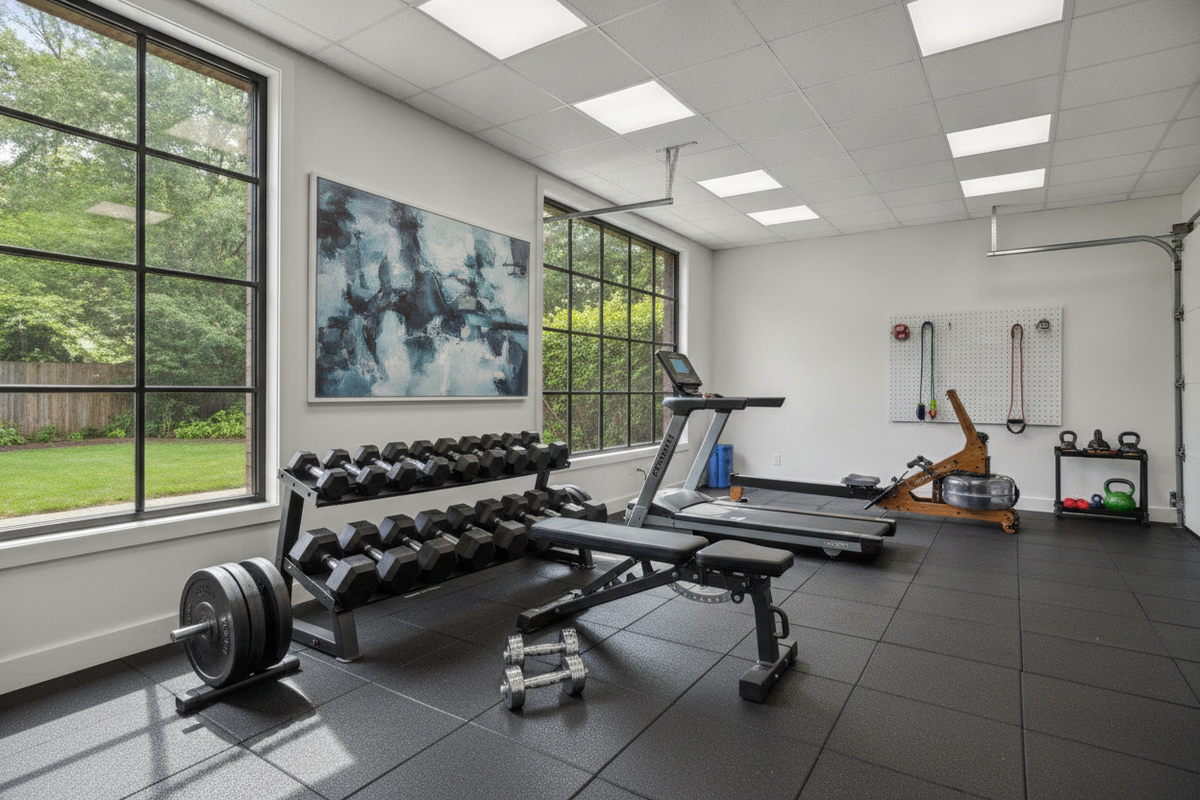
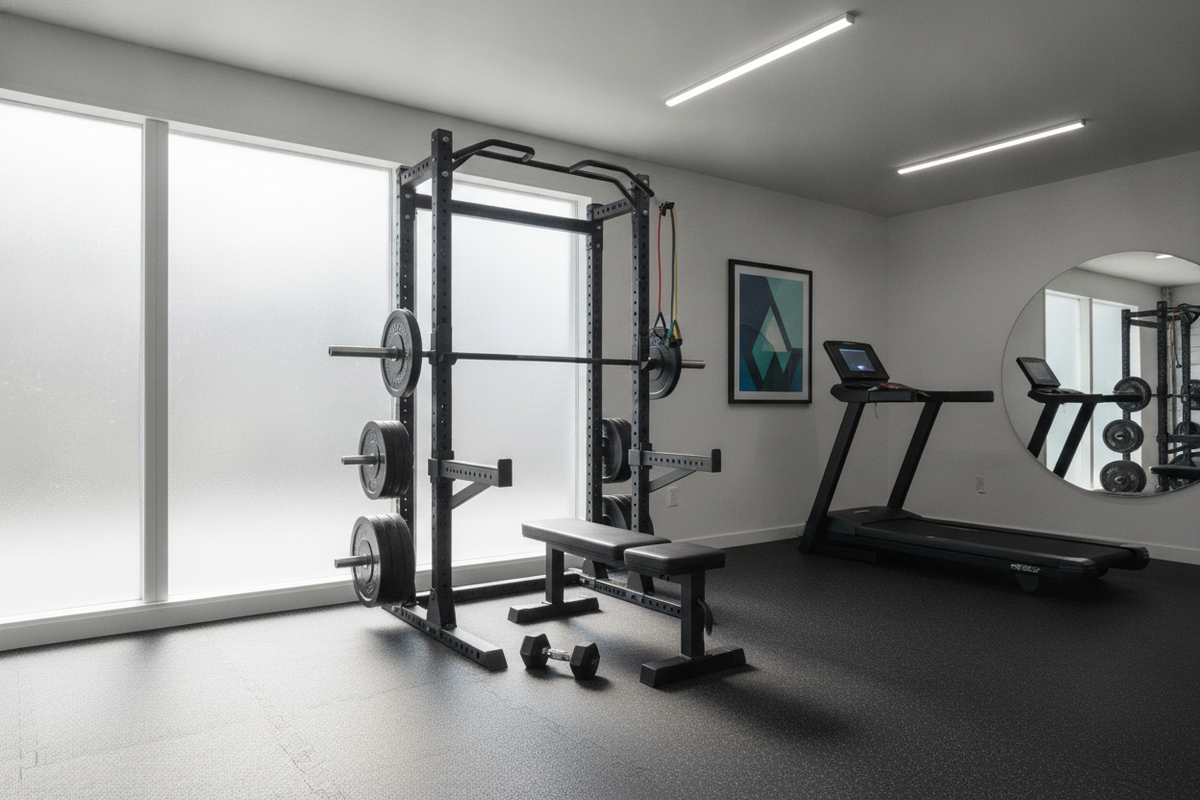
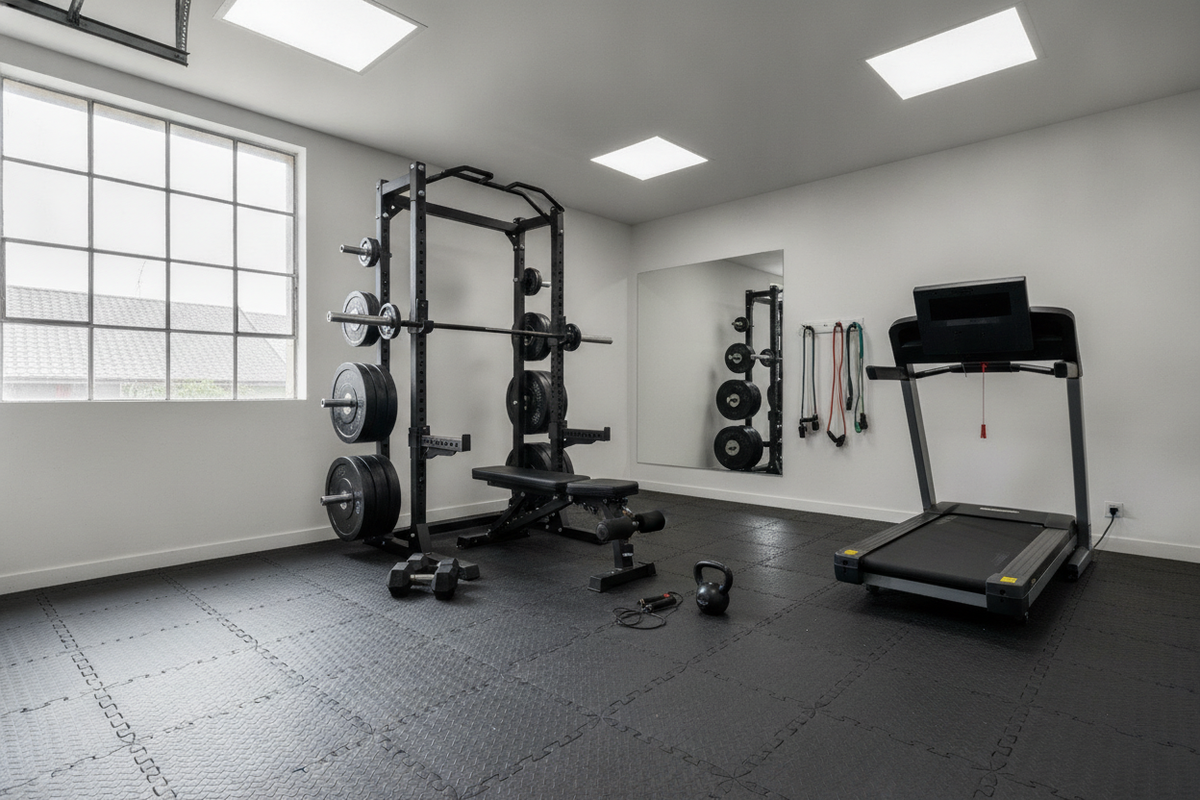
Creating an efficient equipment layout allows you to move smoothly between strength movements and conditioning work without creating hazards. When arranging cardio for weight lifters in a home gym, establish distinct zones: keep your power rack anchored on solid rubber, leave a clear lane for sled pushes or carries, and position your stationary bike or rowing machine where cords and pedals will not obstruct foot traffic.
Proper mat maintenance is equally crucial for hygiene and long-term durability. Conditioning work generates significant sweat, which can degrade cheap foam pads and foster odor-causing bacteria if neglected. High-quality home gym flooring made of vulcanized rubber resists moisture penetration, making routine cleaning straightforward.
To practice effective mat maintenance on your dense rubber mats and large exercise mat surfaces:
- Sweep Regularly: Remove chalk, grit, and dust that can act as an abrasive against rubber textures under dynamic footwork.
- Mop with Mild Cleaner: Use warm water mixed with a neutral-pH cleaner to sanitize surfaces without breaking down the rubber polymers. Avoid harsh bleach or petroleum-based solvents.
- Maintain Air Circulation: Proper ventilation keeps humidity levels down, protecting subfloor protection layers from trapped moisture.
By investing in proper floor protection and organizing your equipment layout sensibly, you build a sustainable training environment where cardio for weightlifters enhances every aspect of your strength journey.