Cardio and Resistance Training Program Home Guide
Creating an effective home fitness routine often comes down to balance. Following a well-designed cardio and resistance training program helps you develop cardiovascular stamina alongside muscular strength without needing a commercial gym membership. By combining these two complementary training styles, you build functional endurance, support daily movement, and keep your home sessions engaging week after week.
Many people struggle when deciding how to integrate aerobic work and lifting into one cohesive plan. If you have ever wondered whether to run before lifting or how to divide your days, reviewing a structured lean bulk cardio training program guide can demonstrate how conditioning and muscle maintenance coexist smoothly. A successful home cardio and resistance training program requires thoughtful planning, smart movement selection, and a supportive floor layout that protects your body and your home.
How Do I Structure a Weekly Cardio and Resistance Training Program at Home?
You can structure a weekly cardio and resistance training program by alternating your lifting and cardiovascular days or by using shorter, combined sessions that address both goals in one workout. The right approach depends on your personal schedule, physical energy, and how much time you can allocate to your home gym each day.
A dependable cardio resistance training program generally relies on a predictable weekly workout split. Organizing your week prevents excessive fatigue and ensures that neither your lifts nor your conditioning suffer from neglect. When planning your schedule, consider these three popular layout styles:
- Alternating Days: Dedicate separate days to strength sessions and dedicated cardio workouts. For example, lift on Monday, Wednesday, and Friday, while reserving Tuesday and Thursday for steady aerobic exercise.
- Hybrid Sessions: Complete both modalities on the same day by dividing your time between lifting intervals and stamina circuits. This is common in a fast-paced cardio and resistance training program when training days are limited.
- Upper-Lower Split with Conditioning Finishers: Focus on targeted lifting splits and append ten to fifteen minutes of low-impact cardio at the end of each session.
Regardless of how you organize your days, monitor your overall training volume to avoid burnout. Balancing effort between challenging lifting sets and conditioning intervals keeps your progress steady. Beginners looking for a detailed foundational structure can consult a beginner resistance training program guide to understand basic session spacing.
Managing Your Weekly Workout Split and Rest Days
Consistent progress in any cardio and resistance training program requires planned recovery just as much as active exertion. Incorporating dedicated rest days allows muscular tissue to rebuild and restores nervous system readiness for the next training block. When your schedule lacks scheduled rest, performance across both strength and endurance exercises quickly declines.
On off days, you can choose complete inactivity or gentle active recovery, such as easy walking or casual mobility drills. Implementing active recovery helps promote blood flow without adding fatigue to your cumulative training volume. A well-rounded cardio resistance training program respects the balance between hard exertion and restorative downtime, giving you the stamina needed for long-term consistency.
Exercise Selection and Session Sequencing for Resistance Training
Effective exercise selection forms the core of your strength work. Choosing versatile movements allows you to target major muscle groups efficiently, even within limited home spaces. Centering your lifting sessions around foundational compound movements—such as squats, lunges, presses, and rows—delivers the most comprehensive muscular stimulation.
Pairing reliable dumbbell exercises with varied bodyweight exercises ensures that your cardio and resistance training program remains adaptable. For instance, you might move from weighted goblet squats straight into push-ups or inverted rows. For detailed ideas on structuring exercises to match your personal level, explore this best resistance training exercises breakdown. Older adults or those focusing on joint comfort can also review an older adult resistance training guide for sensible loading strategies.
Should I Do Cardio Before or After Resistance Training in the Same Session?
You should generally perform resistance training before cardio workouts if your primary goal is building strength, or perform cardio first if cardiovascular endurance is your main priority. Placing your primary goal first ensures you tackle demanding movements with fresh physical energy and mental focus.
When you conduct heavy lifting after exhaustive conditioning, muscular fatigue can alter your movement patterns and limit output. Conversely, starting your session with demanding compound movements or focused dumbbell exercises allows you to lift with strict technique. Once your lifting sets are complete, transitioning to cardio workouts or lighter aerobic exercise allows you to elevate your heart rate without worrying about lifting heavy loads safely.
If you prefer performing both on the same day without interference, consider separating them by several hours or choosing low-impact cardio that does not heavily deplete the muscle groups trained during your strength blocks. In my own home routine, separating heavy lifts from conditioning intervals makes each session feel far more focused.
Home Gym Setup: Equipment Placement and Floor Protection
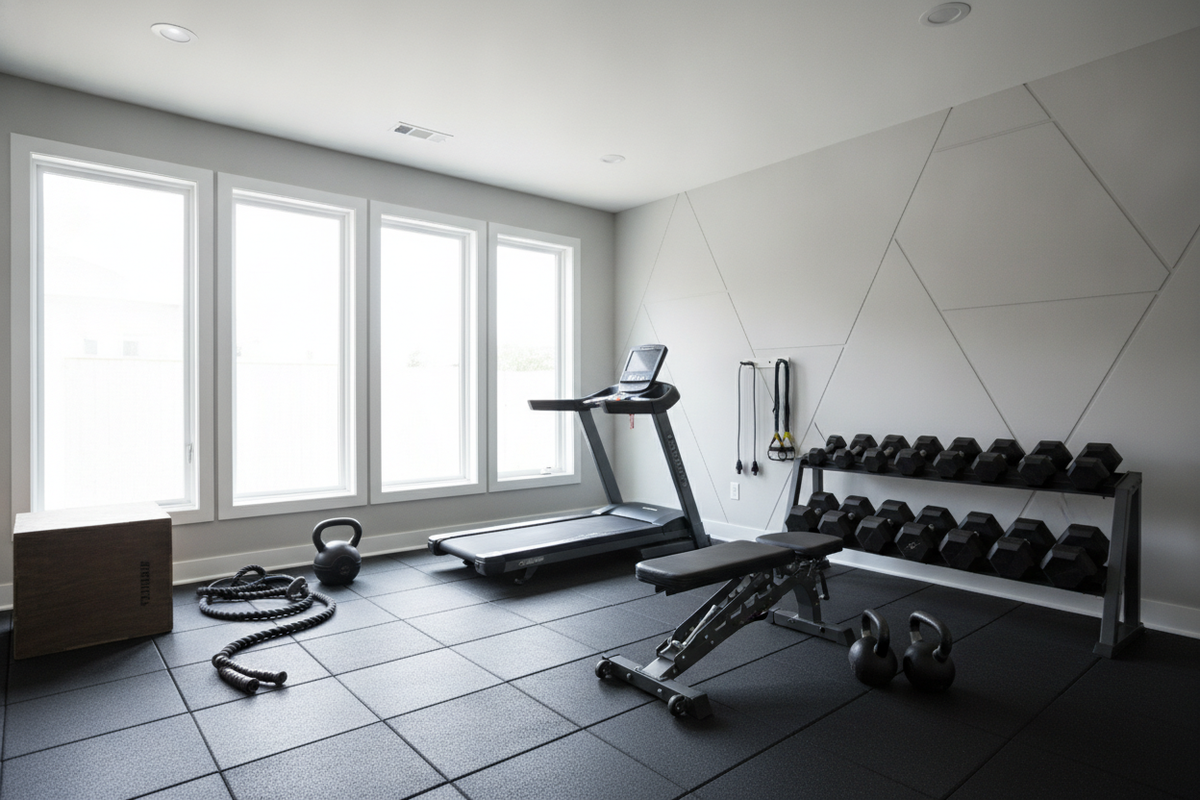
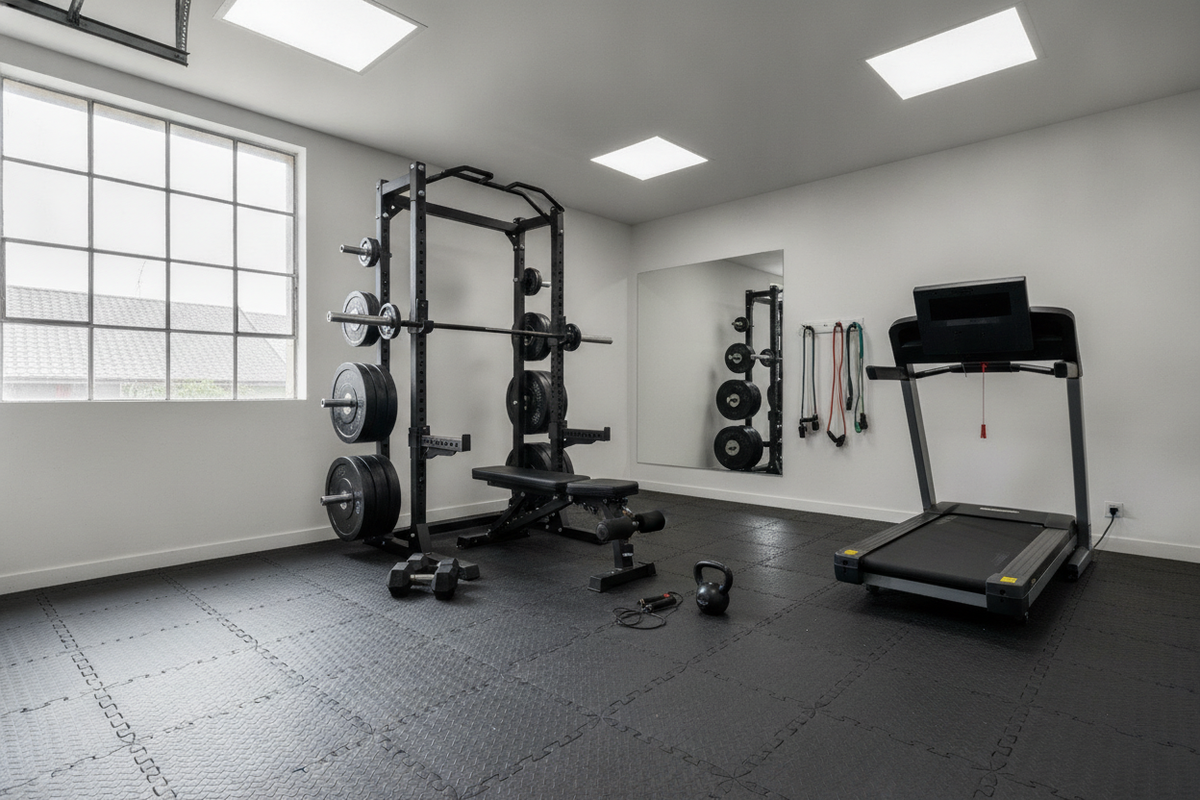
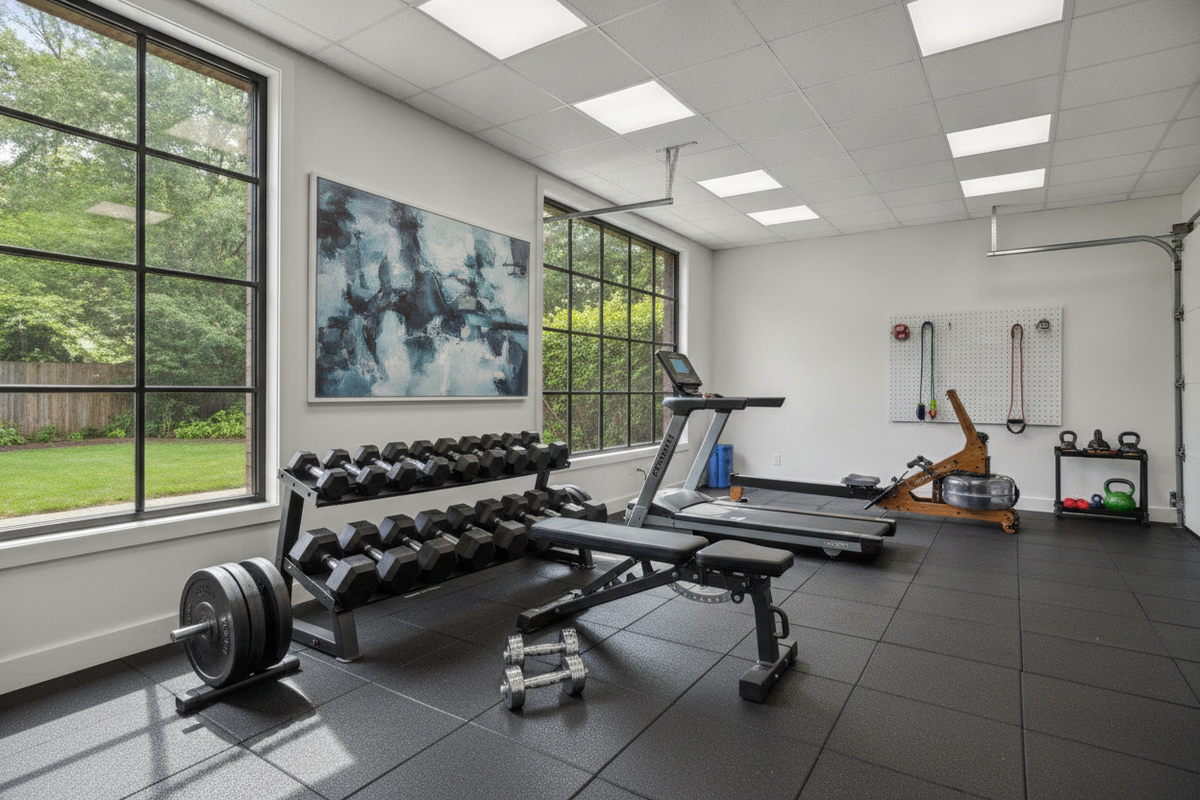
Executing an energetic cardio and resistance training program requires an organized training zone that accommodates varied movement patterns. Your home gym setup needs to support both stationary lifting and dynamic conditioning without creating clutter or tripping hazards. Thoughtful equipment placement keeps your workout space safe and fluid during fast transitions.
Store your weights, resistance bands, and kettlebells against perimeter walls so that the center of the room remains completely clear. If you use benches or adjustable stands, keep them near storage racks. Outfit your station with trusted gear from a curated strength training accessories collection to keep essentials neatly stored and ready for every workout.
How Do I Protect My Floors During High-Impact Cardio and Heavy Lifting?
You can protect your floors during high-impact cardio and heavy lifting by laying down dense gym flooring that disperses weight and absorbs shock. Standard residential floors like hardwood, tile, and laminate are vulnerable to scuffs from dropped weights and repetitive foot strikes.
Installing comprehensive floor protection is crucial whenever you introduce high-impact movements like jump rope intervals, burpees, or box jumps into your cardio and resistance training program. Without sufficient padding, repeated jumping can stress underlying concrete or subfloor boards. Using a resilient large exercise mat provides targeted shock absorption, softening the landing forces for both your joints and your foundation.
Similarly, dedicated subfloor protection shields the structural base of your room against accidental dumbbell drops or heavy equipment pressure. Integrating a large exercise mat with a dependable non-slip surface guarantees that your footing remains stable during rapid lateral drills and heavy squats alike. A quality large exercise mat also deadens vibration, preventing unwanted noise from traveling through adjacent living spaces during early morning cardio workouts.
Maintaining Mat Durability and Training Consistency
A rigorous cardio and resistance training program subjects your workout area to constant friction, moisture, and impact. Ensuring long-term equipment durability requires proactive care and dependable materials. A high-grade large exercise mat built with reliable sweat resistance helps repel perspiration, preventing moisture from seeping beneath the mat and damaging finished floors.
Routine mat maintenance takes only a few minutes after every workout session:
- Wipe down your mats with a mild soap solution and a microfiber cloth to remove sweat and oils.
- Inspect the seams and underside periodically to ensure no dirt or grit has accumulated against your subfloor.
- Keep sharp objects and direct outdoor footwear off your workout flooring to preserve the non-slip surface texture.
Maintaining clean, reliable flooring ensures that your home gym setup remains an inviting place to train. When your training area is well organized, properly cushioned, and protected against heavy wear, sticking to your cardio and resistance training program becomes a seamless, rewarding habit for years to come.