Why I Program High-Intensity Resistance Training for Older Adults
I recently watched a trainer at a big-box gym lead a group of seniors through a strength class that involved nothing but seated arm circles and squeezing foam balls. It was painful to watch. Not because they were working hard, but because they weren't. We have been told for decades that once you hit 60, you are one heavy lift away from a hip replacement. That mindset is exactly what makes people fragile in the first place.
I have spent years testing everything from $5,000 power racks to $20 resistance bands, and the data is clear: the body needs a reason to stay strong. high-intensity resistance training for older adults is about giving the nervous system and the muscles a reason to stick around. Before we talk about how hard to push, you need to understand the foundational benefits of resistance training for longevity.
The Big Misunderstanding About 'High Intensity'
When I say high intensity, most people picture a 22-year-old screaming through a 500-lb deadlift. That is not what we are doing here. In a training context, intensity refers to the proximity to failure. It is about how hard your muscles are working relative to their current capacity, not just the absolute number on the plate.
The fitness industry has done older lifters a massive disservice by equating heavy effort with high risk. If you are doing 20 reps and you could have easily done 40, you aren't training; you are just moving. To see real changes in bone density and metabolic health, you need to work at an RPE (Rate of Perceived Exertion) of about an 8 or 9. That means when you finish a set, you might have had one or two more clean reps left in the tank, but no more. This level of effort triggers the hormonal and neurological adaptations that actually keep you young.
Why Those Pink 2-Pound Dumbbells Aren't Helping
Sarcopenia is the age-related loss of muscle mass, and it specifically targets your Type II muscle fibers. These are your fast-twitch fibers—the ones that help you catch yourself if you trip on a curb or push yourself up out of a deep chair. Those little 2-pound pink dumbbells don't provide enough mechanical tension to even wake those fibers up, let alone keep them.
If the resistance isn't heavy enough to challenge the muscle, your body has no reason to maintain it. It is a use it or lose it scenario. Using ultra-light weights for high reps is basically cardiovascular work. It is fine for burning a few calories, but it does almost nothing to prevent frailty or build the structural integrity your skeleton needs as you age. You need enough weight to create tension that signals the bones to pull in more minerals and the muscles to synthesize more protein.
How to Push Close to Failure Without Wrecking Joints
The secret to high-intensity training for seniors isn't the barbell; it is the machine. I love a good barbell squat, but for an older adult, the stability requirements can be a bottleneck. By using a machine chest press or a seated row, you remove the balance component. This allows you to focus 100% of your effort on the muscle group without worrying about dropping a weight or falling over.
I also recommend using specific strength training accessories to take the bite out of the movements. Knee sleeves can keep joints warm and stable, while high-quality lifting straps can help if your grip strength is the weak link in your back workouts. Pushing to an RPE of 9 is much safer when you aren't worried about your wrists giving out before your lats do. We want the target muscle to fail, not the joints to complain.
Creating a Safe Environment for Heavy Lifts
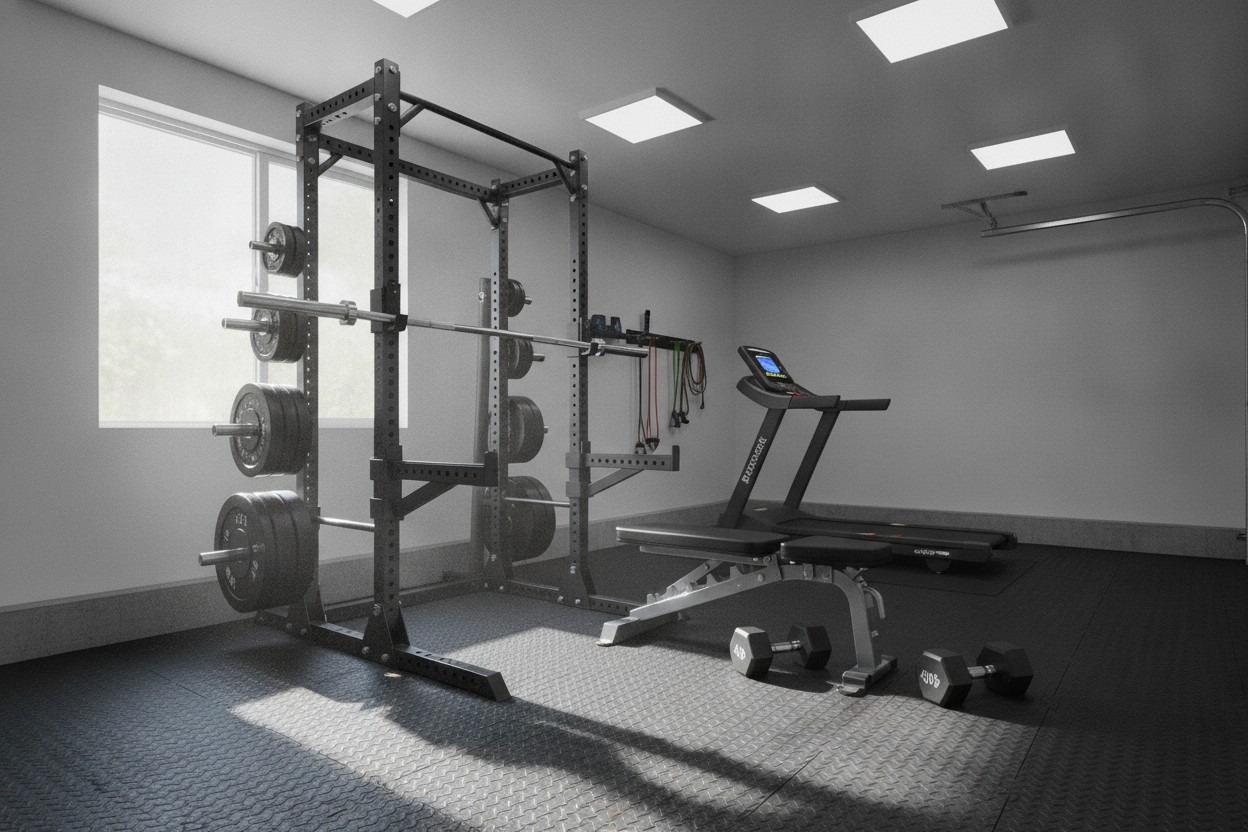
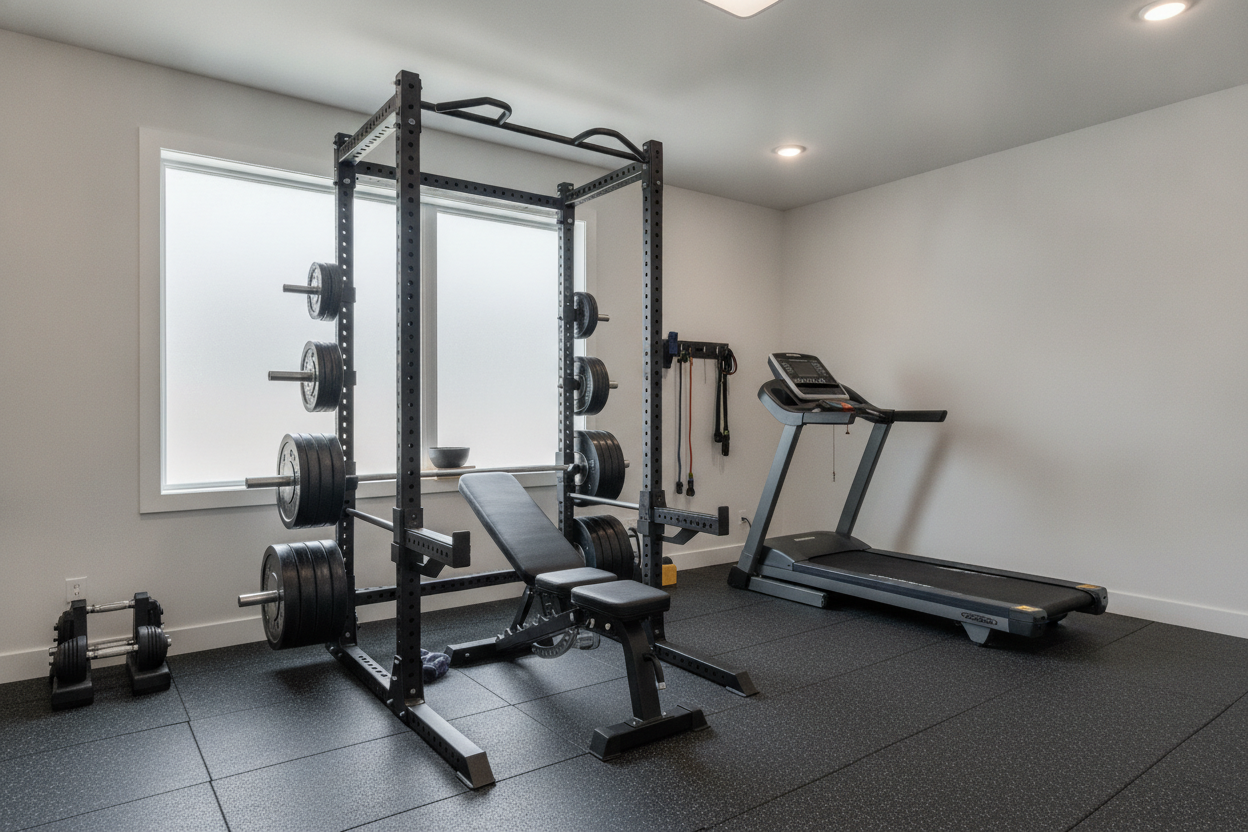
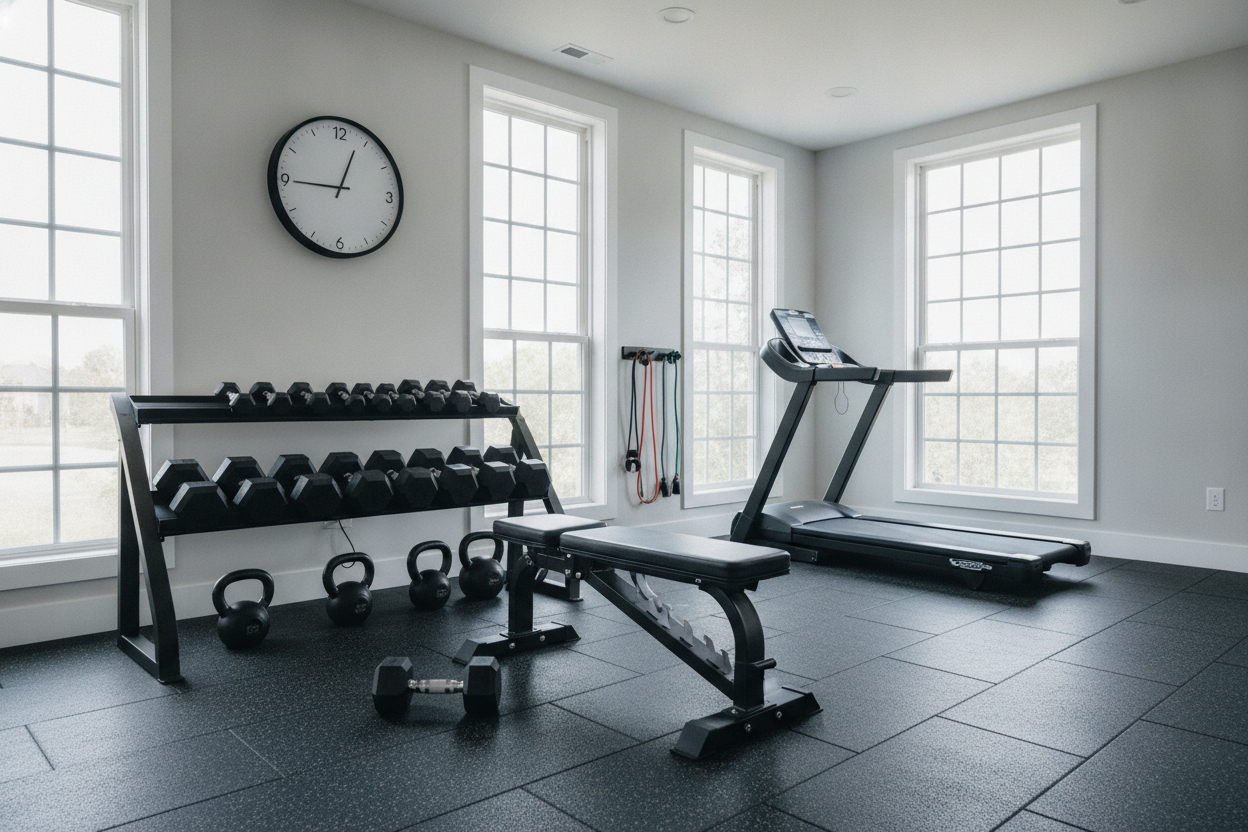
You can't train with high intensity if you are worried about your feet sliding out from under you. Most home gym floors are just slick concrete or cheap carpet. If you are going to be moving meaningful weight, you need a dedicated space with real traction. It is about confidence as much as it is about safety.
I always suggest a solid gym flooring for home workout setup. A thick, non-slip mat provides a stable base for your feet and protects your subfloor if you happen to set a weight down a little too hard. It also defines your work zone, which helps keep the area clear of trip hazards like loose shoes or pets. When you are pushing for those last two hard reps, the last thing you want is a shifting floor.
Putting It Into Practice: A Sample Blueprint
A high-intensity session for an older adult doesn't need to last two hours. In fact, it shouldn't. Because the effort is high, the volume can be low. I typically program 2 to 3 working sets per exercise. If you are truly pushing close to failure, you won't want to do more than that anyway. Quality of effort beats quantity of reps every single time.
A session might look like this: a 5-minute dynamic warm-up, followed by a leg press, a chest press, and a row. That is it. Rest at least two minutes between sets—don't rush it. You want your nervous system to recover so you can bring the same intensity to the next set. For a more detailed breakdown, you can check out the program for older adults I give my parents. It is the exact protocol I use to keep them capable and independent.
My Personal Take
I tried to get my father into functional training years ago—lots of balance boards and light bands. He hated it and saw zero progress. He felt like he was being treated like a patient, not an athlete. When we switched to heavy-ish machine presses and rows, his attitude flipped. He liked the challenge. He liked seeing the pin move down the stack. One mistake I made early on was not accounting for his recovery; we started with three days a week, but two ended up being the sweet spot for his joints. Listen to your body, but don't let it get lazy.
FAQ
Is lifting heavy weights dangerous for my heart?
Actually, resistance training can improve cardiovascular health and blood pressure. However, you should avoid holding your breath (the Valsalva maneuver) during the lift. Keep your breathing steady and consult your doctor if you have pre-existing heart conditions.
Do I need a spotter?
If you stick to machines or a power rack with safety bars, you don't necessarily need a spotter. Machines are designed to keep the weight on a fixed track, making them the safest option for solo high-intensity training.
How do I know if I am hitting the right intensity?
If you finish a set and feel like you could immediately do 10 more reps, the weight is too light. If your form breaks down or you are shaking uncontrollably, it is too heavy. Aim for that hard but controlled feeling on the last two reps.