The Only Strength and Conditioning Equipment Worth Your Garage Space
I remember staring at my garage floor three years ago, barely able to see the concrete through a sea of cheap plastic 'innovations' I’d bought during late-night scrolling sessions. Most of it was junk—flimsy resistance bands that snapped within a month and a 'core trainer' that now serves as a very expensive doorstop. If you’re not careful, your pursuit of high-performance strength and conditioning equipment will turn your workout space into a graveyard of gimmicks.
You don't need a 20,000-square-foot facility to get explosive. You need a few pieces of high-density steel, some heavy canvas, and the discipline to use them. I’ve spent the last decade testing everything from $5,000 racks to $20 sandbags, and I’ve learned that the best gear usually doesn't have a Bluetooth connection or a subscription fee.
Quick Takeaways
- Prioritize multi-use tools like kettlebells and sandbags over single-use machines.
- Invest in a solid foundation—flooring and a rack—before buying 'toys.'
- Avoid anything made of thin-gauge steel or excessive plastic components.
- Real power training requires gear that can handle being dropped, swung, and beaten.
The Functional Fitness Hype Machine
Social media has a way of making us feel like we need a specialized tool for every single movement. One day it's a vibrating foam roller, the next it's a specific 'unilateral explosive trainer' that costs $400. This is the hype machine at work, designed to separate you from your cash while cluttering your gym. Most of these tools offer a pathetic return on investment.
I’ve seen too many guys buy a full set of wall balls, three different types of sleds, and a pegboard before they even own a decent barbell. That gear usually ends up gathering dust. Real conditioning isn't about variety for the sake of variety; it's about intensity. You can get more out of a single heavy kettlebell and a pair of running shoes than most people get out of a room full of 'functional' gadgets.
What Actually Qualifies as Power Training Equipment?
True power training equipment needs to facilitate explosive force production. We’re talking about moving heavy loads fast. This isn't the place for selectorized machines that lock you into a fixed range of motion. You need tools that allow for triple extension—hips, knees, and ankles working together.
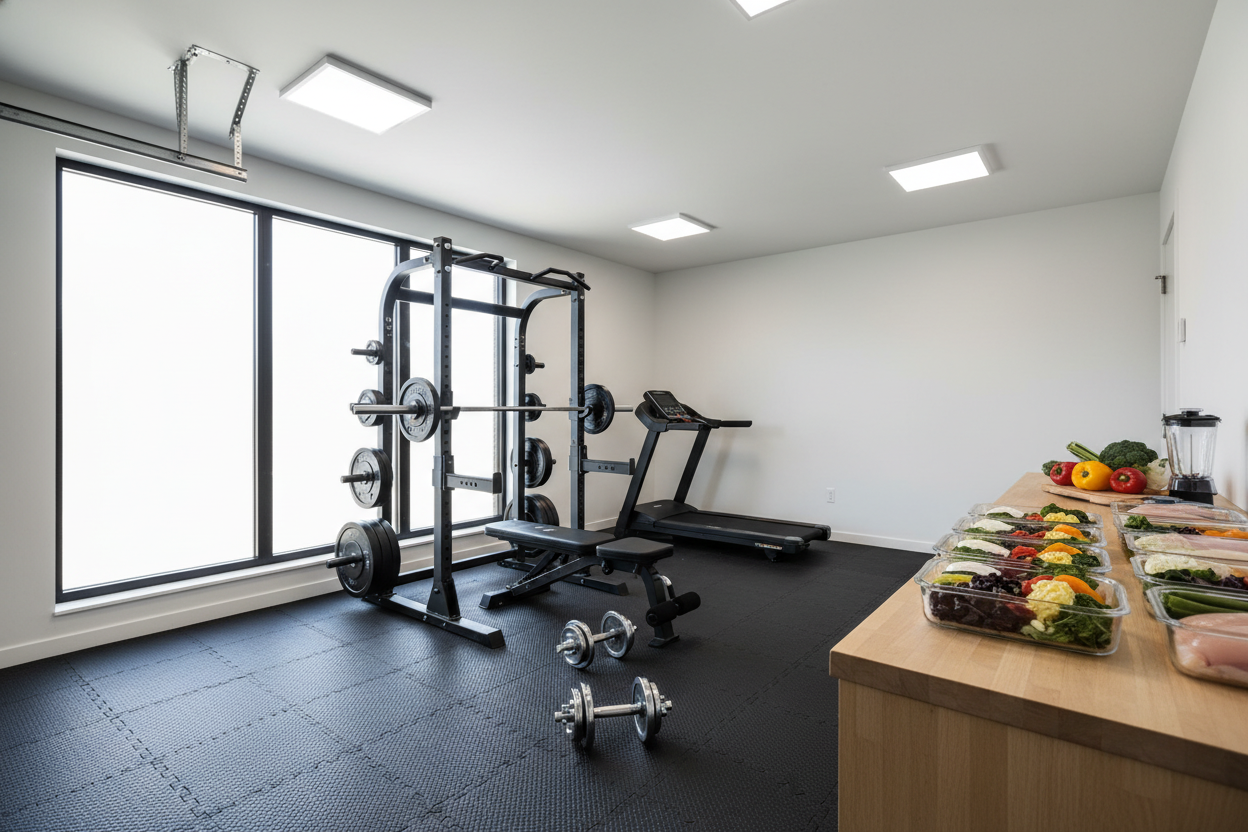
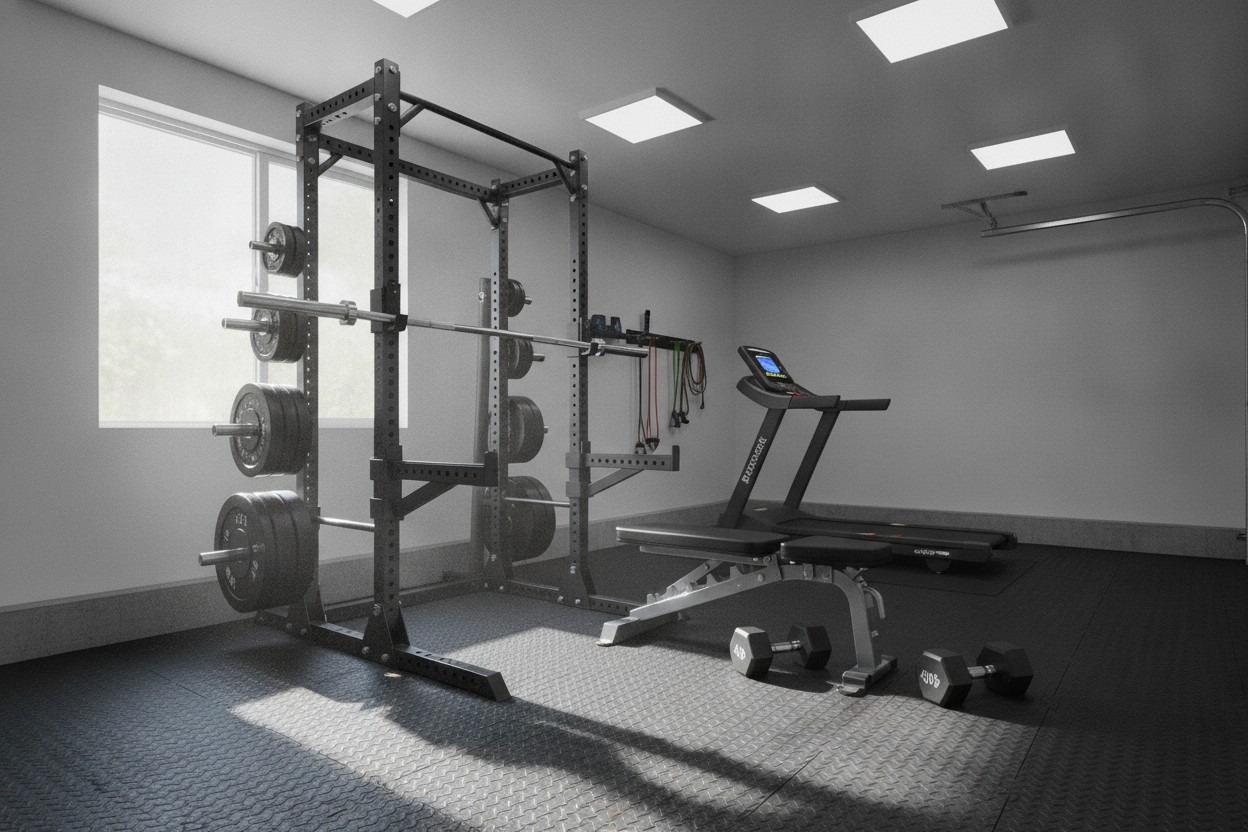
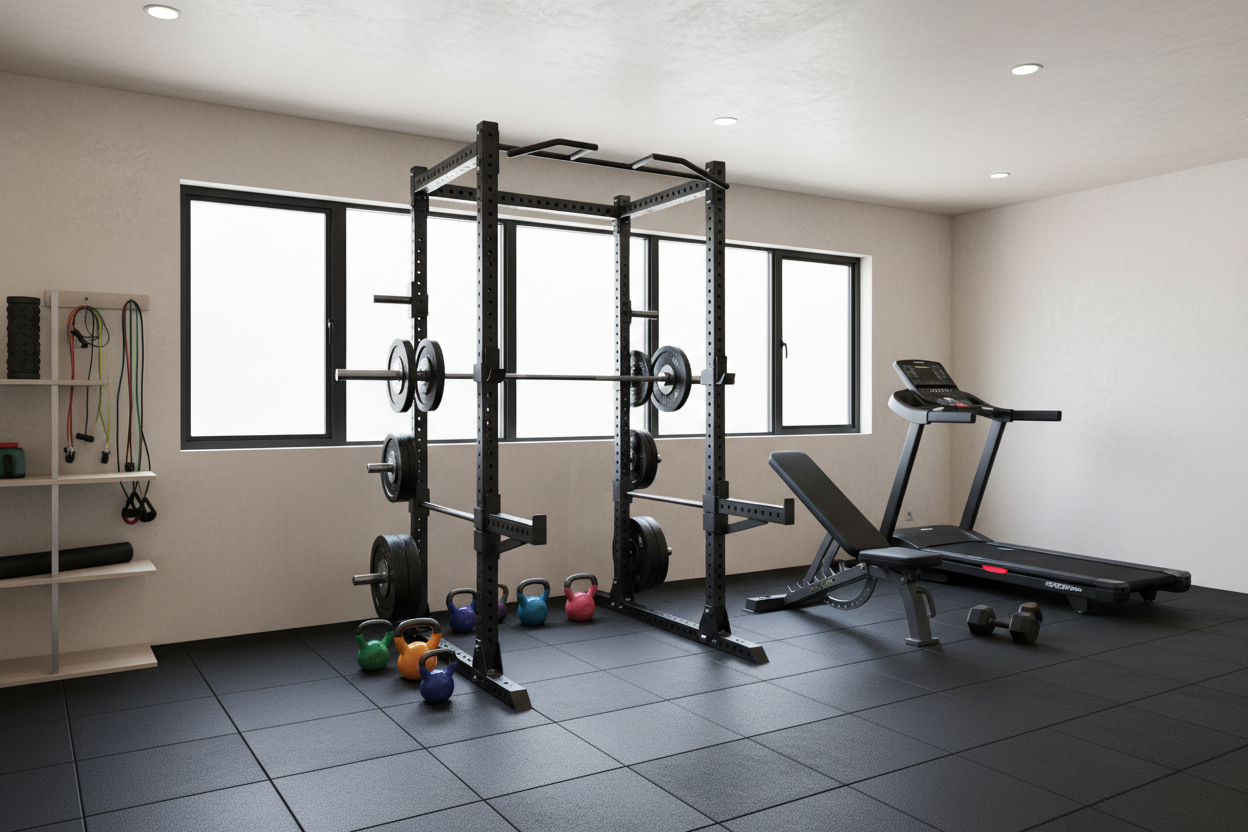
Before you start adding niche conditioning toys, you need to anchor your space with foundational strength equipment. A sturdy power rack with at least 11-gauge steel and a barbell with a decent whip are the centerpieces of any serious power program. If your rack wobbles when you're racking a heavy squat, you aren't going to feel confident enough to move with the speed required for power development.
Conditioning Tools That Won't Gather Dust
Once the rack and bar are set, I look for high-ROI conditioning tools. A heavy sandbag is at the top of my list. A 100lb or 150lb sandbag is awkward, brutal, and develops 'old man strength' that a barbell simply can't touch. It’s also virtually indestructible. Pair that with a couple of competition-grade kettlebells—35lb and 53lb are the standard starting points—and you have a world-class conditioning setup.
If you're doing high-rep swings, snatches, or burpees, don't overlook your floor. I learned the hard way that dropping a 53lb bell on bare concrete is a recipe for a security deposit nightmare. Laying down a large exercise mat for cardio provides the necessary shock absorption to protect your joints and your foundation during those high-impact sessions. For the cardio piece, an air bike is the gold standard. It’s low impact but offers infinite resistance—the harder you pedal, the more it hurts.
Red Flags When Buying Strength Conditioning Equipment
The market is currently flooded with low-quality strength conditioning equipment. The first red flag is 'all-in-one' machines that claim to do 50 different exercises. These are usually jacks-of-all-trades and masters of none, with cables that feel like they’re rubbing against sandpaper and pulleys made of cheap plastic.
Look at the weight capacities. If a bench or rack doesn't clearly state its capacity, or if it's rated for less than 600lbs, walk away. You also want to avoid 'proprietary' attachments. Some brands try to lock you into their ecosystem with weird hole spacing or non-standard tubing sizes. Stick to 2x3 or 3x3 steel with 5/8-inch or 1-inch holes. Also, don't waste money on cheap plastic handles. Investing in high-quality strength training accessories like nylon straps or knurled steel handles will save your hands and last a lifetime.
Tying the Iron to Your Programming
The best gear in the world is just a pile of cold metal if you don't have a plan. I’ve seen guys with $20,000 Rogue setups who just walk around their gym doing aimless curls. To build real-world power, you need to structure your sessions around big movements followed by high-intensity finishers. Use your heavy iron for the strength work, then transition to your sandbags or bells for the conditioning.
A minimalist routine might involve heavy front squats followed by sandbag carries and hill sprints. It’s simple, it’s savage, and it works. If you're struggling to piece it together, check out this full body strength and conditioning workout to get a sense of how to balance the two disciplines without burning out. Gear is the vehicle, but the program is the map.
My Biggest Equipment Mistake
I once bought a cheap, wooden plyo box from a generic sports store because it was $40 cheaper than the name-brand version. The first time I did a max-height jump, the wood splintered on impact. I ended up with a shin full of splinters and a bruised ego. I learned then that for anything you're going to jump on, drop, or throw, you never go for the budget option. Buy it once, buy it right.
FAQ
Is an air bike better than a rower for conditioning?
Both are great, but the air bike is more 'idiot-proof.' Rowing requires significant technique to avoid lower back strain under fatigue. On a bike, you just sit down and suffer. For pure conditioning intensity, the bike wins.
Can I just use dumbbells instead of kettlebells?
For some moves, yes. But for swings and snatches, the offset center of gravity in a kettlebell creates a unique demand on your posterior chain and grip that dumbbells can't replicate. If you can only afford one, get the kettlebell.
How much space do I really need?
You can do a lot in a 4x6 foot space with a single kettlebell and a mat. However, for a full setup with a rack and bar, you really want at least an 8x10 foot area to move safely without hitting walls.