I Kept Cardio in My Lean Bulk Training Program (Here's Why)
I remember staring at my power rack three years ago, gasping for air after a set of eight squats at 275. I was supposedly 'bulking,' which in my head meant eating everything that wasn't nailed down and moving as little as possible to save every precious calorie. I looked bigger in a t-shirt, sure, but I felt like garbage. My heart rate was 95 bpm just walking up the basement stairs to grab a protein shake.
The mistake I made is the same one I see dozens of guys make when they start a lean bulk training program. They treat cardio like a parasite that eats muscle. In reality, cutting out all conditioning is the fastest way to hit a plateau, get 'fluffy' around the middle, and ruin your ability to actually handle high-volume training. If you can't breathe, you can't grow.
- Work Capacity: Better conditioning lets you recover faster between sets of heavy lean mass workouts.
- Nutrient Partitioning: Staying active helps ensure those extra calories go to muscle, not just your gut.
- Heart Health: Don't be the guy who can bench 315 but gets winded tying his shoes.
- Recovery: Low-intensity movement flushes waste products and gets blood into the muscles without adding fatigue.
The Old-School Bulking Myth We Need to Kill
We’ve all heard it: 'Don't run if you can walk, don't walk if you can stand, and don't stand if you can sit.' This old-school bodybuilding mantra was designed for guys on massive amounts of 'pharmaceutical assistance' who were trying to reach 300 pounds. For the rest of us training in a garage, it’s a recipe for becoming an unathletic slab of meat. Most lifters abandon conditioning the second they decide to add size because they fear 'interference effect'—the idea that cardio signals will cancel out your strength signals.
Unless you are running half-marathons on your off days, that interference is mostly a myth. What actually happens when you drop cardio is your aerobic base disappears. Suddenly, your three-minute rest periods aren't enough time for your heart rate to drop. You go into your next set of deadlifts still huffing, your form breaks down because you're tired, and you end up cutting the workout short. You aren't failing because your muscles are weak; you're failing because your lungs are.
I’ve tested this myself. When I cut cardio, my 'bulks' lasted about six weeks before I felt too gross to continue. When I kept the conditioning in, I could push for four or five months straight while staying relatively lean. You don't need to be a marathoner, but you do need to be a functional human being.
Why Work Capacity Actually Drives Muscle Growth
Muscle growth isn't just about the weight on the bar; it's about the total effective volume you can handle over a week. If your lean mass workout calls for 4 sets of 12 on Bulgarian Split Squats, but you're seeing stars and looking for a bucket by the second set, you're leaving gains on the table. A higher baseline of aerobic fitness—often called work capacity—is the engine that allows you to drive that volume.
Think of your body like a car. Your muscles are the engine, but your cardiovascular system is the cooling system. If you put a massive V8 engine in a car but keep the tiny radiator from a 1992 Honda Civic, the whole thing is going to overheat the moment you push it. By maintaining a decent level of fitness, you're upgrading that radiator. You can do more sets, more reps, and recover faster between sessions.
Biologically, better conditioning improves capillary density. This means more blood flow to the muscles you're trying to grow. More blood flow means better delivery of amino acids and faster removal of metabolic byproducts. When you're deep into a heavy leg day, that extra blood flow is the difference between finishing your accessory work and calling it quits because your legs feel like lead. I’ve found that my best lean mass workouts happen when my resting heart rate is in the low 60s, not the high 70s.
The Joint-Friendly Conditioning Hack for Heavy Lifters
The trick to keeping cardio in a lean bulk training program isn't hopping on a treadmill for an hour. That’s boring, and the repetitive impact can beat up your knees when you're already squatting heavy. Instead, I focus on 'eccentric-less' conditioning. This means movements where there is no 'lowering' phase, which is the part of the lift that causes the most muscle damage and soreness.
The king of this is the sled. Pushing a weighted sled for 20-yard sprints or dragging it backward for time will absolutely melt your lungs without making your quads too sore to squat the next day. I also love loaded carries. Grab the heaviest pair of dumbbells you can hold for 60 seconds and go for a walk. It builds your traps, your grip, and your heart rate all at once. If you're stuck inside, a low impact HIIT workout with weights can bridge the gap perfectly. Think kettlebell swings, goblet squats, and overhead presses performed in a circuit with minimal rest.
The goal here isn't to burn 1,000 calories. The goal is to get your heart rate into the 130-150 bpm range and keep it there for 20 to 30 minutes. This 'Zone 2' work is the sweet spot. It builds the aerobic base without trashing your central nervous system. I usually limit these sessions to two or three times a week. If I feel my strength dropping on the big lifts, I know I’ve pushed the intensity of the conditioning too hard.
How to Program Lean Mass Workouts Without Spilling Over
Programming this doesn't have to be a headache. You don't want your conditioning to compete with your heavy lifting for energy. I follow a simple 'High/Low' split. If Monday is a high-intensity heavy squat day, Tuesday is a 'low' day where I might do 30 minutes of incline walking or some light sled drags. This keeps the blood moving and actually helps clear out the soreness from the squats.
Alternatively, you can tack 10 minutes of 'finishers' onto the end of your lifting sessions. After your heavy presses, do five rounds of 15 kettlebell swings and 10 burpees. It keeps your engine primed without requiring an extra trip to the gym. The key is consistency. You can't do one 5-mile run every three weeks and expect results. You need 2-3 sessions of 20-30 minutes of steady-state work or 10-15 minutes of high-intensity intervals.
Monitor your weight and your waist circumference. If you're losing weight, eat a peanut butter sandwich. If your waist is growing faster than your chest, bump up the conditioning. A lean bulk is a balancing act, and your conditioning is the primary tool you use to stay on the wire. Don't be afraid to adjust on the fly based on how your joints feel and how the scale is moving.
Setting Up Your Space for Hybrid Training
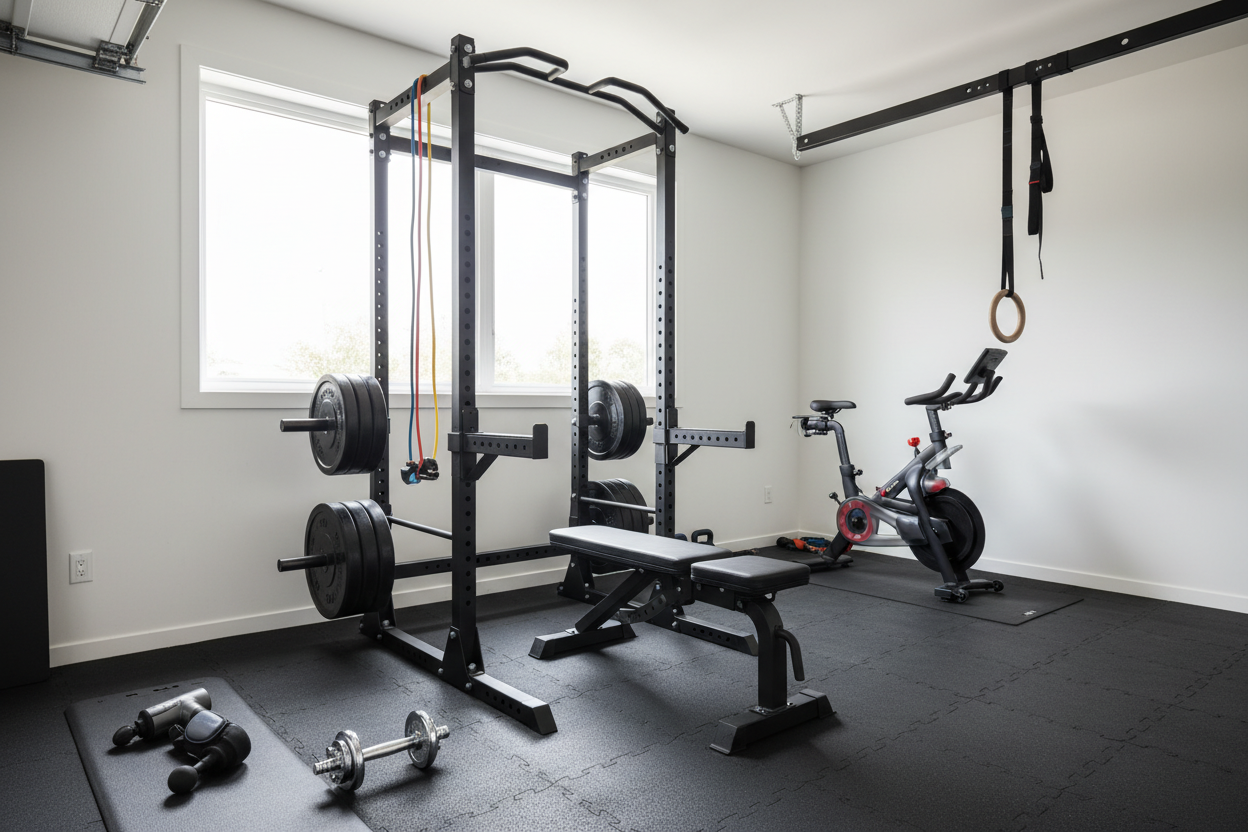
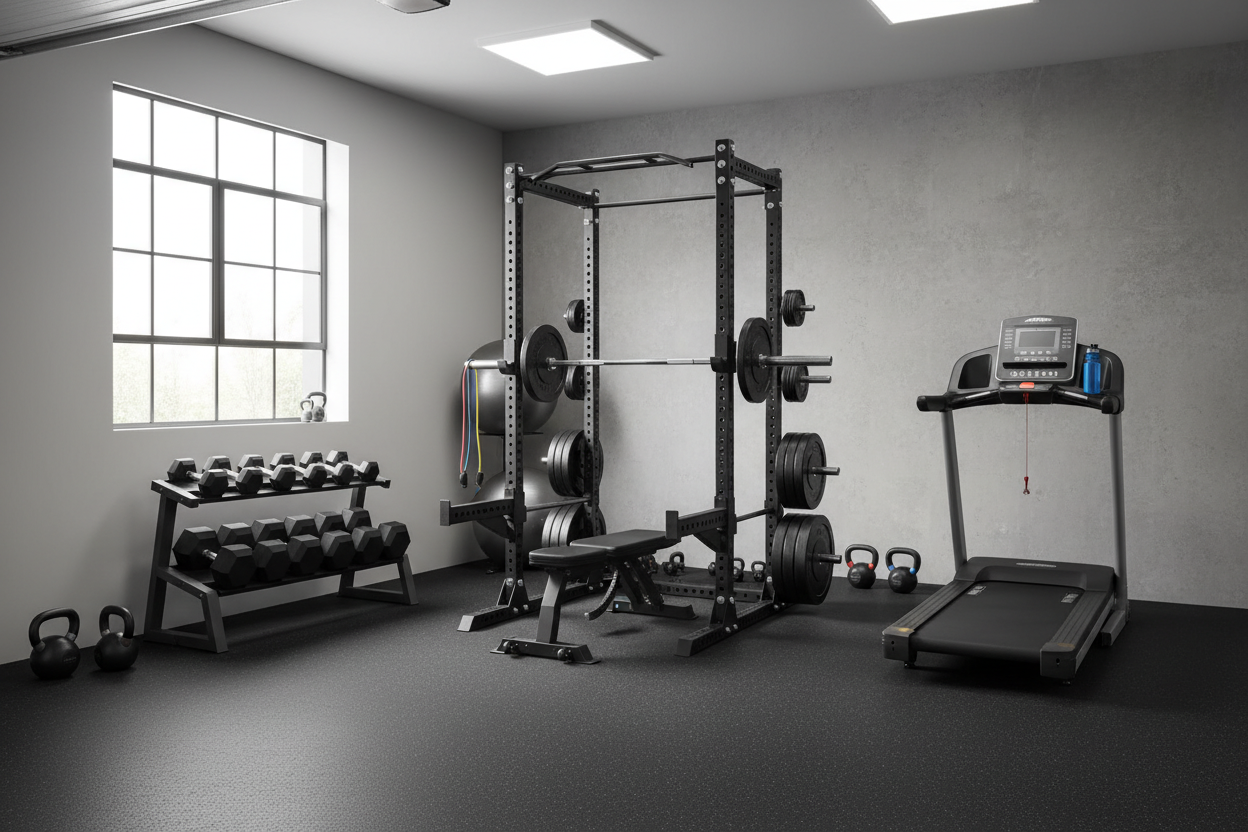
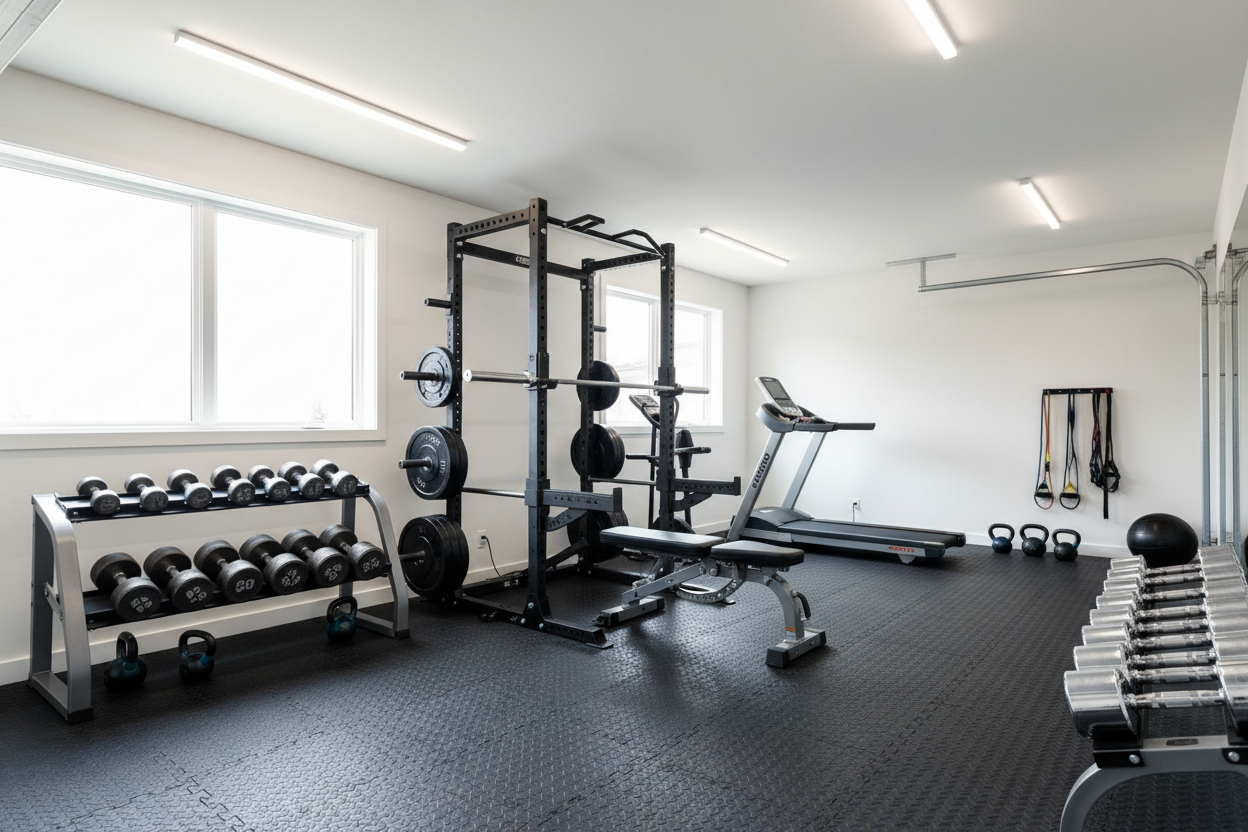
Transitioning from a heavy set of rows to a 10-minute metabolic circuit is a lot easier if your gym isn't a cluttered mess. In my garage, I’ve cleared a dedicated lane for my sled and carries. If you're doing kettlebell swings or high-rep dumbbell work, you need a surface that can take a beating. I’ve found that heavy-duty home gym flooring is essential here. Cheap foam tiles will slide and tear the second you try to do a mountain climber or drop a heavy bell.
You also don't need a ton of big machines. A few key strength training accessories like a jump rope, a single heavy kettlebell, or a set of resistance bands can turn a standard lifting area into a conditioning powerhouse. I keep a 53-lb kettlebell right next to my rack specifically for 'between-set' mobility or end-of-workout swings. It doesn't take up much room, but it's the most used piece of gear in my shop besides the barbell.
One mistake I made early on was buying a cheap, noisy fan bike. It vibrated so much it literally rattled the bolts loose on my storage rack. If you're buying cardio gear for a garage, spend the extra money on something belt-driven and heavy. It’s quieter, smoother, and you’ll actually use it instead of letting it become a very expensive coat rack.
Personal Experience: The 'Thumb' Incident
A few years back, I decided to do a 'no-cardio' bulk. I was eating 4,000 calories a day and lifting heavy five days a week. I got strong—I hit a 405 squat for the first time—but I looked like a giant thumb. My face was puffy, I was snoring at night, and I felt exhausted all the time. I realized that my body was so inefficient at processing energy that I was just storing fat and water. I added back three 20-minute walks a day and two sled sessions a week. Within a month, the puffiness was gone, my energy skyrocketed, and my squat actually went up because I wasn't gassing out during my warm-ups. I'll never skip the 'heart work' again.
FAQ
Will cardio make me lose my muscle?
Only if you're in a massive calorie deficit and doing hours of high-impact running. Low-impact conditioning like walking or sled work actually supports muscle growth by improving recovery and appetite.
What is the best cardio for a lean bulk?
Incline walking, sled pushes, and rucking are top-tier. They have a low recovery cost and don't cause much joint stress, making them perfect for heavy lifters.
Should I do cardio before or after weights?
Always after. You want your glycogen and focus to go toward your heavy lifts. Tacking 10-15 minutes of conditioning onto the end of a session is the most efficient way to program it.