Stop Babying Your Injuries With Weak Physical Therapy Strength Training
I remember sitting on a treatment table, staring at a 2-pound neoprene dumbbell and thinking, 'Is this a joke?' I had a 500-pound deadlift, and this therapist wanted me to do side-lying external rotations with a weight that felt lighter than my morning coffee. It felt like a waste of time, which is exactly why most garage gym lifters quit their rehab long before the tissue actually heals.
The reality is that physical therapy strength training doesn't have to be boring, and it shouldn't be easy. If you are used to moving heavy iron, your body has a higher threshold for adaptation. Treating your rehab like a serious lifting session is the only way to ensure you actually return to the platform stronger than you left it.
Quick Takeaways
- Rehab movements must follow the law of progressive overload to be effective.
- Biological tissues like tendons require significant load to stimulate repair.
- Stop separating 'rehab day' from 'training day'—merge them.
- Micro-loading with fractional plates is the secret to pain-free progression.
The Pink Dumbbell Problem
The biggest disconnect in the fitness world happens at the clinical level. You tweak your back or snap a shoulder, and suddenly you're banished to the land of yellow resistance bands and bird-dogs. For someone who spends four days a week under a barbell, this massive drop in intensity is a psychological and physiological death sentence. You lose your mind from boredom, and your muscles lose their edge.
We skip our rehab because it doesn't feel like work. We are wired to chase a stimulus, and when the PT gives us an exercise that doesn't even break a sweat, we subconsciously write it off as useless. This 'pink dumbbell' approach ignores the fact that a lifter’s baseline is much higher than the average sedentary patient. To get back to 100%, we need to bridge the gap between the clinic and the rack.
Why We Need to Redefine Physical Therapy Strength Training
Your tendons and ligaments are not fragile glass; they are biological ropes that respond to tension. If you only hit them with light bands, they never get the signal to thicken and strengthen. This is where strength training physical therapy becomes a mandatory mindset shift. You have to treat your injured tissue as a weak muscle group that needs a specialized hypertrophy block.
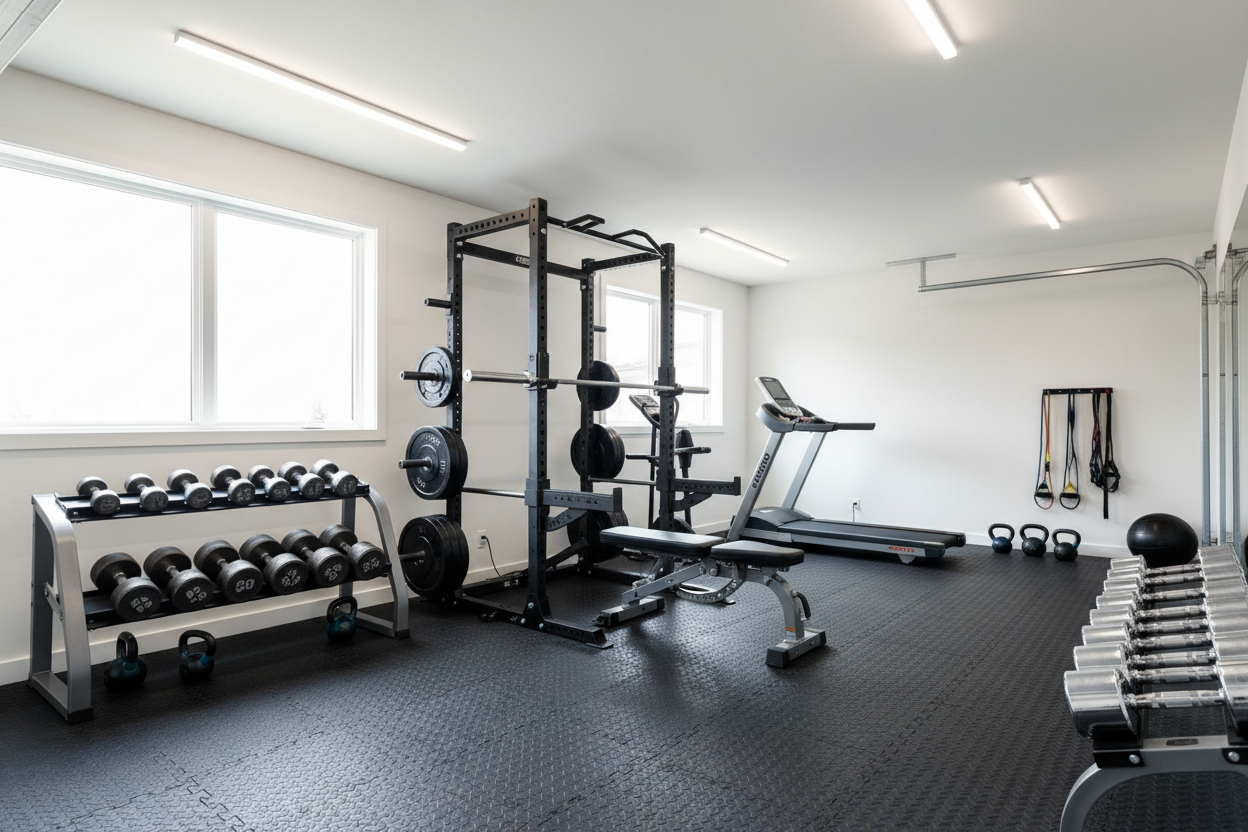
Instead of relying on flimsy clinical tools, you should be using your garage gym strength equipment to apply controlled, measurable stress. If a movement is pain-free, it’s time to add a pound. If it stays pain-free, add five. The goal is to move the rehab movement from the 'warm-up' category into the 'main lift' category as soon as the acute inflammation settles.
3 Rehab Movements I Actually Load Heavy Now
I stopped doing unweighted step-downs for my patellar tendonitis and started doing heavy deficit reverse lunges. By elevating the front foot and holding 50-pound dumbbells, I forced the tendon to handle more load than it ever would with just bodyweight. The pain didn't get worse; the knee actually started feeling stable for the first time in months.
The second shift was swapping those endless band pull-aparts for heavy loaded face pulls on a cable machine. I found that using basic strength training accessories like a long tricep rope or fractional plates allowed me to move 40 to 50 pounds with strict form. That's a massive jump from the negligible resistance of a red mini-band, and my rear delts actually grew in the process.
Lastly, I stopped doing 'empty' isometric holds and started doing weighted planks and pause-squats at the bottom. Holding 135 pounds at the bottom of a squat for 30 seconds does more for hip stability than any clamshell ever could. It’s about high-tension, high-quality movement.
How to Sneak Rehab Into Your Main Workouts
The best way to ensure your rehab actually happens is to stop making it a separate session. I use my rehab movements as 'primers' between my heavy sets. While I'm resting between sets of bench press, I'll do a set of controlled, loaded external rotations. It keeps the joint warm and ensures the work gets done without adding an extra hour to my gym time.
You can also bake these movements into a high-intensity upper body conditioning routine. By pairing a heavy row with a slow, eccentric-focused rehab movement, you're training the muscle to stay stable even when you're fatigued. This builds the kind of resilience that prevents the injury from coming back the moment you try to PR again.
Pain-Free Lifting is Just Smart Programming
Stop viewing your injury as a vacation from the gym. It’s an opportunity to focus on a weak link with the same intensity you'd give to your squat. When you treat physical therapy strength training as real training, you stop being a 'patient' and start being an athlete again. Load the movement, respect the pain threshold, and stop babying the injury. Your garage gym has everything you need to fix yourself—you just have to be willing to sweat for it.
Is it okay to feel a little pain during rehab?
A '2 or 3' out of 10 on the pain scale is usually fine, provided the pain doesn't linger the next day. If it's sharp or gets worse as the set goes on, back off the weight. Dull discomfort is often just the tissue adapting to the new load.
How often should I do these loaded rehab moves?
Treat them like any other muscle group. Two to three times a week is the sweet spot for most. You need the recovery time just as much as you need the stimulus.
Do I need special equipment for this?
Not really. If you have a rack, some plates, and maybe a set of fractional plates to make small jumps, you're set. The goal is to use the gear you already have to make the movements harder over time.