Barbell Lunge: How to Do It Safely and Variations
Quick answer: To do a barbell lunge, set a barbell on your upper back in a power rack, as for a back squat, and step back from the hooks. Stand tall with feet hip width apart and core braced. Step forward about 2–3 feet, then lower your back knee toward the floor until both knees bend to roughly 90 degrees. Push through the front heel to return to standing, then repeat on the other leg. Do 3 sets of 6–10 reps per leg. Barbell lunges build the quads, glutes and hamstrings one leg at a time and let you load lunges heavier than with dumbbells.
Muscles worked
| Muscle | Role |
|---|---|
| Quads | Main mover, front leg |
| Glutes and hamstrings | Hip extension and control |
| Adductors and calves | Stability |
| Core and upper back | Keep the torso upright under the bar |
How to do barbell lunges
- Unrack: set the J-hooks at mid-chest height. Bar on the upper back, hands just outside the shoulders. Step back two steps.
- Brace: big breath, ribs down, eyes forward.
- Step: take a controlled step forward with one leg. Keep the feet hip width so you don't wobble.
- Lower: drop the back knee toward the floor. Front knee over the mid-foot.
- Drive back: push through the front heel to return to the start.
- Alternate legs, or do all reps on one side first.
Barbell lunge variations
| Variation | Why |
|---|---|
| Barbell reverse lunge | Step back instead; easier on the knees and better for balance |
| Barbell walking lunge | Continuous steps; needs open floor space |
| Barbell split squat | Feet stay planted; the most stable way to load heavy |
| Front-rack barbell lunge | More quads and core |
At home, reverse lunges and split squats are usually the best barbell lunges because you stay inside or near the rack. See reverse lunges, split squats and walking lunges.
Common mistakes
| Mistake | Fix |
|---|---|
| Narrow, tightrope stance | Keep the feet hip width apart |
| Short step, heel lifting | Step farther |
| Torso leaning far forward | Lighter bar; chest up |
| Front knee caving in | Track the knee over the middle toes |
| Too heavy too soon | Master dumbbell or kettlebell lunges first |
Safety tips
- Start with an empty bar; balance is the limit at first.
- Clear the floor around you.
- If you lose balance, step the other foot down and stand; don't try to save a bad rep.
- Use the safety arms for split squats inside the rack.
Sets, reps and programming
| Goal | Sets × reps per leg |
|---|---|
| Strength | 4 × 5–6 |
| Muscle | 3 × 8–10 |
| Endurance | 2–3 × 12–15, lighter |
Use lunges after squats or deadlifts on a leg day, 1–2 times a week. For a full plan, see the beginner power rack workout plan.
Barbell lunges at home
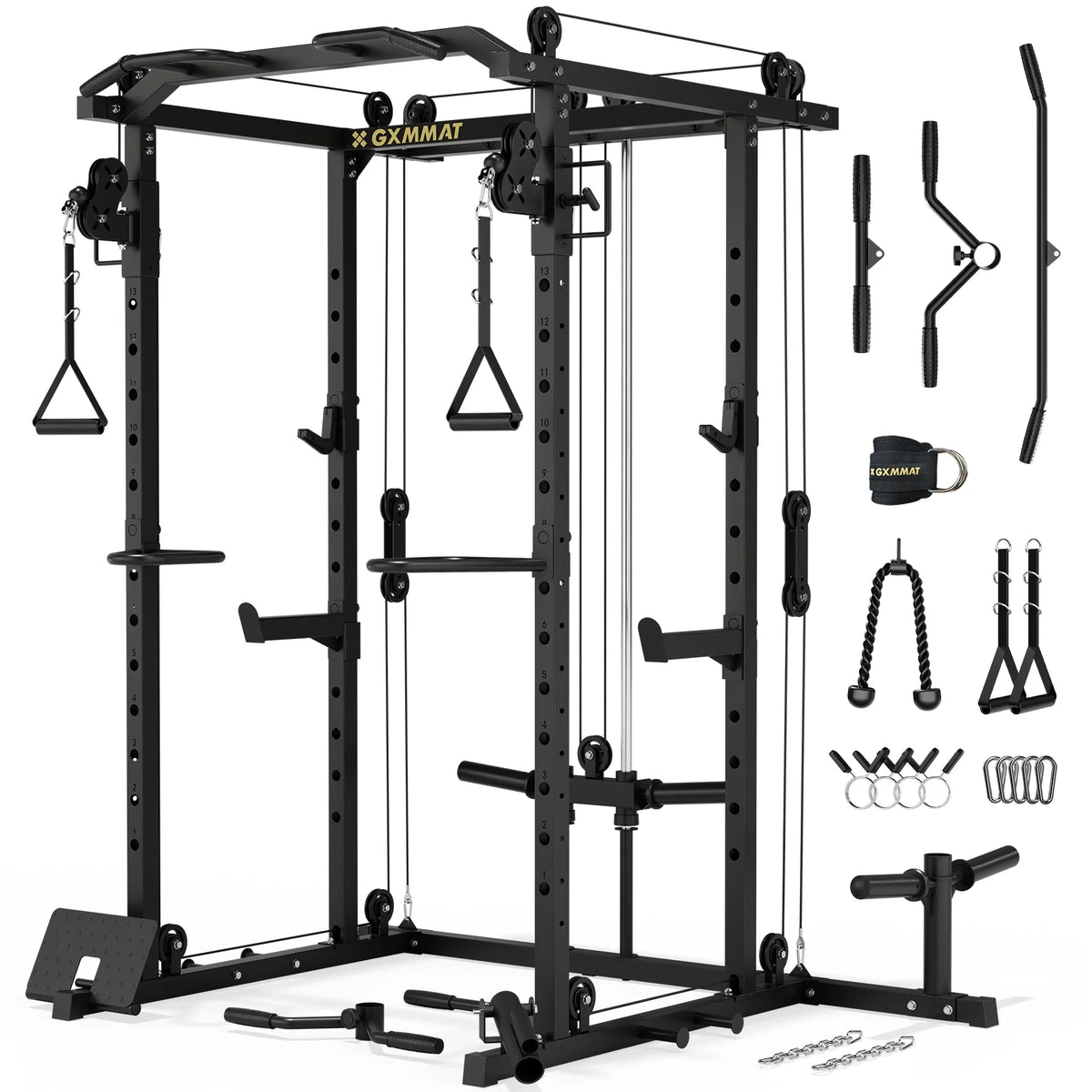
- Rack: unrack from a G5, V6 or X6 power rack.
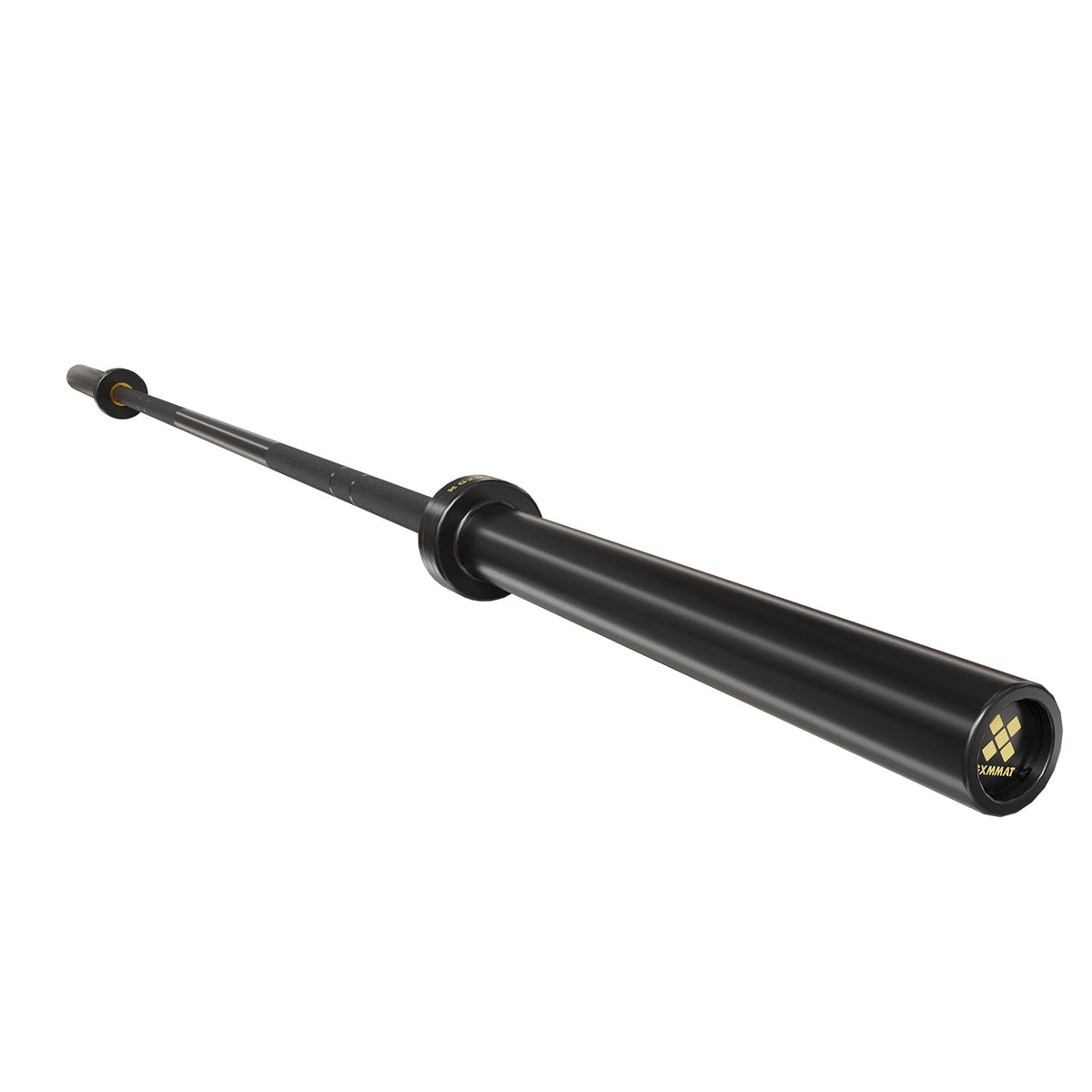
- Bar and plates: 20 kg Olympic bar with bumper plates and collars so the plates can't shift as you step.
- Floor: a non-slip large exercise mat stops your front foot from sliding.
- Knee comfort: a kneeling pad under the back knee for split squats.
FAQ
What do barbell lunges work?
The quads, glutes and hamstrings of each leg, plus the core, adductors and calves.
Are barbell lunges better than dumbbell lunges?
Barbell lunges let you load heavier; dumbbell lunges are easier to balance. Both are effective exercises.
How heavy should barbell lunges be?
Start with an empty bar. Many people lunge 40–60% of their squat weight once balance is solid.
Forward or reverse barbell lunges?
Reverse lunges are usually easier on the knees and better at home. Forward lunges add more deceleration work.
How many lunges should I do?
3 sets of 6–10 reps per leg for most goals.
Written by Yuvien Royer for GXMMAT. This article is general fitness information, not medical advice.