Single Arm Cable Row: How to Do the One Arm Cable Row
Quick answer: To do a single arm cable row (one arm cable row), attach a single handle to a cable machine at about chest height or lower. Stand or kneel facing the pulley in a staggered stance, holding the handle with one arm extended so you feel a full stretch in your back. Keep your torso still, then pull the handle toward your hip, driving your elbow back close to your body and squeezing one lat and shoulder blade. Slowly return to the starting position, letting the shoulder reach forward. Do 3 sets of 10–12 reps per arm. The single arm cable row builds the lats and upper back, fixes side-to-side imbalances and trains the core to resist rotation.
Muscles worked
| Muscle | Role |
|---|---|
| Latissimus dorsi | Main mover; pulls the elbow back |
| Rhomboids and middle traps | Squeeze the shoulder blade |
| Rear shoulders and biceps | Assist the pull |
| Obliques and core | Stop the torso from twisting |
How to do a single arm cable row
- Set the pulley at chest height (standing) or low (seated or kneeling) and attach a D-handle.
- Grab the handle with your right hand and step back until the weight lifts off the stack.
- Stance: left foot forward, slight knee bend, chest up. Starting with the arm long and shoulder reaching forward gives a full stretch.
- Pull: drive the elbow back toward your hip, keeping it close to your side.
- Squeeze the shoulder blade back for a second.
- Return slowly, letting the arm straighten fully. Finish the set, then switch arms.
Variations
| Variation | Focus |
|---|---|
| Standing one arm cable row | Lats and core anti-rotation |
| Kneeling single arm row | Removes leg drive; stricter |
| High-to-low row (pulley high) | More lat |
| Row with rotation | Let the torso rotate slightly for a bigger stretch |
Common mistakes
| Mistake | Fix |
|---|---|
| Twisting the torso to move the weight | Go lighter; keep hips and shoulders square |
| Shrugging the shoulder | Pull the shoulder down before each rep |
| Short range | Full stretch forward, full squeeze back |
| Pulling with the biceps | Think "elbow to hip," not "hand to chest" |
Why train one arm at a time?
Working one lat at a time lets you focus on the weaker side, get a longer range of motion than with two-handed rows, and add core work as your body resists rotation. It's a great complement to seated cable rows, lat pulldowns and barbell rows. No cable? The kettlebell row is a good substitute.
Sets and reps
| Goal | Sets × reps per arm |
|---|---|
| Muscle | 3–4 × 10–12 |
| Strength | 3 × 6–8 |
| Fixing imbalances | Start with the weaker arm; match reps on the stronger side |
Single arm cable rows at home
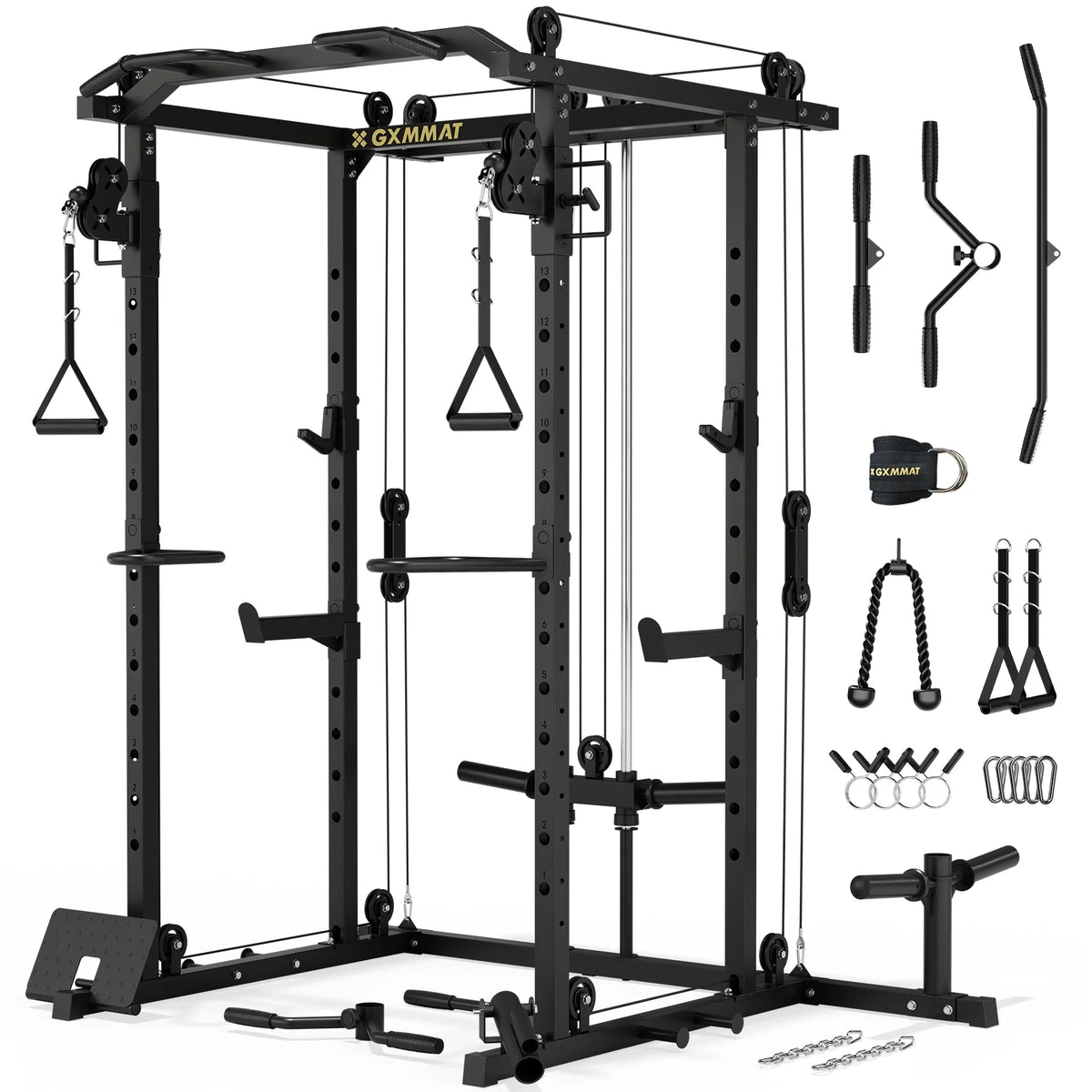
The GXMMAT X6 power rack has dual independent 1:1 cables on adjustable pulleys, ideal for one arm cable rows at any height. The G5 and V6 also include cable systems with handles. Add change plates for small weight jumps, and stand on a non-slip large exercise mat. See the cable attachments guide.
FAQ
What does the single arm cable row work?
The lats, rhomboids, middle traps, rear shoulders and biceps, with the core working to prevent rotation.
Is the one arm cable row better than the seated row?
Not better, different. Single arm rows give a longer range and fix imbalances; two-handed rows let you lift more weight.
Where should the pulley be?
Chest height for standing rows, low for seated or kneeling rows, and high for a lat-focused high-to-low row.
Should my torso rotate?
Keep it mostly square. A small rotation at the stretch is fine if it's controlled.
How heavy should I go?
A weight you can pull for 10–12 controlled reps without twisting.
Written by Yuvien Royer for GXMMAT. This article is general fitness information, not medical advice.