6 Functional Benefits of Weightlifting for Males: Movement Mastery, Joint Resilience, and Home Gym Staging
Why Functional Resistance Training Matters for Men
Engaging in structured resistance exercise is one of the most reliable methods for developing durable physical strength and maintaining functional movement patterns. While cardiovascular exercise supports general endurance, progressive resistance training directly challenges the musculoskeletal system to adapt against mechanical load. For male lifters, adopting a structured weightlifting routine shifts physical conditioning from passive maintenance to active structural reinforcement, helping to offset the physical compromises associated with modern sedentary habits.
Understanding the core benefits of weightlifting for males requires looking beyond surface aesthetics. Deliberate resistance training teaches the central nervous system to coordinate complex motor patterns across multiple joints simultaneously. By prioritizing multi-joint lifts, lifters cultivate physical stability, reinforce postural integrity, and establish a physical foundation capable of handling everyday physical tasks with minimal fatigue.
6 Core Benefits of Lifting Weights for Male Lifters
When evaluated through a biomechanical lens, the advantages of consistent resistance work extend throughout every layer of the kinetic chain. The following key adaptations highlight why structured lifting is essential for male strength, joint integrity, and movement longevity.
1. Posterior Chain Reinforcement and Postural Alignment
Modern work environments often demand extended periods of seated desk work, which can encourage rounded shoulders, forward head posture, and underactive hip extensors. Exercises such as Romanian deadlifts, barbell rows, and kettlebell hinges recruit the entire posterior chain—including the hamstrings, gluteal complex, spinal erectors, and upper back musculature. Strengthening these foundational muscle groups restores balanced tension around the pelvis and spine, reinforcing an upright posture and reducing mechanical strain during daily movement.
2. Enhanced Joint Integrity and Connective Tissue Resilience
Tendon and ligament health relies on gradual, controlled tension. Resistance movements performed with deliberate tempos subject connective tissues to mechanical loading, encouraging adaptation and thickening over time. By moving joints through complete, controlled ranges of motion, lifters build resilience across the knees, hips, and shoulders. For those navigating shoulder tightness or pressing imbalances, learning targeted strategies for managing shoulder discomfort while lifting ensures long-term joint health without interrupting regular training schedules.
3. Kinetic Movement Efficiency and Neuromuscular Control
Multi-joint compound exercises require the nervous system to recruit motor units rapidly and efficiently. A standard squat or overhead press demands total-body tension, core stabilization, and precise timing. This neuromuscular coordination carries over directly into athletic movements, recreational sports, and daily physical tasks, allowing the body to transfer force seamlessly from the ground through the upper extremities.
4. Skeletal Support and Bone Density Preservation
Axial loading—placing controlled resistance through the spine and hips using squats, carries, and presses—signals the skeletal system to maintain mineral density. Consistent resistance exercise provides the mechanical stimulus needed to keep bones robust against everyday physical stress, laying the groundwork for durable mobility well into later decades.
5. Rotational Stability and Core Force Transfer
True functional core strength is defined by the ability to resist unwanted spinal movement and transfer power across the torso. Compound lifting movements demand dynamic core bracing to stabilize the lumbar spine under load. Adding unilateral exercises, such as lunges and single-arm presses, reinforces anti-rotational strength, balancing asymmetries between the left and right sides of the body.
6. Daily Physical Stamina and Work Capacity
Progressive strength training improves work capacity by making routine submaximal tasks feel significantly lighter. When a lifter builds the strength to deadlift or carry heavy loads in training, lifting household items, climbing stairs, and handling physical yard work require a much smaller fraction of their maximal physical output, resulting in sustained daily energy.
Structuring Balanced Home Lifting Sessions
A sustainable home training routine balances primary compound lifts with supplementary isolation exercises. Free weights like barbells and dumbbells provide foundational movement variability, while machine-based movements allow for isolated fatigue management without demanding extensive stabilizer recruitment.
When designing a well-rounded home program, pairing compound free-weight sets with versatile weight lifting machines helps lifters isolate stubborn muscle groups safely while minimizing spinal fatigue. lifters looking to maximize hypertrophy while managing structural fatigue can learn more about building muscle on a dedicated machine for targeted mechanical tension and controlled movement paths.
- Warm-Up and Mobility: Spend time opening up the hips, thoracic spine, and ankles before loading primary movement patterns.
- Primary Compound Lifts: Focus on foundational movement patterns—squats, hinges, presses, and pulls—when physical and nervous system energy is highest.
- Accessory and Machine Exercises: Target specific muscle groups with controlled repetitions on cables or machines to build volume safely.
- Core and Trunk Reinforcement: Finish sessions with loaded carries, anti-extension holds, or rotational bracing exercises.
Home Gym Staging: Equipment Placement and Heavy-Duty Floor Protection
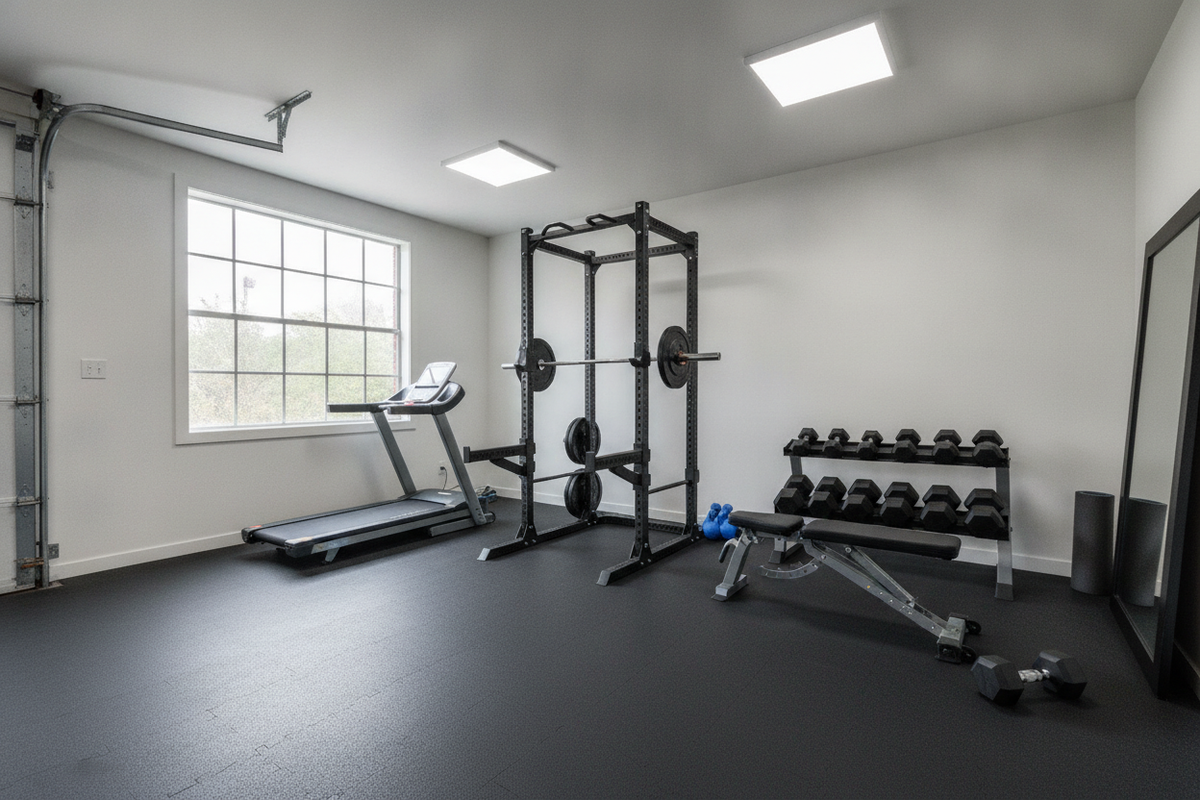
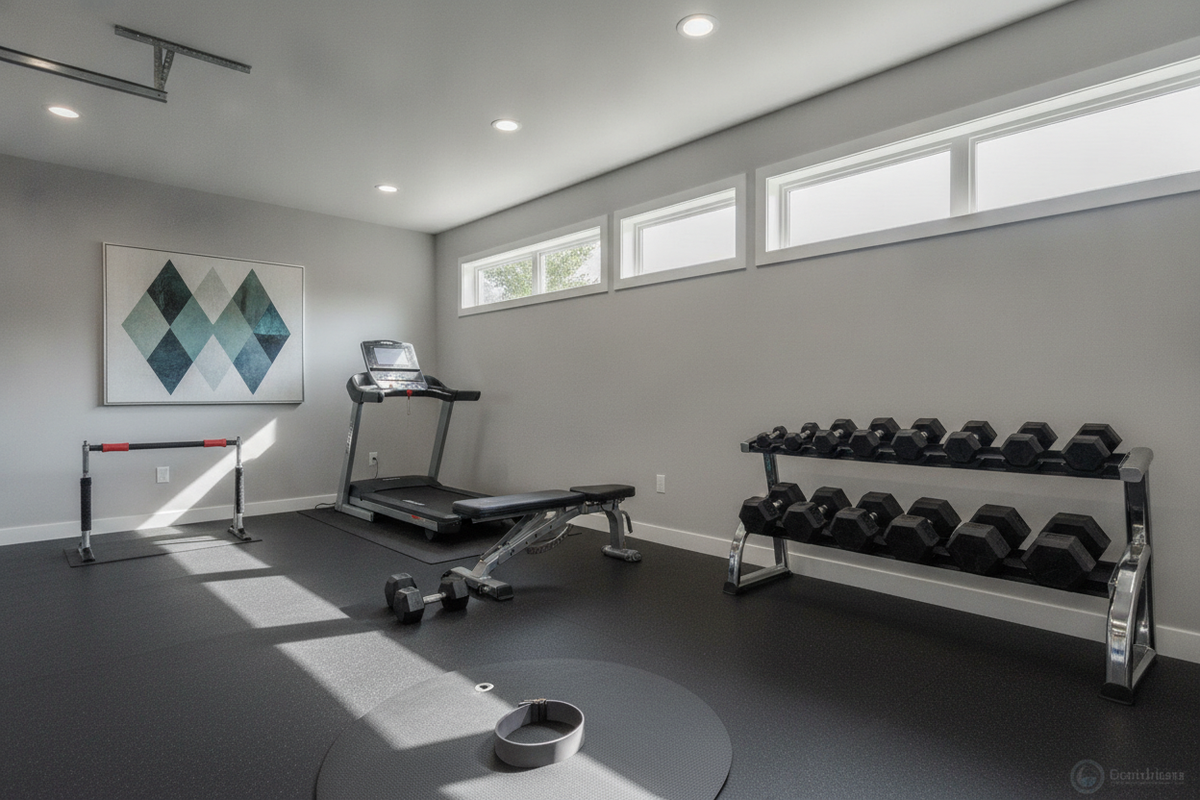
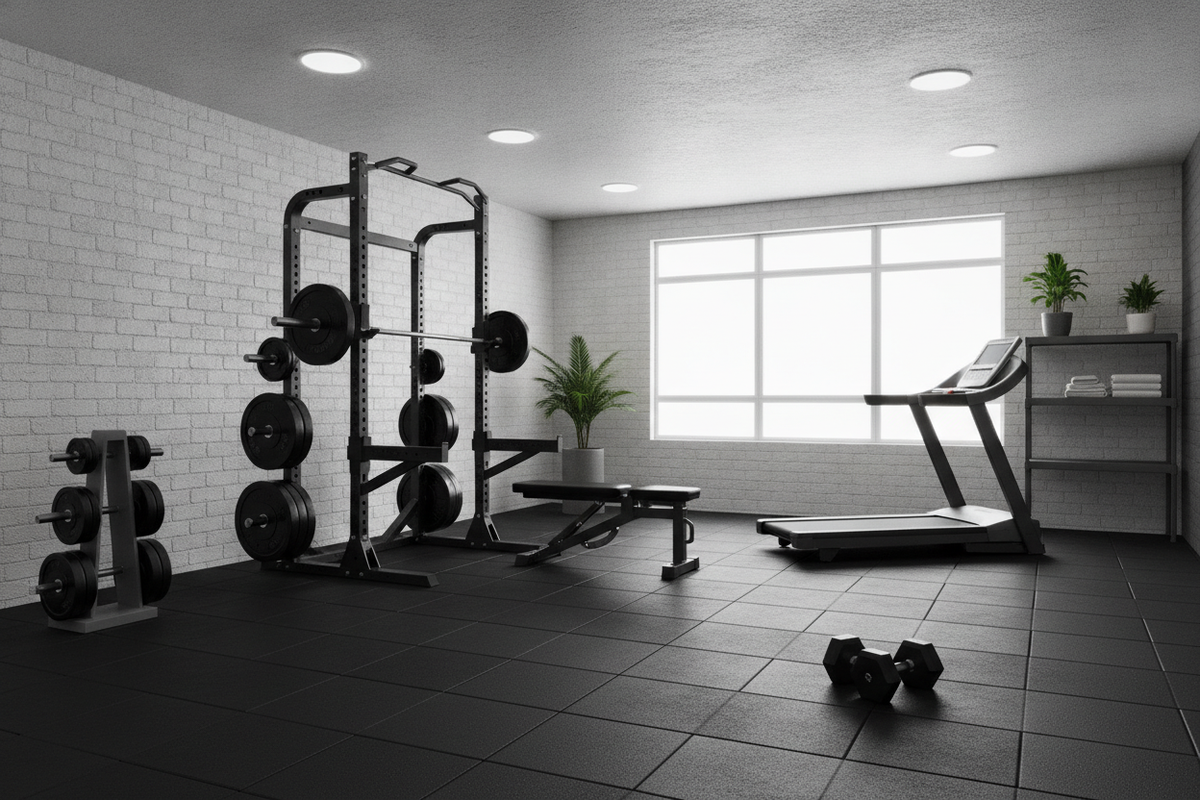
Establishing a dedicated training space at home requires thoughtful planning to maintain a secure, organized, and functional environment. The foundation of any serious home lifting space begins with proper subfloor protection. Dropping heavy weights or placing heavy power racks directly onto bare concrete or hardwood can crack flooring, degrade equipment knurling, and generate excessive room vibrations.
High-density rubber gym flooring serves as the critical barrier between your equipment and the subfloor. Dense rubber mats distribute point-load forces evenly across the surface, providing a non-slip foundation that keeps your footing secure during heavy squats and deadlifts. Unlike soft foam surfaces that compress unstable under load, vulcanized or high-density composite rubber remains firm, ensuring efficient power transfer through the floor.
Before setting up a functional lifting zone, review key factors in selecting free weights for home training to match your space and progression goals. Furthermore, organizing your rack, barbells, and plates using a complete home weight set guide ensures efficient movement flow across your workout area, keeping walkways clear of stray plates and trip hazards.
Maintaining Long-Term Training Consistency and Joint Health
The key to reaping the continuous benefits of resistance training lies in long-term consistency rather than short-term intensity. Lifters should prioritize clean movement mechanics, controlled eccentric tempos, and adequate rest intervals between challenging sessions. Periodically reducing training volume through planned deload weeks allows connective tissues to recover and adapt, preventing overuse issues.
By pairing balanced program design with a stable, well-protected home training zone, male lifters can develop sustainable strength, improve postural alignment, and build resilient movement patterns that support daily performance for years to come.