6 Core Fitness Programs Gym Enthusiasts Rely On: Training Blueprints, Equipment Layout, and Floor Staging
Deconstructing Fitness Programs for Gym Workouts: Core Methodologies
Stepping into a training space without a structured plan often leads to stalled progress, inefficient session pacing, and uneven muscular development. Structured fitness programs gym athletes rely on replace random exercise selection with progressive overload, planned recovery, and targeted movement patterns. Whether training in a commercial facility or building an organized space at home, understanding how different exercise programs function allows you to match your physical objectives with the right equipment and ground setup.
A well-designed program for fitness workout consistency establishes predictable routines for muscle groups, movement planes, and energy systems. By categorizing standard gym workout frameworks, lifters can choose appropriate programs for working out, balance their training stress, and prepare a resilient physical environment that supports long-term athletic development.
1. Hypertrophy-Focused Muscle Building Programs
Hypertrophy-oriented programs for gym workouts prioritize muscular tension, controlled tempos, and moderate rep ranges across multi-joint and isolation exercises. Standard splits—such as upper/lower divisions, push-pull-legs rotations, or body-part schedules—allow dedicated focus on specific muscle groups with adequate rest intervals between sessions.
Executing hypertrophy protocols requires smooth transitions between adjustable benches, dumbbell racks, and cable systems. Because lifters routinely handle moderate-to-heavy free weights that cycle between sets, placing benches over high-density surface protection prevents floor scuffing and dampens the minor impacts of setting down weights between working efforts. For detailed breakdowns on translating bodybuilding structures into self-managed environments, studying how to utilize exercise programs gym veterans use offers valuable scheduling insights.
2. Maximum Strength and Powerlifting Protocols
Strength-focused fitness program training centers on maximizing force production in foundational compound lifts: the squat, bench press, deadlift, and overhead press. These fitness plans utilize low rep ranges, higher relative loads, and extended rest intervals to challenge the neuromuscular system while minimizing unnecessary metabolic fatigue.
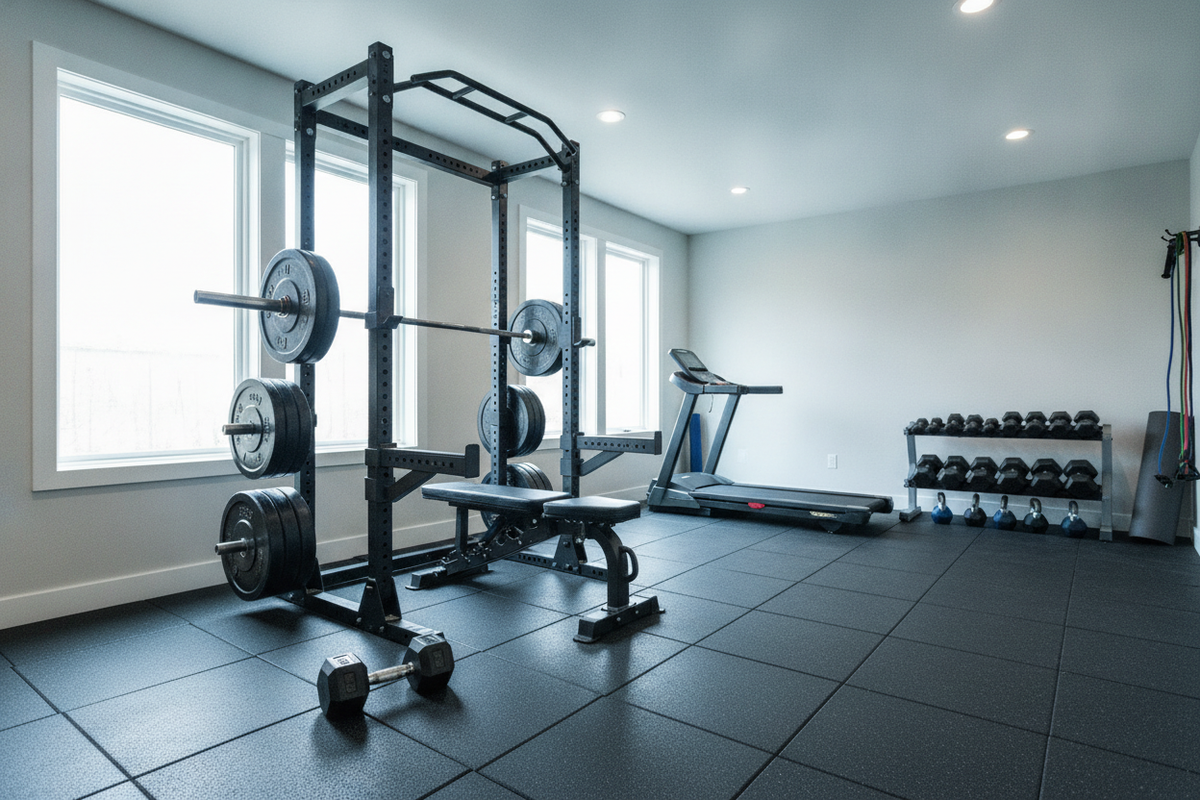
From a spatial and gear perspective, powerlifting and heavy strength work demand absolute platform stability. Foot placement during heavy squats and deadlifts requires a dense, non-compressible surface beneath the feet to ensure efficient force transfer. Positioning a power rack, barbell, and weight plates over resilient rubber matting protects the structural subfloor from heavy point loads and provides firm traction underfoot during maximum-effort lifts.
3. High-Intensity Interval and Functional Conditioning
High-intensity interval training (HIIT) and metabolic conditioning fitness programmes emphasize cardiovascular output, rapid transition times, and multi-directional footwork. These routines combine kettlebell swings, plyometric jumps, medicine ball slams, and bodyweight intervals into timed circuits designed to elevate heart rates and build work capacity.
Conditioning circuits require expansive, uninterrupted floor space clear of clutter. Dynamic lateral jumps, burpees, and sprint stops demand slip-resistant footing that absorbs foot strikes without shifting across the subfloor. Integrating a dedicated large exercise mat for home gym setups establishes a secure boundary for fast-paced movement, preventing joint jarring during repetitive high-impact landings.
4. Functional Mobility, Core, and Active Recovery Routines
Low-impact exercising programs focusing on functional mobility, core stability, and active recovery provide the foundation that keeps higher-intensity training sustainable. These sessions include segmental spine articulation, hip opening flows, isometric core holds, and targeted foam rolling routines.
Unlike heavy lifting zones that prioritize rigidity, mobility and floor-based core exercises require balanced cushioning to support knees, elbows, wrists, and the spine. A dedicated padded zone allows lifters to transition comfortably through prone, supine, and kneeling positions without enduring direct contact with hard, cold flooring.
5. Muscular Endurance and Calisthenics Bodyweight Frameworks
Calisthenics and muscular endurance fitness and training programs center on mastering bodyweight movement through pull-ups, dips, push-up variations, inverted rows, and gymnastic ring work. These routines develop relative strength, core tension, and joint durability through high-volume sets and progressive leverage modifications.
Bodyweight training relies heavily on reliable floor grip for both hands and athletic footwear. Whether anchoring resistance bands to a sturdy upright, supporting hands during push-ups, or landing from pull-up bars, a clean and textured surface prevents hand slippage and ensures consistent stability across challenging levers.
6. Hybrid and Athletic Performance Periodization
Hybrid programs gym athletes use for athletic conditioning blend multiple training modalities into unified cycles. A single microcycle might integrate heavy compound lifting for strength, explosive plyometrics for power, and steady-state conditioning for endurance. Managing this variety requires an adaptable training environment that easily flexes between barbell stations, agility zones, and open floor work.
When organizing hybrid routines, lifters often need to reconfigure their space to accommodate varied lifting tempos and dynamic footwork. Exploring guidelines on adapting fitness programs gym plans for your home setup can help you organize modular training zones that fit specific movement demands without overcrowding your training area.
Optimizing Equipment Placement and Floor Protection for Diverse Programs
Executing diverse fitness training programmes within a single facility or home training area requires intentional equipment zoning and deliberate surface selection. Arranging your training space logically helps maintain movement efficiency and protects your equipment and subfloor over time:
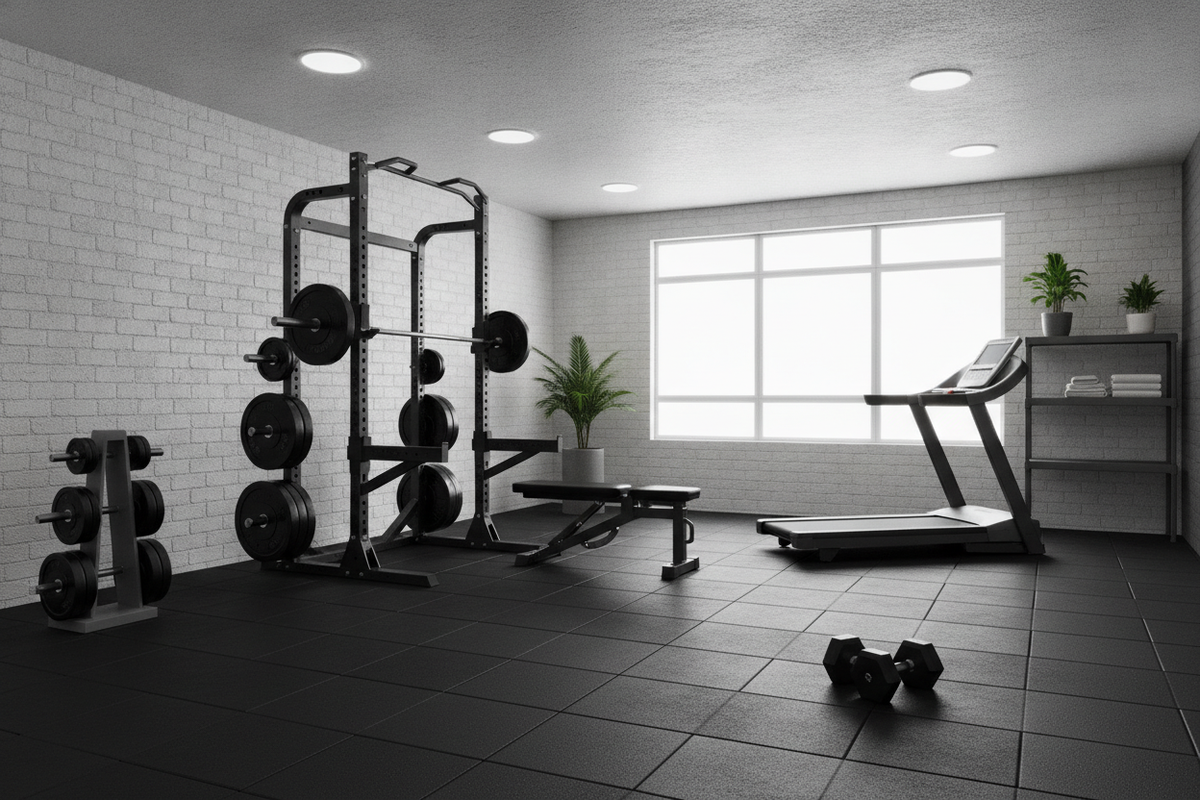
- Stationary Heavy Zones: Place power racks, weight trees, and heavy functional trainers against load-bearing perimeter walls. Secure these areas with dense, shock-dispersing rubber mats to absorb static equipment weight and dropped plates.
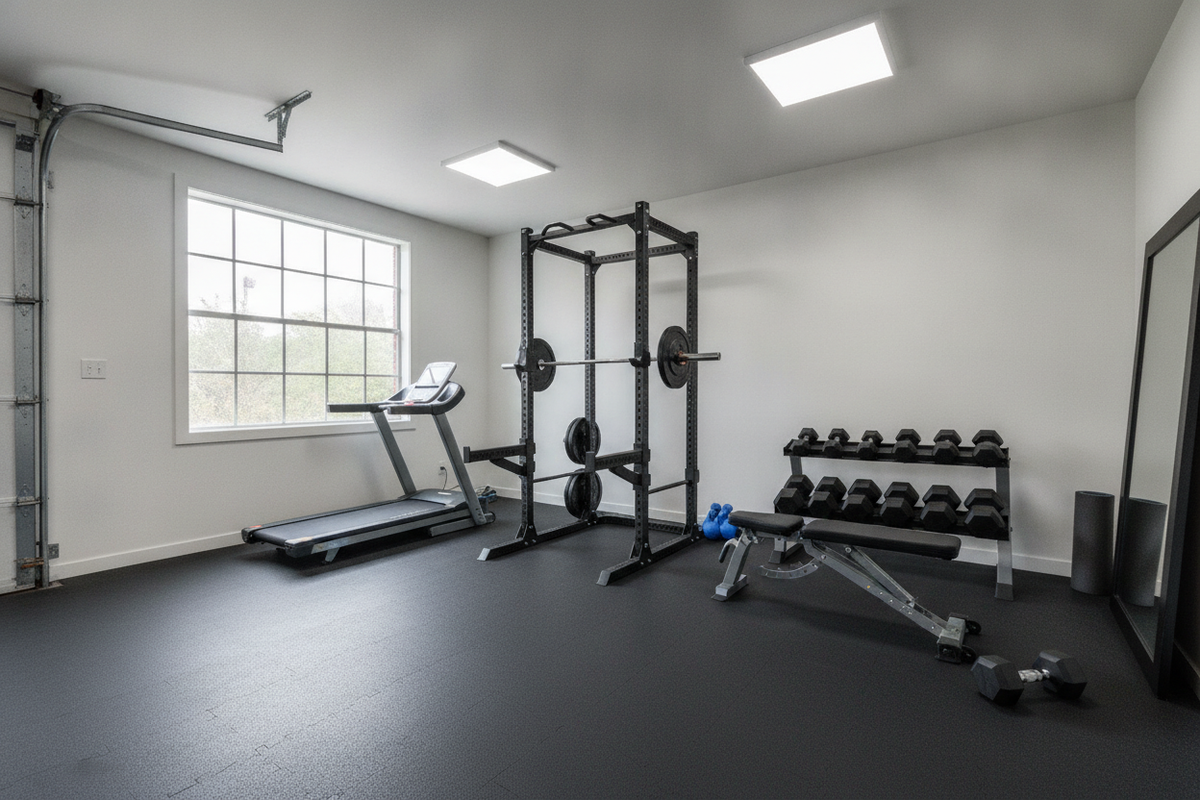
- Dynamic Free-Weight Areas: Position adjustable benches and dumbbell storage centrally, ensuring at least several feet of clear perimeter around all sides for unrestricted dumbbell arcs and kettlebell paths.
- Open Calisthenics and Groundwork Zones: Reserve an uninterrupted central area for bodyweight drills, agility patterns, and mobility work. Deploying a wide, high-density 6x10ft exercise mat gym flooring foundation provides seamless coverage for both aggressive shoes and bare-hand floor contact.
Selecting and Adapting the Right Training Program for Your Space
Choosing the ideal fit workout program requires balancing personal physical priorities with available square footage and equipment access. Begin by evaluating your primary objective—whether developing absolute strength, muscular shape, cardiovascular stamina, or joint longevity. Once your main focus is established, select a structured split that fits realistically into your weekly schedule.
Finally, align your programming choices with your physical training space. If training in a compact area, prioritize multi-purpose compound lifts, adjustable dumbbells, and bodyweight progressions over bulky single-station machines. Staging your floor with durable, non-slip protective matting ensures you can execute any chosen training workout program with confidence, consistency, and stability.