Adapting Fitness Programs Gym Plans For Your Home Setup
I remember staring at a popular 12-week hypertrophy template on my phone while standing in my cramped, 10x10 spare bedroom. The plan called for leg presses, cable crossovers, and a seated calf raise machine. All I had was a pair of dusty 25-pound dumbbells and a squeaky resistance band. Trying to copy standard fitness programs gym routines verbatim when you train at home is a recipe for frustration. But after helping dozens of clients build out their garage and spare-room setups, I've learned that you don't need to scrap those commercial plans. You just need to translate them.
Any program for fitness workout goals can be adapted if you understand the underlying mechanics of the exercises.
Quick Takeaways
- Focus on movement patterns (push, pull, hinge, squat) rather than specific machines.
- Use tempo and paused reps to make lighter weights feel heavier during minimalist phases.
- Swap bilateral machine exercises for unilateral dumbbell or kettlebell variations.
- Prioritize floor protection early to prevent joint pain and subfloor damage.
- Modify heavy barbell protocols to accommodate safe, spotter-free lifting at home.
The Challenge of Copying Commercial Routines
Most fitness programs for gym environments assume you have access to selectorized machines, a full dumbbell rack from 5 to 100 pounds, and multiple cable stations. When you bring that training workout program home, the immediate roadblock is equipment limitation. You cannot do a traditional leg extension without the machine. If a plan calls for a 150-pound lat pulldown and you only have a pull-up bar, you have a mechanical disconnect.
The trick to adapting exercising programs is recognizing the intent behind the exercise. Is it a horizontal pull? A vertical push? Knee flexion? Once you identify the biomechanical purpose, you can plug in a home-friendly alternative. This approach keeps you progressing through standard programs for gym workouts without needing thousands of dollars worth of commercial gear. I always tell my clients to stop looking at the name of the exercise and start looking at the muscle group it targets.
Phase 1: Adapting Programs for Minimalist Setups
When you first clear out that spare room, your inventory is usually sparse. Maybe you have a few resistance bands, your own body weight, and some open floor space. If you try to run standard fitness training programmes here, you have to manipulate variables other than weight.
To make a basic push-up mimic the stimulus of a heavy bench press, you need to alter the tempo. Try a 4-second eccentric (lowering) phase, a 2-second pause at the bottom, and an explosive push to the top. This time-under-tension strategy forces muscle fatigue even when the absolute load is low. For lower body, replace the leg press with Bulgarian split squats using a heavy resistance band looped under your front foot.
Because you are doing a lot of floor-based core work, plyometrics, and band anchoring, the quality of your floor matters immediately. Trying to do burpees or banded deadlifts on a slick hardwood floor or thin living room carpet will wreck your knees and ankles. Setting up a large exercise mat for home gym use gives you the necessary grip and cushioning to execute these foundational movements safely. When I first started training in my apartment, I skipped the mat and ended up with severe shin splints from doing jump squats on concrete. Don't make that mistake.
Phase 2: Dumbbell and Kettlebell Focused Plans
Eventually, you will upgrade your space. Most people grab a set of adjustable dumbbells (usually the 5 to 52.5 lb range) or a couple of moderate kettlebells (16kg and 24kg). This opens up a massive library of exercise programs. Now, you can start translating machine-based isolation movements into free-weight equivalents.
If your program fitness training calls for a seated cable row, you can swap it for a chest-supported dumbbell row on an adjustable bench. When the plan demands a pec deck fly, switch to flat dumbbell flyes or wide-grip push-ups. The key here is unilateral training. Because 50 pounds might not be enough for a heavy bilateral goblet squat, you shift to single-leg variations like front-rack reverse lunges to double the relative load on the working leg.
The downside to adjustable dumbbells is that they can be bulky and awkward to rest on your thighs before a heavy press. You have to learn how to kick them up into position safely. If you are trying to map out exactly how to structure these substitutions week by week, reviewing a complete home training guide can help you align your new free weights with your hypertrophy or strength goals.
Phase 3: Translating Heavy Rack and Barbell Work
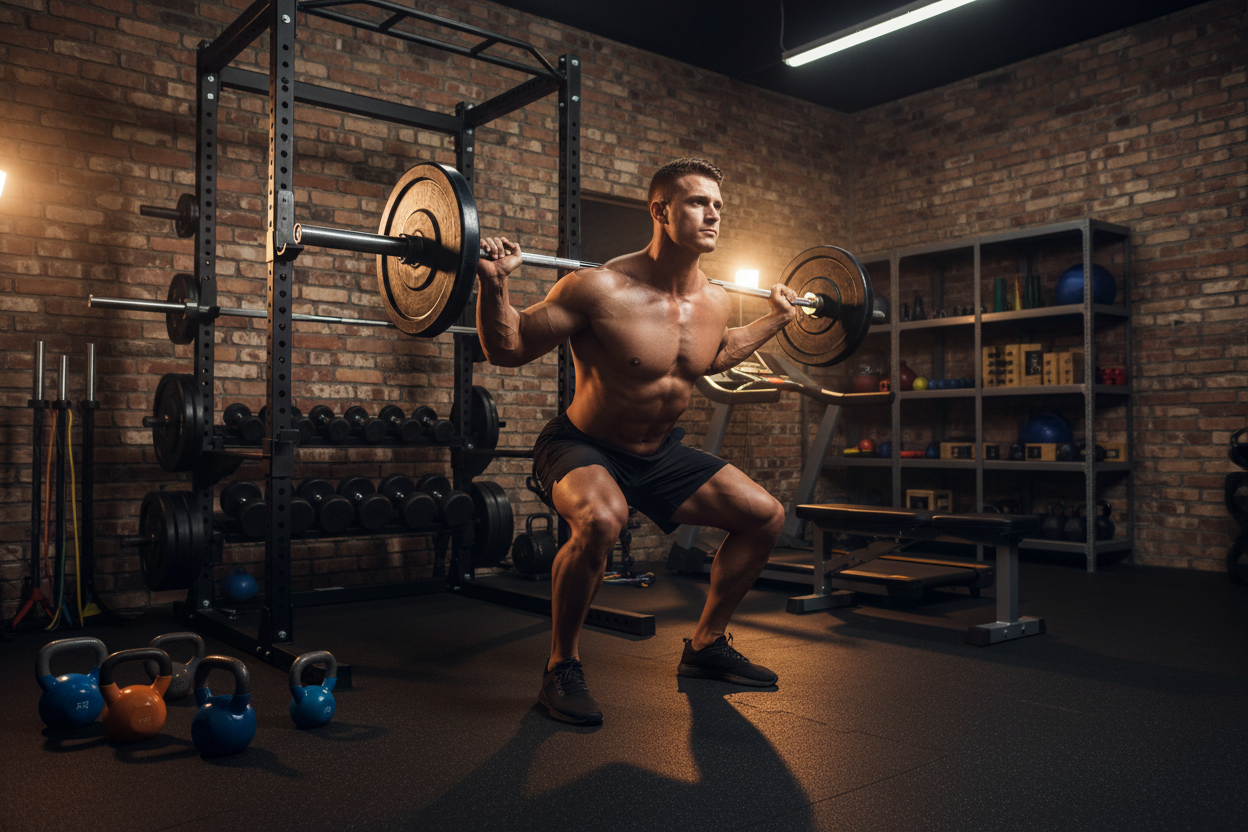
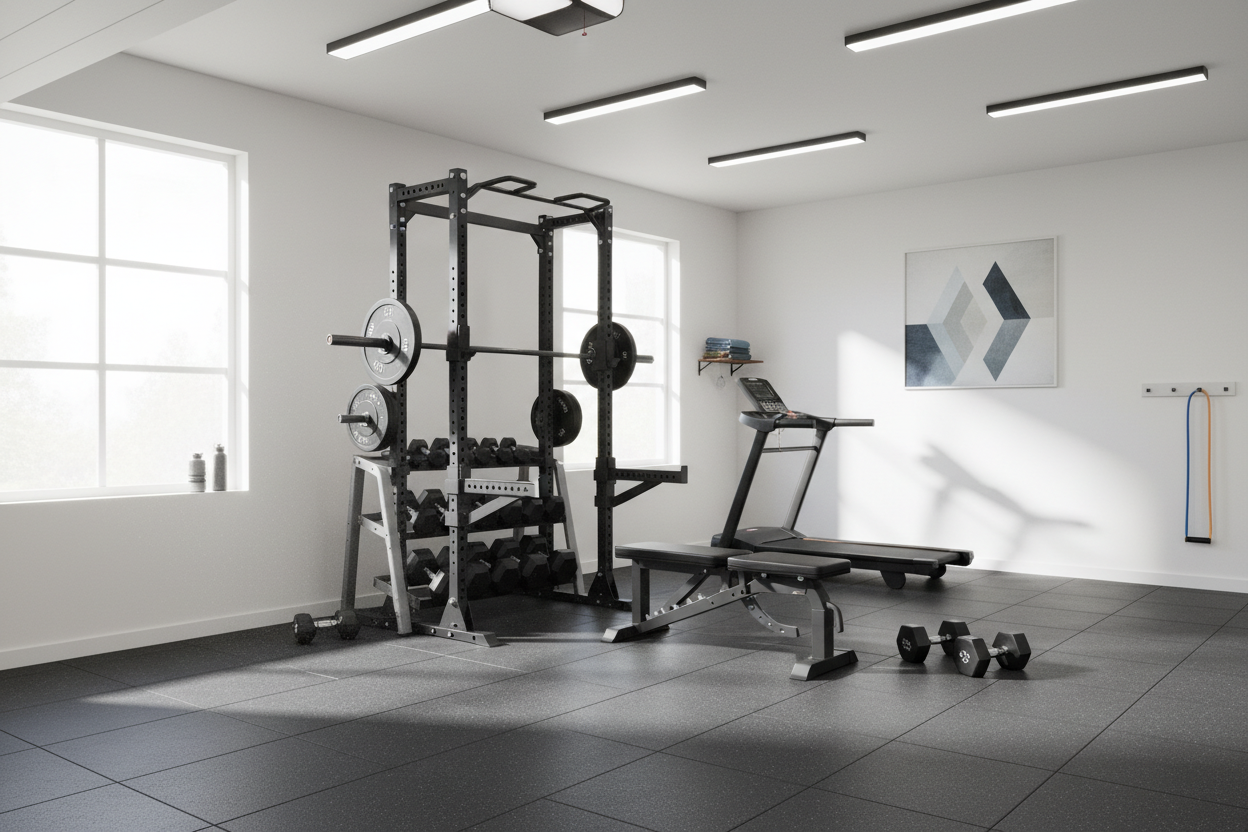
Phase 3 is the garage gym dream: a power rack, a barbell, and 300+ pounds of bumper plates. At this stage, your setup closely mirrors the free-weight section of a commercial facility. However, running a standard training workout plan still requires one major adjustment: safety.
In a public gym, you can easily ask for a spotter on a heavy bench press or squat. At home, you are on your own. This means you must rely on safety pins or spotter arms. Set them up during your warm-up sets to ensure they catch the bar just below your active range of motion. I tested a popular half-rack last year, and while the footprint was great for a tight garage, the spotter arms were too short (only 15 inches). I had to actively step back toward the uprights during a failed squat to hit the safeties—a terrifying realization mid-rep. Always prioritize racks with deep safety pins.
When you adapt a commercial workout plan for your home barbell, you might also swap high-risk movements for safer alternatives. For example, replacing a heavy barbell back squat with a barbell front squat or a Zercher squat ensures that if you fail, you can simply dump the bar forward.
Protecting Your Space During Intense Routines
As your equipment gets heavier, the physical toll on your home infrastructure increases. Dropping a 45-pound dumbbell on a standard residential floor will crack tile, dent hardwood, and shatter the subfloor. Even programs for working out that rely heavily on kettlebell swings can create enough repetitive force to loosen floorboards over time.
You need a dedicated barrier. A standard yoga mat is too thin and will shred under the knurling of a dropped barbell. I recommend laying down a durable 6x8ft exercise mat over your training area. This specific size is usually perfect for a power rack footprint or a dedicated dumbbell zone, providing enough density to absorb shock and reduce noise. Noise reduction is critical if you train early in the morning while your family sleeps. High-density flooring deadens the clanking of a heavy fit workout program, saving both your relationships and your foundation.
Evolving Your Fitness Program Training Over Time
Your home gym is never truly finished. It evolves alongside your fitness and training programs. What starts as a minimalist bodyweight routine in a bedroom will likely grow into a comprehensive garage setup over a few years.
The secret to long-term progress is remaining flexible. Don't stress if you lack a specific machine for a program for gym use. Focus on progressive overload—adding reps, increasing time under tension, or slowly acquiring heavier weights. By understanding the mechanics behind the movements, you can adapt any workout fitness program to fit the exact equipment you have today, while slowly building the gym you want tomorrow.
Frequently Asked Questions
Can I build muscle at home without machines?
Absolutely. Muscle growth requires mechanical tension, metabolic stress, and muscle damage. You can achieve all three using dumbbells, bands, or bodyweight by manipulating rep ranges and tempo, regardless of the specific fitness plans you follow.
How do I replace a leg press at home?
The best home alternatives are Bulgarian split squats, weighted step-ups, or front-rack reverse lunges. These unilateral movements target the quads and glutes intensely without requiring the massive loads of a leg press machine.
Is it safe to lift heavy barbells alone?
Yes, provided you have a power rack or half-rack equipped with sturdy safety pins or spotter straps. Always test the safety height with an empty bar before starting your heavy working sets.