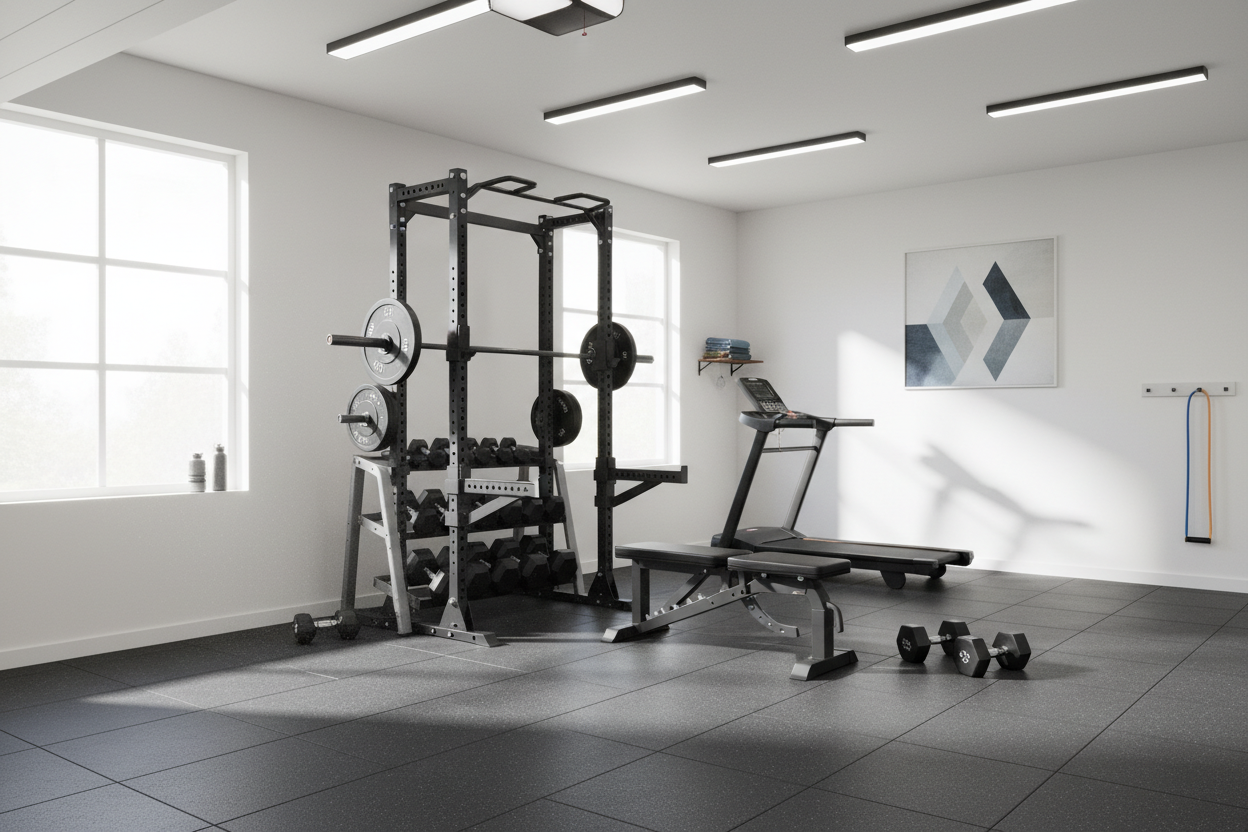
Floor Mat for Outside: The Complete Buyer's Guide
Taking your workouts into the fresh air is one of the best ways to train, but dropping heavy barbells on raw concrete is a fast track to ruined bumper plates and cracked driveways. Whether you are setting up a temporary driveway lifting station or a permanent patio gym, finding the right floor mat for outside is the critical first step to a safe, functional outdoor training space.
Using standard indoor flooring outdoors usually leads to warping, sun-fading, and dangerous mold buildup. In this guide, we will break down exactly what separates a true outdoor-rated mat from the rest, helping you build a resilient backyard gym that survives the elements.
Key Takeaways
- Material matters: Look for vulcanized rubber, which resists water absorption and withstands drastic temperature changes.
- UV resistance is non-negotiable: Standard mats will bake, crack, and crumble under direct sunlight without proper UV treatment.
- Thickness dictates function: A minimum of 3/4-inch thickness is required if you plan on dropping weights.
- Drainage prevents rot: Textured bottoms or specialized outdoor tiles allow rainwater to flow underneath, preventing mold.
Crucial Specs for Outdoor Gym Mats
Thickness and Density
When you are lifting outside, the subfloor is usually unforgiving concrete, asphalt, or wood decking. If you are performing heavy deadlifts or Olympic lifts, you need a high-density rubber mat that is at least 3/4-inch thick. Anything thinner will transfer the shock directly to the ground, potentially damaging both your foundation and your equipment.
UV Protection and Drainage
The biggest enemies of backyard floor mats are the sun and trapped moisture. UV-treated mats prevent the rubber from drying out and crumbling. Additionally, if your outdoor space is not covered, you must prioritize mats with a channeled or waffle-patterned underside. Flat mats will trap rainwater, leading to stagnant water, foul odors, and eventual degradation of the rubber.
Space Planning for Your Outdoor Setup
Driveway vs. Patio Clearances
A standard 4x6 foot mat is perfect for a basic barbell station, but outdoor spaces often have uneven grading. If you are setting up on a driveway, be mindful of the slope—lifting on a severe incline alters your mechanics. For patio setups, ensure you have at least 24 inches of clearance from railings or siding so an errant barbell bounce does not cause property damage.
From Our Gym: Honest Take
When we first tested outdoor setups at our facility, we made the rookie mistake of throwing standard horse stall mats on an unshaded concrete patio. By mid-July, the mats had absorbed so much heat they literally burned to the touch, and the edges began curling up, creating a massive tripping hazard during kettlebell swings.
We eventually swapped them out for a UV-stable, vulcanized floor mat for outside with a channeled backing. The difference was night and day. Even after heavy rainstorms, the water drained out in hours instead of pooling for days. One caveat: outdoor-specific mats do tend to carry a heavier initial rubber smell when baking in the sun for the first few weeks, but it dissipates quickly in the open air.
Frequently Asked Questions
Can I leave a floor mat for outside year-round?
Yes, provided it is made of vulcanized rubber with UV protection. However, if you live in an area with extreme winters, sweeping snow off promptly and avoiding metal shovels will extend the lifespan of your mats.
What is the best thickness for backyard floor mats?
For general fitness, yoga, or bodyweight exercises, 3/8-inch to 1/2-inch is sufficient. If you are dropping barbells or heavy dumbbells, you need at least 3/4-inch high-density rubber to protect the subfloor.
How do I clean outdoor gym flooring?
A simple leaf blower works wonders for daily debris. For a deeper clean, use a mild dish soap and warm water with a stiff-bristled deck brush, then hose it off. Avoid harsh chemical cleaners, which can strip the UV protective coating.