How to Build Serious Muscle With Just a Lifting Weights Machine
Walk into any gym, and you’ll see a divide. On one side, the clamor of dropping barbells; on the other, the rhythmic clanking of the selectorized stacks. There is a lingering myth that to get big or strong, you must stick exclusively to iron plates. That is simply not true.
A lifting weights machine offers a unique advantage that free weights struggle to replicate: constant, isolated tension. Whether you are a bodybuilder looking to bring up a lagging body part or a novice learning movement patterns, ignoring machines means leaving gains on the table.
Key Takeaways
- Isolation is King: Machines stabilize the load for you, allowing you to focus 100% of your energy on the target muscle rather than balance.
- Safety Profile: They reduce the risk of injury by enforcing a fixed path of motion, making them ideal for training to failure safely.
- Time Efficiency: Changing resistance with a pin is faster than loading plates, keeping your heart rate up and workout density high.
- Constant Tension: Many modern machines use cams to ensure the muscle stays under tension throughout the entire range of motion.
The Science of Stability
The primary argument against machines is that they don't train stabilizer muscles. While true, this is actually their greatest strength for hypertrophy (muscle growth).
When you squat with a barbell, your lower back and core often fatigue before your quads do. This is the limiting factor. When you use a leg press or a hack squat machine, you remove the need to balance the load.
This allows your nervous system to drive maximum output directly into the prime mover muscles. You can push a lifting weight machine closer to absolute mechanical failure without the fear of getting crushed under a bar.
Optimizing Mechanical Tension
To get the most out of these tools, you cannot just hop on and push. You need to understand the resistance curve.
Free weights rely on gravity, meaning the difficulty changes depending on the angle of the joint. A dumbbell fly, for example, has zero tension at the top of the movement. A well-designed machine keeps the tension constant.
Adjusting for Your Biomechanics
A common error is improper setup. If the machine's pivot point doesn't align with your joint's pivot point, you place sheer stress on your tendons.
Take the leg extension, for instance. If your knee isn't aligned with the machine's axis of rotation, you aren't just working your quads; you are grinding your knee joint. Take the extra ten seconds to adjust the seat height and back pad.
Common Mistakes to Avoid
Even though machines are safer, they aren't foolproof. The biggest mistake I see is the "stack slam."
If you let the weights crash down between reps, you are using momentum, not muscle. You are also losing the eccentric (lowering) portion of the lift, which is responsible for a significant amount of muscle growth. Control the weight on the way down; don't let gravity do the work for you.
My Training Log: Real Talk
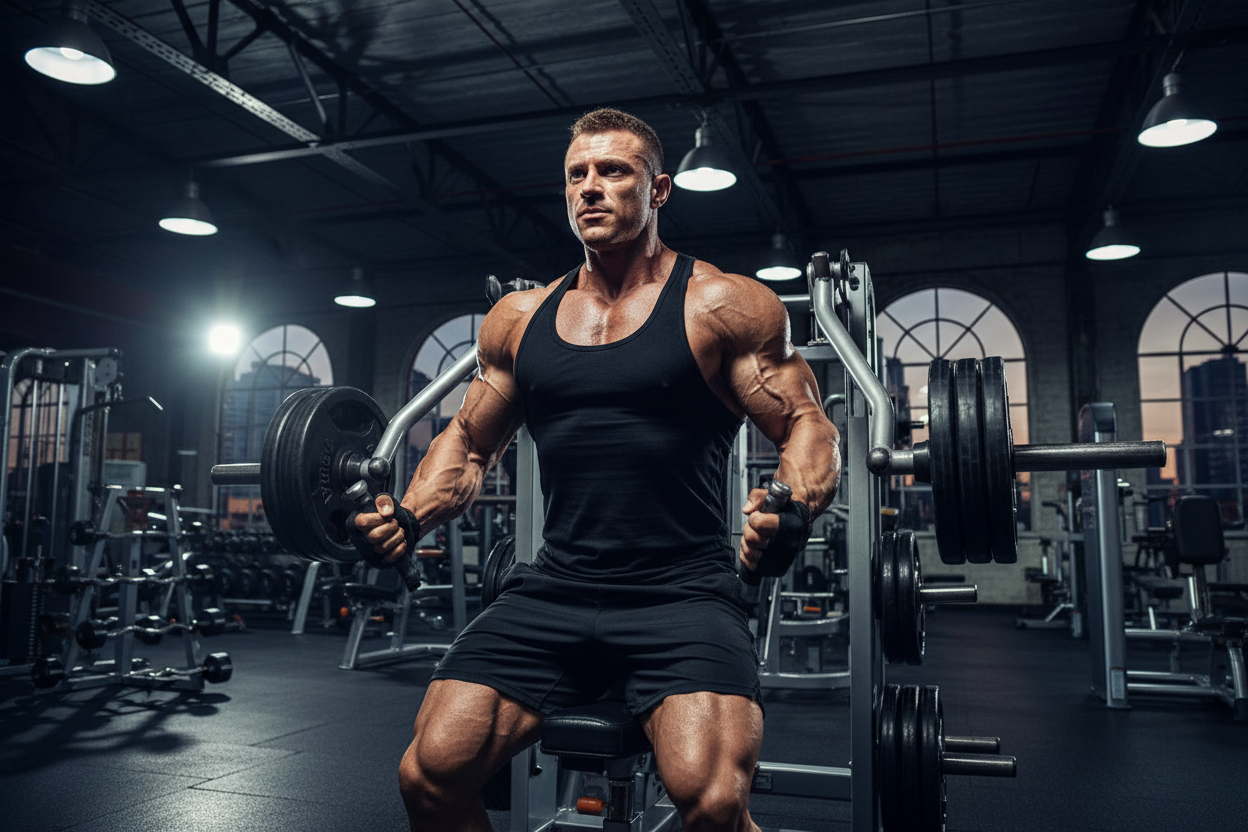
I want to be honest about the experience of using these machines versus the glossy marketing photos. I remember specifically training on an older plate-loaded chest press in a basement gym. It wasn't smooth.
There was this specific friction—a grit—in the movement path because the guide rods hadn't been oiled in months. I had to push harder at the start just to overcome the drag, not the weight.
Another thing people don't mention is the "knuckle whitener" effect. On a heavy machine row, the rubber grips often start to slip once your hands get sweaty. I learned the hard way that you still need chalk or straps, even on machines. I also recall the distinct, annoying pinch of my skin getting caught in the gap between the seat pads on a leg curl machine when I didn't position my hips exactly right. These machines are tools, but they have quirks you only learn by grinding through hundreds of reps.
Conclusion
The lifting weights machine is not a crutch for the weak; it is a scalpel for the precise. By combining the raw stability of machines with the intensity of training to failure, you can stimulate growth in ways free weights sometimes cannot match. Don't choose sides. Choose the tool that gets the job done.
Frequently Asked Questions
Is a lifting weights machine better than free weights for beginners?
Often, yes. Machines guide your body through the correct range of motion, which helps beginners learn the movement pattern without the risk of dropping weights or losing balance. It builds a base level of strength safely.
Can I build significant muscle mass using only machines?
Absolutely. Muscle fibers do not know if you are holding a barbell or a machine handle; they only recognize tension. As long as you apply progressive overload (adding weight or reps over time), you will build mass.
How often should I use machines in my routine?
A balanced approach works best. Many lifters start their workout with compound free-weight movements (like squats) when they are fresh, and finish with machine work to isolate muscles and train to failure safely without fatigue compromising their form.