Your Gym for Home Is Going to Ruin Your Floors (Do This)
I remember the exact moment I decided to quit my commercial membership. It was a Tuesday, the squat rack had a twenty-minute wait, and the guy using it was doing bicep curls. I went home, opened my laptop, and started piecing together my first gym for home. I was so focused on the knurling of the barbell and the price of the plates that I completely ignored what was under my feet. Big mistake.
Quick Takeaways
- Standard residential flooring (hardwood, tile, or thin carpet) cannot handle dropped iron.
- High-density rubber is non-negotiable for impact absorption and noise reduction.
- A 6x8 footprint is the gold standard for a single-person lifting station.
- Prioritize floor protection before buying your first rack to avoid thousands in repair costs.
Stop Buying Squat Racks Before You Do This
The excitement of building a home gymnasium is a trap. You see a sale on a power rack, you grab a set of 45-lb plates, and you think you’re ready to move weight. But personal gyms at home aren't just about the equipment you lift; they are about the structure that supports it. I’ve seen guys bolt a 200-lb rack directly into a garage floor only to realize later that the concrete is cracking under the vibration of every heavy rep.
You have to build from the ground up. If you’re looking at at home fitness gyms on Instagram, notice what’s under the racks. It’s never just the subfloor. Whether you’re setting up in a spare bedroom or a basement, the floor is the most expensive thing to fix if you mess it up. Your gym is home now, which means you can’t just walk away from the damage like you would at a big-box facility. You own every crack in the tile and every dent in the wood.
The Brutal Reality of Dropping Iron on Hardwood
Physics is a jerk. When you drop a 50-lb dumbbell from waist height, it doesn't just hit the floor with 50 lbs of force. It generates an impulse that can shatter ceramic tile or leave a permanent crater in oak flooring. If you are building an exercise gym for home use, you have to account for the 'oops' factor. Even if you never plan on dropping a deadlift, a sweaty hand or a missed re-rack happens to everyone eventually.
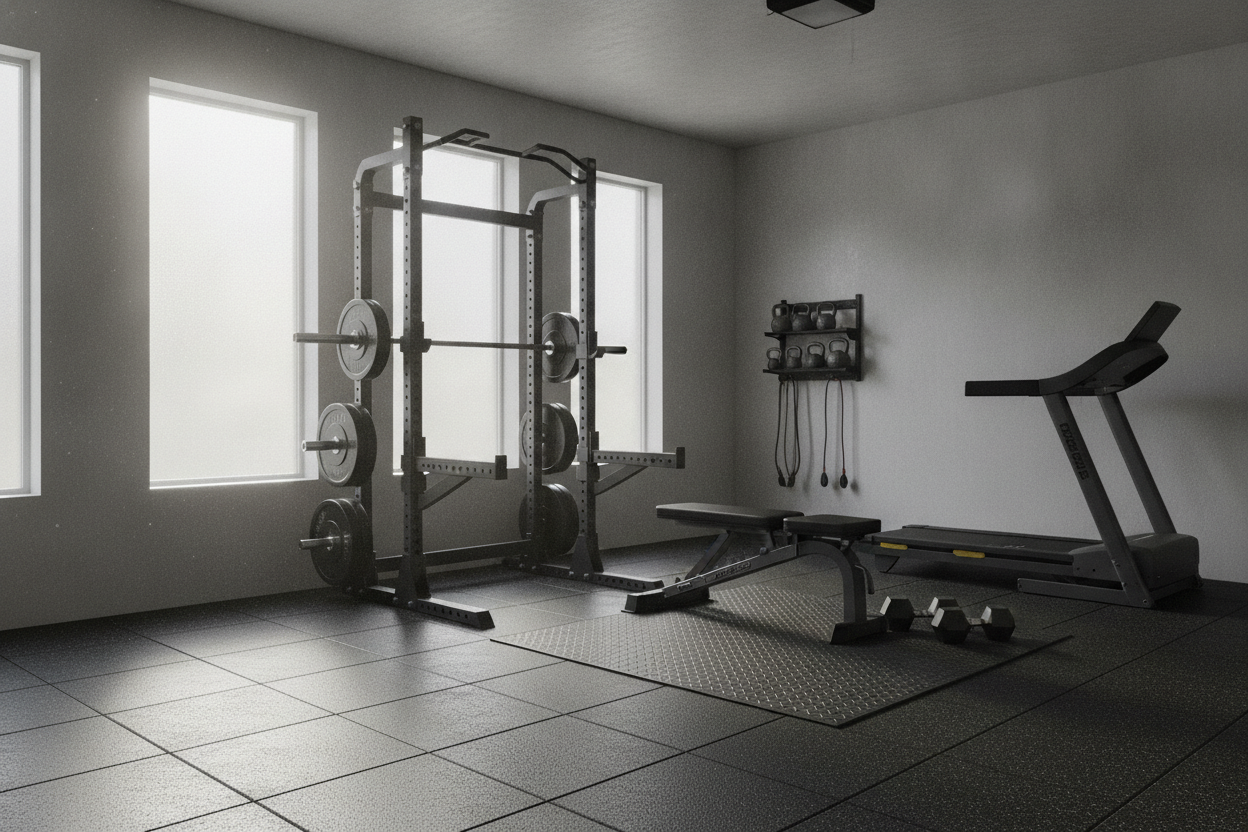
Beyond the structural damage, there is the noise. Gym weights home setups are notoriously loud. Without proper dampening, a single set of rows sounds like a car crash to anyone else in the house. You need a large exercise mat for home gym protection to act as a shock absorber. This isn't just about the spot where you stand; it's about creating a dedicated zone where the energy of the lift is dispersed across a wide surface area rather than focused on one tiny point of impact.
I’ve tested everything from cheap foam tiles to thick plywood platforms. Foam is useless for home gyms with weights; it compresses under the load and leaves your rack feeling wobbly and dangerous. You need something with a high shore durometer rating—basically, a measurement of how much the rubber resists indentation. If you can poke your finger into it and it feels squishy, it’s not going to protect your house from a pair of 45s.
Horse Stall Mats vs. Real Gym Flooring: What I Actually Use
You’ll hear a lot of 'budget' advice telling you to go to a farm supply store and buy horse stall mats. I’ve done it. Here’s what they don’t tell you: they smell like a tire fire for six months, they are rarely a uniform thickness, and they often bleed black oils onto your floor. For an exercise home gym, I’ve moved away from the agricultural stuff. You want purpose-built rubber that won't off-gas toxic smells in a confined bedroom or basement.
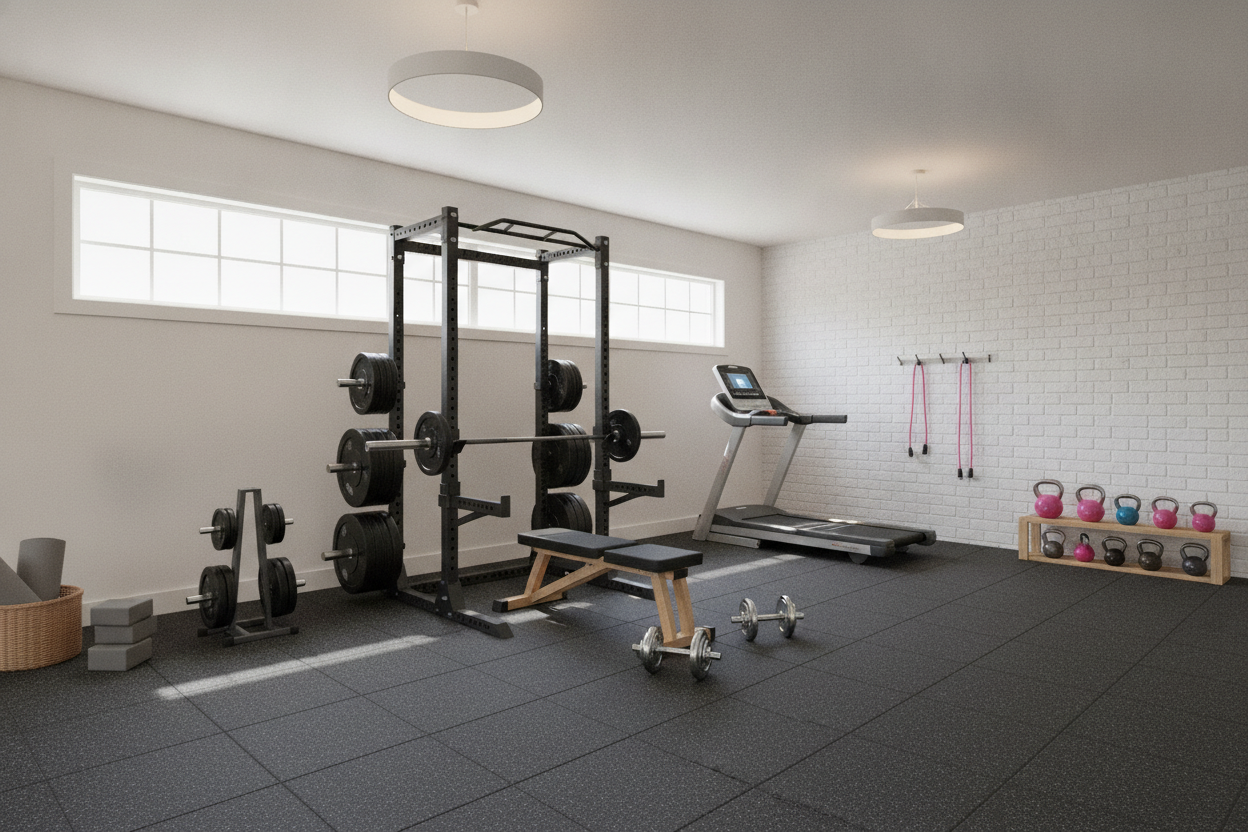
The sweet spot for thickness is 7mm to 10mm for general training, or up to 3/4 inch if you’re doing heavy Olympic lifting. I found that a gym flooring for home workout mat in a 6x8 dimension is the perfect footprint. It fits a standard power rack and gives you enough room to step back for lunges or overhead presses without falling off the edge. It’s heavy enough to stay put without adhesive, which is a lifesaver if you’re renting and need to take your gym with you when you move.
How to Train Heavy When You Only Have a 6x8 Space
Once your floor is armored, you don't need a massive commercial footprint to get strong. Most workout gym for home setups fail because people try to buy ten different machines. You don't need a leg press, a cable crossover, and a dedicated bench station. If you have a solid 6x8 rubberized area, you have a world-class training facility. A rack, a barbell, and a bench cover 95% of your needs.
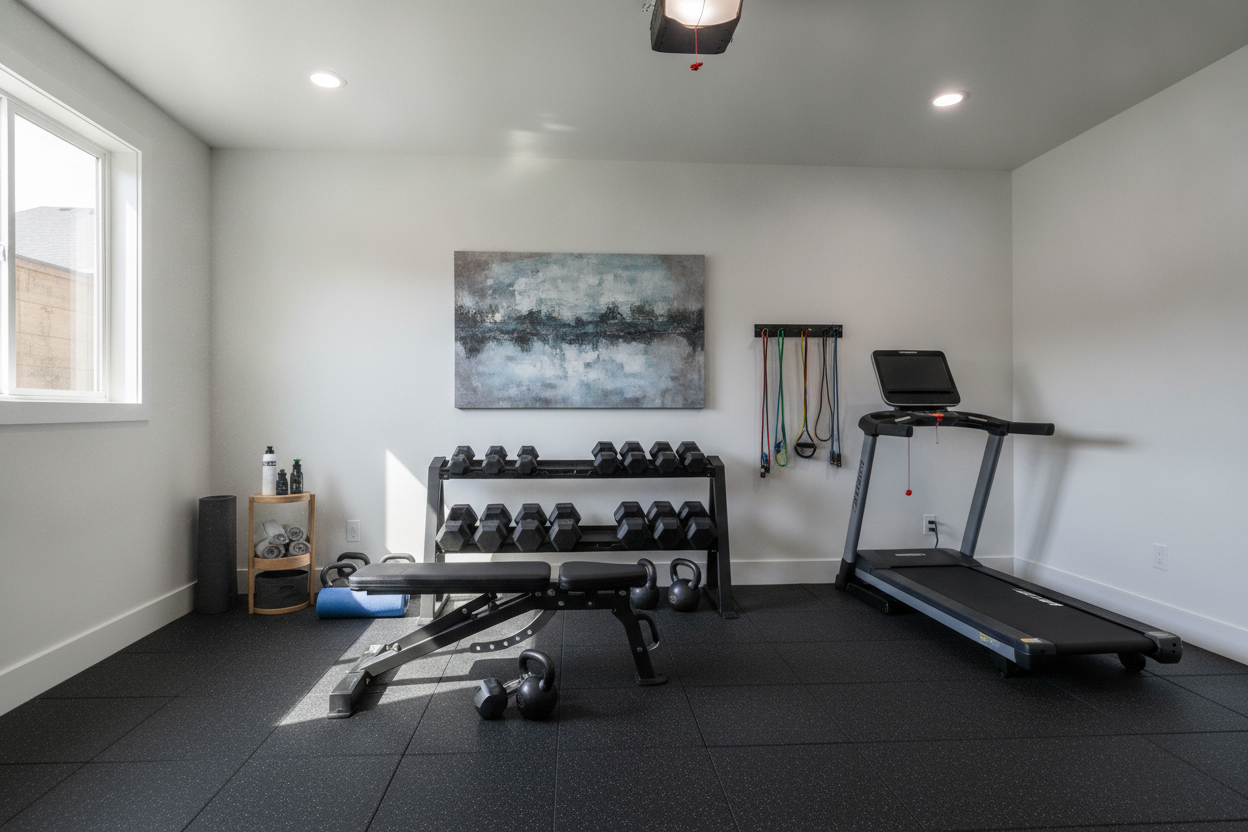
The key to maximizing home workout gyms is versatility. I focus on big, compound movements that utilize the floor I just protected. You can run a full exercise routine for home gym success by combining heavy free weights with resistance bands. The bands allow you to add 'accommodating resistance' without needing to buy another 200 lbs of iron plates that would further stress your subfloor. It’s a smarter way to train that keeps your footprint small and your joints happy.
Why Light Weights and a Good Floor Are All You Need to Start
You don't need to replicate a 20,000-square-foot club. Most gyms at home get better results with less equipment because there are zero distractions. If you're worried that you don't have enough weight to get a 'real' workout, you're looking at it wrong. You can get absolutely crushed by moderate weights if you understand how to manipulate your training variables.
I often point people toward a density workout for home gym owners when they are limited on iron. By shortening rest periods and increasing the total work done in a 20-minute window, you make 135 lbs feel like 315 lbs. This is safer for your exercise gym home environment and easier on your equipment. Your workout gym home should be a place of efficiency, not a storage unit for unused metal. Protect the floor, buy a solid bar, and start moving.
My Personal Experience: The Tile Disaster
I learned the flooring lesson the hard way. I thought a 1/4-inch foam 'puzzle mat' from a big-box retailer was enough for my 52.5-lb adjustable dumbbells. I finished a set of overhead presses, got a bit lazy on the descent, and set the weight down a little too hard. I heard a sickening *crunch*. I peeled back the foam to find a spiderweb crack running through two ceramic tiles in my guest room. It cost me $400 in repairs and a week of labor. Now, I never lift on anything less than high-density rubber.
Frequently Asked Questions
Can I put a home gym on carpet?
Yes, but you need a solid layer between the carpet and the equipment. Put down a sheet of 3/4-inch plywood first, then your rubber gym mat. This prevents the rack from wobbling and keeps the carpet from being permanently crushed or torn.
Is 8mm thickness enough for deadlifts?
For most people using bumper plates, 8mm is plenty. If you are using iron plates and pulling over 400 lbs, I’d recommend doubling up or using a dedicated lifting platform to save your foundation.
How do I stop my gym mats from sliding?
If you use a large enough single-piece mat (like a 6x8), the weight of the mat and the equipment on top usually keeps it locked in place. For smaller tiles, use double-sided carpet tape around the perimeter.