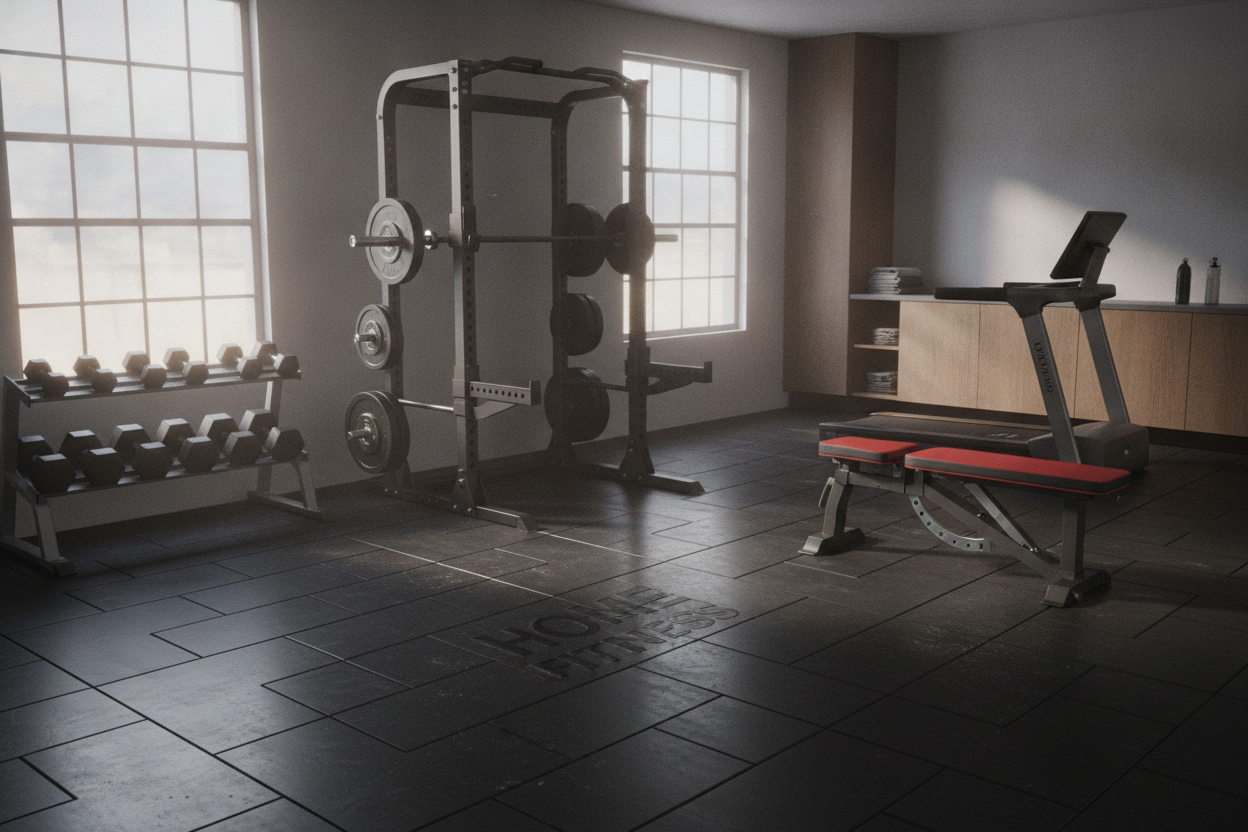
Why Most Home Gyms on Sale Are a Complete Waste of Money
I remember my first big score. It was a $300 all-in-one station I found during a massive holiday blowout. Within three months, the cables frayed, the seat vinyl tore, and the whole thing wobbled like a folding chair every time I tried to bench. I thought I was being smart, but I was just buying someone else's inventory problem. Finding home gyms on sale is easy; finding one that won't end up as a glorified clothes rack in six months is the real challenge.
- Check the Gauge: If it's 14-gauge steel, keep walking. You want 11-gauge for anything structural.
- Avoid 'Mystery' Bundles: If the barbell doesn't have a name or a knurling spec, it’s a pipe, not a bar.
- Track the Price: Use browser extensions to see if that 50% discount is off a fake MSRP.
- Floor First: No deal is worth a cracked foundation or a destroyed subfloor.
The 'Blowout' Illusion: How Pricing Games Work
Retailers are masters of the 'anchor price' trick. They’ll list a mediocre squat rack at an inflated $1,100 MSRP for a week, then 'slash' it to $550 during a home gym sale. You think you’re getting a steal, but in reality, that rack was designed to be a $500 product from the start. It’s a psychological game designed to make you ignore the specs because the 'savings' look too good to pass up.
I always tell people to look at the price history. If a product is permanently on sale, it’s not a sale—it’s just the price. You need to learn how to spot real deals for your home gym by comparing the current price against the 90-day average. If the price hasn't actually moved, the retailer is just trying to clear out old stock of white-labeled junk that’s taking up warehouse space.
What Actually Matters When Browsing Home Gyms for Sale
Ignore the flashy plastic covers and the '50 exercises in one' marketing. When you're looking at home gyms for sale, look at the steel. Commercial-grade equipment uses 11-gauge steel (roughly 1/8th of an inch thick). Budget stuff uses 14-gauge. It might not sound like much, but the moment you rack 300 pounds on a 14-gauge upright, you’ll feel the sway.
Check the hardware, too. Real racks use 5/8-inch or 1-inch bolts. If the hardware looks like something that belongs on a bookshelf, it won't survive a heavy session. Also, look at the weight capacity. If a rack is rated for 500 lbs, that’s usually the static limit—the point where it literally collapses. You want a working limit that far exceeds what you’ll ever lift. Don’t buy for who you are today; buy for the person who’s going to be deadlifting 400 lbs in two years.
Why You Should Skip the Flimsy All-in-One Bundles
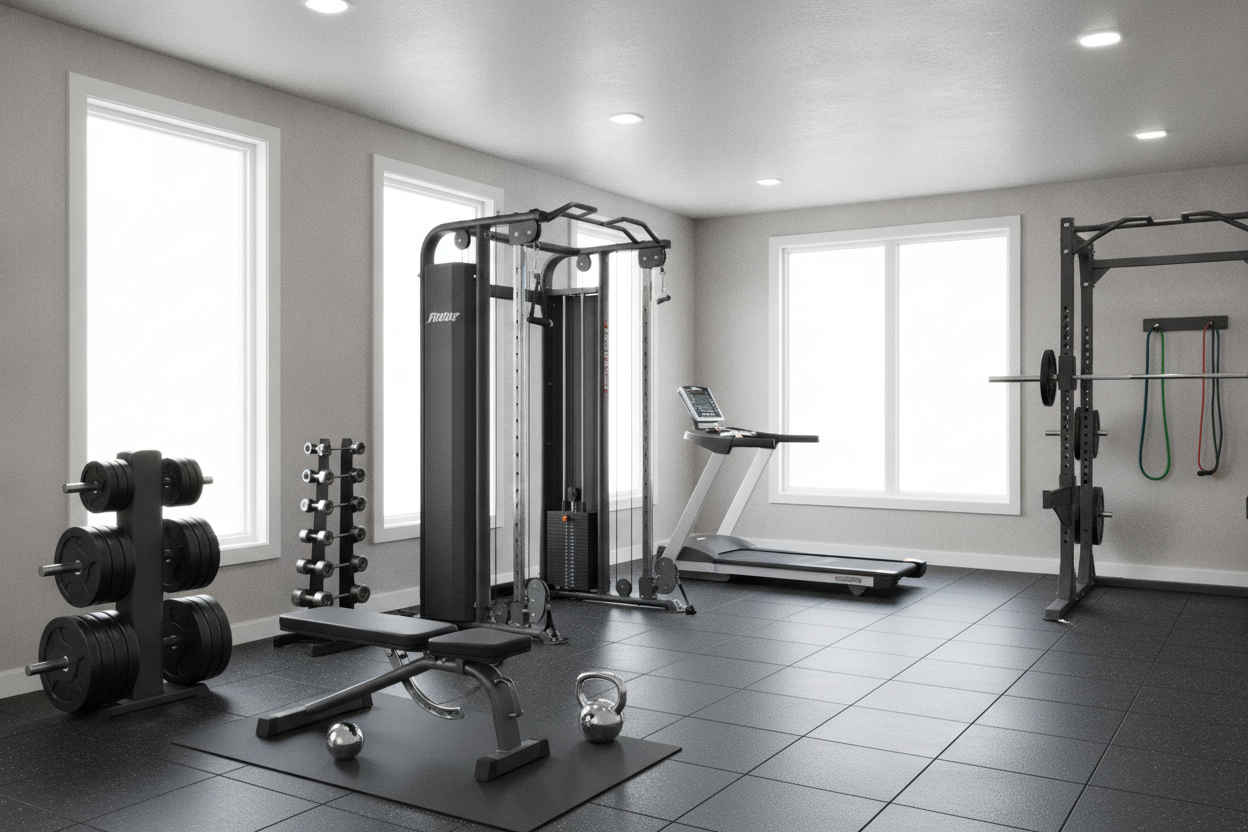
Those massive multi-station machines with the built-in pec deck and leg extension look great in a 3D render. In a garage? They’re a nightmare. These machines usually use cheap plastic pulleys and nylon-coated cables that stretch and snap. Once one part breaks, the whole unit is often useless because the parts are proprietary.
I’ve tested dozens of these, and the range of motion is almost always off. If you’re taller than 5'10' or shorter than 5'4', you’ll find yourself hitting the frame before you get a full contraction. Standalone pieces—a solid rack, a real bench, and a quality barbell—are modular. If you want to upgrade your bench later, you can. With an all-in-one, you’re stuck with whatever mediocre engineering the manufacturer forced on you.
The Foundation: Protect Your Property First
Before you drag 500 pounds of iron into your spare bedroom, think about the floor. I made the mistake of using those cheap, colorful puzzle mats when I started. They’re fine for yoga, but they compress instantly under a rack. Worse, they offer zero impact protection for your subfloor. One heavy deadlift and you’re looking at a $2,000 repair bill for your concrete or hardwood.
Don't skimp here. You need high-density rubber that can actually disperse force. Investing in large gym flooring for home workouts is the most boring purchase you’ll make, but it’s the most important. It kills the noise, saves your joints, and keeps your equipment from sliding around while you’re trying to hit a PR.
The Only 3 Pieces Worth Buying on a Discount
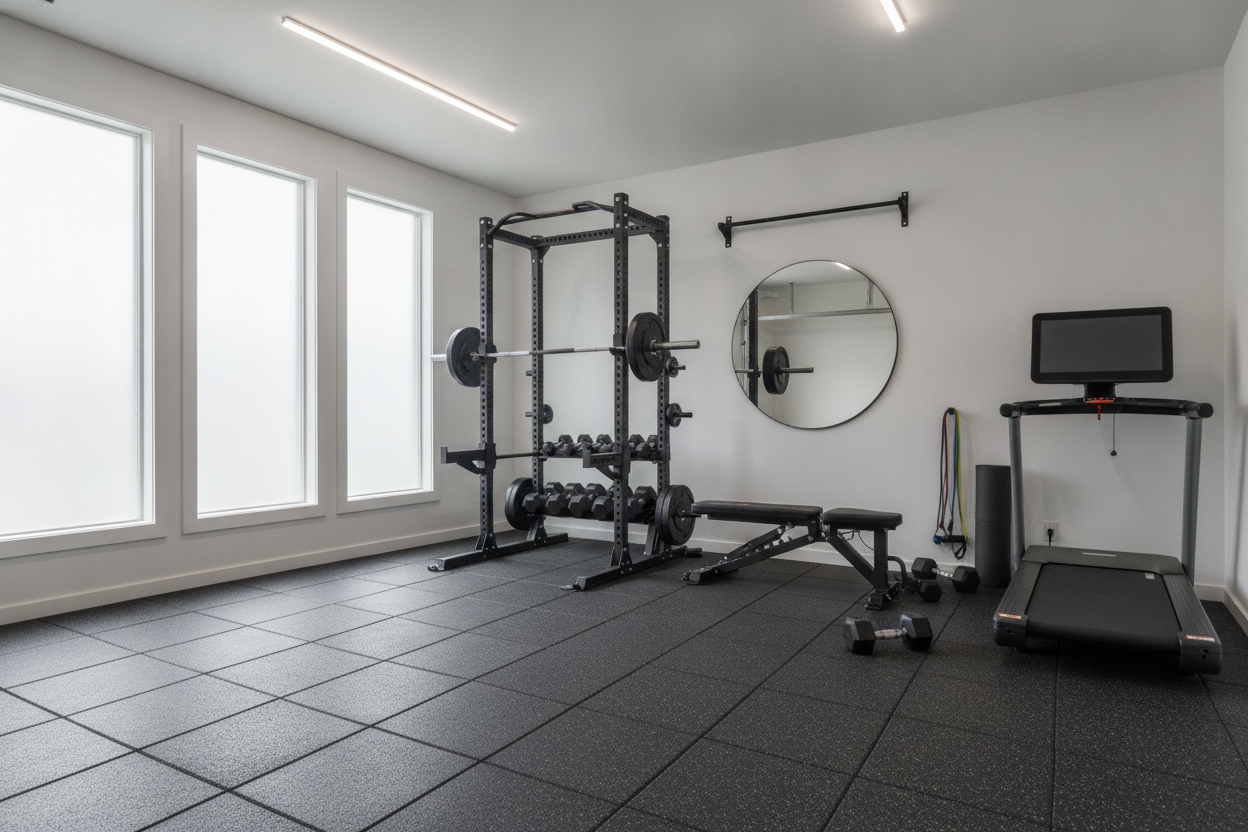
If you're hunting during a sale, focus your budget on the 'Big Three': a power rack, a barbell, and plates. These are the items that actually hold their value. A quality power rack is the literal skeleton of your gym. When you're choosing the right power rack for sale, look for 3x3-inch uprights and a wide base for stability.
Next, get a barbell with decent knurling. If the bar feels smooth like a curtain rod, your grip will fail long before your muscles do. Finally, look for iron or bumper plates. Iron is thinner and lets you fit more weight on the bar, while bumpers are better if you're training on a second floor or doing Olympic lifts. These three items are the only things you truly need to get world-class results at home.
My Personal Lesson in 'Cheap' Iron
I once bought a set of 'bargain' plates that were so poorly cast that the 45-lb plates actually weighed 41 lbs and 48 lbs respectively. I spent three months wondering why my bench press felt 'lopsided' before I finally put them on a scale. It’s a perfect example of why the cheapest option usually costs you more in the long run. Now, I only buy from brands that guarantee weight tolerance within 1-2%. It sounds like a small detail until you're trying to calculate a new max and the math doesn't add up.
FAQ
Is 14-gauge steel okay for a beginner?
It’ll hold for a while, but you’ll outgrow it fast. If you plan on lifting for more than six months, save up for 11-gauge. The stability difference is night and day.
Should I buy a used home gym instead of a new one on sale?
Usually, yes. You can often find high-end commercial gear on the used market for the same price as 'new' budget gear. Just check for rust and bent frames.
Are 'smart' home gyms worth the subscription?
Only if you actually use the classes. Most of those machines become expensive mirrors the moment you stop paying the $40/month subscription fee. Iron never expires.