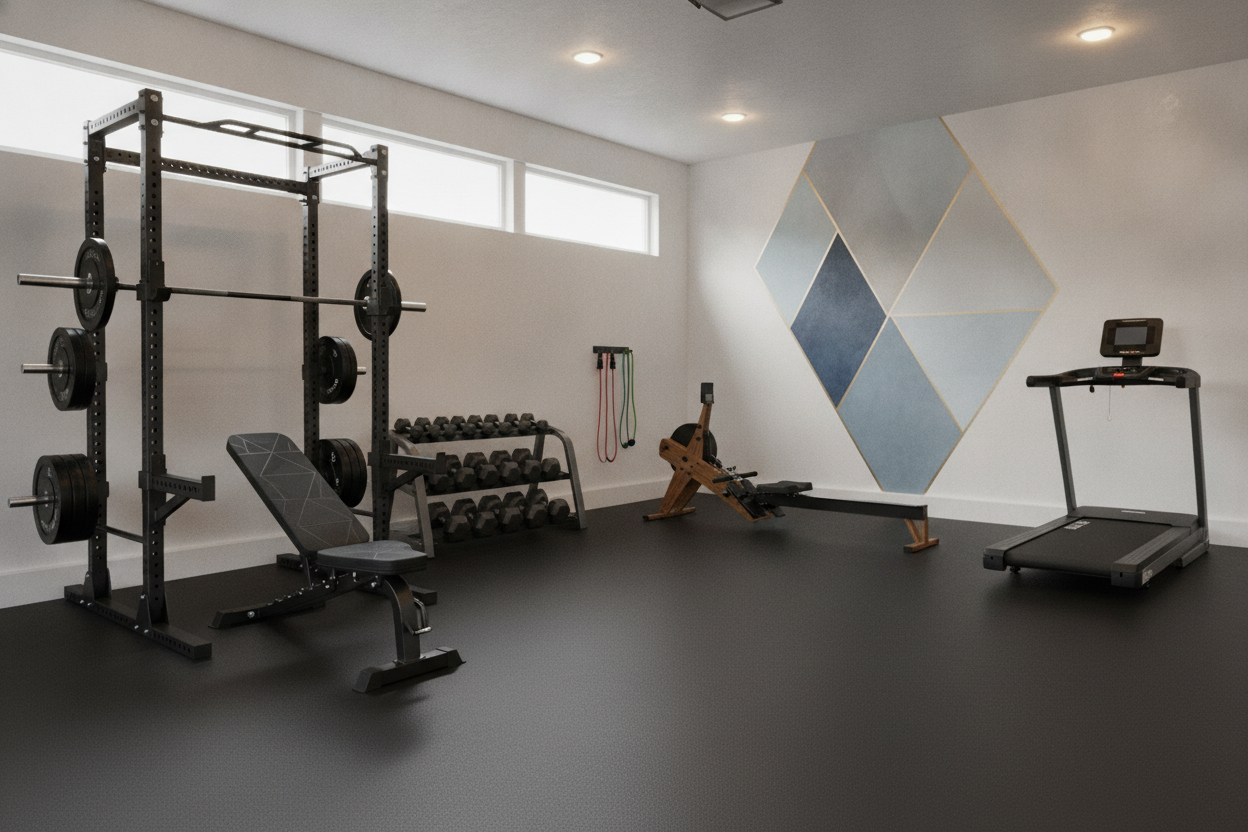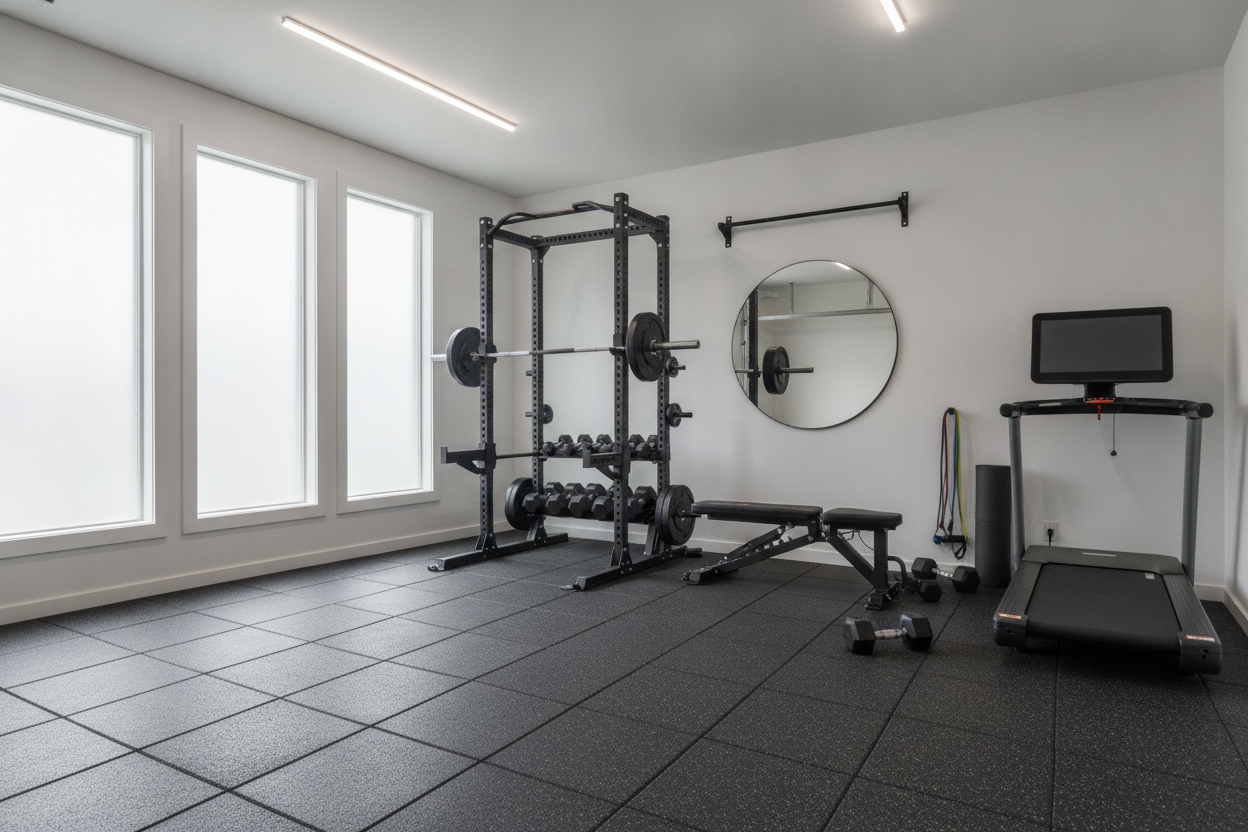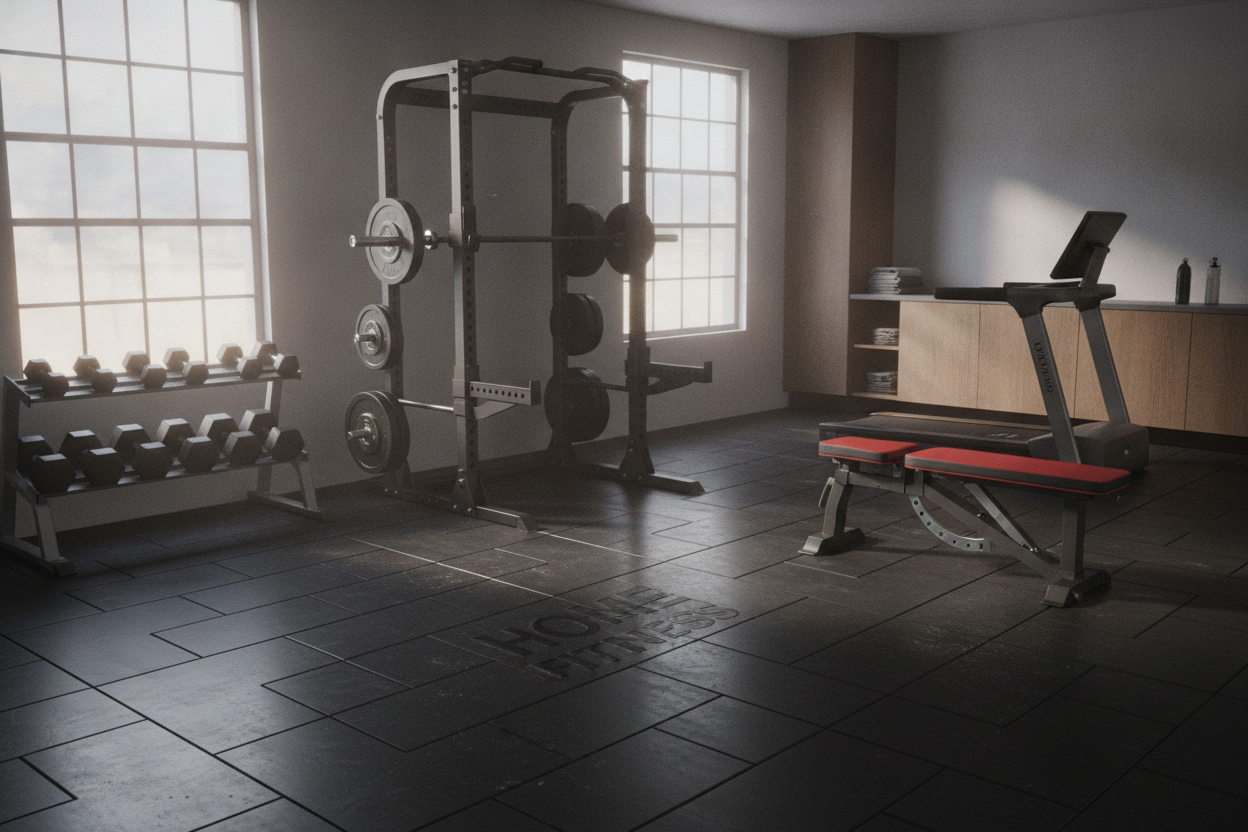
I Ruined My Floors Trying to Mix a Nice Home and Fitness Gear
I was staring at a $400 repair bill for a single plank of white oak. The sound it made wasn't a thud; it was a sickening, sharp crack that let me know my 50-pound hex dumbbell had just won a fight against my floor. I thought I could balance a high-end home and fitness lifestyle by just throwing a thin rug down and being 'careful.' I was wrong.
Setting up a training space inside your living quarters isn't as simple as buying a rack and calling it a day. You are essentially bringing industrial-grade stress into a residential-grade environment. If you don't treat the infrastructure with more respect than the weights themselves, you're going to destroy your property value before you even finish your first block of training.
Quick Takeaways
- Never trust foam puzzle mats for anything heavier than a yoga flow.
- Always check the feet of your equipment; plastic end caps are floor-killers.
- A 3/4-inch rubber stall mat is the gold standard for impact protection.
- Create a 'moisture boundary' to prevent sweat from eating your floor finish.
The Day I Cracked My Hardwood (And Learned My Lesson)
It happened during a lazy set of RDLs. I wasn't even Maxing out. I just set the dumbbell down a little too aggressively after a final rep, and the corner of the weight caught the edge of a floorboard. That 50-pound hunk of iron acted like a chisel. In that moment, I realized that my 'spare room gym' was a disaster waiting to happen. I had spent thousands on the gear but zero on the foundation.
You see, most of us think about the footprint of the equipment—how much space it takes up—but we rarely think about the pressure points. A 200-pound rack with 300 pounds of plates on it is a quarter-ton of static weight sitting on four tiny metal feet. Without serious load distribution, those feet will sink into your subfloor like a hot knife through butter. Indoor training requires infrastructure, not just a credit card and a dream.
Why Your Local Fitness Home Store Sets You Up for Property Damage
If you walk into a generic fitness home store, they’ll sell you equipment that looks great in a showroom but performs poorly in a real house. These machines often feature 'hard plastic' floor stabilizers. Under a heavy load, those plastic caps don't grip; they vibrate and grind. Every time you use that rowing machine or cable tower, those feet are micro-sanding your floor finish.
Worse yet, the 'protective' mats sold at big-box retailers are usually 1/2-inch EVA foam. Foam is great for a kid's playroom, but it's useless for heavy lifting. It compresses completely under load, meaning your floor still takes the full force of the impact. You need high-density vulcanized rubber that doesn't 'bottom out' when you're re-racking a heavy squat.
The Foundation: Layering Your Floor for Heavy Lifts
The goal is to turn your floor into a tank. I eventually stripped out the cheap foam and went with a multi-layer approach. You want a base layer that covers enough surface area so the weight is distributed across multiple floor joists. For most people, a 6X8Ft Exercise Mat Yoga Mat Gym Flooring For Home Workout is the perfect starting point. It covers the entire footprint of a standard power rack and a bench without those annoying seams that puzzle mats have.
When you use a single, heavy-duty mat, you eliminate the risk of the floor pieces sliding apart during a heavy set. I prefer 7mm to 10mm thickness for general use, but if you're pulling deadlifts over 400 pounds, you might want to stack a second layer of 3/4-inch horse stall mats specifically in the drop zone. This setup absorbs the vibration that usually travels through the walls and annoys your neighbors or spouse.
Selecting Machines That Don't Destroy Your Baseboards
When shopping for home fitness gear, look at the base of the machine before you look at the features. You want wide, flat stabilizers with rubberized over-molds. If the machine has wheels for portability, make sure they are soft polyurethane, not hard nylon. Hard wheels will flat-spot and then scratch your floors the next time you try to move the unit.
If you're moving beyond basic dumbbells, you need to Maximize Your Fitness The Best Exercise Machines For Home And Gym by choosing gear with a low center of gravity. Top-heavy machines are more likely to 'walk' across the room during high-intensity use. I once had a cheap spin bike that migrated three inches to the left every time I did a sprint interval, eventually gouging my baseboards. Look for frames that have a 'bolt-down' option even if you don't plan to bolt them; it usually indicates a much sturdier frame construction.
The 'Sweat Zone' Strategy for Spare Rooms
Sweat is surprisingly destructive. It's acidic, and if it seeps into the cracks of your hardwood or the fibers of your carpet, it stays there. After six months, your spare room will start to smell like a locker room, and no amount of Febreze will fix it. You need a dedicated moisture-proof boundary.
I recommend using a Large Exercise Mat For Home Gym that extends at least two feet beyond the edges of your equipment. This creates a 'buffer zone' for chalk dust, water bottle spills, and the inevitable sweat puddles. After a session, you can just wipe down the rubber with a mild disinfectant. If you keep the mess contained to the mat, you protect the 'home' part of your home gym. My mistake was thinking I only needed a mat under the machine itself—I didn't account for where I'd be standing (and sweating) during my rest periods.
FAQ
Can I put a squat rack on a second-floor apartment?
Technically yes, but you need to know which way your joists run. Always place the rack across multiple joists rather than parallel to one. And invest in 'silencer pads' for your plates to keep the vibration from traveling through the frame.
Are puzzle mats okay for just dumbbells?
Only if you never plan on dropping them. Even a 20-pounder will bottom out a puzzle mat and dent the floor underneath. They also tend to pull apart during lunges or any movement with lateral force.
How do I stop my treadmill from shaking the whole house?
Use an isolation mat. These are thicker, denser rubber mats specifically designed to kill the motor's vibration. If it's still shaking, you likely have a subfloor issue or the treadmill feet aren't leveled properly.