Weights or Cardio: Choosing the Right Routine for Home
When planning a home fitness routine, one of the most frequent debates is whether to prioritize weights or cardio. Both approaches offer substantial physical benefits, yet each places distinct demands on your weekly schedule, energy levels, and available room space. The right decision hinges on your current conditioning, training goals, and the physical constraints of your workout area. Rather than viewing the choice as all-or-nothing, understanding how these two disciplines function within a personal space helps you create an enjoyable and sustainable routine.
Weights or Cardio: Deciding Your Primary Focus
Choosing an anchor for your training week helps you organize your schedule without burnout. When you focus primarily on resistance, your sessions revolve around mechanical tension, steady pacing, and progressive overload. Conversely, prioritizing aerobic conditioning centers your time around heart rate elevation, continuous motion, and lung capacity. Neither approach is universally superior; what matters most is selecting an approach you can practice consistently over months and years.
Personal motivation plays a pivotal role in this selection. If you feel energized by rapid movements, steady footwork, or breaking an immediate sweat, an aerobic-centered schedule can feel natural and motivating. If you prefer the measured structure of sets, tracked repetitions, and tracking weight progression, resistance sessions will likely keep you more engaged. Clarifying this preference early prevents the common frustration of buying equipment you rarely use.
Understanding Strength Training: Muscle and Floor Demands
Committing to strength training brings clear benefits for metabolic health, joint stability, and posture. Engaging in regular weight training challenges muscle fibers to adapt, supporting favorable body composition and visible muscle tone over time. Furthermore, consistent resistance training reinforces connective tissues and builds functional strength for everyday movements. However, working with free weights introduces specific physical demands on your living space.
Heavy training tools exert concentrated downward pressure. Dropping loaded dumbbells or setting down cast-iron plates can easily chip concrete, dent wood planks, or crack tile foundations. Providing adequate floor protection is crucial whenever you practice lifting weights indoors. Compact items like kettlebells and barbells require resilient, dense rubber flooring designed to dissipate point-load impact and prevent surface fracture. Outfitting your station with supportive pads and items from our strength training accessories collection helps preserve both your floor and your equipment.
Understanding Cardio: Stamina and Dynamic Movement
Aerobic work targets endurance, stamina, and cardiovascular efficiency. Structured cardio workouts train the heart and lungs to manage prolonged effort, which translates into better stamina throughout everyday tasks. Practicing regular aerobic exercise also promotes agility, rhythm, and mobility through varied movement patterns across multiple planes.
Because conditioning routines frequently feature quick footwork, managing cumulative joint impact is vital. Exercises such as high knees, skater jumps, burpees, or skipping with a jump rope generate repetitive downward forces. A dedicated exercise mat with a high-traction surface prevents slips during sweaty, high-velocity intervals. Incorporating dependable shock absorption beneath your feet cushions repeated landings, reducing stress on knees, ankles, and hips over extended training blocks.
Weights Versus Cardio: Matching Your Personal Goals
Comparing these two modalities directly helps you align your weekly efforts with concrete goals. Whether your objective is leaning out, preparing for a recreational sport, or carving out efficient exercise sessions in a cramped apartment, each discipline offers distinct trade-offs.
Which is better cardio or weight training for fat loss?
When comparing cardio or weight training for fat loss, combining both or prioritizing resistance generally offers greater long-term metabolic benefits than endurance work alone. While continuous aerobic movement expends a notable amount of energy during the session itself, resistance work preserves and builds lean muscle tissue. Maintaining lean tissue supports resting energy expenditure, making it easier to sustain physical changes over time. Many lifters find success pairing structured resistance work with moderate, low-impact conditioning to aid recovery without excessive fatigue. For an in-depth look at energy systems and training styles, review our guide to cardio versus fat burn.
What's better cardio or weights for small home gyms?
For limited floor space, choosing cardio or weights usually favors versatile free weights because compact iron requires far less room than bulky machines. A single set of adjustable weights or a few kettlebells can facilitate a complete full-body session within a compact four-by-six-foot area. In contrast, treadmills, rowing machines, and stationary bikes consume substantial permanent footprint and are difficult to move. When managing a tight home workout footprint, opting for modular hand weights paired with lightweight conditioning tools like a jump rope delivers complete training versatility without crowding the room.
Home Gym Setup: Equipment Placement and Protection
Creating an organized home gym requires thoughtful arrangement of both your gear and your foundation. Logical equipment placement ensures that walking pathways remain open, reducing the hazard of tripping over loose plates or collars during transitions. Storing heavy items against load-bearing perimeter walls rather than in the center of elevated rooms also balances the physical weight load on household joists.
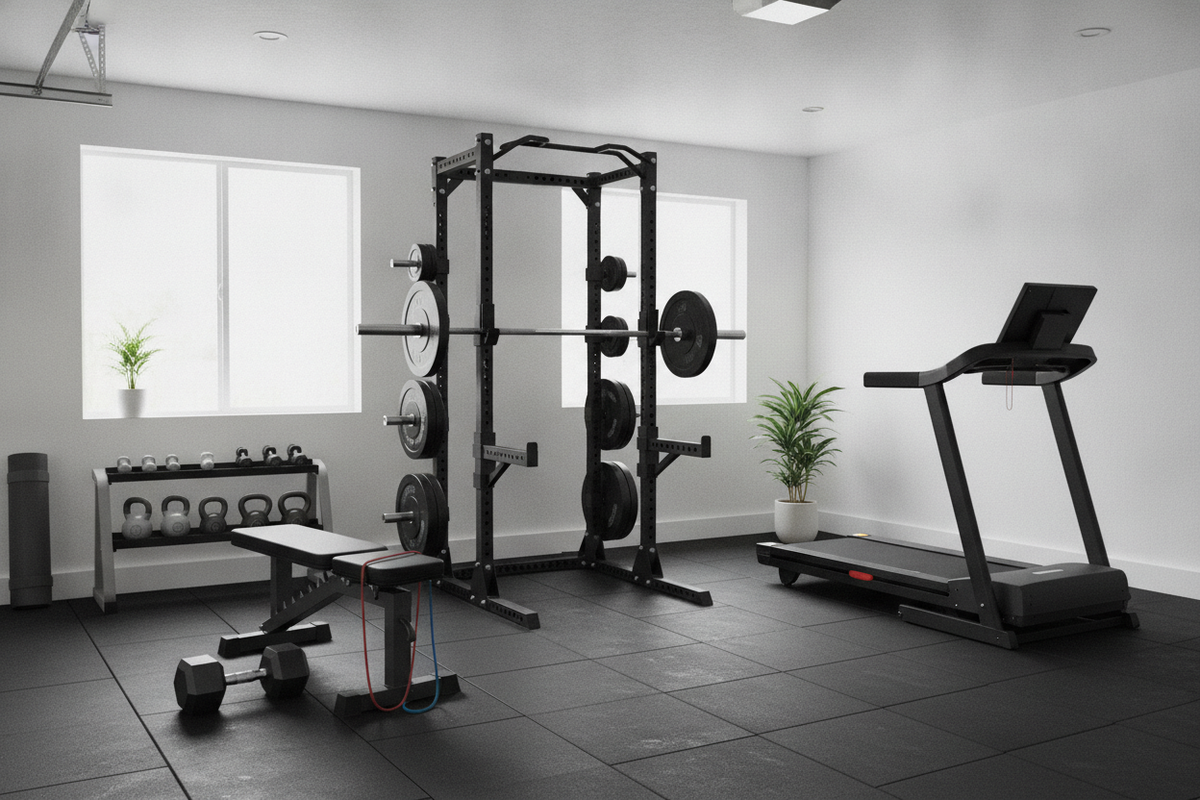
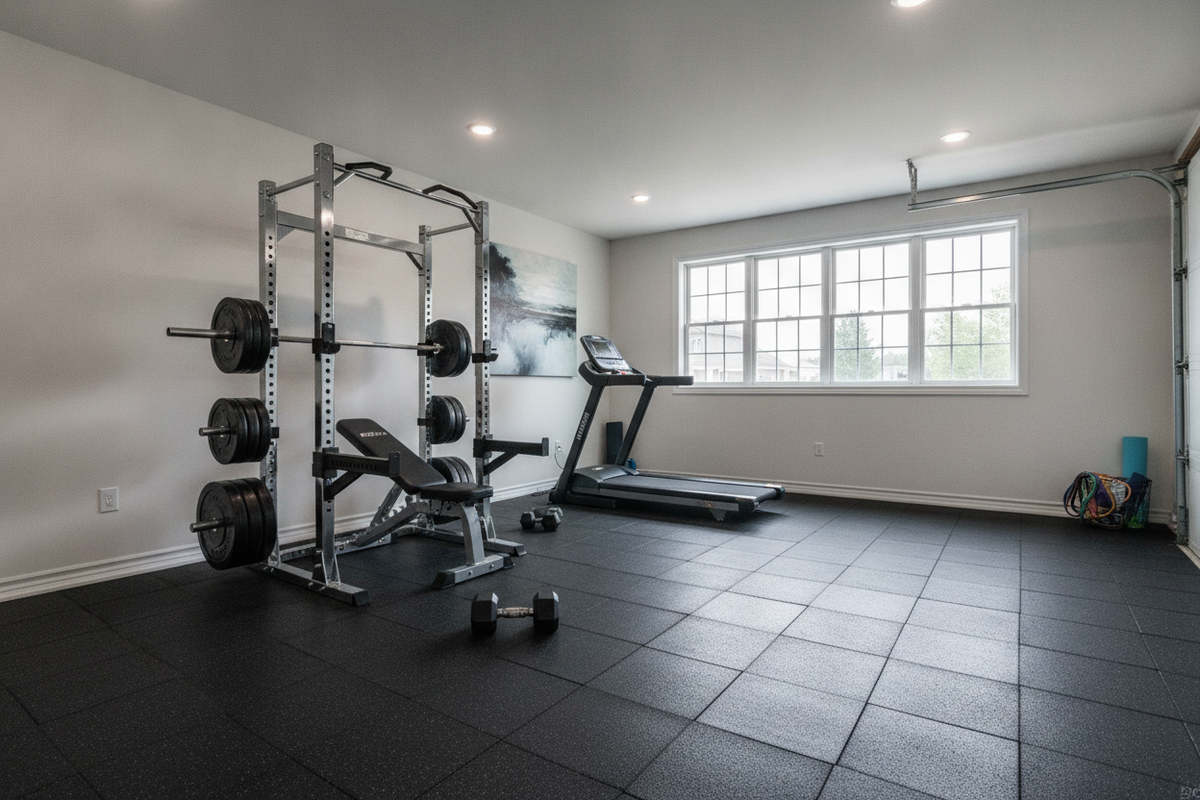
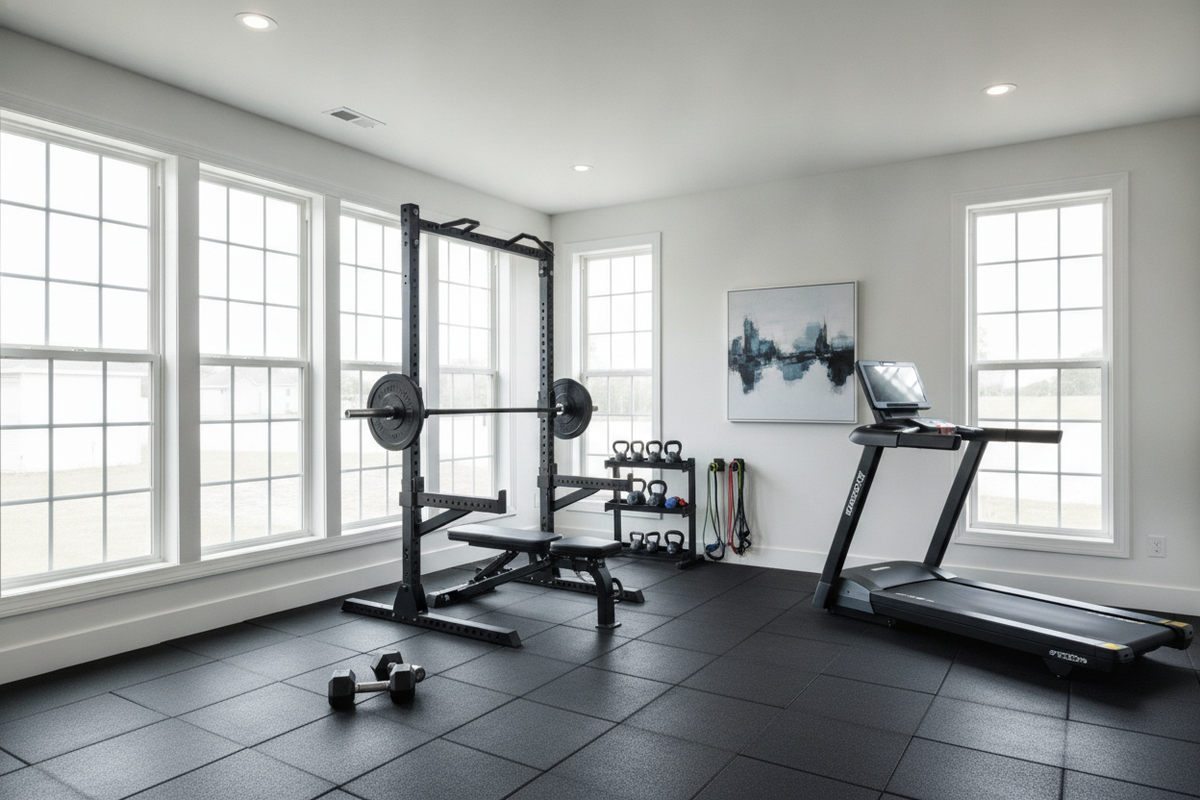
Protecting the underlying flooring structure demands materials engineered for dynamic gym environments. Specialized mats provide essential subfloor protection against dropped hand weights and the vibration of jumping drills. Installing a layer of dense rubber creates a firm, non-slip base that remains stable during heavy squats while providing the resilient cushioning needed for dynamic drills. High-grade surface coverage shields your underlying flooring investment, dampens sound transmission through walls, and provides a clean, professional finish to your workout zone.
Combining Weights and Cardio on a Single Floor Surface
You do not need to treat this decision as an exclusive divide. Many lifters achieve excellent fitness outcomes by integrating both approaches into a unified plan. One straightforward method is alternating disciplines across different days of the week, reserving specific slots for planned recovery days. This ensures your muscular system rests while you maintain light active movement.
Another efficient strategy is circuit training, where you move immediately from a resistance movement into a short aerobic burst. For example, transitioning directly from goblet squats into jumping jacks on the same padded floor provides both strength stimuli and elevated heart rates within a single compact workout. If you prefer performing both disciplines in the same workout, completing strength exercises first ensures optimal focus and stability when managing heavy loads. You can explore sequencing strategies in our guide on cardio after weights, or explore multi-day layouts using our cardio and weight training methods guide.
Final Practical Recommendations
Determining your balance between free weights and aerobic exercise ultimately comes down to your personal priorities, the layout of your space, and what type of movement keeps you consistent. If you aim to build physical resilience, improve functional power, and preserve muscle tissue, building your space around free weights on an impact-absorbing surface is an excellent choice. If you value stamina, quick agility, and rhythmic conditioning, an open floor area with protective matting will serve you well. By equipping your training area with resilient flooring, you create a safe, versatile foundation ready for whatever training path you choose.