Gluteal Region Muscle Guide: Home Gym Setup
Building lower-body strength starts with understanding how the hips and pelvis generate force. Every gluteal region muscle plays an important part in stabilizing the pelvis, extending the hips, and supporting upright movement during daily activity and demanding training sessions. When organizing an effective training space at home, understanding muscular function helps you choose the right movements and the ideal surface support for floor-based training.
Understanding the Gluteal Region Muscle Groups
In human functional movement, the gluteal region is the: anatomical area located posterior to the pelvic girdle, extending from the iliac crest down to the gluteal fold. Studying the anatomy buttock region reveals that this zone contains both large power-generating muscles and smaller stabilizing rotators. To explore the foundational structure in more depth, review our detailed gluteal muscle guide.
A well-conditioned gluteal region muscle provides essential balance across the entire posterior chain. Within the gluteus area, muscle fibers run at various angles to control multidirectional movements of the femur. Whether you are running, climbing stairs, or lifting weights, the anatomy buttock region distributes impact forces away from the lower back and knees.
What is each gluteal region muscle responsible for?
Each gluteal region muscle is responsible for specific hip actions, ranging from powerful hip extension to fine pelvic control and outward leg rotation. The muscular system in the gluteal region divides into superficial layers that produce high-torque movements and deeper layers that secure the femoral head within the hip socket.
- Gluteus maximus: The largest gluteal region muscle, responsible primarily for hip extension and external rotation, driving upward motion during squats and step-ups.
- Gluteus medius: Positioned along the outer hip, this muscle controls hip abduction and prevents the opposite side of the pelvis from dropping during single-leg weight bearing.
- Gluteus minimus: The deepest of the main glute heads, working closely with the medius to provide continuous pelvic stability and internal hip rotation.
- Deep rotators: A compact group beneath the larger muscles, including the piriformis and obturator muscles, that assist with hip stability and rotational control.
When balanced through proper exercise, these structures maintain healthy alignment throughout your lower body workouts, keeping the hips centered under load.
Superficial and Deep Glute Heads and the Gluteal Fossa
The primary power of the hip comes from the three distinct glute heads. The largest prime mover, the gluteus maximus, covers the posterior pelvic structure and ties directly into the iliotibial band. For a closer look at these muscular borders, check our gluteus maximus structure breakdown. Above and beneath it lie the gluteus medius and gluteus minimus, which originate along the outer ilium.
Surrounding the bony contours of the pelvis, the gluteal fossa and nearby pelvic lines create attachment points where muscular tendons anchor firmly. You can explore these skeletal contours further in our guide to the anterior gluteal line. A healthy gluteus area relies on smooth interaction between these glute heads and the underlying deep rotators. When one gluteal region muscle becomes inactive or fatigued, other hip structures must compensate, making balanced recruitment essential during training.
What exercises best target the gluteus area at home?
The best exercises to target the gluteus area at home combine hip extension, hip abduction, and single-leg stability drills across varying angles of resistance. Selecting multi-joint compound lifts alongside isolated accessory drills ensures complete development for every gluteal region muscle.
Hip Thrust and Glute Bridge Variations
The hip thrust stands out as a prime movement for horizontal hip extension. Because tension peaks at full hip extension, the gluteus maximus works under direct load. A standard glute bridge performed flat on the ground serves as an approachable entry point, teaching proper pelvic tilt without heavy loading. Adding barbell hip thrusts introduces progressive resistance, challenging the glute heads to produce force throughout the lockout range. Practicing a bodyweight glute bridge between loaded sets is also helpful for refining mind-muscle connection.
Squats, Lunges, and Split Squats
Upright compound exercises build functional strength across the entire gluteal region. Bodyweight squats establish proper hip-hinge mechanics and knee tracking. Progressing to split squats places high demand on single-leg pelvic stability, forcing the gluteus medius and gluteus minimus to prevent lateral hip shift. Including split squats in your regular lower body workouts ensures that both sides of the gluteus area develop equal strength and balance.
Abduction Drills and Resistance Bands
To isolate lateral stabilizers, incorporating hip abduction exercises is key. Looping resistance bands around your knees or ankles during lateral walks, clamshells, or seated abductions activates the upper glute heads. You can learn more about training lateral hip stabilizers in our abductor muscle movement overview. Pairing resistance bands with bodyweight squats reinforces outward knee drive, engaging every superficial gluteal region muscle simultaneously.
What type of flooring works best for hip thrusts and floor bridges?
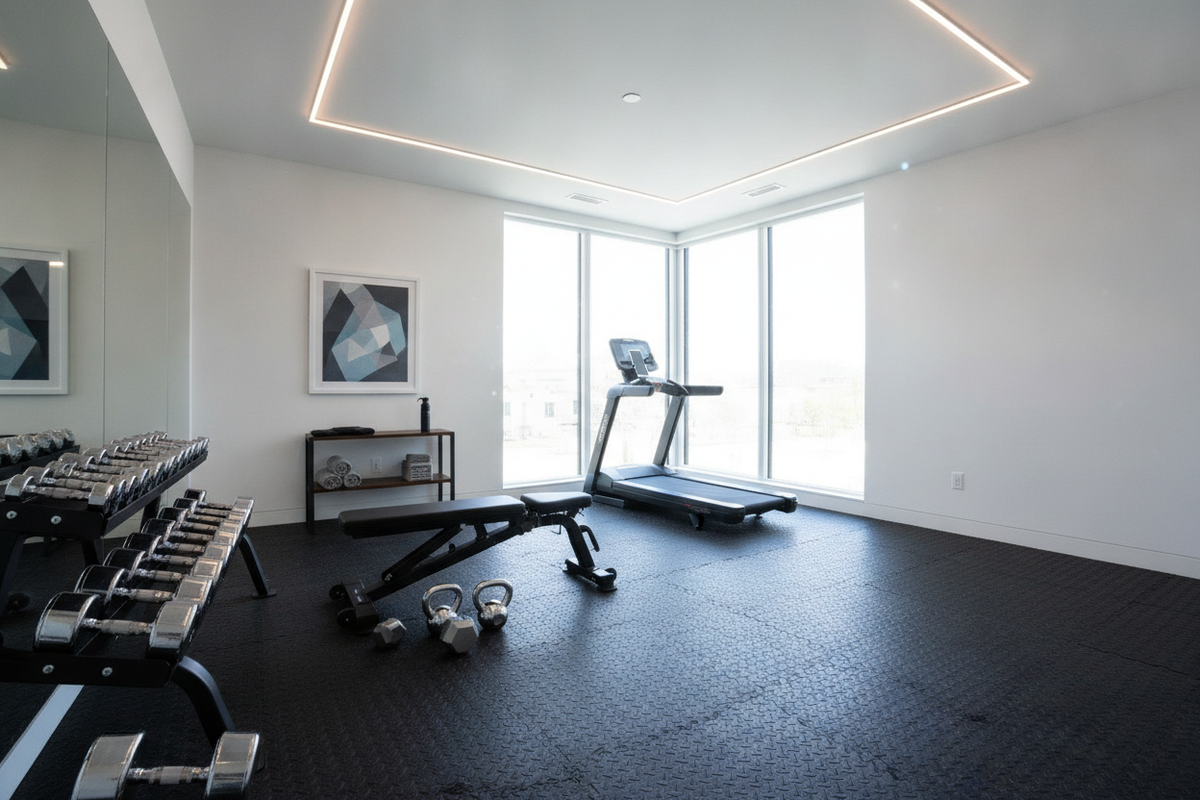
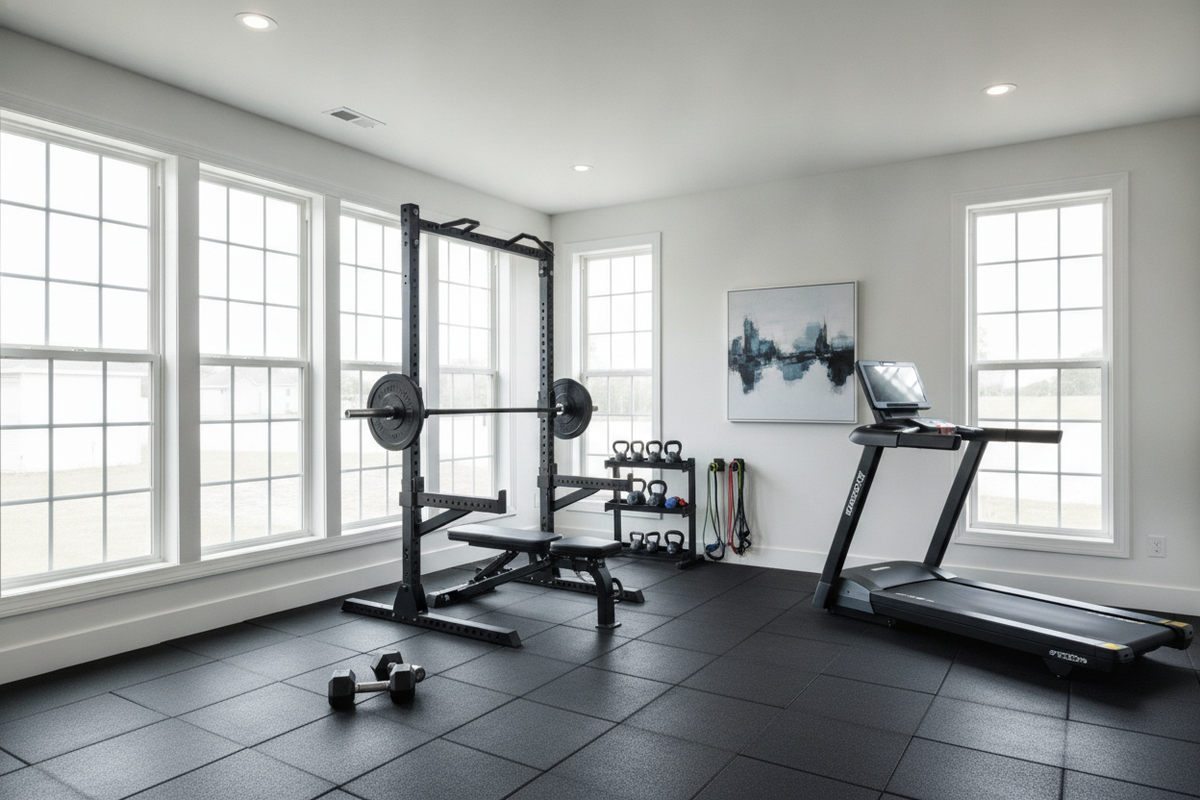
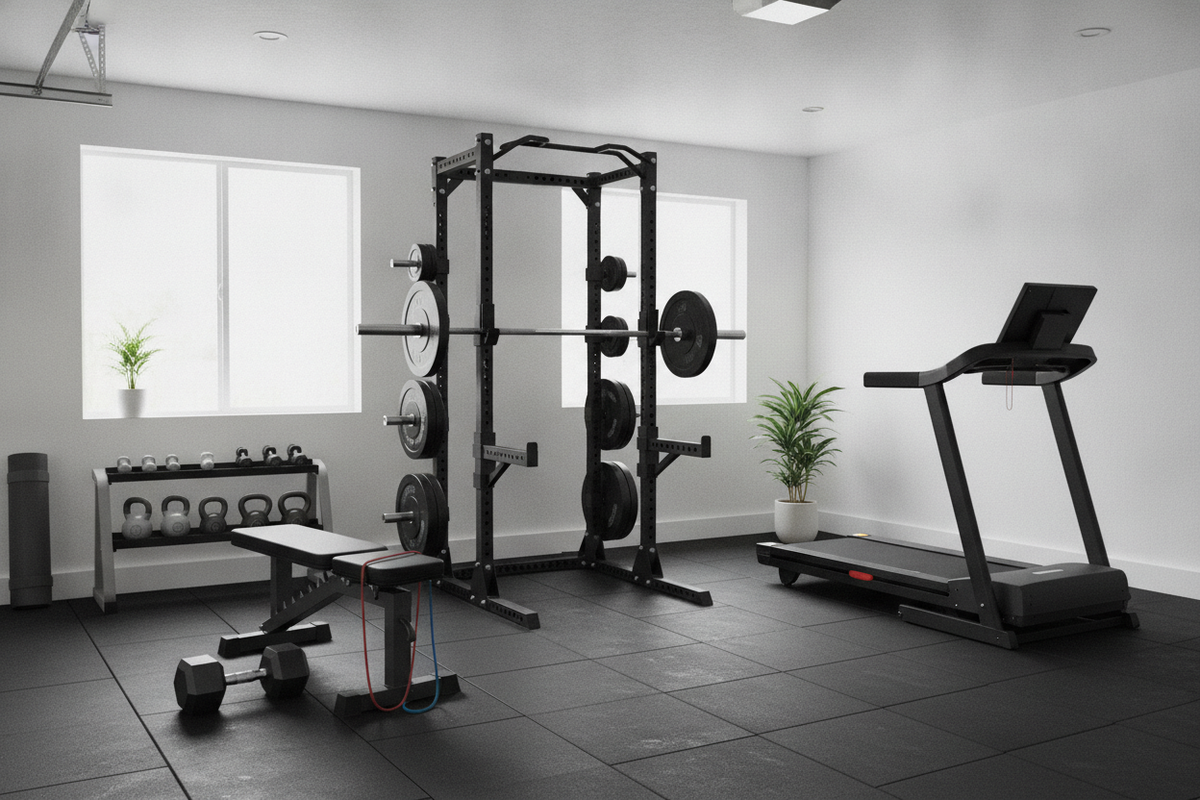
Dense rubber flooring and a non-slip workout mat work best for hip thrusts and floor bridges because they provide firm traction and prevent joint discomfort against hard subfloors. Performing lower body workouts directly on bare concrete, tile, or hardwood can cause unnecessary bruising on the upper back, tailbone, and heels.
When planning your home gym floor, balance cushioning with structural firmness. An overly soft exercise mat compresses unevenly, which can compromise pelvic stability during a heavy glute bridge or thrust. High-density rubber distributes concentrated pressure effectively, providing reliable subfloor protection when setting down heavy plates or resting a barbell across your hips.
Using a non-slip workout mat ensures that your feet remain anchored without sliding forward during hip extension. In my own training space, keeping a dedicated exercise mat under the thrust bench prevents the frame from sliding backward across the floor during heavy sets. A quality home gym floor surface also cushions knees during quadruped hip kickbacks and kneeling thrust variations, protecting sensitive joints while you train each gluteal region muscle.
Equipment Placement and Mat Maintenance for Hip Training
Thoughtful equipment placement keeps your home training space safe, organized, and functional. When configuring your setup for glute workouts, arrange your bench, weights, and mats with clear clearance on all sides:
- Bench positioning: Anchor your hip thrust bench against a wall or directly atop dense rubber flooring to eliminate sliding during the lift.
- Foot positioning zone: Keep a clean, non-slip workout mat right in front of the bench to provide stable footing for hip extension lifts.
- Weight storage: Position barbells, plates, and resistance bands within arm's reach to avoid awkward twisting when loading your gluteal region muscle under tension.
Proper mat maintenance extends the life of your training surface and maintains reliable traction. Sweat, dust, and shoe debris can create slick spots on your home gym floor, reducing grip during heavy barbell hip thrusts. Clean your exercise mat and dense rubber flooring regularly with a mild, neutral floor cleaner and warm water. Routine mat maintenance ensures maximum subfloor protection and a slip-free surface for all of your lower body workouts.