
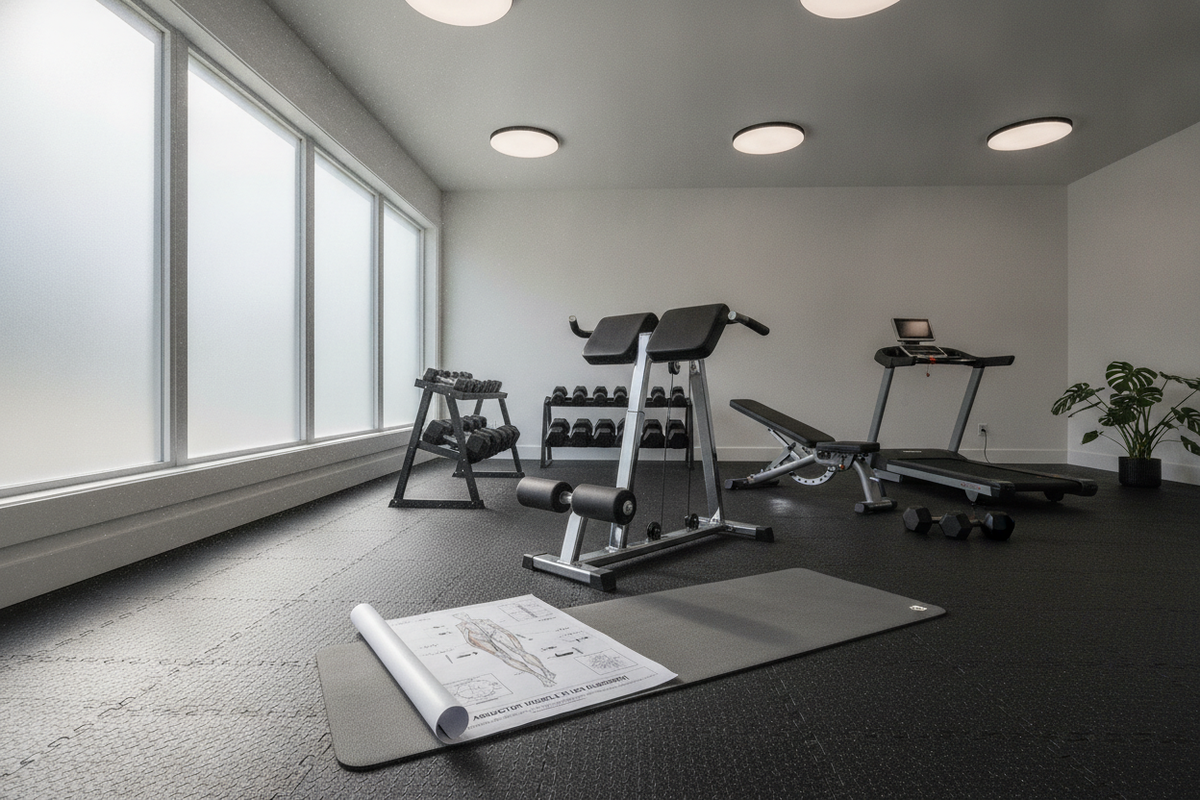
Abductor Muscle in Leg Blueprint: Functional Anatomy, Movement Vectors, and Floor Mat Staging
Introduction: Understanding the Abductor Muscle in Leg
Developing a stable lower body requires paying close attention to lateral hip mechanics. When discussing the abductor muscle in leg structures, we refer to a coordinated network of lateral hip and upper leg tissues responsible for stabilizing the pelvis and guiding movement away from the midline of the body. An underactive or unconditioned abductor muscle leg system can lead to compensations during compound lifts, running, and jumping.
Whether navigating loaded squats or performing dynamic agility work, the lateral hip compartment provides the foundational torque necessary to keep the knees aligned over the toes. By exploring how these muscles function, athletes and home gym enthusiasts can refine their training routines and optimize their training environment for long-term consistency.
Anatomical Architecture of the Thigh Abductor Muscles
The lateral hip complex is not a single isolated muscle, but rather an interconnected system. The primary abductor muscles of the leg include the gluteus medius, gluteus minimus, and tensor fasciae latae (TFL). Together, these form the primary abductor muscle group, supported by deep lateral rotators such as the piriformis, gemelli, and obturator internus.
- Gluteus Medius: The largest muscle in the lateral hip compartment, originating on the ilium and inserting onto the greater trochanter of the femur. It acts as the primary driver of hip abduction and dynamic pelvic stability.
- Gluteus Minimus: Positioned beneath the gluteus medius, this muscle assists in abduction and internal rotation while providing joint congruence for the femoral head within the acetabulum.
- Tensor Fasciae Latae (TFL): A superficial muscle that merges into the iliotibial (IT) band, assisting in hip flexion, internal rotation, and abduction.
Understanding the exact muscles that abduct the thigh helps trainees select specific movement angles rather than relying on generic leg movements. For an integrated look at lower-body muscular development, reviewing our comprehensive thigh muscle leg guide provides valuable context on balancing primary drivers with stabilizing tissues.
Biomechanical Vectors: How Abduction of Thigh Muscles Operates
The biomechanical function of the abduction of thigh muscles changes depending on whether the foot is anchored to the ground or free in the air. In open-chain mechanics, such as side-lying leg raises or standing lateral leg swings, these muscles draw the thigh laterally away from the sagittal plane.
In closed-chain mechanics, such as walking, sprinting, or single-leg balance, the abductors of thigh act as essential pelvic stabilizers. When one foot leaves the floor, the contralateral hip tends to drop; the stance-leg abductors contract to keep the pelvis level. This action prevents excessive valgus collapse at the knee joint and maintains an efficient path of force through the lower extremity. The functional demand on these thigh abductor muscles mirrors stabilization concepts found in upper-body joint mechanics, such as those covered in our muscle that abduction guide.
Targeted Exercise Progressions for the Lateral Hip Compartment
To fully activate and strengthen the lateral compartment, a training routine should combine both floor-based isolation exercises and loaded standing drills. Building dedicated training blocks around the thigh abductor muscles improves recruitment efficiency before moving into heavy compound sessions.
- Side-Lying Hip Abductions: Performed with a straight knee and slight internal or neutral hip rotation to emphasize the posterior fibers of the gluteus medius.
- Side Planks with Leg Raise: Combines lateral core stabilization with high-tension hip abduction on both the working and supporting limbs.
- Banded Lateral Monster Walks: Uses mini-bands around the ankles or above the knees to load the abductor muscle in leg across horizontal movement planes.
- Single-Leg Romanian Deadlifts: Demands intense isometric pelvic stabilization from the stance-leg abductors while loading the posterior chain.
For high-intensity formats that integrate these movements into time-efficient sessions, our leg that muscle guide illustrates how to balance localized hip drills with broader compound training.
Home Gym Floor Staging and Joint Cushioning for Lateral Work
Executing ground-based hip abduction routines requires practical consideration for joint comfort and traction. Side-lying exercises place direct pressure on the greater trochanter and lateral pelvic rim. Practicing on unyielding surfaces can cause discomfort, prompting compensations that pull the pelvis out of neutral alignment.
High-density gym flooring and dedicated exercise mats provide necessary cushioning under the hips, knees, and elbows without sacrificing foundational firmness. When transitioning to standing banded drills, a non-slip textured mat surface prevents footwear from sliding during sudden lateral changes of direction. Ensuring your mat remains stationary against the subfloor keeps tension focused squarely on the target abductor muscle leg musculature.
Kinetic Balance: Integrating Abductors with Antagonist Compartments
An isolated focus on the lateral hip without considering opposing muscle groups can create imbalances in hip mechanics. The abductor muscle group works in direct opposition to the medial adductor compartment, which pulls the leg toward the body midline.
Maintaining an even ratio of strength between the lateral abductors and medial adductors preserves joint symmetry and smooth femoral tracking during deep squats and lunges. Trainees can study the antagonistic functions of the inner thigh through our detailed muscle leg guide. Furthermore, harmonizing lateral work with posterior chain training, as detailed in our thigh muscle guide, ensures balanced stability across all planes of movement.
Workout Programming, Mat Maintenance, and Layout Management
Structuring a routine for the abductor muscles of the leg involves smart workout placement and clean home gym management. Trainees can incorporate light banded abductions as a dynamic warm-up component to prime the hips before heavy squats, deadlifts, or sprinting drills. Dedicated isolation volume can then be completed at the end of a session.
To preserve your home gym setup, keep your exercise mats clean by wiping them down with mild, non-corrosive cleaning solutions after floor sessions. Store resistance bands in accessible bins and keep lateral movement lanes free of loose dumbbells or plates. Maintaining a dedicated, clear zone on your workout mat makes training the abductor muscle in leg safe, structured, and consistent over the long term.


