Mastering Thigh Muscle Exercise: The Science of Leg Growth
Leg day is often the most dreaded day of the week, yet it remains the cornerstone of a balanced physique. If you have been grinding away at the squat rack without seeing significant changes in size or definition, the issue likely isn't your effort—it's your execution. Effective leg training requires more than just moving weight from point A to point B; it demands a deep understanding of biomechanics and tension. In this guide, we break down the proper approach to **thigh muscle exercise** to help you stop wasting reps and start building structural integrity.
Key Takeaways
- Anatomy Matters: Effective training targets the quadriceps (front), hamstrings (back), and adductors (inner thigh) equally.
- Frequency over Volume: Hitting legs twice a week often yields better hypertrophy than one massive session.
- Range of Motion: Partial reps result in partial growth; deep flexion is required for maximum muscle fiber recruitment.
- Compound First: Always start your thigh muscles workout with multi-joint movements before moving to isolation.
The Anatomy of Leg Drive
Before grabbing a barbell, you need to understand what you are actually trying to stimulate. The thigh isn't a single slab of meat; it is a complex system of levers.
The Quadriceps
These are the extensors. Their primary job is to straighten the knee. To truly tax them, you need exercises that create significant knee flexion. If your knees aren't traveling forward (within safe limits) during a squat or lunge, you are likely shifting the load to your hips, missing the point of the exercise.
The Hamstrings
Sitting on the back of the leg, these muscles flex the knee and extend the hip. Many lifters neglect the "knee flexion" aspect (like leg curls) and focus only on deadlifts. You need both for complete development.
Compound Movements: The Builder
Isolation exercises have their place, but your primary thigh muscle exercise selection must rely on compound movements. These recruit the most motor units and trigger the greatest hormonal response.
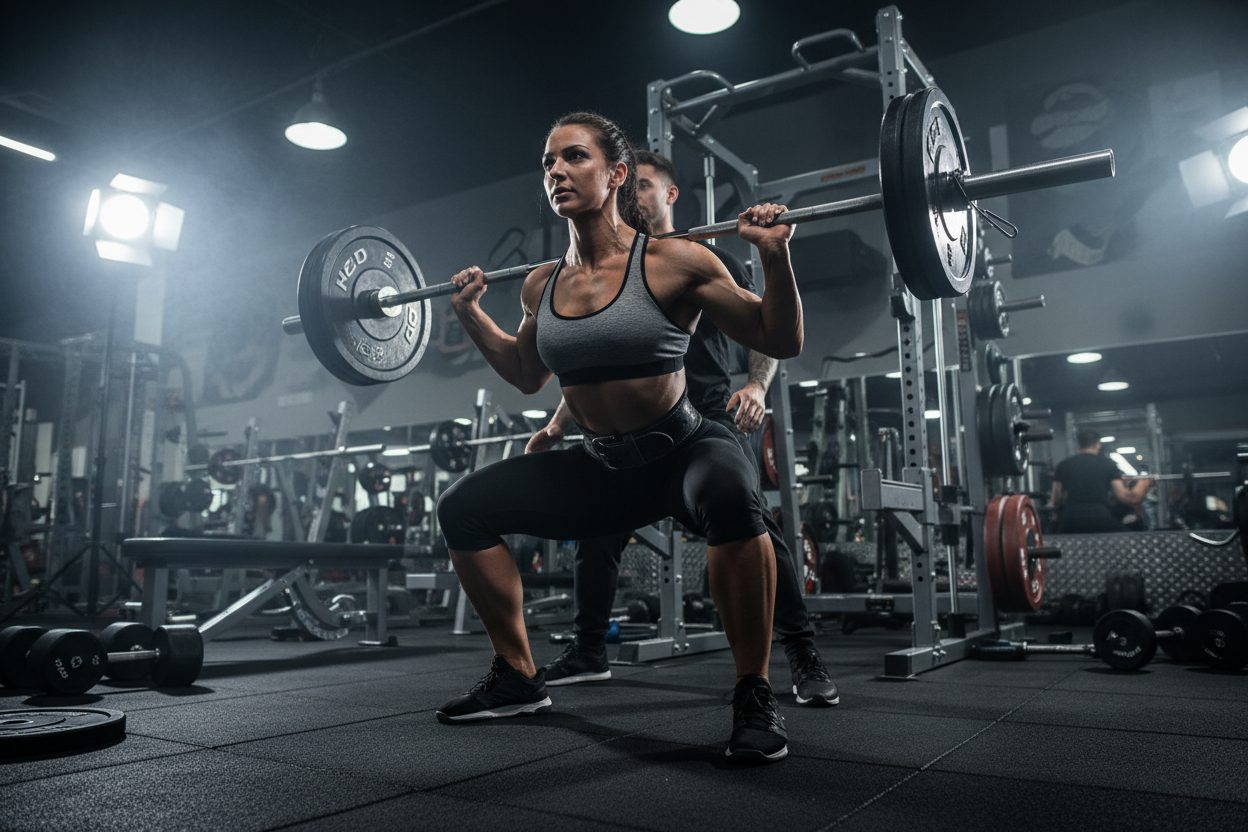
The High-Bar Squat remains the gold standard here. Unlike the Low-Bar Squat, which is great for powerlifting totals, the High-Bar position keeps the torso upright. This forces the quads to do the heavy lifting rather than the lower back. When performing these, control the eccentric (lowering) phase. Dropping into the hole and bouncing out uses elasticity, not muscle tension.
Structuring a Complete Thigh Muscles Workout
A balanced routine shouldn't leave you unable to walk for a week; it should stimulate growth that you can recover from. Here is how to structure the session for hypertrophy.
1. The Heavy Compound
Start with Squats, Hack Squats, or Leg Press. Keep reps in the 6-10 range. This is where you overload the mechanical tension.
2. Unilateral Work
This is non-negotiable. Bilateral movements hide imbalances. Incorporate Bulgarian Split Squats or Walking Lunges. These movements torch the adductors and stabilizers that standard squats often miss.
3. Metabolic Stress (Isolation)
Finish with Leg Extensions or Hamstring Curls. Keep the rest periods short and the reps high (15-20). The goal here is blood flow and cellular swelling, often referred to as "the pump."
Common Mistakes to Avoid
The biggest error I see on the gym floor is ego lifting. Loading up the leg press with every plate in the gym only to move the sled two inches is useless. It places massive stress on the joints with zero benefit to the muscle belly. Drop the weight, maximize the depth, and control the tempo.
My Training Log: Real Talk
I want to be honest about the reality of a truly effective leg session. When I finally fixed my squat form to focus on thigh hypertrophy rather than just moving weight, my numbers dropped by 30%. It was humbling.
But the specific moment I knew it was working wasn't the soreness the next day—it was the "wobble" immediately after a set of Bulgarian Split Squats. There is a very distinct, nauseating burn that sits right in the teardrop of the quad when you refuse to lock out at the top of the movement. I remember having to sit on the dusty gym floor for three minutes because my legs felt like gelatin. That specific feeling, where the muscle feels tight and useless simultaneously, is the indicator of a successful session. If you finish your workout and can effortlessly jog up the stairs to the locker room, you probably didn't go hard enough.
Conclusion
Building impressive legs takes patience and a high tolerance for discomfort. By prioritizing full range of motion and smart programming over ego lifting, you will see the growth you have been chasing. Treat every rep with intention, and the results will follow.
Frequently Asked Questions
How often should I perform thigh muscle exercises?
For most natural lifters, training legs twice a week is optimal. This allows you to split the volume, ensuring high-quality reps without excessive fatigue accumulation that happens in a single "bro-split" leg day.
Can I build thigh muscles without heavy weights?
Yes, but you must increase the intensity through other means. High repetitions, shorter rest periods, and tempo manipulation (slowing down the rep) can create enough stimulus for growth, though heavy loading is generally more efficient for size.
What if I have knee pain during squats?
Knee pain often stems from poor mobility or muscle imbalances. Try switching to a Goblet Squat or a reverse lunge, which places less shear force on the knee joint. Always warm up your hips and ankles thoroughly before your main lifts.