Adductor Muscle Exercises: The Missing Link to Total Leg Strength
Most lifters treat their inner thighs as an afterthought. You might throw in a few sets on the machine at the end of a leg day, or ignore them entirely. This is a mistake. If your squat has stalled, or if you are dealing with nagging groin pain, proper adductor muscle exercises are likely the solution you have been ignoring.
The adductors are not just there for aesthetics; they are major stabilizers of the pelvis and significant contributors to hip extension. Neglecting them leaves a massive gap in your lower body power production. Let's fix that.
Key Takeaways
- Stability is Key: Strong adductors prevent knee valgus (knees caving in) during heavy squats and deadlifts.
- Compound vs. Isolation: Deep squats recruit the adductor magnus heavily, but isolation is needed for the adductor longus and brevis.
- Injury Prevention: The Copenhagen Plank is the gold standard for preventing groin strains in athletes.
- Frequency: Train adductors 2 times per week for optimal hypertrophy and strength gains.
Why You Must Strengthen Adductors (Beyond Aesthetics)
Before we get into the specific movements, you need to understand the anatomy. The adductor group consists of the adductor magnus, longus, and brevis, along with the gracilis and pectineus. While their primary function is adduction (bringing the leg toward the centerline), they are dynamic movers.
The adductor magnus, specifically, is a powerhouse. Research suggests that in deep hip flexion (the bottom of a squat), the adductor magnus creates more hip extension torque than the glutes and hamstrings combined. If you aren't doing specific hip adductor exercises, you are leaving pounds on the bar.
The Risk of Imbalance
Many athletes suffer from "quad dominance" or overactive abductors (outer glutes), leading to an imbalance. This weakness is a primary cause of groin strains. Incorporating adductor strengthening exercises balances the forces around the hip joint, keeping your pelvis neutral and your knees healthy.
The Best Exercises for Adductors: A Complete Breakdown
You don't need a thousand variations. You need a mix of heavy compounds for the magnus and targeted isolation for the longus and brevis. Here are the best exercises for adductors.
1. The Copenhagen Adductor Plank
If you are looking for the best adductor exercise for injury prevention and isometric strength, this is it. It targets the adductor longus and gracilis heavily.
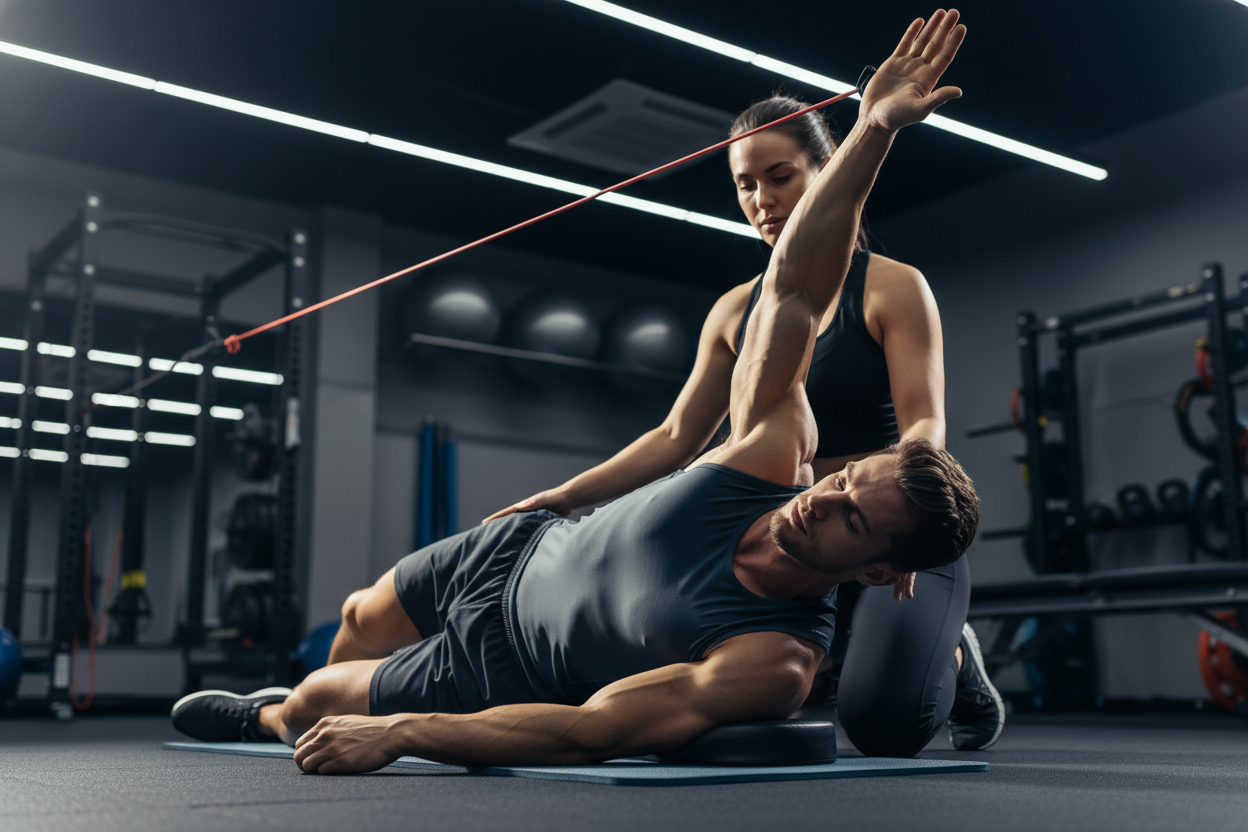
How to do it: Lie on your side. Place your top foot on a bench and your bottom leg on the floor. Lift your hips until your body forms a straight line, lifting the bottom leg off the floor so it meets the top leg. Hold.
2. Deep High-Bar Squats
When asking what exercises work adductors effectively without a machine, the answer is the squat—but depth matters. The adductor magnus acts as a major hip extensor out of the hole. Half-squats won't cut it. You need to break parallel to fully engage the inner thigh musculature.
3. Seated Adductor Machine
Often mocked as a "thigh master" variation, this is actually a staple adductor exercises gym movement. It is one of the few ways to take the adductor longus through a full range of motion under load. This is essential for adductor exercises bodybuilding routines where hypertrophy is the main goal.
4. Cossack Squats
This is a dynamic adductor workout staple. By shifting your weight to one side while keeping the other leg straight, you stretch the adductors of the straight leg while strengthening the working leg in a lengthened position. This improves both mobility and strength simultaneously.
Programming Your Adductor Workout
You do not need a separate "inner thigh day." Instead, integrate exercises for hip adductors into your existing leg sessions. Here is how to structure it:
- Warm-up: 2 sets of Cossack Squats (bodyweight) to open the hips.
- Compound Lift: Deep Squats (Adductor Magnus focus).
- Accessory: Copenhagen Planks (3 sets to failure).
- Finisher: Seated Adductor Machine (3 sets of 15-20 reps).
How to Train Adductors for Specific Goals
If your goal is purely strength, focus on the adductor lifts that allow for progressive overload, like the squat and heavy machine work. If you are a runner or soccer player, prioritize adductor muscle strengthening exercises that challenge stability, like the Copenhagen plank or single-leg Romanian deadlifts.
My Training Log: Real Talk
I used to ignore direct adductor work completely. I thought heavy squats were enough. That worked fine until I hit a plateau at 315 lbs. My knees started caving in (valgus collapse) coming out of the hole, and I developed a nagging ache near my groin after heavy sessions.
I started adding the Copenhagen Plank at the end of my sessions. I’m not going to lie—it is humbling. The first time I tried it, I couldn't hold it for more than 10 seconds without my top leg shaking violently. The burn isn't in the muscle belly like a bicep curl; it feels like a deep, stabilizing burn right near the attachment point at the hip. But after three weeks of doing them consistently, that "wobble" at the bottom of my squat disappeared. The stability transfer was immediate.
Conclusion
Building impressive legs requires a 360-degree approach. Adductor muscle exercises are often the missing component that bridges the gap between looking strong and actually being strong. Whether you choose the adductor longus workout isolation of a machine or the brutal stability of a Copenhagen plank, the key is consistency. Strengthen your inner thighs, and your squats, deadlifts, and athletic performance will thank you.
Frequently Asked Questions
Can you do adductor exercises at home?
Yes. The Copenhagen plank is one of the best hip adductor exercises and requires only a chair or couch. You can also perform side-lying leg raises or squeezing a medicine ball between your knees (adductor squeeze) to strengthen adductors without gym equipment.
Do squats work the adductor muscles?
Absolutely. Specifically, the adductor magnus is heavily recruited during the concentric (upward) phase of a deep squat. However, squats do not effectively target the adductor longus or brevis, which is why isolation leg adductor exercises are still necessary.
How often should I train my adductors?
For most people, 2 to 3 times per week is ideal. Since they are postural stabilizers, they recover relatively quickly. You can add a specific adductor strengthening exercise to the end of every lower-body workout.