Chapter 4 Worksheet: Preventing Fitness Injuries
When studying athletic conditioning, working through the chapter 4 worksheet preventing injuries through fitness training provides a structured look at how physical preparation protects the human body. Introductory sports medicine, physical education, and personal training courses frequently rely on this coursework to teach how bodily systems adapt under progressive stress. Durability during fitness training does not happen by accident. It stems from systematic conditioning, careful movement choices, and thoughtful management of your training space.
Understanding the Chapter 4 Worksheet on Preventing Injuries Through Fitness Training
What are the main concepts in the chapter 4 worksheet preventing injuries through fitness training? The primary focus centers on how structured conditioning, consistent periodization, and environmental awareness work together to safeguard joints and muscles. Instead of treating injury avoidance as an afterthought, academic curricula emphasize that proactive fitness training builds resilience long before heavy resistance is introduced.
A central takeaway from this study material is that physical tissues adapt to load over time. Tendons, ligaments, and skeletal muscles require gradual exposure to volume and intensity to handle repetitive mechanical force. When lifters rush into high-intensity sessions without a conditioning foundation, the likelihood of acute strains or chronic overuse spikes. Understanding the core answers in this coursework helps athletes at any level design routines that stay productive and sustainable over years of physical activity.
Core Principles of Conditioning Covered in Study Worksheets
Modern sports science curricula emphasize foundational principles of conditioning that dictate how the body responds to exercise stress. These core tenets appear across study guides to ensure coaches and athletes approach programming responsibly. For an in-depth perspective on building sustainable stamina across long training cycles, reviewing a comprehensive conditioning training guide provides practical insights into structuring daily effort.
Key conditioning principles addressed throughout the coursework include:
- The Overload Principle: To increase physical capability, tissues must encounter demands greater than what they routinely handle. Rather than reckless weight jumps, this concept relies on measured, gradual increases in volume or resistance.
- Progression and Consistency: Adjusting exercise difficulty in steady increments gives connective tissue time to remodel. Sporadic bursts of extreme exertion disrupt steady adaptation and elevate fatigue.
- Individuality and Specificity: Physical adaptation reflects an individual's background, posture, and current recovery tolerance. Exercise selection should match specific athletic goals while respecting physiological limitations.
- Active Recovery: Sustainable strength demands intentional downtime. Active recovery sessions, such as low-intensity walking or light mobility drills, encourage blood flow to recovering tissues without adding systemic fatigue.
Key Training and Conditioning Techniques for Injury Prevention
How do training and conditioning techniques reduce injury risk during home workouts? Structured training and conditioning techniques translate physiological theory into daily habits by balancing aerobic stamina, joint flexibility, and localized muscular resistance. Integrating varied exercises keeps trainees from overusing specific movement patterns while ensuring stabilizing muscle groups receive adequate attention. Lifters can also consult a focused fitness training guide to understand how varied contraction speeds and loading styles cultivate durability.
The curriculum emphasizes that preventing injuries through fitness training involves far more than simply selecting conservative weights. It requires developing sound motor control, joint protection, and symmetrical strength across primary and opposing muscle groups. By utilizing systematic conditioning routines, athletes build the physical resilience necessary to handle unpredictable physical demands both during sport and throughout regular life.
Warm-Up, Flexibility, and Core Stability Basics
Every effective training session opens with a purposeful warm up and cool down. Bypassing these phases leaves tendons and muscles unprepared for sudden explosive forces or deep loading angles. Modern curricula highlight the importance of starting every workout with a dynamic warm up. An active warm-up elevates muscle temperature, promotes blood circulation, and takes major joints through their functional range of motion before external resistance is introduced.
After heavy training, static stretching plays a supportive role in restorative care. While ballistic movements prepare tissues before work sets, controlled static stretching post-workout aids long-term flexibility training. Dedicating time to flexibility training ensures healthy tissue length around mobile junctions like hips, ankles, and shoulders. Alongside flexibility work, establishing reliable core stability protects spinal alignment during complex multi-joint lifts. A strong midsection transfers force efficiently between the lower and upper body, reducing unwanted shearing forces on the lumbar spine.
Balancing Muscular Strength and Cardiorespiratory Conditioning
Athletic resilience requires a well-rounded foundation across multiple physical capacities. Coursework frequently contrasts cardiorespiratory endurance with localized muscular strength and endurance. If an athlete lacks cardiorespiratory endurance, mental and physical fatigue sets in prematurely during long sessions, degrading lifting form and raising the chance of injury. Conversely, incorporating progressive resistance exercise builds muscular strength and endurance, creating a robust muscular shield around vulnerable joints.
As covered in conditioning curricula, progressive resistance exercise should advance methodically over time. When agonist and antagonist muscle groups develop symmetrically, joints remain centered and tracking properly throughout demanding motions. Trainees interested in balancing their aerobic and resistance work can review an applied training conditioning guide to structure workout order effectively. Combining both modalities ensures total-body conditioning without generating excessive isolated exhaustion.
Environmental Safety: Gym Flooring and Equipment Placement
How does gym flooring and equipment placement support injury prevention during training? Maintaining a safe workout environment requires reliable traction, impact cushioning, and open transit paths around active stations. Sports medicine guides emphasize that physical conditioning must be supported by an equally safe physical setting to prevent accidental falls, slips, and joint impact trauma.
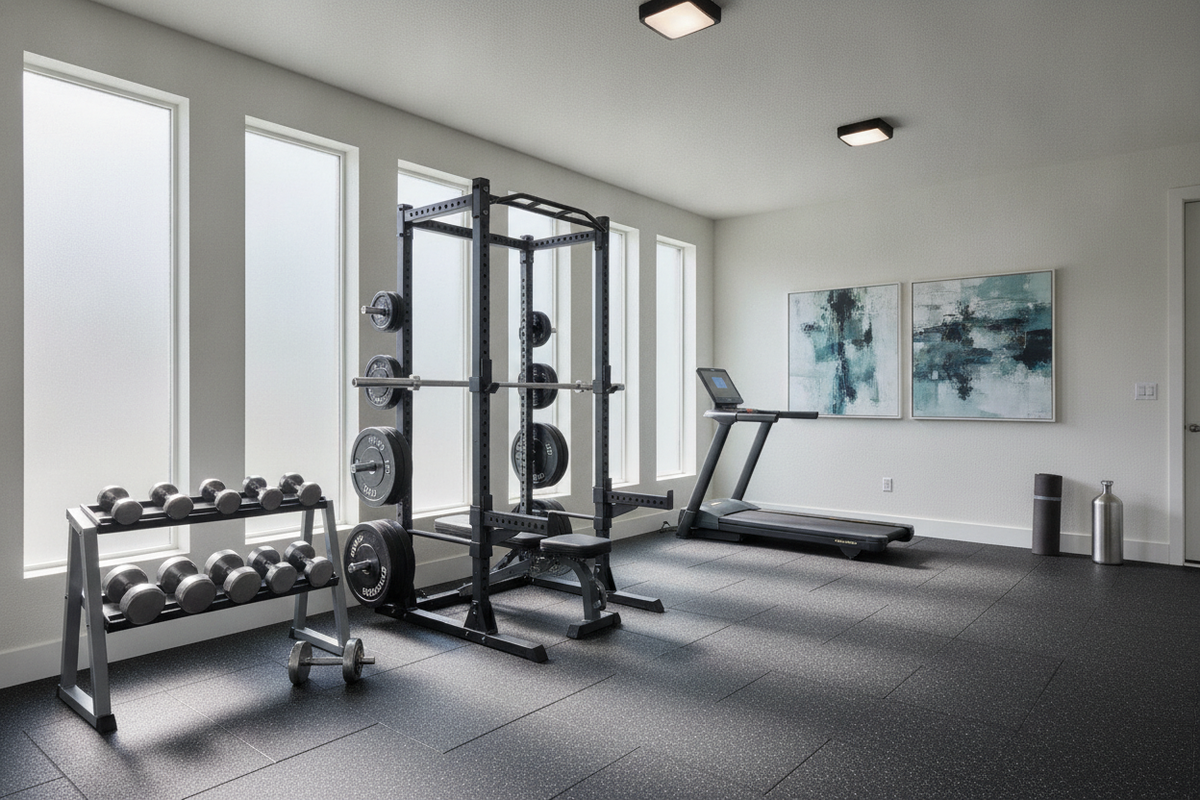
Dropping heavy weights or completing explosive jumps on bare concrete or slick hardwood creates sharp rebound shock and slipping risks. Covering hard subfloors with quality gym flooring provides essential floor protection while absorbing vibration and impact forces. Trainees can roll out a large workout mat or interlock dense home gym floor mats across primary lifting zones to establish sure-footed footing. Dedicated exercise mats under weight benches and plyometric areas dampen downward energy, protecting both your joints and the floor beneath.
Strategic equipment placement is just as vital as dependable flooring. Cluttered workout spaces invite tripping hazards, particularly when an athlete is fatigued toward the end of an intensive set. Setting racks, weight trees, and dumbbells along the room's perimeter keeps the central training area clear for walking lunges, barbell work, or agility drills. Maintaining adequate equipment placement gives you ample clearance for overhead presses and wide Olympic stances. Those outfitting a personal workout area can browse a dedicated training collection to find functional storage solutions, resistance tools, and hardware that keep floors tidy and free of clutter.
Practical Tips for Applying Chapter 4 Concepts at Home
Translating sports medicine study sheets into everyday home workouts does not require a commercial athletic facility. Any committed fitness enthusiast can establish a safe, progressive routine by applying fundamental training and conditioning techniques step by step. In my own garage space, I find that reviewing these conditioning basics periodically keeps training fresh and prevents careless programming errors.
Consider this practical checklist derived from standard athletic conditioning coursework:
- Secure Your Training Surface: Lay down protective gym flooring or place a large workout mat beneath high-traffic exercise areas. Durable home gym floor mats cushion heavy landings and guard against unexpected slips.
- Commit to Preparation: Dedicate the first ten minutes of your workout to a dynamic warm up, and finish with a dedicated warm up and cool down window to encourage recovery.
- Clear Movement Pathways: Emphasize orderly equipment placement by racking plates, stowing bands, and keeping walking pathways free of stray accessories.
- Follow Gradual Progression: Apply progressive resistance exercise by adjusting repetitions, sets, or load gradually rather than jumping weights abruptly.
- Incorporate Rest and Variety: Plan active recovery days to balance high-volume sessions, allowing tissue adaptation to consolidate between workouts.
- Maintain Reliable Floor Protection: Position high-density exercise mats under heavy racks and landing zones to safeguard subflooring and improve underfoot grip.
Approaching your daily workouts with the structured mindset found in the chapter 4 worksheet preventing injuries through fitness training creates a durable foundation for lifelong exercise. Balancing proper exercise progression, dedicated mobility, and a well-arranged, padded training environment allows you to pursue aggressive fitness goals safely and consistently.