Cardio or Weight Training: Best Setup for Home
When planning a personal exercise area, deciding between cardio or weight training is often the first major fork in the road. Both modalities deliver distinct conditioning benefits, yet each creates very different spatial, acoustic, and surface demands inside a residential room. Determining whether your primary focus belongs on endurance machines, free weights, or a balanced blend will shape the layout of your room and the protective layers you place underfoot.
Cardio or Weight Training: Choosing the Right Routine for Home
Choosing between conditioning machines and resistance gear depends primarily on your fitness goals, available square footage, and household noise tolerance. If your main objective centers on endurance, high-cadence intervals, and sustained aerobic exercise, dedicated cardio training tools may anchor your space. Conversely, if your priority is building lean muscle mass and bone density, strength training should take center stage. For a detailed breakdown of how both approaches shape conditioning outcomes, check out this cardio weight training guide.
You do not necessarily have to pick only one style. Many people rotate between weight lifting or cardio across their weekly routine. Dynamic cardio workouts frequently involve bounding, lateral strides, and rhythmic steps across open space, calling for clear floor lanes. In contrast, focused weight training relies on compact benches and lifting stations where stable footing under heavy loads matters more than expansive floor clearance.
Should I Focus on Cardio or Weight Training at Home?
You should focus on whichever training method aligns with your primary physical goals while respecting your home's structural limits and floor space. If you must prioritize, consider whether you thrive on the steady cadence of aerobic exercise or the calculated progressions of resistance work. Starting with one core discipline allows you to spend your budget wisely and lay down the correct flooring foundation before adding complementary accessories.
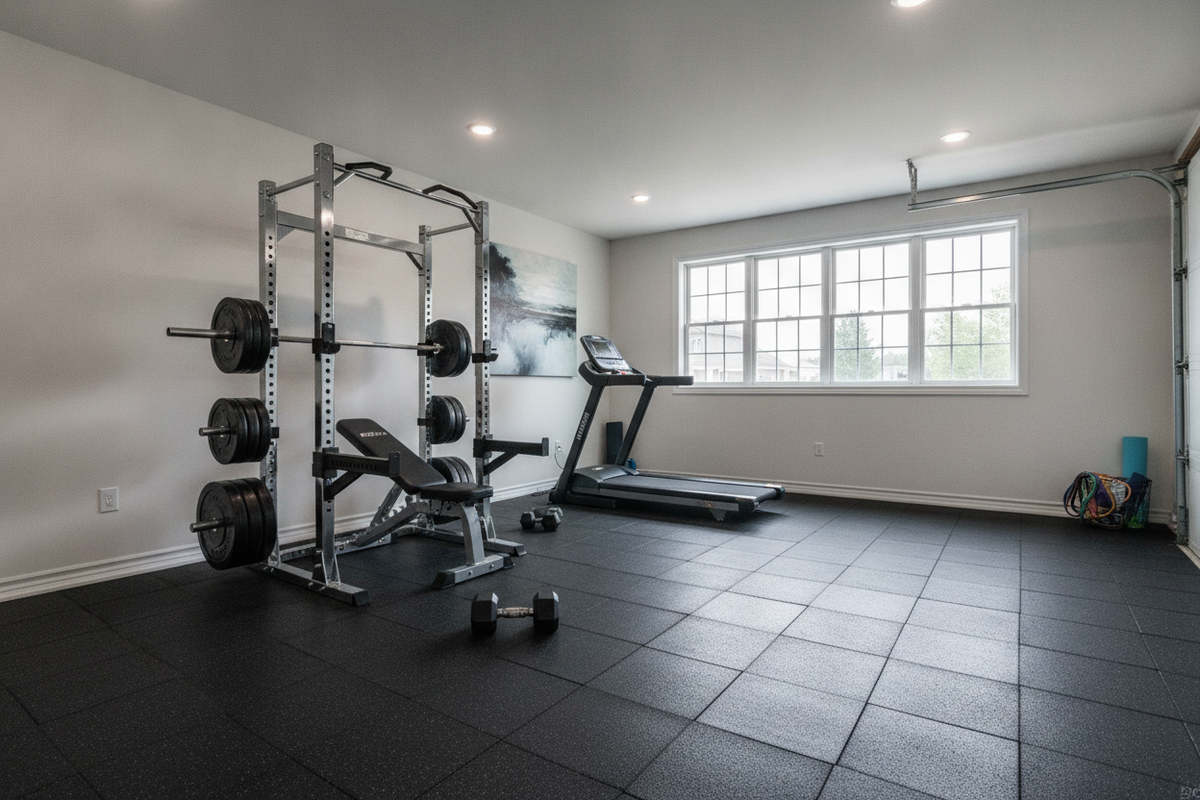
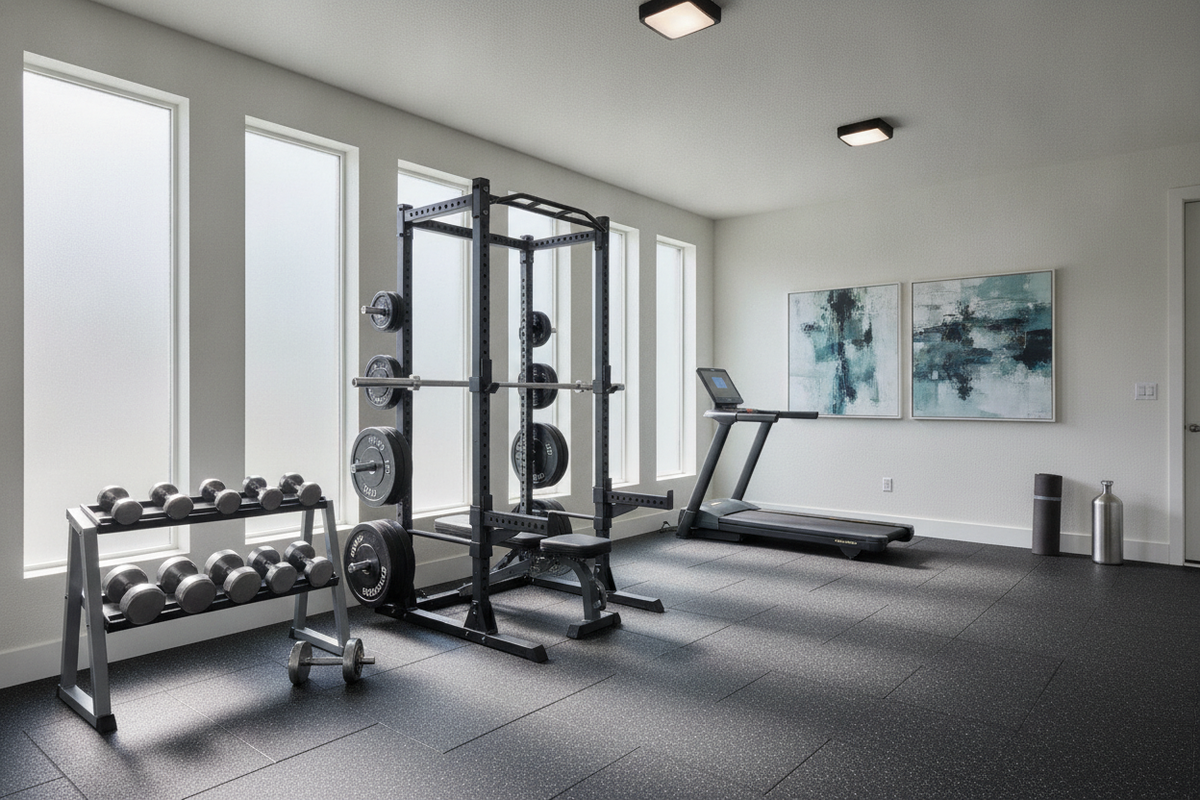
A space arranged around cardio training requires adequate ventilation, clearance for high-impact movement, and easy viewing angles for screens or consoles. Meanwhile, an area reserved for resistance equipment requires stable upright placement and dense floor padding to absorb shock. When comparing aerobics vs weight training in an upstairs room, acoustics become an immediate priority. Treadmill motor hum and foot strikes transmit low-frequency vibration through floor joists, whereas clinking iron plates create sudden impact noises. Factoring in household acoustics will help you make a practical choice that keeps your workouts neighbor-friendly.
Space and Footprint Demands: Machines vs Free Weights
The overall footprint required for workout equipment varies substantially between motorized units and modular iron pieces. A motorized treadmill occupies a permanent rectangular zone and requires additional clearance behind the running belt for user safety. Similarly, a rowing machine requires a long linear corridor that can dominate a standard spare room. Measuring both the stationary boundaries and the active movement envelope around each piece is essential before making a purchase.
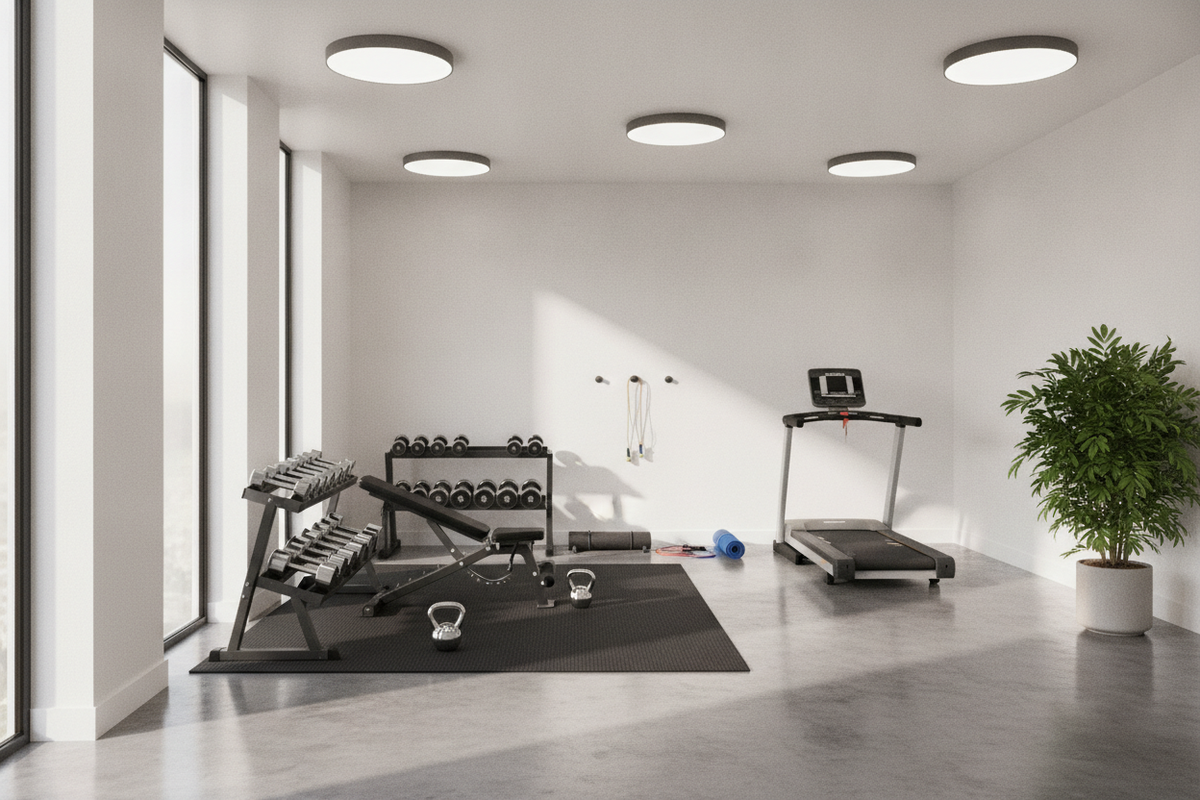
Resistance gear, such as adjustable dumbbells and kettlebells, can often be stored vertically on compact racks when not in use. You can explore versatile options in our weight lifting collection to see how modern stations optimize usable space. Placing free weights in a designated corner leaves room for dynamic calisthenics or jump rope intervals. However, once you introduce heavy equipment like a power cage, that area becomes permanently dedicated to bar paths and plate loading.
Assessing these spatial trade-offs reveals which layout suits your floor plan best. Stationary machines occupy the same footprint around the clock, whereas free weights and utility benches can be shifted between sets. For multi-use rooms, modular strength equipment often leaves more open floor area than parking several bulky cardio units.
Floor Protection: Handling Point Loads vs Repetitive Movement
Flooring requirements differ noticeably depending on whether you focus on lifting or cardio. Motorized cardio units generate sustained mechanical vibration, while bodyweight aerobics involve repetitive, high-impact movement across a wider perimeter. In contrast, resistance exercises introduce intense point load pressure from rack posts, loaded benches, and cast-iron dumbbells. Dropping heavy weights directly on unprotected surfaces can cause costly subfloor damage, including cracked concrete or splintered subfloor panels.
To safeguard your home while dampening noise, match your routine with the proper surface materials:
- Vibration dampening: Placing a dedicated equipment mat beneath a motorized treadmill or rowing machine isolates motor hum and minimizes floor vibration.
- Subfloor defense: Installing a durable rubber gym mat beneath racks and benches disperses severe point load pressure away from delicate underlayments.
- Joint comfort: A resilient high-density exercise mat cushions high-impact movement during calisthenics, reducing joint impact during repetitive drills.
- Noise suppression: Layering shock-absorbing flooring across active lifting zones provides reliable noise reduction during plate drops.
- Modular coverage: Interlocking protective floor tiles allow you to customize boundaries between cardio machines and open barbell stations.
When laying down protective floor tiles, pay close attention to lateral stability so seams do not pull apart during multi-directional lunges or box jumps. Investing in quality shock-absorbing flooring preserves both your physical comfort and the underlying architecture of your room.
Can I Combine Lifting or Cardio in a Small Home Workout Area?
Yes, you can combine lifting or cardio in a small home workout area by selecting versatile, space-conscious equipment and dense, multi-use flooring. Instead of crowding your room with multiple single-purpose cardio machines, pair compact tools like adjustable dumbbells and resistance bands with an open floor strip for high-tempo intervals. A modest workout zone of eight to ten square feet can easily accommodate both routines when accessories are stored neatly after each session.
One practical setup involves structuring your routine as circuit training, alternating weighted sets with short aerobic intervals. You might pair kettlebells with jump rope intervals, or alternate goblet squats with mountain climbers. This approach bridges aerobics vs weight training without requiring dual stations. For ideas on structuring functional routines, explore our weight lifting training guide.
When designing a dual-purpose room, choose a high-density exercise mat that offers firm lateral stability under heavy loads while providing enough cushion to ease joint impact during cardio drills. A dense surface ensures you can perform strict overhead presses without your heels sinking into soft foam. Integrating functional accessories from our training collection allows you to switch between resistance drills and aerobic conditioning seamlessly.
Setting Up a Balanced Weekly Split
Organizing a balanced weekly split allows you to build strength and cardiovascular stamina without compromising physical recovery. Rather than attempting to fit exhaustive lifting sessions and intense cardio workouts into the same training hour, consider alternating your daily emphasis across the week.
A well-structured schedule might follow this balanced layout:
- Monday: Upper-body strength training targeting back, shoulders, and chest.
- Tuesday: Moderate-intensity cardio training utilizing steady-state rowing or running.
- Wednesday: Lower-body weight training focused on squats, lunges, and hinge movements.
- Thursday: Low-intensity aerobic exercise or active mobility drills for recovery.
- Friday: Full-body circuit training blending short strength intervals with cardio drills.
- Weekend: Rest, light outdoor walking, or gentle stretching.
Splitting training days this way keeps your room clutter-free. On lifting days, your rubber gym mat remains unobstructed for safe bar paths. On conditioning days, you can roll out an equipment mat or leave the central area open for agile footwork. Structuring your schedule thoughtfully keeps your workout room functional and organized throughout the week.
Maintenance and Wear Management for Mixed Workout Floors
Keeping a dual-use fitness room in top condition requires regular cleaning and preventative care, especially when combining heavy weights with sweat-heavy cardio workouts. Moisture that drips onto interlocking seams can migrate toward the subfloor if not dried promptly, creating potential issues on wood surfaces underneath.
Stationary gear presents its own long-term wear patterns. Heavy equipment uprights and machine leveling feet exert persistent downward force on the exact same surface spots. Periodically shifting static equipment by an inch or two prevents permanent compression marks in your protective floor tiles. Routinely inspecting each rubber gym mat ensures it retains resilience under heavy use.
Maintaining clean flooring also preserves traction and safety. Chalk residue and household dust reduce the lateral stability necessary for rapid turns during cardio work and firm footing during heavy squats. In my own home gym, taking two minutes to vacuum chalk dust and wipe away sweat after each session has kept the floor mats looking and performing like new for years.
Ultimately, selecting the right setup comes down to your personal training goals, available room dimensions, and household sound requirements. By choosing durable floor protection and modular accessories, you can create a high-performing training room that supports both aerobic conditioning and strength work for years to come.