Wall Pilates for Beginners: 20-Minute Workout and 28-Day Plan
Quick answer: Wall Pilates is mat Pilates done with your feet, hands or back against a wall for support and extra resistance. It's low impact, needs no equipment except a mat and a clear wall, and suits beginners. Sessions are usually 10–30 minutes. Expect better core strength, balance and flexibility. Don't expect spot fat loss or a body transformation in 28 days; those viral claims aren't backed by research.
Key takeaways
- All you need: a clear wall and a non-slip mat set flush against it.
- The wall adds support and resistance, making Pilates moves easier to learn.
- Evidence: Pilates in general shows benefits for core strength, balance and flexibility; wall Pilates specifically hasn't been studied much.
- Pair it with strength and cardio for overall fitness.
What is wall Pilates?
Wall Pilates adapts classic Pilates exercises using a wall. Pushing your feet into the wall during a bridge or leg lift adds resistance; leaning against it during squats or roll-downs adds support and feedback for alignment. It took off on TikTok, along with "28-day wall Pilates challenge" apps. It's basically a cheap, at-home cousin of mat Pilates and reformer classes.
Does wall Pilates work?
Reviews of Pilates research suggest benefits for core strength, balance, flexibility, posture and some types of back pain, though many studies are small and the evidence quality is often low. Wall Pilates hasn't been tested directly, but it uses the same principles, so similar benefits are likely. What it won't do:
- Spot-reduce belly fat. No exercise targets fat in one area.
- Replace cardio or heavy strength training for heart health or bone density.
- Transform your body in 28 days. It can build a great habit in that time, though.
Setup: wall + mat
- Pick a clear, sturdy wall with no pictures, shelves or outlets at foot height.
- Lay your mat flush against the wall so your hips don't slide away.
- Use a non-slip mat with grip on both sides so it doesn't creep during bridges and leg pushes.
- Go barefoot or wear grip socks for better traction on the wall.
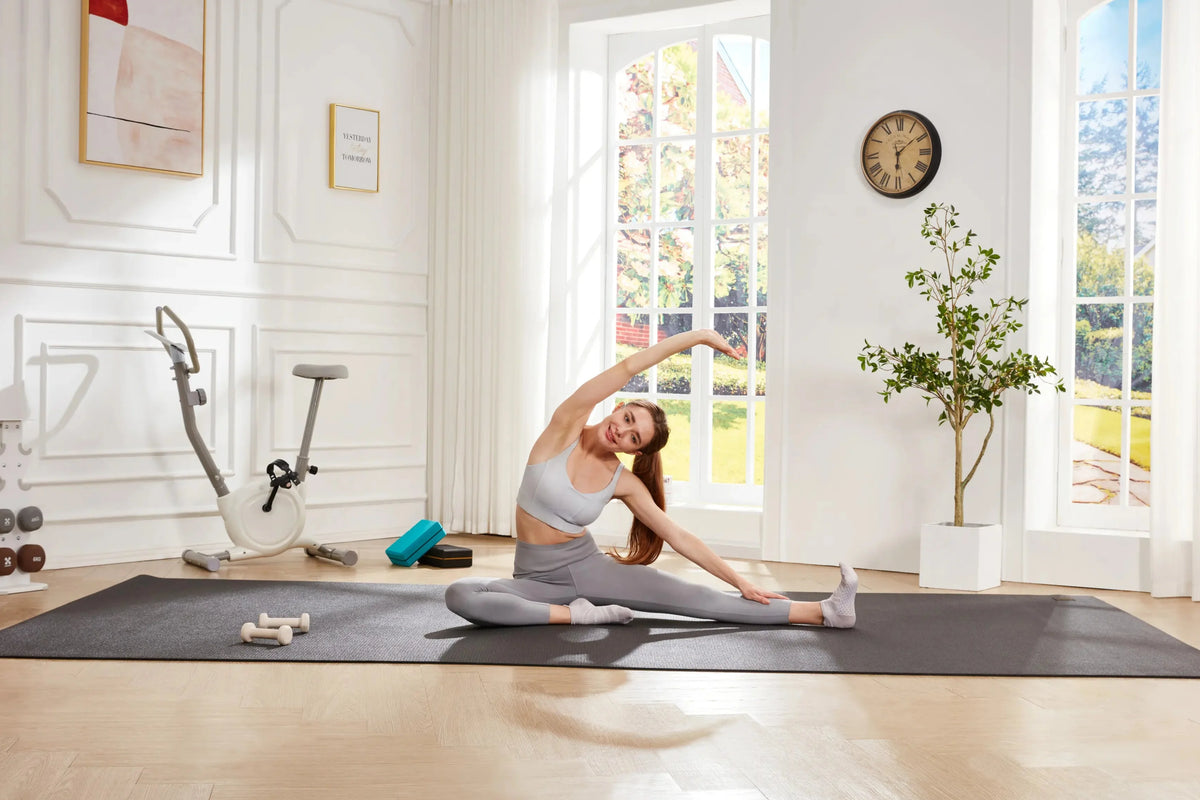
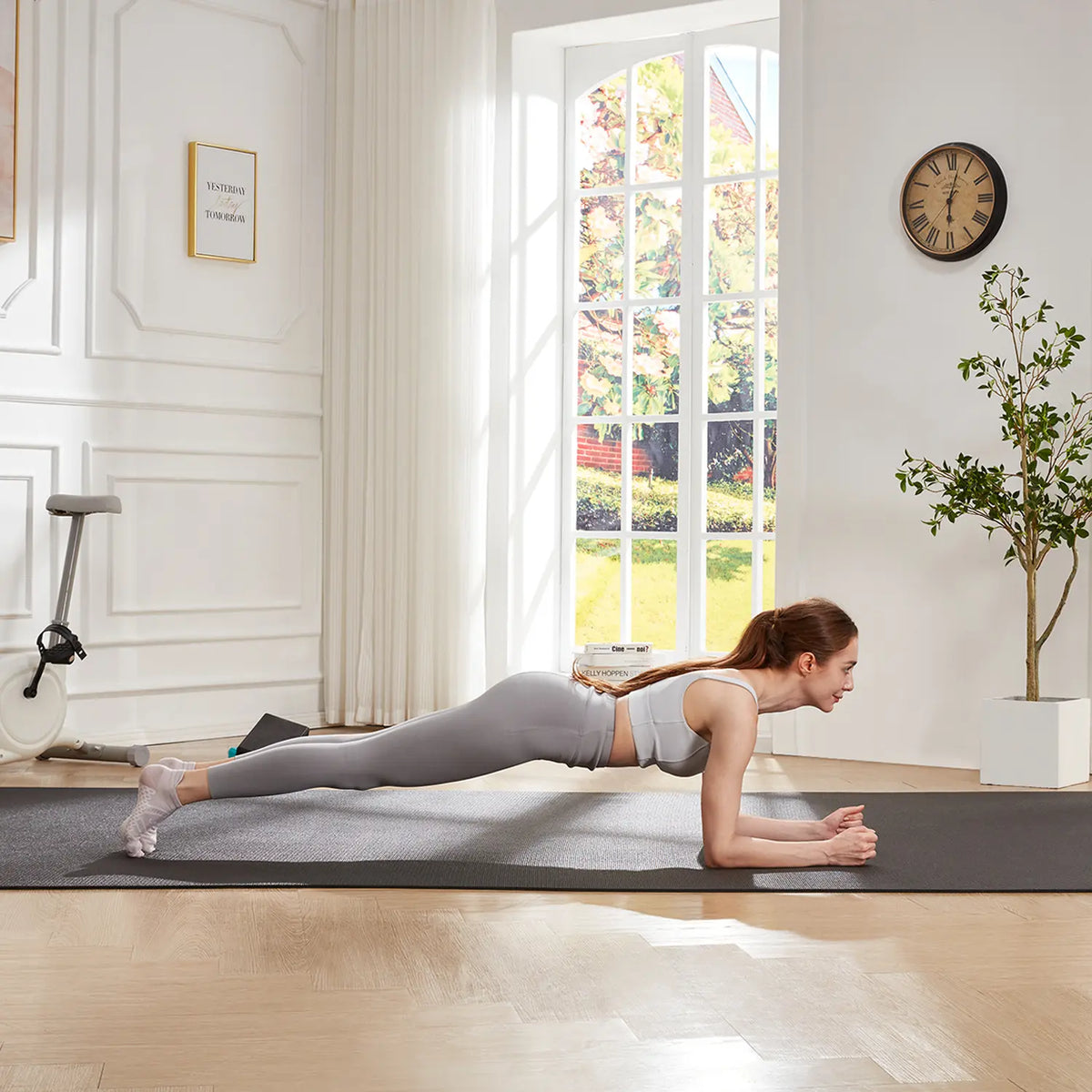
A long mat matters: you lie with your feet on the wall and your head 5–6 feet away. A GXMMAT large yoga mat gives you room to lie down, roll and stretch without sliding onto the floor, and the soft surface cushions your spine during roll-ups and bridges. For hard floors, the 7' × 5' × 9 mm extra-thick mat is the most comfortable option.
20-minute wall Pilates workout for beginners
Do each move for the reps listed, rest 15–30 seconds between moves and repeat the circuit twice.
| # | Exercise | Reps | How to |
|---|---|---|---|
| 1 | Wall roll-down | 6 | Stand with your back against the wall, feet a step away. Slowly peel your spine off the wall from the head down, then roll back up. |
| 2 | Wall bridge | 10 | Lie on your back, feet flat on the wall, knees at 90°. Press into the wall and lift your hips, then lower slowly. |
| 3 | Single-leg wall bridge | 6 per side | Same as above with one leg extended toward the ceiling. |
| 4 | Wall tabletop toe taps | 8 per side | Lying with feet on the wall in tabletop, lower one foot to tap the mat while keeping your lower back still. |
| 5 | Side-lying leg lift | 10 per side | Lie on your side with your back against the wall. Lift your top leg while keeping your heel sliding along the wall. |
| 6 | Wall sit with arm circles | 30 sec | Back on the wall, knees about 90°, small arm circles. |
| 7 | Wall push-up | 10 | Hands on the wall at shoulder height, body in a straight line. |
| 8 | Legs-up-the-wall rest | 1 min | Lie with your legs resting up the wall and breathe slowly. |
A simple 28-day wall Pilates plan
| Week | Sessions | Progression |
|---|---|---|
| 1 | 3 × 15 min | One round of the workout, focus on form |
| 2 | 4 × 20 min | Two rounds |
| 3 | 4 × 20 min | Slow every rep to 3 seconds up, 3 seconds down |
| 4 | 4–5 × 25 min | Add a third round or hold bridges for 5 seconds |
On 2 other days, add strength training or a walk. Our beginner strength plan and Zone 2 cardio guide are easy places to start.
Wall Pilates vs mat Pilates vs reformer
| Wall Pilates | Mat Pilates | Reformer | |
|---|---|---|---|
| Equipment | Mat + wall | Mat | Reformer machine or studio |
| Cost | Very low | Very low | High |
| Beginner-friendly | Very (wall gives support) | Yes | Yes, with instruction |
| Resistance | Bodyweight + wall | Bodyweight | Adjustable springs |
FAQ
What is wall Pilates?
Pilates exercises done with a wall for support and resistance, such as wall bridges, roll-downs and wall sits. It needs only a mat and a clear wall.
Does wall Pilates really work?
It can improve core strength, balance and flexibility, like mat Pilates. It hasn't been studied directly, and it won't spot-reduce fat or replace cardio and strength training.
How long should a wall Pilates workout be?
10–30 minutes, 3–5 times a week, is typical for beginners.
Is wall Pilates good for beginners?
Yes. The wall supports your body and gives feedback on alignment, which makes Pilates moves easier to learn.
What mat do I need for wall Pilates?
A non-slip mat long enough to lie on with your feet on the wall, ideally with cushioning for your spine. A large yoga mat placed flush against the wall works well.
Written by Yuvien Royer for GXMMAT. This article is general fitness information, not medical advice. Check with a healthcare professional if you're pregnant or have back or joint conditions.