Start Training at Home: Room Setup and Basic Exercises
Establishing the Foundation: Why Environment Precedes Movement
Stepping into a consistent fitness routine begins long before lifting an iron plate or completing a repetition. Preparing your physical room structure dictates whether subsequent sessions feel organized and intentional or crowded and chaotic. When you decide to start training, clearing a dedicated kinetic envelope allows your limbs to travel through natural ranges of motion without bumping furniture, door frames, or low overhead fixtures. Moving without spatial hesitation encourages consistent motor habits, steady focus, and mental calm.
Subfloor conditions play a critical role in how stable you feel during both standing and floor-based drills. Slick hardwood, polished stone, or uneven tiled grout lines can interfere with balance during early training phases. Grounding your exercise perimeter with a dedicated matting foundation dampens shifting surfaces and builds tactile reassurance underfoot. For those setting up their initial space away from commercial facilities, consulting a dedicated training start guide can clarify how deliberate home setups ease the transition into structured physical movement.
Beyond physical mechanics, establishing a well-defined boundary fosters psychological consistency. When a specific zone in your living area is permanently reserved for physical effort, entering that space cues readiness and accountability. You avoid the mental friction of constantly rearranging furniture, hunting for misplaced bands, or navigating slippery flooring surfaces every time you begin an exercise session.
Selecting Foundational Movement Patterns for a Confident Training Start
A reliable training start relies on foundational movement archetypes rather than an exhaustive catalog of complex exercises. Multi-joint patterns provide high utility for developing baseline strength and joint coordination across diverse body types.
- The Hinge and Squat: Lower-body mechanics center on deliberate hip flexion, knee tracking, and foot engagement. Practicing unweighted squats and bodyweight hinges teaches you to push into the floor evenly across your heels and forefeet, cultivating balanced lower-body tension.
- Push and Pull Pairings: Horizontal push variations, such as floor push-ups, paired with horizontal rows build balanced tension across the upper torso, chest, and shoulder girdle.
- Midline Control: Stationary floor holds and ground-based trunk drills reinforce spinal positioning, creating a dependable anchor for future loaded lifts.
- Carries and Dynamic Balance: Unilateral ground contacts, step-ups, and split stances develop stability across ankles and hips while teaching the body to absorb dynamic ground pressure.
Focusing on controlled tempos rather than rapid repetitions refines movement mechanics. Emphasizing pauses during bottom positions and executing deliberate descents builds bodily awareness without overloading connective structures. Referencing an established core training guide helps ensure that your midline drills reinforce stability without unnecessary hip flexor dominance or spinal strain.
Equipment Placement and Spatial Layout for Small and Shared Spaces
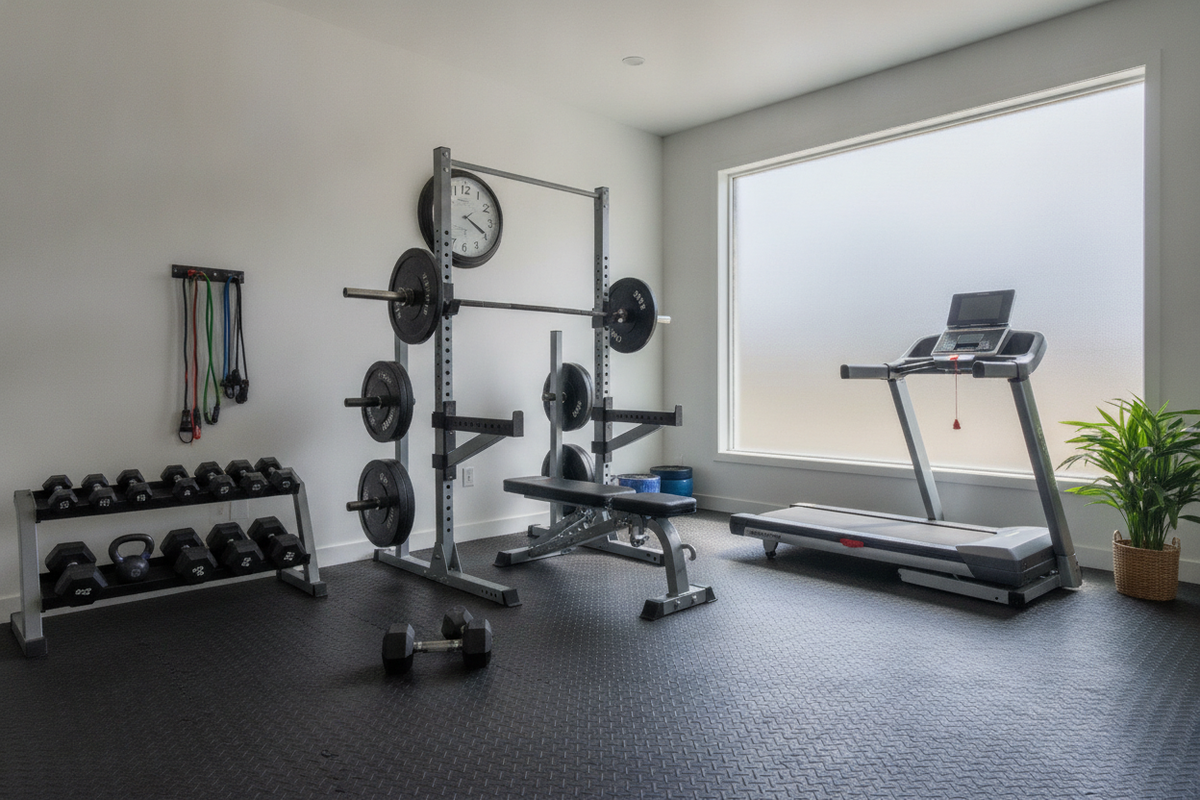
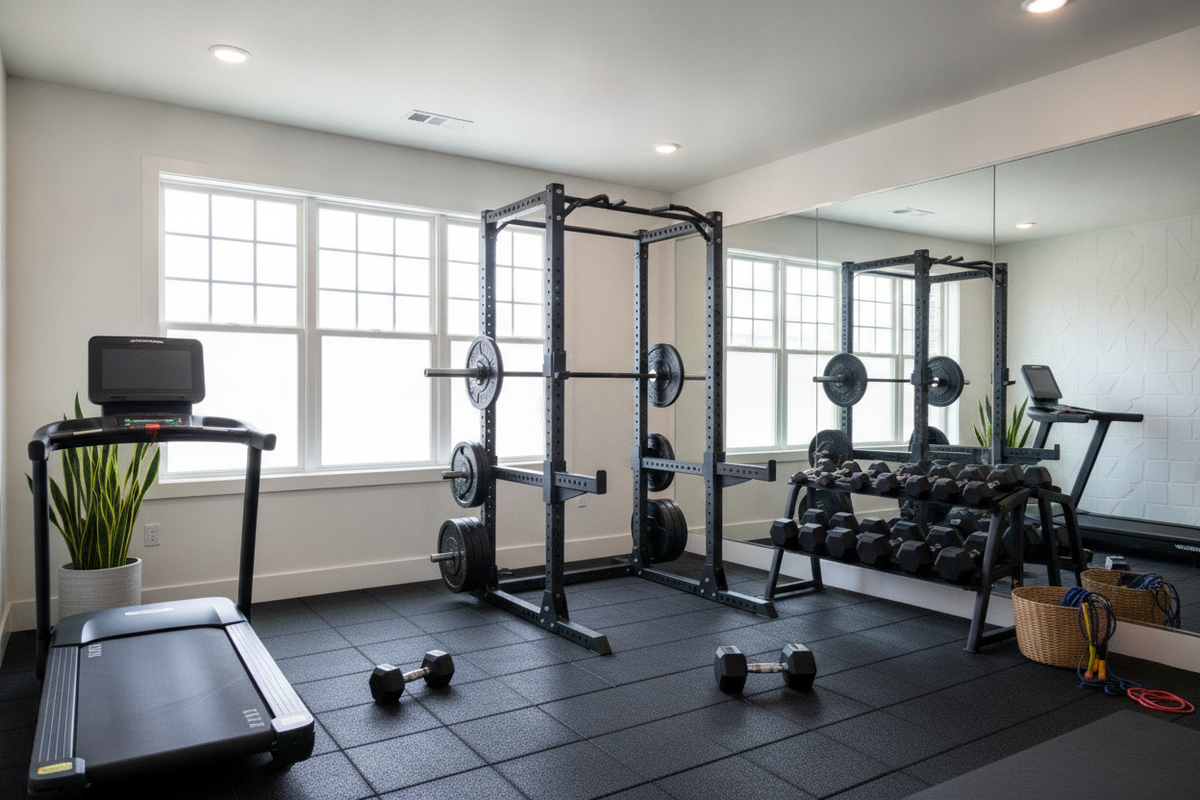
Effective spatial layout keeps high-traffic living areas orderly while providing a dedicated workout zone. Arranging gear along room perimeters leaves the central floor open for unrestricted dynamic drills. When equipment encroaches on the active exercise footprint, the risk of missteps or interrupted movement arcs increases significantly.
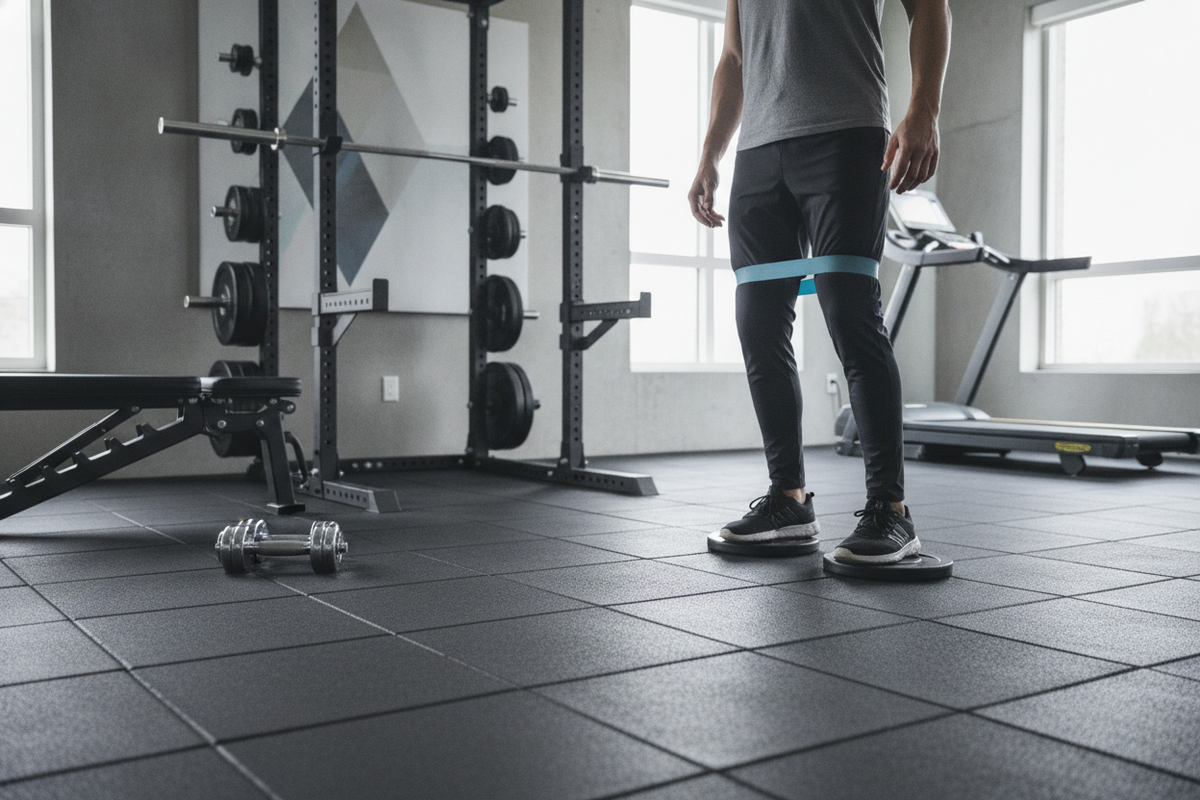
Staging loose gear requires deliberate positioning and dedicated boundary control. Dumbbells, kettlebells, and weight collars should rest in dedicated storage racks, cradles, or floor wedges to prevent unintentional rolling across slick floors. A stray dumbbell resting on smooth hardwood can quickly shift underfoot during dynamic movement, compromising lifter balance.
If you are fitting your setup into a shared living room or tight bedroom corner, reviewing a compact apartment training guide will help you maximize available square footage without sacrificing everyday room utility. Prioritizing modular gear that stacks neatly along baseboards or tucks beneath furniture keeps your living quarters uncluttered when the session concludes.
Floor Protection and Subfloor Defense During Early Strength Work
Subfloors absorb substantial stress during strength training sessions. Flat weight benches, dumbbell edges, and repetitive foot landings concentrate downward pressure onto narrow contact points. Over time, these point loads can scuff polyurethane coatings on wood, crack brittle ceramic tiles, or crumble residential drywall ceilings underneath.
High-density fitness mats distribute concentrated downward loads across a broader surface area, preserving structural flooring integrity. In addition, quality matting mitigates lateral sliding during split-stance exercises or explosive lateral movements, ensuring the surface beneath your feet remains anchored.
A resilient mat also dampens mechanical vibration, which is particularly beneficial in multi-story residential settings. Following a sound-dampening residential training guide ensures that downward forces and floor contact remain contained and neighbor-friendly throughout early training routines.
Essential Gear Integration: Scaling Up from Bodyweight to Weighted Implements
Progressing from bodyweight movements to external resistance requires a deliberate approach to equipment selection. Establishing ground-level stability through stable footwear or bare-foot mat contact comes first. Once bodyweight mechanics feel secure and repeatable, incorporating resistance bands, adjustable weight systems, and floor blocks allows for steady progression without cluttering your floor plan.
In my view, selecting versatile accessories early on provides far more long-term utility than cluttering a room with single-purpose machines. Sourcing dependable pieces from a dedicated strength training collection allows you to introduce incremental resistance while keeping your floor footprint clean and adaptable.
Begin by pairing simple elastic resistance with basic push and pull drills to explore tension curves. As control improves, integrate adjustable dumbbells or kettlebells into your squat and hinge progressions. This gradual layering builds confidence without introducing unnecessary spatial hazards into your exercise envelope.
Mat Maintenance and Workspace Longevity
Preserving your workout surface requires consistent, simple maintenance habits. Daily sweat, ambient dust, and shoe debris can accumulate on textured surfaces, reducing traction and compromising footing over time.
- Post-Session Wipe-Downs: A brief wipe-down using a damp microfiber cloth clears surface moisture before it settles into micro-textures or creates lingering moisture traps.
- Mild Cleansing Solutions: Use gentle, non-abrasive soap mixtures rather than harsh bleach or petroleum-based solvents that can dry out or break down mat rubber and protective coatings.
- Moisture Inspection: Periodically lift mat corners to verify that condensation or spilled liquids have not accumulated against sensitive subflooring beneath, which could damage finished timber or trap damp odors.
- Even Wear Distribution: If your room geometry allows, rotating mat orientation periodically helps distribute foot traffic and bench contact evenly across the surface material.
Cultivating these simple care habits keeps your exercise surface hygienic, slip-resistant, and dependable for every workout as you advance your home training routine.